Film · 2006
The Texas Chainsaw Massacre: The Beginning
Jonathan Liebesman
An origin story that explains nothing and spares no one.
87Punishing to sit through, out of 100 — mostly how bleak it is
- PaceJolts you often70
- ThreatPeople, entirely96
- GoreUnflinching86
- ToneNo relief at all6
- RealityCould happen14
Era bias 66 · Modern. Texture rather than fear, so it is not part of the grade. All six scores →
Horror movies where the monster is a person →
Part of a series: Texas Chainsaw Massacre movies in order →
On VHSCREAM’s six-axis scale, The Texas Chainsaw Massacre: The Beginning (2006) is most extreme on the threat axis: 96 out of 100, where 0 is a threat that is not human and 100 is human monsters. 95% of the 320 horror works we have scored come in lower on that axis. How we score →
The Texas Chainsaw Massacre: The Beginning is a 2006 American slasher film directed by Jonathan Liebesman, a prequel to the 2003 remake. In 1969, two brothers heading to enlist for Vietnam crash on a Texas road with their girlfriends and are taken by the Hewitt family. We score it 096 on the threat axis and 006 on tone.
Scored and reviewed by VHSCREAM on · how we score
How scary is The Texas Chainsaw Massacre: The Beginning, actually?
Scored against the published rubric, here is what the numbers mean.
The threat at 096 is near the human ceiling — only 1 work scores higher. A family of killers and a man impersonating a dead sheriff. Nothing supernatural happens.
Viscera 086 is high — 283 works score lower. Nerves cut on a table, a face skinned, a throat cut, a meat hook and chainsaw deaths, with an unrated cut that goes further.
Tone 006 is bleak — 9 works score lower. Nobody survives, nobody comes close, and the last image is the killer walking home happy.
Pace 070 is on the shock side, with 265 works slower. A violent prologue, a crash, then constant escalation.
Era bias 066 reads modern — 146 works score lower. A 1969 setting shot with a 2006 sensibility: a graded red-white-and-blue palette and a deliberately jittery shutter.
Reality anchor 014 is grounded — 11 works score lower. Everything in it could happen, and the film has no interest in suggesting otherwise.
On jump scares: a few. The cruelty is sustained rather than sudden, and the shocks mostly come from the car crash and the back-seat attack.
Who should skip The Texas Chainsaw Massacre: The Beginning
Skip it if you want an origin story that explains anything. The director deliberately explains little about Thomas beyond his birth and his job.
Skip it if torture is a hard limit. Most of the running time is young people being tortured by a family in a farmhouse.
Skip it if you need someone to survive. Nobody does.
Content notes: a death in childbirth, an infant abandoned in a dumpster, chainsaw killings, a man's arm nerves cut while he is restrained, a face skinned, a throat cut, a meat hook, a biker shot, and a fatal car crash.
Watch it if you are finishing the remake continuity, you want R. Lee Ermey at full volume, and you can take a film that is cruel without being frightening.
The Texas Chainsaw Massacre: The Beginning on six axes of fear
Every work in the index is scored on six continuous axes of fear. This is what The Texas Chainsaw Massacre: The Beginning looks like as a vector — and what each ten-point band looks like across everything else we hold.
Where that puts it: joint #1 human monsters · joint #3 bleakest · joint #10 grounded
Draft score — awaiting human review. About these scores
Disagree with a number? Say so on the axis itself. Nobody has confirmed this vector yet, and a score you challenge goes to the top of the queue to be re-scored by a human. Votes do not move the numbers — they decide what gets looked at first. How the scoring works →
Scored against the published rubric. This vector is a draft awaiting review — the method is public so you can argue with it.
The Texas Chainsaw Massacre: The Beginning: the review
The Texas Chainsaw Massacre: The Beginning is one of the cruellest studio horror films of its decade, and cruelty is all it has.
Platinum Dunes made the 2003 remake into a hit, and New Line paid $3.1 million more than it expected to keep the rights when Dimension Films came in with a large offer. The producers wanted a prequel because it gave them more room. Scott Kosar was busy, so Sheldon Turner wrote it, from a story he shared with David J. Schow. Jonathan Liebesman was unsure about directing until he learned it was a prequel, and then he said something revealing: he wanted to explain as little as possible about the killer's motives, because the film "needed to feel like the beginning of hell."
That is an accurate description of what he made. It is not an origin story in any sense that would satisfy someone wanting to understand Leatherface. It is ninety minutes of a family torturing four young people to death.
The origin, such as it is
The prologue is the best idea in the film. In 1939 a woman dies giving birth at a Texas slaughterhouse, and the supervisor throws the baby in a dumpster. A young Luda Mae Hewitt finds him, takes him home and names him Thomas. Thirty years later Thomas is still working at the same plant, under the same supervisor, when the health department shuts it down. He refuses to leave. When he is forced out, he kills the supervisor with a hammer and takes a chainsaw home.
That is close to the 1974 film's idea — a family of slaughterhouse workers who keep doing the one thing they know after the work goes away — and it is the one moment in the remake continuity that reaches for it. Then Sheriff Winston Hoyt comes to arrest Thomas, and Luda Mae's other son Charlie kills the sheriff and takes his badge and his name. The Sheriff Hoyt of the 2003 film, again played by R. Lee Ermey, is an impostor, and that is the second good idea. There is not a third.
Ermey carries it
The four young people — brothers Eric and Dean, and their girlfriends Chrissie and Bailey — are on their way to enlist, and Dean has been planning to dodge the draft. A biker chases them down with a shotgun, the car crashes, Chrissie is thrown into a field, and "Hoyt" arrives, shoots the biker, and takes the rest home. From there the film belongs to Ermey. His Hoyt is a drill-sergeant sadist who torments Dean about the draft while the family works on Eric, and he is the one performer who gives the film any variation in register. Matt Bomer, Jordana Brewster, Taylor Handley and Diora Baird are asked mainly to be hurt.
The Vietnam frame is the film's one gesture towards a subject. Eric and Dean are on their way to enlist, Dean has been planning to dodge the draft, and Hoyt makes that the centre of his torment. There is a version of this film in which that matters — a country sending its sons off to die, and a family at home doing the same thing on a smaller scale — and you can feel the script brush past it. But Liebesman's instinct to explain nothing extends to theme as well as motive, and the idea is dropped as soon as the chainsaw starts.
Andrew Bryniarski returns as Thomas, and Lee Tergesen turns up as Holden, who briefly takes Hoyt hostage before Thomas kills him with the chainsaw.
How it looks
Liebesman and his cinematographer, Lukas Ettlin, used a desaturated red, white and blue palette, and shot the film in chronological order. After the car crash Ettlin changed the camera's shutter angle from 180 to 90 degrees, so that everything after the accident would feel more chaotic. It works: the second half has a stuttering, hard-edged motion that makes the violence feel jagged rather than staged. The film was shot around Austin, partly at the same locations as the 2003 remake, and it matches its predecessor's grime closely.
Where it falls down
It is unrelieved, and not in the productive way. Eric has the nerves in both arms cut while strapped to a table, then is killed with the chainsaw and his face is taken for a mask. Bailey is dragged back with a meat hook and later has her throat cut. Dean is sawn. Chrissie, who seems for a moment to have got away, is impaled by Leatherface, hidden in the back seat of the car she escaped in, and the crash kills a state trooper and a passer-by. Nobody survives, and the film is careful that nobody gets close. There is no tension in that structure, only waiting.
Critics were close to unanimous. It has 17 percent on Rotten Tomatoes, Peter Travers gave it zero stars, The New York Times called it an invitation to hard-core sadism, and audiences gave it a C+. It was nominated for a Golden Raspberry for Worst Prequel or Sequel and lost to Basic Instinct 2. It opened second at about $18.5 million and took about $51.8 million in total, around half of what the remake earned, which is why Platinum Dunes passed on a third.
Watch the 1974 original for the family-business idea done properly, and see the franchise in order for how this prequel fits the remake line. If you want extremity with something behind it, Martyrs is the harder and better film.
The ending of The Texas Chainsaw Massacre: The Beginning explained
The ending, in full. Open it when you have seen it.
The short answer: nobody gets away. Eric is tortured and killed with the chainsaw and Thomas skins his face to wear as a mask. Bailey has her throat cut, and Dean is killed with the chainsaw when he goes after Chrissie. Chrissie escapes the house in the dead supervisor's car, but Leatherface is hiding in the back seat and fatally impales her with the chainsaw. The car crashes, killing a state trooper and a pedestrian. In the last shot, a triumphant Leatherface walks back down the road towards the Hewitt house.
Does anyone survive The Texas Chainsaw Massacre: The Beginning?
None of the four young leads survive. Eric, Bailey, Dean and Chrissie all die, as do the biker who chased them, Holden, a state trooper and a pedestrian. Hoyt is badly beaten by Dean but not shown dying, and the Hewitt family is still standing at the end, which is the point: the film is a prequel, and the family has to be intact for the 2003 film four years later.
How does Sheriff Hoyt become sheriff?
He is not the sheriff. The real Sheriff Winston Hoyt tries to arrest Thomas after the slaughterhouse killing, and Luda Mae's son Charlie Hewitt Jr. kills him and takes his identity. The man R. Lee Ermey plays in both remake-line films is Charlie, wearing a dead man's badge.
How does Leatherface get his mask in The Beginning?
From Eric. Thomas straps him to a table and cuts the nerves in both his arms, later kills him with the chainsaw, and skins his face to wear. It is the point at which the film starts calling him Leatherface rather than Thomas.
How does Chrissie die?
She escapes the Hewitt house in the supervisor's car, but Leatherface is hiding in the back seat. He fatally impales her with the chainsaw, the car crashes, and a state trooper and a pedestrian die in the wreck.
If The Texas Chainsaw Massacre: The Beginning is your kind of fear
The eight works closest to The Texas Chainsaw Massacre: The Beginning in the index on the five axes that describe fear, the same medium first — not by genre label, and not by what other people watched.
The Texas Chainsaw Massacre
Marcus Nispel · 2003 · Film
Shares human monsters.
92% shared signal
Hostel
Eli Roth · 2005 · Film
Shares a bleak, unforgiving tone.
92% shared signal
Leatherface
Julien Maury and Alexandre Bustillo · 2017 · Film
Shares grounded realism.
92% shared signal
Halloween
Rob Zombie · 2007 · Film
Shares explicit viscera.
91% shared signal
Saw III
Darren Lynn Bousman · 2006 · Film
Shares human monsters.
90% shared signal
Saw V
David Hackl · 2008 · Film
Shares explicit viscera.
89% shared signal
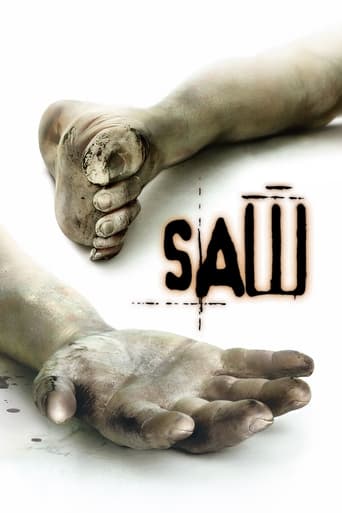
Saw
James Wan · 2004 · Film
Shares relentless shock.
89% shared signal
Off Season
Jack Ketchum · 1980 · Book
Shares a bleak, unforgiving tone.
95% shared signal
More lists like these: Movies like Saw
Questions about The Texas Chainsaw Massacre: The Beginning
The things people actually ask about this film, answered — including how it ends.
What happens at the end of The Texas Chainsaw Massacre: The Beginning?
All four young leads die. Chrissie escapes in the supervisor's car, but Leatherface is hiding in the back seat and impales her with the chainsaw. The car crashes, killing a state trooper and a pedestrian, and Leatherface walks triumphantly back along the road to the Hewitt house.
Is The Texas Chainsaw Massacre: The Beginning a prequel?
Yes. It is a prequel to the 2003 remake, set four years before it in 1969, with a prologue showing Leatherface's birth in 1939. R. Lee Ermey and Andrew Bryniarski return as Hoyt and Thomas Hewitt. It was originally subtitled The Origin.
How was Leatherface born in the remake series?
In 1939 a woman dies giving birth at a Texas slaughterhouse, and the supervisor leaves the baby in a dumpster. Young Luda Mae Hewitt finds him, names him Thomas and raises him. Thirty years later, when the slaughterhouse closes, he kills that same supervisor with a hammer.
Who is Sheriff Hoyt really?
Charlie Hewitt Jr., Luda Mae's son, played by R. Lee Ermey. When the real Sheriff Winston Hoyt tries to arrest Thomas in 1969, Charlie kills him and takes his identity. He goes on posing as the sheriff into the events of the 2003 film.
Is there an unrated cut of The Texas Chainsaw Massacre: The Beginning?
Yes. New Line's US DVD, released on 16 January 2007, included both the theatrical and the unrated versions, and the UK release came as a two-disc uncut edition. We score the film 086 on viscera on the strength of what it shows.
How much did The Texas Chainsaw Massacre: The Beginning make?
About $51.8 million in total on a $16 million budget. It opened second with about $18.5 million and dropped almost 60 percent in its second weekend. It earned roughly half of the 2003 remake's gross, and Platinum Dunes passed on making a third film.
These are ranked against The Texas Chainsaw Massacre: The Beginning, not against you.
Build your own tape →