Film · 2017
Jigsaw
The Spierig Brothers
Ten years dead, Kramer is back on the tapes. A barn, five sinners and one good trick.
73Hard going to sit through, out of 100 — mostly how bleak it is
- PaceBuilds, then strikes64
- ThreatPeople, entirely90
- GoreExplicit74
- ToneBleak24
- RealityGrounded30
Era bias 86 · Thoroughly modern. Texture rather than fear, so it is not part of the grade. All six scores →
Horror movies where the monster is a person →
Part of a series: Saw movies in order →
On VHSCREAM’s six-axis scale, Jigsaw (2017) is most extreme on the threat axis: 90 out of 100, where 0 is a threat that is not human and 100 is human monsters. 85% of the 320 horror works we have scored come in lower on that axis. How we score →
Jigsaw is a 2017 American trap-horror film directed by the Spierig Brothers, written by Josh Stolberg and Peter Goldfinger. A decade after John Kramer's death, five people wake chained in a barn while detectives find bodies that bear his signature. We score it 090 on the threat axis and 086 on era bias.
Scored and reviewed by VHSCREAM on · how we score
How scary is Jigsaw, actually?
Scored against the published rubric, here is what the numbers mean.
The threat at 090 is near the human end — 273 works score lower. A disciple working from a dead man's methods and a corrupt detective do all the harm; nothing supernatural happens.
Viscera 074 is high — 232 works score lower. Self-inflicted cuts, a death by acid injection, a severed leg, a man shredded by a spiral blade, and a head sliced open by a laser, though the camera is tidier than in the old films.
Tone 024 is bleak — 163 works score lower. Most of the players die and the killer walks away, but the film has a puzzle-box lightness the original run rarely had.
Pace 064 is on the shock side, with 228 works slower. Briskly cut between the barn and the investigation, with each trap a short, sharp set-piece.
Era bias 086 reads modern — 240 works score lower. Clean, bright digital photography that breaks from the green grime of the earlier films.
Reality anchor 030 is grounded — 68 works score lower. The traps are mechanical and the twist is about time, not anything impossible.
On jump scares: a few, mostly in the police scenes, and they are not what the film is built on.
Who should skip Jigsaw
Skip it if you want to be frightened. It is a puzzle film with traps in it, and critics found it rarely scary.
Skip it if you guess twists early. The film depends on one reveal, and if you see it coming, the investigation has little else to offer.
Skip it if you have no interest in the Saw series. It is built around Kramer's legacy and assumes you know who he is.
Content notes: self-inflicted cuts, death by injected acid, a leg severed by a wire trap, a man killed by a spiral blade, a shotgun backfiring into a woman, a head sliced by a laser collar, the death of a baby referred to, a fatal drunk-driving crash referred to, and a woman's murder as backstory.
Watch it if you liked the timeline trick at the heart of the earliest films, you want a cleaner, brighter take on the formula, and you want to hear Tobin Bell back on the tapes.
Jigsaw on six axes of fear
Every work in the index is scored on six continuous axes of fear. This is what Jigsaw looks like as a vector — and what each ten-point band looks like across everything else we hold.
Draft score — awaiting human review. About these scores
Disagree with a number? Say so on the axis itself. Nobody has confirmed this vector yet, and a score you challenge goes to the top of the queue to be re-scored by a human. Votes do not move the numbers — they decide what gets looked at first. How the scoring works →
Scored against the published rubric. This vector is a draft awaiting review — the method is public so you can argue with it.
Jigsaw: the review
Jigsaw is a magic trick with one move, and it is a pretty good move, but you will spend most of the film waiting for it.
After Saw 3D closed the original run, Lionsgate stopped making these films and waited for a pitch worth reviving them for. Seven years later, this is it: a soft reboot directed by the Spierig Brothers, Michael and Peter, written by Josh Stolberg and Peter Goldfinger after two years of chasing the job. Their first pitch put the game on an oil derrick in the middle of the ocean. Lionsgate said no, and what they settled on instead was a return to the series' oldest trick — a story told across two timelines without telling you that is what it is doing.
The barn is the series' cleanest set since the bathroom
Five people wake in a barn with buckets over their heads and chains round their necks, and the chains begin dragging them towards a wall of buzzsaws unless they give up some blood. Most of them cut themselves and get free. One man, unconscious, does not wake in time. From there the game moves through a sequence of rooms in the same building, each one revealing what one of the players did. Carly, a purse snatcher, caused the death of an asthmatic woman. Mitch sold a faulty motorcycle that killed Kramer's nephew. Anna smothered her baby and let her husband take the blame. Ryan's drunken stunt killed his friends in a car crash.
The barn is well used. The Spierigs shoot it bright, all warm wood and dust, a long way from the green murk of the old films, and it gives the traps a strange, almost rural calm. The spiral-blade funnel that kills Mitch, powered by a motorcycle engine, is the best-designed device the series had produced in years, and the shotgun at the end — a key to freedom, the tape says, with the keys hidden inside the shell — is a typically perverse Kramer joke.
The investigation is the decoy
Running alongside is a police story. Detective Halloran and his partner Hunt are finding corpses that match the players in the barn, and they start to suspect two forensic pathologists, Logan Nelson and Eleanor Bonneville. Eleanor admits to being a Jigsaw fan, and a body resembling one of the players turns up in her studio, which makes her the obvious suspect, which makes her the wrong one. Halloran, meanwhile, is bent, and his partner finds jigsaw-shaped pieces of flesh in his freezer. The film keeps shuffling guilt between the three of them, and it is not quite as clever about it as it thinks.
Tobin Bell returns, and it is a pleasure to hear the voice again. The film uses him sparingly and well.
The last room is the old series in miniature
The best sequence is the final barn test. Anna and Ryan, the last two players, are shackled to pipes at opposite ends of a room, and Kramer finally tells each what the other did. Then he gives them a shotgun with a single shell and calls it their key to freedom. It is a direct echo of the first film's bathroom — two people, two chains, one round — and the Spierigs stage it as a standoff. Anna takes the gun and tries to shoot Ryan. It backfires and kills her. The keys were inside the shell all along, and now they are wrecked. That is the series' moral argument in about three minutes: the way out was there, and violence destroyed it.
Charlie Clouser, who scored every film before it, came back and deliberately stripped his music down for what he called a reinvention of the series, and it suits the brighter, emptier look. The directors described their approach as Saw for 2017, and for once the description is accurate. It is a tidy, modern re-run of the formula rather than an extension of the old story, and the cast was signed with sequels in mind — Hannah Emily Anderson was contracted for three films — that never came. The next two entries went elsewhere.
Where it falls down
It is not very frightening. The deaths are clean, quick and almost tasteful by the standards of the series, and the film's interest is in the puzzle rather than the pain. Critics described it as familiar and rarely scary, and that is the right charge: it feels like a respectful cover version.
The characters in the barn are thin even by Saw standards, sketched just enough to justify their traps. The police scenes are flat, and Callum Keith Rennie's Halloran is written as such an obvious bad cop that the film has to work hard to keep him in play as a suspect.
And the twist, once it lands, makes the investigation retroactively pointless. You realise the whole police plot was a delivery mechanism for one reveal, and on a second viewing it plays like stalling.
It opened at number one, though with one of the franchise's weaker debuts, and grossed $102.9 million worldwide on a $10 million budget. It is worth seeing if you liked the twist of the first film and want a version of it done with care. Line it up with the others in the Saw movies in order, and if you want the films that taught it everything, start with Saw. For the same blend of procedural and theatrical killing, Saw X does it with more conviction.
The ending of Jigsaw explained
The ending, in full. Open it when you have seen it.
The short answer: the barn game is not happening now. It took place ten years earlier, and the unconscious man who seemed to die in the first trap was Logan Nelson, the pathologist. John Kramer spared him because his crime — mislabelling Kramer's X-rays, so his cancer went undiagnosed — was an honest mistake, and made him his first apprentice. In the present, Logan has recreated the old barn games, chosen his victims from criminals Detective Halloran let walk free, and framed Halloran as the new Jigsaw Killer, in revenge for Halloran releasing Edgar Munsen, the man who killed Logan's wife. In the final trap, Logan and Halloran wear collars rigged with laser cutters and must confess. Halloran makes Logan go first, and Logan appears to die; Halloran then confesses and his collar shuts off. But Logan is alive, and because Halloran broke the rules by forcing him to go first, Halloran's collar restarts and slices his head open. Logan says "I speak for the dead" and shuts the door.
Who is the killer in Jigsaw?
Logan Nelson, the forensic pathologist played by Matt Passmore. He was Kramer's first apprentice, recruited a decade earlier after surviving the barn game, and he is the one behind the new killings. He spends the film helping to investigate them and steering suspicion towards Detective Halloran.
When does the barn game take place in Jigsaw?
Ten years before the police investigation. The film cuts between the two as though they are happening at once, which is the trick. The bodies the detectives keep finding are new victims killed in recreations of the old game, and the barn scenes, with Kramer alive and speaking on tape, are the original game from a decade earlier.
Why did Jigsaw spare Logan?
Logan was the unconscious man in the barn's first trap. His sin was mislabelling Kramer's X-rays years earlier, which meant his cancer went undiagnosed. Kramer decided that Logan should not die for an honest mistake, saved him, and recruited him as his first apprentice.
What happens to Halloran at the end of Jigsaw?
He dies. Halloran and Logan are both fitted with laser collars and told to confess. Halloran forces Logan to confess first, then admits to letting criminals walk free for personal gain. His collar switches off — but because he broke the rules by making Logan go first, it reactivates and slices open his head.
If Jigsaw is your kind of fear
The eight works closest to Jigsaw in the index on the five axes that describe fear, the same medium first — not by genre label, and not by what other people watched.
Spiral: From the Book of Saw
Darren Lynn Bousman · 2021 · Film
Shares human monsters.
95% shared signal
Leatherface: The Texas Chainsaw Massacre III
Jeff Burr · 1990 · Film
Shares a bleak, unforgiving tone.
94% shared signal
Sleepaway Camp
Robert Hiltzik · 1983 · Film
Shares explicit viscera.
94% shared signal
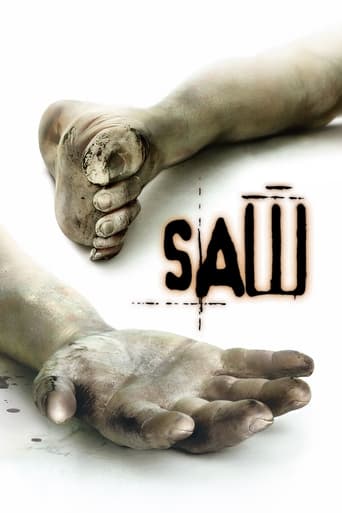
Saw
James Wan · 2004 · Film
Shares grounded realism.
93% shared signal
Friday the 13th: The Final Chapter
Joseph Zito · 1984 · Film
Shares human monsters.
93% shared signal
Saw II
Darren Lynn Bousman · 2005 · Film
Shares a bleak, unforgiving tone.
92% shared signal
Saw V
David Hackl · 2008 · Film
Shares explicit viscera.
92% shared signal
Friday the 13th
Sean S. Cunningham · 1980 · Film
Shares grounded realism.
92% shared signal
More lists like these: Movies like Saw
Questions about Jigsaw
The things people actually ask about this film, answered — including how it ends.
What happens at the end of Jigsaw?
The barn game is revealed to have happened ten years earlier, and Logan Nelson was the unconscious man in it. Kramer spared him and made him his first apprentice. In the present, Logan stages new killings to frame Detective Halloran, then kills him in a laser-collar trap after Halloran breaks the rules by making Logan confess first.
Who is the new Jigsaw in Jigsaw (2017)?
Logan Nelson, a forensic pathologist played by Matt Passmore. He survived the barn game a decade earlier and became John Kramer's first apprentice. In the present he recreates the old games using criminals Halloran freed, framing Halloran as the new killer to avenge his wife's murder by Edgar Munsen.
Is John Kramer alive in Jigsaw?
No. Kramer has been dead for almost a decade when the police investigation begins. He appears in the barn scenes because they are set ten years earlier, during his original game, which the film presents as though it were happening in the present. That is the film's twist.
Is Jigsaw a reboot of the Saw series?
It is described as a soft reboot and the eighth instalment of the series, following Saw 3D. It keeps John Kramer and his methods but introduces new characters, and it was followed by Spiral in 2021. Its story was not continued by either Spiral or Saw X.
How gory is Jigsaw?
Less than most Saw films. We score it 074 on viscera, lower than the original run's entries. There are severe deaths — a spiral blade, injected acid, a laser collar — but the camera is cleaner and quicker than in earlier films, and the focus is on the puzzle rather than the pain.
These are ranked against Jigsaw, not against you.
Build your own tape →