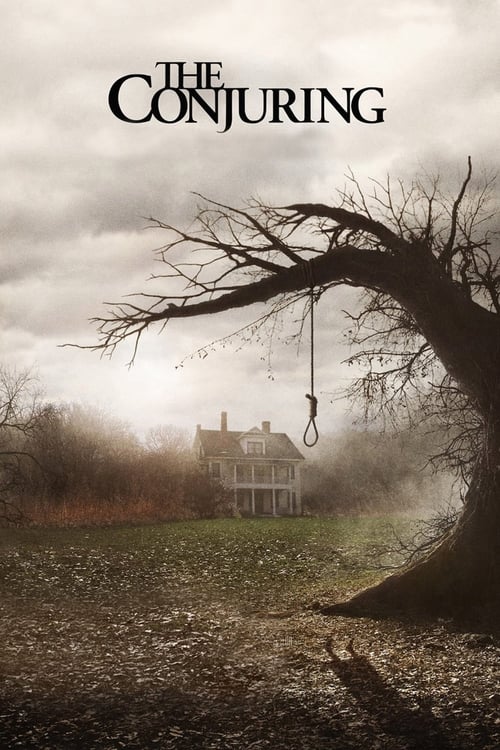
Film · 2013
The Conjuring
A jump-scare machine built with real craft. Shows you almost nothing and still lands.
Most extreme on THE THREAT — a supernatural threat at 012
On VHSCREAM’s six-axis scale, The Conjuring (2013) is most extreme on the threat axis: 12 out of 100, where 0 is a supernatural threat and 100 is human monsters. 6% of the 105 horror works we have scored come in lower on that axis. How we score →
The Conjuring is a 2013 supernatural horror film directed by James Wan, based on a case investigated by Ed and Lorraine Warren in 1971. A family of seven moves into a Rhode Island farmhouse and something in it begins working through the mother. We score it 012 on the threat axis — only 6 works score lower, the supernatural end of the scale — and 022 on viscera, the joint-tenth-least-explicit film we have scored.
Scored and reviewed by VHSCREAM on · how we score
The Conjuring: the review
The Conjuring is the best-made studio haunted-house film of the century, and its achievement is entirely craft rather than idea.
There is nothing in the premise you have not seen. Family moves into old house; dog will not come inside; clocks stop at 3:07; the basement is boarded over; a medium arrives. Wan knows you know, and builds the entire film on the assumption. His camera moves when nothing is happening and holds still when something is, which is the opposite of the convention and the reason the scares land. He stages whole sequences in one unbroken take so that you are forced to search the frame yourself — the wardrobe, the sheet, the doorway behind Carolyn's head — and the film's cruellest trick is that it lets you find things before the characters do.
The Warrens are the film's actual subject
Patrick Wilson and Vera Farmiga play Ed and Lorraine as a working couple who are tired. Their scenes are domestic and unglamorous: paperwork, a daughter, a locked room full of other people's problems, a marriage with an injury in it. Farmiga in particular plays clairvoyance as a chronic condition rather than a gift, and the film's warmth towards them is what separates it from its imitators and from its own sequels.
Lili Taylor's Carolyn Perron is the other half of it. She is a woman who is losing weight, bruising inexplicably and being told it is nothing, and the possession reads first as illness.
The scares are built, not sprung
The clap game in the basement, the music box, the hands on the bedpost, the sheet in the dark, the wardrobe. Every single one is set up earlier as an ordinary household object and then used. Joseph Bishara's score is harsh and string-driven and knows when to stop, which most films of this kind do not.
Where it is thin
Bathsheba herself is a weak antagonist once explained — a witch with a backstory delivered as exposition is less frightening than a boarded cellar. The five daughters are barely differentiated. And the climax turns into a physical fight with an invisible opponent, which is the one point where the film becomes generic.
For Wan's other mode in the same decade, Insidious; for the franchise this film launched, Annabelle and The Nun; for the 1982 studio haunting it is descended from, Poltergeist.
The ending of The Conjuring explained
Total spoilers from here. Everything above this line is spoiler-free.
The short answer: Carolyn is fully possessed, takes two of her daughters and drives off, and is found in the house's cellar attempting to stab Christine. Ed performs the exorcism himself, without the Church's authorisation, because there is no time to get it. It fails until Lorraine reaches the woman rather than the entity — she holds Carolyn's face and makes her remember a specific day at the beach with her family. Carolyn breaks free, expels Bathsheba, and the family survives. The closing scene puts the Perrons' music box in the Warrens' artifact room; Lorraine mentions that the Vatican has called with another case.
Who is Bathsheba in The Conjuring?
The film's Bathsheba Sherman is presented as a relative of the accused Salem witch Mary Towne Eastey, who in 1863 sacrificed her week-old child to the Devil, cursed anyone who took her land, and hanged herself from a tree in the yard at 3:07 in the morning. She possesses mothers and makes them kill their children. The 3:07 clock motif, the boarded cellar and the tree outside all trace back to her.
How is the possession broken?
Not by scripture. Ed reads the rite and it does nothing but hurt Carolyn. Lorraine stops him, crouches in front of her and describes a day at the beach — the Perrons' own memory, which Lorraine saw earlier in a vision. Naming something that belongs to Carolyn and not to Bathsheba is what gives her the purchase to expel it. The film's position is that the exorcism works because the woman is still in there.
Why can't the Church help?
Because authorisation takes time the family does not have. The Warrens are told the Perrons are not baptised and that the case needs documentation and a priest, and the paperwork is still moving when Carolyn abducts her daughters. Ed is a demonologist, not a priest, and the film makes clear he is doing something he has no standing to do.
What is the clap game in The Conjuring?
Hide and clap: one player is blindfolded, the others clap to be found. Christine and Nancy play it in the first act, which establishes it as harmless. Later Carolyn is blindfolded in the cellar and something claps from a place where none of her children are standing. It is the single best-engineered scare in the film and it costs nothing — a blindfold and a sound.
Why is Annabelle in this film?
The doll appears in the prologue as an unrelated case and then sits in the Warrens' locked artifact room for the rest of the film. It is doing two jobs: establishing that the Warrens accumulate objects that cannot be destroyed, and seeding a spin-off. Within The Conjuring itself the doll never does anything, which is why it works.
How scary is The Conjuring, actually?
Scored against the published rubric, here is what the numbers mean.
The threat at 012 is near the supernatural floor — only 6 works score lower. There is no human villain anywhere in it, and no reading of the film in which anybody is faking.
Viscera 022 is very low — 21 works score lower. A dead dog, some bruising, a bitten tongue and blood on a knife. Nothing is dwelt on.
Era bias 084 reads modern — 81 works score lower, which is worth stating plainly: the film is set in 1971 but shot with a modern digital grade, a modern sound mix and a modern camera vocabulary. Period setting is not period texture.
Pace 068 is on the shock side, with 89 works slower. It is a film of set pieces with short gaps.
Tone 026 is bleak for a film in which everybody lives — 70 works score lower. The mother is made to try to kill her children and the Warrens go straight to the next case.
Reality anchor 046 is close to the midpoint. The house obeys geography and the rules are consistent; only the cellar sequences bend.
On jump scares: many, and they are superbly made. The wardrobe, the sheet, the clap, the bedposts.
The Conjuring on six axes of fear
Every work in the index is scored on six continuous axes of fear. This is what The Conjuring looks like as a vector.
Where that puts it: #7 supernatural · #11 modern · #12 without gore · #15 relentless
Disagree with a number? Say so on the axis itself. Nobody has confirmed this vector yet, and a score you challenge goes to the top of the queue to be re-scored by a human. Votes do not move the numbers — they decide what gets looked at first. How the scoring works →
Scored against the published rubric. This vector is a draft awaiting review — the method is public so you can argue with it.
Who should skip The Conjuring
Skip it if jump scares are the problem rather than the appeal. This is a film engineered around them, with roughly a dozen in two hours.
Skip it if a mother being made to harm her children is a hard limit. That is the mechanism of the entire third act.
Skip it if the Warrens' real-world record will bother you. Ed and Lorraine Warren were working investigators whose claims were widely disputed, and the film presents them as unambiguously correct.
Content notes: a mother coerced towards killing her children, an infant sacrifice described in detail, a hanging, a dead animal, a child held under water, a blood-and-bone exorcism, and extensive scenes of children in danger.
Watch it if you want the most technically accomplished haunted-house film since the seventies, you like jump scares built out of ordinary objects, and you want two leads who feel like a marriage rather than a device.
Where to find it
Streaming on HBO Max ↗Physical copies on eBay ↗Availability from JustWatch via TMDB. We earn nothing from these links.
Nothing loads from YouTube until you press play.
If The Conjuring is your kind of fear
The eight works closest to The Conjuring in the index, ranked by distance across all six axes — not by genre label, and not by what other people watched.
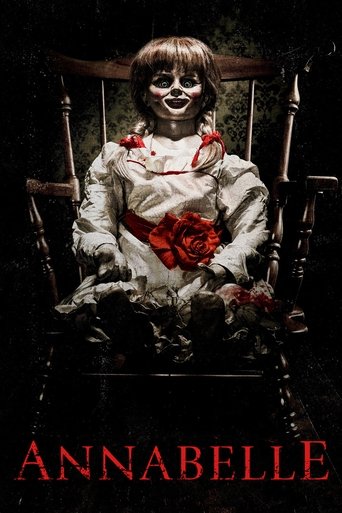
Annabelle
John R. Leonetti · 2014 · Film
Shares a supernatural threat.
97% shared signal

Lights Out
David F. Sandberg · 2016 · Film
Shares modern craft.
92% shared signal
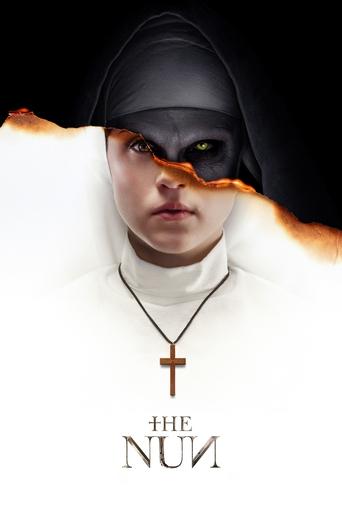
The Nun
Corin Hardy · 2018 · Film
Shares restraint over gore.
91% shared signal
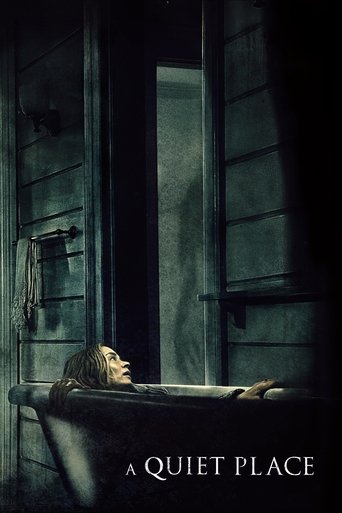
A Quiet Place
John Krasinski · 2018 · Film
Shares a bleak, unforgiving tone.
89% shared signal
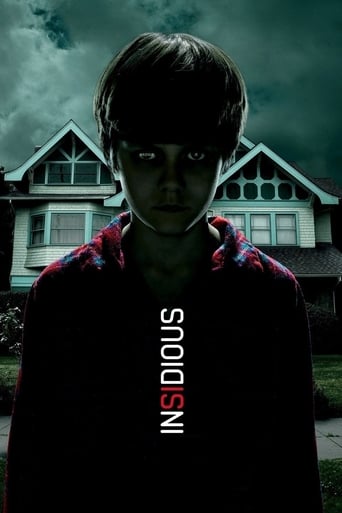
Insidious
James Wan · 2010 · Film
Shares relentless shock.
86% shared signal
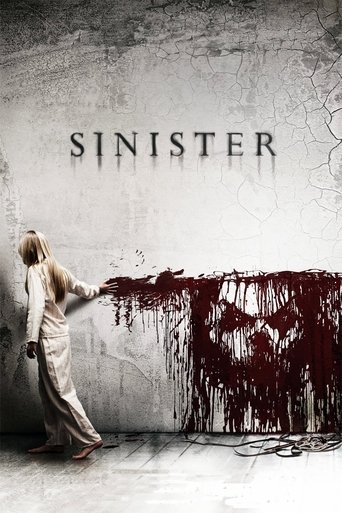
Sinister
Scott Derrickson · 2012 · Film
Shares a supernatural threat.
85% shared signal
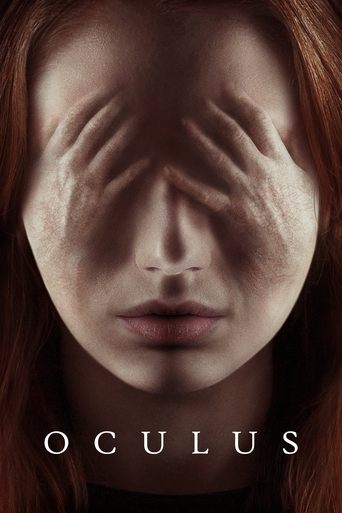
Oculus
Mike Flanagan · 2013 · Film
Shares modern craft.
82% shared signal
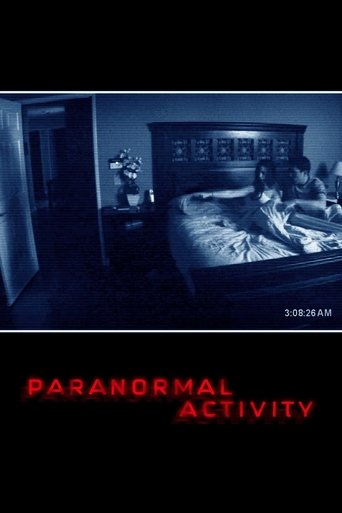
Paranormal Activity
Oren Peli · 2007 · Film
Shares restraint over gore.
81% shared signal
See the full list of movies like The Conjuring →
Questions about The Conjuring
The things people actually ask about this film, answered.
What happens at the end of The Conjuring?
Carolyn, fully possessed, takes two daughters and tries to kill one in the cellar. Ed performs an unauthorised exorcism that fails until Lorraine makes Carolyn remember a day at the beach with her family. Carolyn expels the entity, everyone lives, and the Warrens take the music box home.
Who is Bathsheba in The Conjuring?
A 19th-century woman the film presents as a relative of a Salem defendant, who sacrificed her newborn to the Devil, cursed the land and hanged herself at 3:07am. She possesses mothers and drives them to kill their children, which is what she attempts with Carolyn Perron.
Is The Conjuring based on a true story?
It is based on a case Ed and Lorraine Warren claimed to have investigated at the Perron farmhouse in Harrisville, Rhode Island, in 1971, and the Perron family maintains something happened there. The Warrens' methods and conclusions were widely disputed, and the film's exorcism, the cellar sequence and the Bathsheba history are dramatised.
How scary is The Conjuring?
Very, if jump scares work on you. We score it 068 on pace and 012 on the threat axis — relentless, and entirely supernatural — while keeping viscera at 022. The fear is almost all staging: long takes, household objects, and sound used instead of gore.
Is The Conjuring gory?
Barely. We score it 022 on viscera, among the lowest in our index. There is a dead dog, bruising, blood on a knife and a bitten tongue. The film deliberately withholds injury so that the scares depend on anticipation.
What order should I watch the Conjuring films in?
Release order works, and this is the first. The two direct sequels continue the Warrens; Annabelle and The Nun are prequels built out of objects and characters glimpsed here. Nothing in the first film requires anything else.
These are ranked against The Conjuring, not against you.
Build your own tape →