Film · 2016
The Conjuring 2
A council house in Enfield, a girl with an old man's voice, and a sceptic's videotape.
55Strong to sit through, out of 100 — mostly how bleak it is
- PaceBuilds, then strikes64
- ThreatSomething not human12
- GoreHolds back22
- ToneBleak28
- RealityTilts unreal46
Era bias 84 · Modern. Texture rather than fear, so it is not part of the grade. All six scores →
The most supernatural horror movies ever made →
Part of a series: The Conjuring universe movies in order →
On VHSCREAM’s six-axis scale, The Conjuring 2 (2016) is most extreme on the threat axis: 12 out of 100, where 0 is a threat that is not human and 100 is human monsters. 6% of the 320 horror works we have scored come in lower on that axis. How we score →
The Conjuring 2 is a 2016 American supernatural horror film directed by James Wan. Ed and Lorraine Warren fly to a council house in Enfield, London, where a girl named Janet appears to be possessed by the spirit of an old man who died there. We score it 012 on the threat axis and 084 on era bias.
Scored and reviewed by VHSCREAM on · how we score
How scary is The Conjuring 2, actually?
Scored against the published rubric, here is what the numbers mean.
The threat at 012 is near the supernatural end — 20 works score lower. A dead man possesses a child and a demon nun is using him; nobody human does any harm at all.
Viscera 022 is restrained — 40 works score lower. There is almost no blood: the violence is a possessed child, a house that will not keep still, and a vision of an impalement.
Tone 028 is bleak — 188 works score lower. A struggling family is terrorised and disbelieved, but the film is warm towards its couple, and the Elvis scene and the ending give real relief.
Pace 064 is on the shock side, with 228 works slower. Long, patient camera moves, each one ending on a sting.
Era bias 084 reads modern — 218 works score lower. A 1977 period setting, but a 2016 digital grade, sound design and creature work.
Reality anchor 046 is in the middle — 135 works score lower. A real London setting with consistent rules for its ghosts, broken by the Crooked Man, who belongs to a different kind of film.
On jump scares: many. Most are earned by a long take that lets you search the frame first, but the film is built on them.
Who should skip The Conjuring 2
Skip it if you want a film about what really happened in Enfield. It is the Warrens' version, dramatised, and it overrules its own sceptic.
Skip it if two hours and fourteen minutes of haunted house is too much. The middle hour repeats its beats.
Skip it if a possessed child is a hard limit. Janet sleepwalks, is possessed and speaks with a dead man's voice for much of the film.
Content notes: possession of a child, a child threatening suicide at a window, a vision of a man impaled, a séance involving the Amityville murders, and sustained loud jump scares.
Watch it if you liked the first film, you want James Wan's camera at its most confident, and you can enjoy a haunted-house film that is open about the doubts around its source.
The Conjuring 2 on six axes of fear
Every work in the index is scored on six continuous axes of fear. This is what The Conjuring 2 looks like as a vector — and what each ten-point band looks like across everything else we hold.
Draft score — awaiting human review. About these scores
Disagree with a number? Say so on the axis itself. Nobody has confirmed this vector yet, and a score you challenge goes to the top of the queue to be re-scored by a human. Votes do not move the numbers — they decide what gets looked at first. How the scoring works →
Scored against the published rubric. This vector is a draft awaiting review — the method is public so you can argue with it.
The Conjuring 2: the review
The Conjuring 2 is a longer, louder and more sentimental film than the one it follows, and for most of its two hours and fourteen minutes James Wan makes that look like a virtue.
The first film was a farmhouse and a family. This one is a council house in Enfield in 1977, a single mother called Peggy Hodgson raising four children, and a daughter, Janet, who has played with a Ouija board and started talking in the voice of an angry old man. The man is Bill Wilkins, who died in the house, and the Warrens are sent to decide whether the family is being haunted or lying for attention. That second possibility is the most interesting thing in the script, and Wan takes it more seriously than you would expect from a film with a demon nun on the poster.
The real case is "alleged", and the film knows it
The film presents itself as the Warrens' account of what came to be called the Enfield poltergeist, the alleged haunting of two sisters at their mother's council house between 1977 and 1979. It is worth being clear about what that means. The film is dramatising claims, not documenting events, and the most honest scene in it belongs to the sceptic: Franka Potente's Anita Gregory produces video of Janet wrecking a kitchen by hand, and for a stretch the haunting is discredited and the Warrens pack to leave. The film then overrules her, because it has to, but it lets the doubt sit on screen for long enough to matter. If you want to know what really happened in Enfield, this is not the place to find out, and it does not pretend otherwise for as long as the poster does.
What Wan is actually interested in is the Hodgsons themselves. Frances O'Connor plays Peggy as worn out rather than terrified, a woman whose main fear is the council and the neighbours. Madison Wolfe is very good as Janet, a child who is frightened of what is happening and of not being believed, in that order. The domestic texture of a cramped London council house is the strongest thing the film has, and it is the reason the haunting lands.
Wan's camera is still the real special effect
The set-pieces are built the way they were built in The Conjuring: long, gliding takes that make you search the frame yourself. The best of them are conversations with the possessed Janet, in which a child's mouth produces an old man's voice and the camera simply refuses to cut away. The Crooked Man, played by Javier Botet, is a much cruder idea, a nursery rhyme turned into a stretched figure from a zoetrope, and it looks like what it is: a creature designed to be a spin-off.
Patrick Wilson and Vera Farmiga remain the reason any of this works. The film gives them more room than the first, including a scene in which Wilson performs Elvis Presley's "Can't Help Falling in Love" on guitar. It is corny and it is also the moment the film earns its ending, because it makes the marriage feel like something worth protecting rather than a plot device.
Built in Burbank, set in London
The Enfield house is mostly a set. The production spent fifty days shooting, forty of them on Warner Bros. soundstages in Burbank and ten on location in London, and the seam is invisible. Don Burgess's photography keeps the light low and wet, and Joseph Bishara's score, harsh and string-driven as it was in the first film, is used more sparingly than you would expect, which makes the moments it does arrive feel like an alarm. Kirk Morri's editing lets the long takes run until the audience is begging for a cut, then cuts.
There is also something the first film did not have: a sense that the Warrens are a public couple whose reputation is on the line. The Amityville prologue opens the film with them under scrutiny, and in Enfield they are surrounded by other investigators, Simon McBurney's Maurice Grosse among them, who have their own views about what is going on. The question of whether the Warrens are being used, by a family or by a demon, gives the film a second engine underneath the scares, and it is the part of the script that has aged best. A priest was brought in to bless the set before shooting, because of events the crew could not explain during the first film; it is the kind of story this franchise has always been happy to tell about itself, and it is worth hearing in the same spirit as everything else here.
Where it falls down
It is too long. One hundred and thirty-four minutes is a lot of haunted-house film, and the middle hour repeats its own beats: a noise, a search, a chair moving, a Warren arriving in time. The demon nun was put in during additional photography in March 2016, replacing a winged figure, and you can feel the graft. Valak is visually striking and narratively thin, a villain who exists to explain why the ghost of an old man was being used as a pawn, and the explanation is the weakest part of the script. And Lorraine's visions of Ed's death are a device the film leans on so heavily that the climax becomes a matter of waiting for a tree to be struck by lightning.
The Crooked Man is a further problem. He has nothing to do with Enfield and arrives in the middle of the film as an idea from somewhere else, which he was.
None of that stopped it. Made for $40 million, it grossed about $323 million worldwide, and the demon it introduced got its own film two years later.
For the farmhouse case that started it, The Conjuring; for every film in the shared universe in watching order, the Conjuring movies in order; and for Valak's own origin story, The Nun.
The ending of The Conjuring 2 explained
The ending, in full. Open it when you have seen it.
The short answer: Lorraine realises that the spirit of Bill Wilkins is not the real threat but a pawn of the demon nun, which has been hiding behind him and blocking her sight. In a trance earlier in the film she scratched the demon's name into her Bible without knowing it. The Warrens return to the Hodgson house to find Janet possessed and standing at a window, about to jump. Ed grabs her and nearly falls; lightning strikes a tree outside and leaves the jagged stump from Lorraine's vision of Ed's death. Lorraine reads the name, Valak, from her Bible, and naming the demon gives her power to command it back to Hell. Janet is freed, Ed survives, and back home Ed adds the Crooked Man's zoetrope to the Warrens' collection beside the Annabelle doll.
What happens at the end of The Conjuring 2?
Lorraine names the demon and banishes it. She had written the name in her Bible while in a trance, and once she reads it aloud the demon loses its hold. Janet, who was about to throw herself from a window, is pulled back inside. Lorraine's vision of Ed impaled does not come true: the stump is there, but Ed lives.
Who is the demon in The Conjuring 2?
Valak, the demonic nun played by Bonnie Aarons. She first appears in Lorraine's vision during the Amityville séance at the start of the film, and she is the force behind the old man's ghost in Enfield. The film's rule is that knowing a demon's name gives you power over it, which is why the name scratched in the Bible decides the ending.
Is Bill Wilkins real in The Conjuring 2?
Within the film he is the ghost of a former resident who died in the house, and he possesses Janet and speaks through her. The ending reframes him as a pawn rather than the villain: Valak has been using him. The film does not explain how he died beyond saying that he lived and died in that house.
Who is the Crooked Man?
A figure from a nursery rhyme, given life through a zoetrope toy belonging to Peggy's youngest child, and played by Javier Botet. He is one of the demon's manifestations in the house rather than a separate case. At the end Ed shelves the zoetrope in the Warrens' room of artefacts, and a spin-off built around him was later shelved.
Was the Enfield case faked?
The film raises the question itself. Anita Gregory shows video of Janet wrecking the kitchen, and the Warrens nearly leave. The film then decides the haunting was real, because it is a horror film. The Wikipedia article on the film calls the real Enfield case an alleged haunting, and nothing in the film is evidence for what actually happened.
If The Conjuring 2 is your kind of fear
The eight works closest to The Conjuring 2 in the index on the five axes that describe fear, the same medium first — not by genre label, and not by what other people watched.
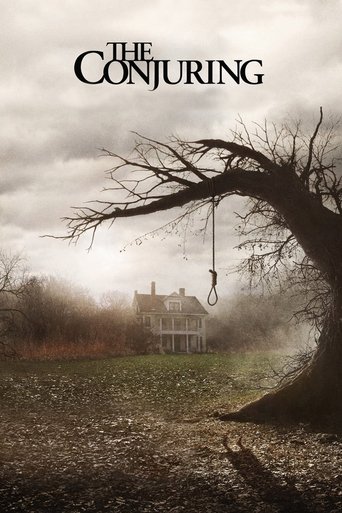
The Conjuring
James Wan · 2013 · Film
Shares a threat that is not human.
97% shared signal
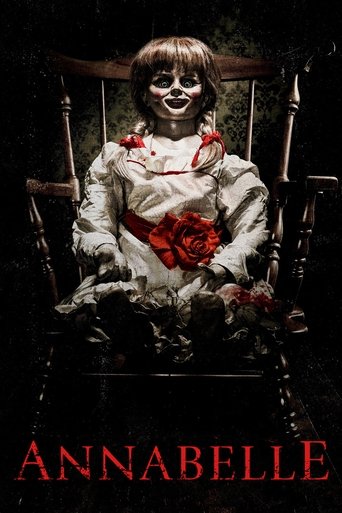
Annabelle
John R. Leonetti · 2014 · Film
Shares restraint over gore.
96% shared signal

Lights Out
David F. Sandberg · 2016 · Film
Shares a bleak, unforgiving tone.
90% shared signal
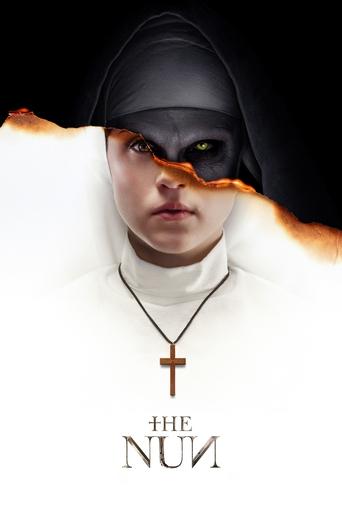
The Nun
Corin Hardy · 2018 · Film
Shares a threat that is not human.
90% shared signal
Paranormal Activity: The Marked Ones
Christopher Landon · 2014 · Film
Shares restraint over gore.
89% shared signal
Insidious: Chapter 3
Leigh Whannell · 2015 · Film
89% shared signal
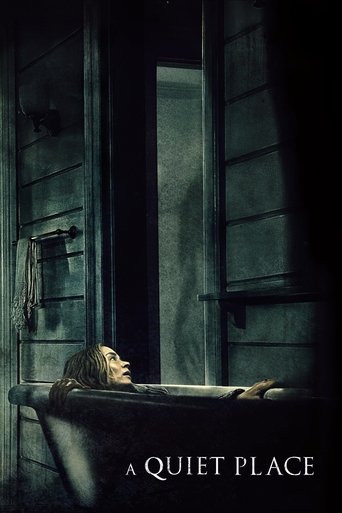
A Quiet Place
John Krasinski · 2018 · Film
Shares a bleak, unforgiving tone.
88% shared signal
The Nun II
Michael Chaves · 2023 · Film
88% shared signal
More lists like these: Movies like The Nun · Movies like A Quiet Place
Questions about The Conjuring 2
The things people actually ask about this film, answered — including how it ends.
What happens at the end of The Conjuring 2?
Lorraine reads the demon's name, Valak, from her Bible, where she had scratched it in a trance, and uses it to banish the demon. Janet, who was about to jump from a window, is freed and pulled back inside. Ed nearly falls but survives. At home he adds the Crooked Man's zoetrope to the Warrens' collection.
Is The Conjuring 2 based on a true story?
It is based on the Warrens' account of the Enfield poltergeist, the alleged haunting of two sisters at their mother's council house in London between 1977 and 1979. The film dramatises claims rather than documenting events, and it even includes a sceptic's video suggesting Janet faked part of it.
Who is Valak in The Conjuring 2?
The demonic nun, played by Bonnie Aarons, who first appears in Lorraine's vision during the Amityville séance. She uses the ghost of Bill Wilkins as a pawn to possess Janet. The nun was added during additional photography in 2016, replacing a winged demon, and she later received her own film, The Nun.
Does Ed Warren die in The Conjuring 2?
No. Lorraine has repeated visions of Ed impaled on a jagged tree stump, and in the climax lightning creates that exact stump outside the Hodgson house. Ed nearly falls while saving Janet, but Lorraine banishes the demon in time and both of them survive.
How scary is The Conjuring 2?
Very jumpy but not gory. We score it 022 on viscera and 064 on pace, which puts it on the shock side of our scale. Its scares are long takes that end in a sudden sting, with almost no blood. A possessed child and a demon nun carry most of it.
Do you need to see The Conjuring before The Conjuring 2?
It helps but is not required. The Warrens and their marriage carry over, and the opening Amityville séance assumes you know who they are. The Enfield case stands on its own, and the film explains its rules about naming a demon as it goes.
These are ranked against The Conjuring 2, not against you.
Build your own tape →