Film · 2014
Annabelle
John R. Leonetti
A doll that does not move, in a film that keeps insisting it might.
Most extreme on THE THREAT — a supernatural threat at 014
On VHSCREAM’s six-axis scale, Annabelle (2014) is most extreme on the threat axis: 14 out of 100, where 0 is a supernatural threat and 100 is human monsters. 8% of the 105 horror works we have scored come in lower on that axis. How we score →
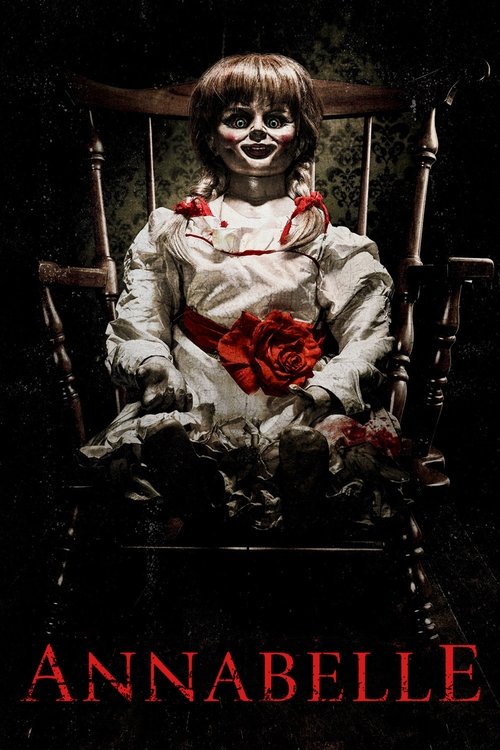
Annabelle is a 2014 horror film directed by John R. Leonetti, the first spin-off from The Conjuring, built around the doll glimpsed in that film's prologue. A pregnant woman in 1967 California is given a vintage doll, and then her house is broken into by members of a cult. We score it 014 on the threat axis — only 8 works score lower, the supernatural end of the scale — and 024 on viscera.
Scored and reviewed by VHSCREAM on · how we score
Annabelle: the review
Annabelle is a competent film about a doll that does nothing, and it works in exactly the places where it stops being about the doll.
The honest assessment first: this is a product. It exists because an object sat in a locked room in The Conjuring for two hours and audiences asked about it, and it was shot quickly on the strength of that curiosity. Leonetti was James Wan's cinematographer rather than his director, and the difference shows in the one thing that matters in this subgenre — the timing of a reveal. Where Wan holds a shot until you find the thing yourself, Leonetti cuts to it.
What is genuinely good in it is the period and the apartment. The film moves the Forms from a Santa Monica house to a Pasadena apartment building after the attack, and the second two-thirds are set in a cramped, brown, well-observed 1967 flat with a laundry room in the basement and a lift that stops between floors. The best sequence in the film is Mia in that basement with a pram, and the second best is the lift, which Leonetti stages with real patience: she presses the button, the doors open on the same floor, repeatedly.
Annabelle Wallis and Alfre Woodard are carrying it
Wallis has very little to work with and plays a frightened new mother without any of the hysteria the script invites. Woodard's Evelyn — a bookshop owner whose daughter Ruby died in a car crash that Evelyn survived — arrives halfway through and immediately gives the film a second register, because she is the only person in it with something at stake other than fear.
The doll is the film's biggest problem
It never moves on screen in a way that is frightening, because a doll that moves is a joke and a doll that does not move is furniture. The film's own instinct is right and it keeps the object static, which leaves it with nothing to do but place it ominously on chairs. Everything actually frightening in the film is done by a shadow, a sewing machine, a child's drawing or a figure on a stairwell.
Where it is weakest
The cult attack in the first act is lifted wholesale from the Manson murders and is handled without much thought about that. Father Perez's exposition is clumsy. And the demonic figure, when finally shown, is a man in make-up on a landing.
For the film this one is standing next to, The Conjuring; for the other object-driven prequel in the same series, The Nun; for the same haunted-object logic done with more nerve, Oculus.
The ending of Annabelle explained
Total spoilers from here. Everything above this line is spoiler-free.
The short answer: Father Perez establishes that the thing attached to the doll is a demon rather than a ghost, that it has been using the doll as a conduit, and that what it is actually after is a soul — specifically the baby's, with Mia's as an acceptable substitute. In the final act the demon takes Leah, and Mia is told that it will accept a willing soul instead. She takes the doll to the window of the apartment and prepares to jump with it. Evelyn stops her, takes the doll out of her hands, and goes out of the window herself — because she has spent the film saying that she should have died in the crash that killed her daughter and that she was given a reason to stay. The demon is satisfied, the baby is returned unharmed, and the Forms survive. Six months later the doll turns up in an antiques shop and is bought as a gift for a student nurse — which is the collector's item that opens The Conjuring.
What does the demon in Annabelle want?
A soul, freely given. The film's cosmology is delivered by Father Perez: the entity is not the dead cultist Annabelle Higgins and is not bound to the doll, which is only a vessel it has been permitted to use; it attached itself during the ritual suicide in the Forms' house and has been working towards a child. Perez is explicit that it cannot simply take Mia's soul — it requires consent, which is why the ending is structured as a choice rather than a fight.
Who is Annabelle Higgins?
The estranged daughter of the Forms' neighbours, who returns with a man from the cult she has joined, murders her parents, breaks into the Forms' house, and cuts her own throat in the nursery while holding the doll. A drop of her blood falls into the doll's eye. The film is careful that she is not the haunting: the ritual she was performing is what let something else in, and the demon simply uses her name.
Who takes Mia's place at the end?
Evelyn. She has told Mia earlier that she survived the car crash that killed her daughter Ruby and attempted suicide afterwards, and that she has been waiting for a purpose. When the demon demands a soul she takes the doll from Mia's arms and goes out of the window with it. Her body is found in the street and the doll is gone; the film treats it as a redemption rather than a tragedy, which is the one place it is more sentimental than it has earned.
How does Annabelle connect to The Conjuring?
Directly, at both ends. The Conjuring opens with two student nurses describing a doll that has been terrorising their flat, and the Warrens take it into their artifact room. Annabelle ends six months after its own events with the doll in an antiques shop being bought as a present for one of those nurses. The films share no characters, and the Warrens do not appear in Annabelle.
Is Annabelle based on a true story?
It is based on a case the Warrens claimed. Their account involves a Raggedy Ann doll given to a nursing student in 1970, written notes in a child's handwriting, and a death they attributed to it; the doll is displayed in their Occult Museum in Connecticut. The 1967 setting, the Forms, the cult attack, Evelyn and the entire plot of this film are invented, and the doll in the film bears no resemblance to the Raggedy Ann.
How scary is Annabelle, actually?
Scored against the published rubric, here is what the numbers mean.
The threat at 014 is deep into the supernatural — only 8 works score lower. The cult members are dead twenty minutes in, and nothing afterwards has a human agent.
Viscera 024 is low — 24 works score lower. A throat cut in the first act, a stabbing, and a body in the street. Almost nothing is shown.
Era bias 082 reads modern — 76 works score lower, which is the film's central aesthetic contradiction: the 1967 production design is excellent and the filmmaking around it is 2014 digital throughout.
Pace 070 is fast — 91 works are slower. The film averages a scare every five or six minutes and rarely holds a quiet scene.
Tone 030 is bleaker than the ending suggests — 77 works score lower. A woman dies to save a baby, four people are murdered in the first act, and the object is still at large.
Reality anchor 048 is just under the midpoint. The apartment and the basement obey geography; only the final stairwell sequence bends.
On jump scares: many, and they are cut rather than held.
Annabelle on six axes of fear
Every work in the index is scored on six continuous axes of fear. This is what Annabelle looks like as a vector.
Where that puts it: #8 supernatural · #10 relentless · #12 modern · #13 without gore
Disagree with a number? Say so on the axis itself. Nobody has confirmed this vector yet, and a score you challenge goes to the top of the queue to be re-scored by a human. Votes do not move the numbers — they decide what gets looked at first. How the scoring works →
Scored against the published rubric. This vector is a draft awaiting review — the method is public so you can argue with it.
Who should skip Annabelle
Skip it if a baby in danger is a hard limit. The second half is a demon trying to take an infant and the film uses the nursery repeatedly.
Skip it if the Manson-derived opening will sit badly. The first-act attack on a pregnant woman by cult members in 1967 California is a very thin fictionalisation.
Skip it if you want the doll to do something. It does not. Viewers expecting a possessed-toy film find the whole thing inert.
Content notes: a cult attack on a pregnant woman, two murders and a ritual suicide by throat-cutting, a demon's sustained attempt to take an infant, a suicide presented as redemptive, a recounted road death of a child, and a stabbing.
Watch it if you want a well-made period haunting with two good performances in it, you enjoy a basement and a lift used properly, and you want the piece that explains the object in The Conjuring's locked room.
Where to find it
Streaming on HBO Max ↗Physical copies on eBay ↗Availability from JustWatch via TMDB. We earn nothing from these links.
Nothing loads from YouTube until you press play.
If Annabelle is your kind of fear
The eight works closest to Annabelle in the index, ranked by distance across all six axes — not by genre label, and not by what other people watched.
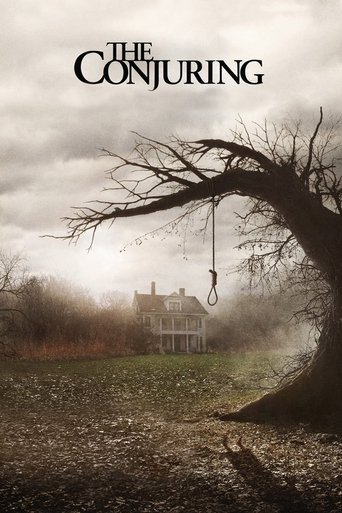
The Conjuring
James Wan · 2013 · Film
Shares a supernatural threat.
97% shared signal

Lights Out
David F. Sandberg · 2016 · Film
Shares modern craft.
93% shared signal
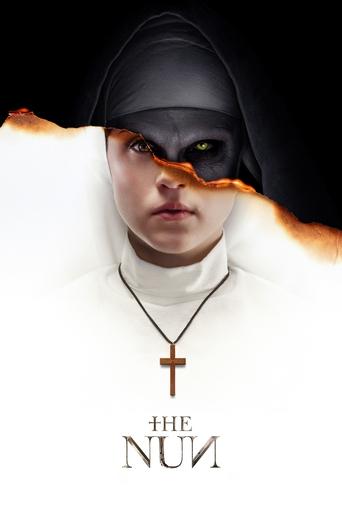
The Nun
Corin Hardy · 2018 · Film
Shares restraint over gore.
93% shared signal
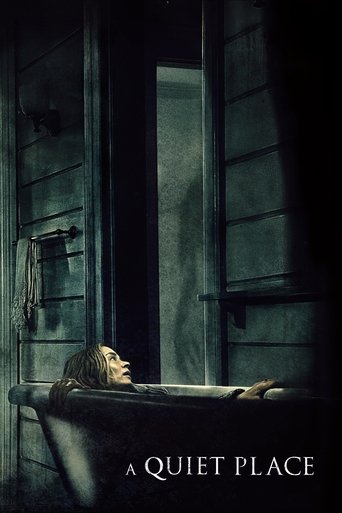
A Quiet Place
John Krasinski · 2018 · Film
Shares a bleak, unforgiving tone.
88% shared signal
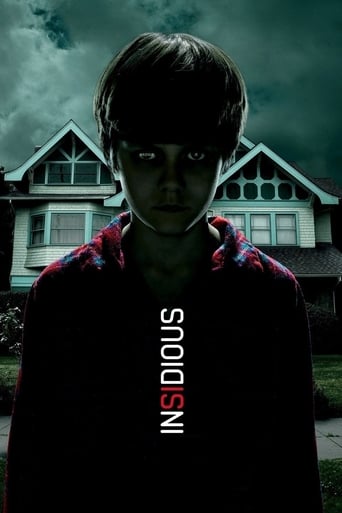
Insidious
James Wan · 2010 · Film
Shares relentless shock.
87% shared signal
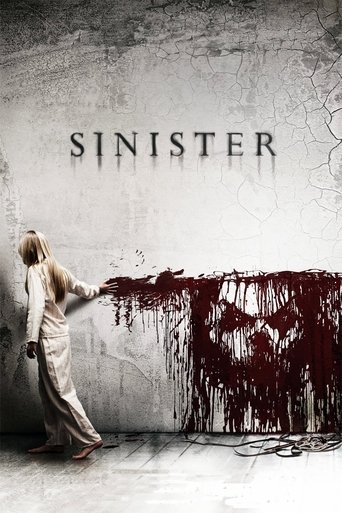
Sinister
Scott Derrickson · 2012 · Film
Shares a supernatural threat.
85% shared signal
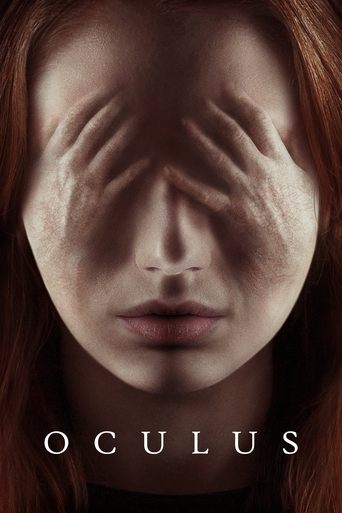
Oculus
Mike Flanagan · 2013 · Film
Shares modern craft.
82% shared signal
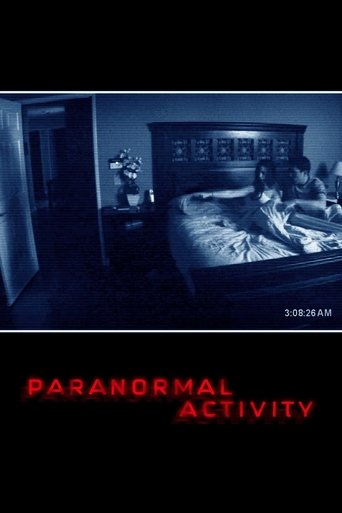
Paranormal Activity
Oren Peli · 2007 · Film
Shares restraint over gore.
79% shared signal
See the full list of movies like Annabelle →
Questions about Annabelle
The things people actually ask about this film, answered.
What happens at the end of Annabelle?
The demon takes the baby and will accept a willing soul in exchange. Mia prepares to jump from the window holding the doll; Evelyn takes it from her and goes out instead, having said all film that she should have died with her daughter. The baby is returned, and the doll reappears in an antiques shop.
What does the demon in Annabelle actually want?
A soul, given freely. Father Perez explains that the doll is only a vessel, that the entity attached itself during the cultist's ritual suicide, and that it has been working towards the child. It cannot take a soul by force, which is why the ending is a choice.
Who is Annabelle Higgins?
The neighbours' estranged daughter, who joins a cult, murders her parents, breaks into the Forms' house and cuts her own throat in the nursery while holding the doll. Her blood falls into its eye. She is not the haunting — her ritual is what let something else through.
How does Annabelle connect to The Conjuring?
The Conjuring opens with two student nurses describing a doll, which the Warrens then lock in their artifact room. Annabelle is set earlier and ends with the doll being bought in an antiques shop as a present for one of those nurses. No characters are shared.
Is Annabelle based on a true story?
It is based on a case the Warrens claimed, involving a Raggedy Ann doll given to a nursing student around 1970 and now displayed in their museum. Everything in the film — the 1967 setting, the Forms, the cult, Evelyn and the plot — is invented, and the film's doll looks nothing like the real one.
Is Annabelle scary?
Moderately, and not because of the doll. We score it 070 on pace and 014 on the threat axis. The effective sequences are a basement with a pram and a lift that will not leave the floor; the doll itself never moves.
These are ranked against Annabelle, not against you.
Build your own tape →