
Film · 1982
Poltergeist
A warm suburban comedy for forty minutes, then the house starts eating people.
Most extreme on THE THREAT — a supernatural threat at 008
On VHSCREAM’s six-axis scale, Poltergeist (1982) is most extreme on the threat axis: 8 out of 100, where 0 is a supernatural threat and 100 is human monsters. 1% of the 105 horror works we have scored come in lower on that axis. How we score →
Poltergeist is a 1982 horror film directed by Tobe Hooper, produced and co-written by Steven Spielberg. A Californian family's youngest daughter is taken into their house by something living in the television static. We score it 008 on the threat axis — only 1 work scores lower, which puts it at the supernatural floor — and 048 on tone.
Scored and reviewed by VHSCREAM on · how we score
Poltergeist: the review
Poltergeist is the best suburban horror film ever made because it likes the suburb.
The Freelings are not a family in crisis. They are a functioning household in a new-build estate in Cuesta Verde: the father sells the houses he lives in, the mother is funny and smokes a joint in bed, the teenager has a radio and an attitude, and the first act is a comedy of ordinary noise — a dog, a remote control war with a neighbour, a cluttered kitchen. Spielberg wrote it and his signature is all over that warmth, which is exactly what makes the escalation work. The chairs stacking themselves on the kitchen table while Diane stands with her hand over her mouth is not a scare. It is a woman delighted, filming it for her husband, before anyone understands.
Then the film turns, and the turn is uncommonly well judged: a tree through a window, a clown chair that is empty, a closet full of light, and a five-year-old's voice coming out of a television set.
The effects are 1982 and they are still extraordinary
Richard Edlund's work — the stairwell vortex, the ectoplasm in the hall, the arms coming out of the wardrobe, the skeletal apparition on the landing, the house imploding into a point of light — was done optically, with rear projection, miniatures and practical rigs, and it has the particular quality of being physically present in the frame. The two most upsetting images in the film are both practical: Marty's face coming apart over a bathroom sink, and Diane in a swimming pool full of coffins.
The haunting has a cause and the cause is a property developer
Everything in the film points at one revelation: the estate was built over a cemetery, and Steve's employer moved the headstones and left the bodies. The family's house sits on them. That is a very Spielbergian structure — the horror is a cost externalised by a business, and the father discovers he has been selling it — and it gives the film an anger that its reputation as a crowd-pleaser tends to hide.
Where it is uneven
The parapsychologists are a plot device with three bodies. The second-act reunion is a false ending that drains tension and the film never quite recovers it. And the final assault on the house is close to an action sequence.
For the modern studio haunting built directly on this template, The Conjuring and Insidious; for Hooper's own earlier and far uglier film, The Texas Chain Saw Massacre.
The ending of Poltergeist explained
Total spoilers from here. Everything above this line is spoiler-free.
The short answer: the medium Tangina Barrons talks Diane through going into the closet on a rope to bring Carol Anne back, and both of them come out of the ceiling covered in a red ectoplasm. Tangina declares the house clean and the family begins to move out — and that is when the real attack comes. Robbie's clown doll pulls him under the bed, the closet reopens, Diane is thrown around the walls of the upstairs hallway, and the swimming pool and the lawn erupt with coffins and corpses, which is the film's confirmation that the bodies are still there. The Freelings get out and the house implodes into a single point of light in front of the neighbours. The last scene is a motel room, where Steve pushes the television set out onto the balcony and closes the door.
Why is the house in Poltergeist haunted?
Because it was built on a cemetery whose occupants were never moved. Steve confronts his boss, who admits that the development relocated the headstones and left the bodies in the ground to save time and money, and that the next phase will do it again on the hill above. The film's position is that the dead are not vengeful about death; they are vengeful about being paved over.
What happens to Carol Anne?
She is taken into a space the film never names, reachable through her bedroom closet and audible through the television. Tangina describes it as a place where the dead are held by a presence that keeps them from moving on by using Carol Anne's life-force as a lure. Diane retrieves her physically, on a rope, and they are expelled together through the ceiling in a shower of red fluid. Carol Anne is unharmed and remembers very little.
Who is Tangina Barrons?
A clairvoyant brought in by the parapsychologist Dr Lesh when the university team is out of its depth. Zelda Rubinstein plays her as brisk, professional and unimpressed, and she delivers the film's cosmology and its most famous line — "this house is clean" — which is wrong. She is wrong because she has correctly cleared the house of its spirits and has no idea what is still underneath it.
What is the clown scene in Poltergeist?
A clown doll sits on a chair in the boys' room and Robbie has been frightened of it since the first act. In the final assault he looks up, the chair is empty, and the doll's arms come around his throat from behind and drag him under the bed. It is about forty seconds long, it was shot with an animatronic and a cable rig, and it has done more damage to clowns' reputations than any other sequence in film.
Did Steven Spielberg direct Poltergeist?
The credited director is Tobe Hooper and the question has never been settled. Spielberg wrote the story, co-wrote the screenplay, produced, was present for most of the shoot and cut the film; Hooper has said he directed it and Spielberg has said Hooper did, while also describing his own level of involvement in terms that make the credit awkward. The Directors Guild investigated and Spielberg published an open letter crediting Hooper. The film's texture is Spielberg's and its best individual scares are recognisably Hooper's.
What does the ending of Poltergeist mean?
That the family was never the problem and the house was never the point. Nothing is exorcised, nobody is punished, and the development on the hill is still going ahead. The Freelings survive by leaving, and Steve's last act — putting the television outside the motel room — is the film telling you the aperture is the thing, and that every house in the country has one.
How scary is Poltergeist, actually?
Scored against the published rubric, here is what the numbers mean.
The threat at 008 is at the supernatural floor — only 1 work scores lower. No human being in the film harms anybody; the developer's negligence is the cause and not the agent.
Tone 048 is near the midpoint — 98 works score lower, which is high for a haunting. The entire family survives, the film is frequently funny, and the last beat is a gag.
Viscera 042 is just under the median — 49 works score lower. A face peeled apart in a mirror, corpses in a pool, a steak crawling across a worktop, and a good deal of ectoplasm.
Era bias 016 is deep analog — only 28 works score lower. 1982 optical effects, rear projection, miniatures and practical rigs, with no digital anywhere.
Reality anchor 062 leans towards dream logic — 70 works score lower. The hallway stretches, the closet is a corridor and the bathroom sequence is explicitly a hallucination.
Pace 060 is on the shock side, with 81 works slower, though the first forty minutes are entirely domestic.
On jump scares: many, and the clown is the most consequential in horror.
Poltergeist on six axes of fear
Every work in the index is scored on six continuous axes of fear. This is what Poltergeist looks like as a vector.
Where that puts it: #2 supernatural · #13 surreal
Disagree with a number? Say so on the axis itself. Nobody has confirmed this vector yet, and a score you challenge goes to the top of the queue to be re-scored by a human. Votes do not move the numbers — they decide what gets looked at first. How the scoring works →
Scored against the published rubric. This vector is a draft awaiting review — the method is public so you can argue with it.
Who should skip Poltergeist
Skip it if children in danger is a hard limit. A five-year-old is abducted and a nine-year-old is strangled by a toy, and both are filmed at length.
Skip it if corpses and exhumation will trouble you. The last reel is bodies coming out of a lawn and a swimming pool, and the film holds on them.
Skip it if you want a horror film that stays frightening. The second-act rescue resolves most of the tension and the final act is pitched closer to spectacle.
Content notes: the abduction of a young child, a child attacked by a toy, a body-horror hallucination of a face coming apart, exhumed corpses and coffins shown repeatedly, a dead pet buried on screen, and a sustained depiction of a mother's terror.
Watch it if you want the template every modern studio haunting is built from, you like practical effects you can feel the weight of, and you want a horror film that is warm about the family it is terrorising.
Where to find it
Rent or buy from Amazon Video · Apple TV Store · Google Play Movies +2 ↗Physical copies on eBay ↗Availability from JustWatch via TMDB. We earn nothing from these links.
Nothing loads from YouTube until you press play.
If Poltergeist is your kind of fear
The eight works closest to Poltergeist in the index, ranked by distance across all six axes — not by genre label, and not by what other people watched.

Profondo Rosso
Goblin · 1975 · Record
Shares analog-era texture.
82% shared signal

Suspiria (OST)
Goblin · 1977 · Record
Shares a supernatural threat.
81% shared signal
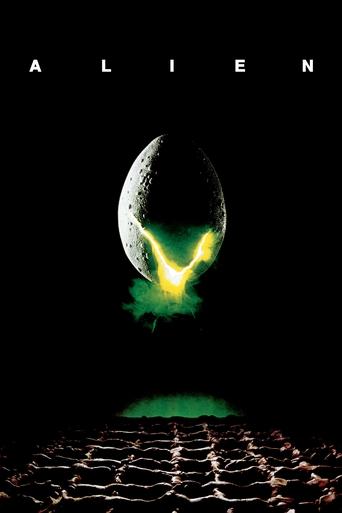
Alien
Ridley Scott · 1979 · Film
Shares a supernatural threat.
77% shared signal
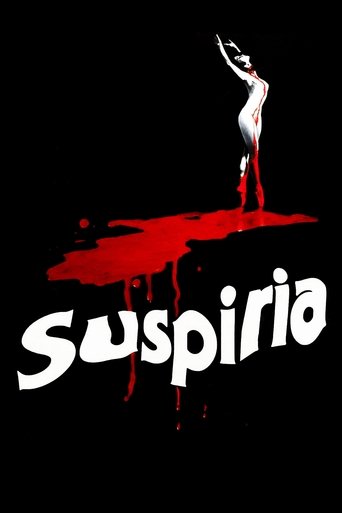
Suspiria
Dario Argento · 1977 · Film
Shares analog-era texture.
76% shared signal

The Fog (OST)
John Carpenter · 1980 · Record
73% shared signal
The Elementals
Michael McDowell · 1981 · Book
73% shared signal
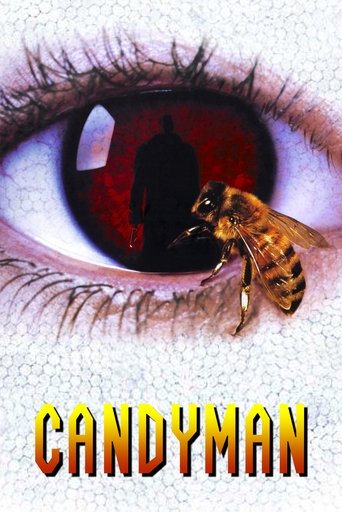
Candyman
Bernard Rose · 1992 · Film
72% shared signal
The Exorcist
William Friedkin · 1973 · Film
72% shared signal
See the full list of movies like Poltergeist →
Questions about Poltergeist
The things people actually ask about this film, answered.
What happens at the end of Poltergeist?
Diane retrieves Carol Anne from the closet and Tangina declares the house clean — then the real attack begins. The clown takes Robbie, Diane is thrown around the hallway, and coffins erupt from the lawn and pool. The family escapes, the house implodes, and Steve puts the motel television outside.
Why is the house haunted in Poltergeist?
Because the development was built over a cemetery and only the headstones were moved. Steve's employer admits it, and says the next phase of building will do the same. The coffins coming out of the lawn at the end are the proof.
What is the clown scene in Poltergeist?
In the final act Robbie looks at the chair where his clown doll sits, finds it empty, and the doll's arms come around his throat and pull him under the bed. It runs about forty seconds, was done with an animatronic, and is the most influential clown sequence in horror.
Who directed Poltergeist, Tobe Hooper or Steven Spielberg?
Hooper is credited and the dispute has never been resolved. Spielberg wrote the story, co-wrote the script, produced, was on set and supervised the cut; after a Directors Guild inquiry he published a letter crediting Hooper. Both men's fingerprints are visible in different parts of the film.
What took Carol Anne in Poltergeist?
A presence Tangina describes as holding the dead in a space between worlds and using Carol Anne's life-force to keep them there. The film never names it, and the entity is separate from the buried dead who erupt in the final sequence.
Is Poltergeist scary or is it a family film?
Both, deliberately. We score it 008 on the threat axis and 048 on tone: entirely supernatural, and unusually warm. It is rated PG in the United States, contains a face-peeling hallucination and a lawn full of corpses, and was part of why the PG-13 rating was created.
These are ranked against Poltergeist, not against you.
Build your own tape →