Film · 1992
Alien 3
David Fincher
A prison foundry, no weapons, one creature, and Ripley out of reasons to live.
74Hard going to sit through, out of 100 — mostly how bleak it is
- PaceBuilds, then strikes48
- ThreatMostly supernatural22
- GoreShows some of it62
- ToneNo relief at all8
- RealityTilts unreal42
Era bias 22 · Analog-leaning. Texture rather than fear, so it is not part of the grade. All six scores →
The bleakest horror movies ever made →
Part of a series: Alien movies in order →
On VHSCREAM’s six-axis scale, Alien 3 (1992) is most extreme on the tone axis: 8 out of 100, where 0 is a bleak, unforgiving tone and 100 is gleeful black comedy. 7% of the 320 horror works we have scored come in lower on that axis. How we score →
Alien 3 is a 1992 American science fiction horror film directed by David Fincher, in his feature debut. Ripley's escape pod crashes on Fiorina 161, a prison foundry of violent men, and something has come down with her. We score it 008 on tone and 022 on the threat axis.
Scored and reviewed by VHSCREAM on · how we score
How scary is Alien 3, actually?
Scored against the published rubric, here is what the numbers mean.
The threat at 022 is near the supernatural end — 75 works score lower. The creature that kills almost everybody cannot be reasoned with; the prisoners and the company are dangerous, but it is the animal that does the dying.
Viscera 062 is above the middle — 178 works score lower. An autopsy on a child, men killed in the vents and tunnels, a creature bursting from a dog and a queen bursting from a chest, though much of it happens in darkness and fast cutting.
Tone 008 is deep in the bleak range — 22 works score lower. The heroine of two films dies on purpose, the child she saved is dead before the credits, and almost nobody else survives.
Pace 048 sits just on the dread side of the middle, with 142 works slower. Long stretches of the prison's routine, then chases through the tunnels.
Era bias 022 reads analog — 90 works score lower. Practical sets at Pinewood, a creature in a suit and a 1992 film stock with very little digital work in it.
Reality anchor 042 is grounded — 115 works score lower. The foundry, the prison and the rules are physical and consistent; only the creature is impossible.
On jump scares: a few, mostly the creature arriving out of the dark in the tunnels.
Who should skip Alien 3
Skip it if you loved the characters who survived Aliens. The film kills Newt and Hicks before the opening credits are over, and Bishop is scrap.
Skip it if a hopeless ending ruins a film for you. The heroine dies, by choice, and almost everyone else dies with her.
Skip it if you need a villain who can be beaten. The creature dies, but the company arrives at the end exactly as it always has, and the only victory left to Ripley is refusing it.
Content notes: an autopsy of a child, a creature bursting from an animal, a woman alone among violent male prisoners, men killed in an explosion, a man killed in molten lead, a suicide, and a creature bursting from a woman's chest.
Watch it if you want the darkest film in the series, you like doomed, grimy production design, and you want to see where David Fincher started.
Alien 3 on six axes of fear
Every work in the index is scored on six continuous axes of fear. This is what Alien 3 looks like as a vector — and what each ten-point band looks like across everything else we hold.
Where that puts it: joint #9 bleakest
Draft score — awaiting human review. About these scores
Disagree with a number? Say so on the axis itself. Nobody has confirmed this vector yet, and a score you challenge goes to the top of the queue to be re-scored by a human. Votes do not move the numbers — they decide what gets looked at first. How the scoring works →
Scored against the published rubric. This vector is a draft awaiting review — the method is public so you can argue with it.
Alien 3: the review
Alien 3 is a deliberately hopeless film, and the thing everyone held against it in 1992 — that it refuses to give anybody what they wanted — is the thing that makes it worth watching now.
It opens by undoing the previous film. In the first minutes, a facehugger loose aboard the Sulaco starts a fire, an escape pod ejects with the sleeping survivors, and it crashes on Fiorina "Fury" 161, a foundry and maximum-security prison for men with a genetic predisposition to antisocial behaviour. Hicks and Newt are dead in the wreck. Bishop is broken. Ripley insists on an autopsy of the girl, to be sure nothing is growing inside her, and then the two bodies are burned. James Cameron later called killing off Bishop, Newt and Hicks a slap in the face to him and to the fans. It is meant to feel that way. The film's whole argument is that surviving the last film did not save anybody.
A prison of men and one woman
What Fincher builds on Fury 161 is a closed community of violent men living in a decaying foundry at the end of the universe, held together by something close to a religion. Charles S. Dutton's Dillon is their spiritual leader, and he is the best thing in the film after Weaver: a man who knows exactly what he is and has decided to be something else anyway. Charles Dance's Clemens, the prison doctor, is the person on the planet who comes closest to treating Ripley as an equal, and the film punishes that.
Weaver plays Ripley as exhausted past fear. She is a woman alone among male prisoners, she has lost everyone she saved in the last film, and the threat she has to manage is as much the men and the company as the creature. The film is not subtle about this. It is also not wrong.
The creature comes out of a dog
The alien in this film bursts out of an animal rather than a person — inmate Murphy's dog — and the film's horror is built from the place it hunts in: a maze of furnaces, vents and tunnels where it kills Murphy, Boggs and Rains and drags the warden into the ducts. The inmates have the foundry itself to fight it with, and the set-pieces are built around vents, toxic waste and molten lead. One plan to flush the creature out with burning waste goes off early and kills several of the men. The final plan uses the foundry's mould and costs nearly all of them.
The horror that lands hardest is not any attack but a scan. Ripley puts herself through the medical scanner and finds she is carrying a queen embryo, which is why the creature spared her when it killed Clemens in front of her. From that point the film is about a woman who knows she is going to die, decides that she will, and only wants to take the thing in her chest with her.
A film assembled in a storm
The production history is famous and the article that records it reads like a horror film of its own. William Gibson, Eric Red, David Twohy, Vincent Ward, John Fasano and Larry Ferguson all worked on scripts. Renny Harlin left. Ward was replaced as director by Fincher, a first-time feature director. Filming began at Pinewood on 14 January 1991, before the script was finished and after about $7 million had already been spent. Fox wanted Ripley to survive; Weaver would only make the film if Ripley died. Fincher has since disowned it, blaming studio interference, and told The Guardian in 2009 that nobody hated it more than he did. A 144-minute Assembly Cut, which he did not take part in, appeared in 2003 and is often rated higher than the theatrical release.
Whatever else went wrong, the film looks extraordinary. The cinematographer Jordan Cronenweth became too ill to continue and Alex Thomson took over, and between them they gave Fury 161 a palette of rust, smoke and sodium-coloured gloom that makes the earlier films look clean. Fincher, in his first feature, already frames people as small things inside machinery. The film opened at number two in America behind Lethal Weapon 3, underperformed at home, and still earned more than $100 million overseas; audiences gave it a C on CinemaScore, and it has spent the years since being argued back into favour. It was nominated for the Academy Award for Best Visual Effects, and it is the version of this world in which nobody is coming to help, which is a more honest reading of the first film than its louder sequel managed.
Where it falls down
The theatrical cut is hard to follow. The inmates are shaved and dressed alike and lit by the same brown gloom, and in the chase sequences it is genuinely difficult to tell who has just died. The creature effects are uneven, particularly in the shots where it runs. Characters are introduced and killed before they have registered. Some of the middle hour sags under the weight of the inmates' theology. And Elliot Goldenthal's score, which is good, sometimes tells you what to feel in scenes that would have been more frightening silent. Roger Ebert called it the best-looking bad movie he had seen in a while, which is unfair, but you can see the shape of the complaint.
For the original it is answering, Alien; the whole run in sequence is at Alien movies in order. For another film about a group of isolated men who cannot trust what is among them, The Thing.
The ending of Alien 3 explained
The ending, in full. Open it when you have seen it.
The short answer: Ripley dies, and she dies on purpose. She discovers she is carrying an alien queen embryo, which is why the creature will not kill her, and asks Dillon to do it. He agrees to once they have killed the creature. The inmates lure it into the foundry's mould to drown it in molten lead; every remaining prisoner dies except Dillon and Morse, and Dillon sacrifices himself to keep it in place while Morse pours. The creature survives the lead, and Ripley kills it with the fire sprinklers, the thermal shock blowing it apart. A Weyland-Yutani team arrives, including a man who looks like Bishop and says he made him, and asks her to let them remove the embryo. She refuses and falls backwards into the furnace, holding the queen as it bursts from her chest. Morse is the sole survivor.
Why does Ripley jump into the furnace at the end of Alien 3?
Because she is carrying a queen embryo, and Weyland-Yutani wants it for biological weapons. The company team promises they can remove it and that she can live, but Ripley knows exactly what the embryo is worth to them. Dying in the furnace is the only way to make sure the queen dies with her. The queen bursts out as she falls, and she holds it to her chest.
Is the man at the end of Alien 3 really Bishop?
The film presents him as a man who looks exactly like Bishop and claims to be his creator, played by Lance Henriksen, who also voices the damaged android earlier in the film. He offers to remove the embryo so that Ripley can live. The film gives her, and us, every reason not to trust him: he arrives with the company that has wanted the creature since the first film.
How does the alien die in Alien 3?
The prisoners lure it into the foundry's mould and pour molten lead over it, with Dillon holding it in place and dying there. The creature survives the lead and climbs out. Ripley turns on the fire sprinklers, the cold water hits the superheated creature, and the thermal shock blows it apart.
What happened to Newt and Hicks?
They died before the film begins. A fire aboard the Sulaco ejects the survivors from the previous film in an escape pod, and when it crashes on Fury 161 only Ripley is alive. She insists on an autopsy on Newt to make sure no embryo is inside her, and none is found. Both bodies are then burned.
Who survives Alien 3?
Only Morse, one of the inmates, played by Danny Webb. He pours the lead at the end and is led away by the company team after Ripley's death. Every other prisoner, the warden, the doctor and Ripley herself are dead by the end.
If Alien 3 is your kind of fear
The eight works closest to Alien 3 in the index on the five axes that describe fear, the same medium first — not by genre label, and not by what other people watched.

The Exorcist
William Friedkin · 1973 · Film
Shares a bleak, unforgiving tone.
91% shared signal
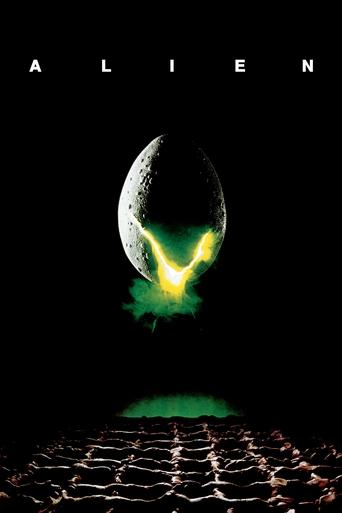
Alien
Ridley Scott · 1979 · Film
Shares a threat that is not human.
91% shared signal
The Ritual
David Bruckner · 2017 · Film
Shares a bleak, unforgiving tone.
90% shared signal
Prometheus
Ridley Scott · 2012 · Film
Shares a threat that is not human.
89% shared signal
Incantation
Kevin Ko · 2022 · Film
89% shared signal
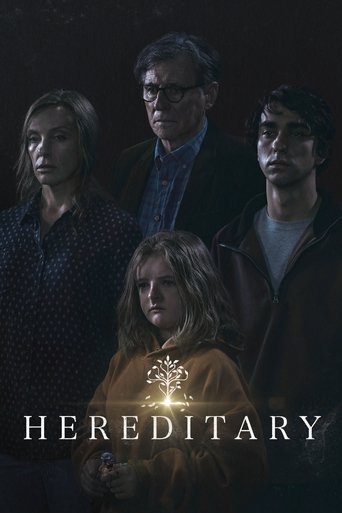
Hereditary
Ari Aster · 2018 · Film
88% shared signal
The Autopsy of Jane Doe
André Øvredal · 2016 · Film
88% shared signal
'salem's Lot
Stephen King · 1975 · Book
89% shared signal
More lists like these: Movies like The Exorcist · Movies like Alien · Movies like Hereditary · Movies like The Omen
Questions about Alien 3
The things people actually ask about this film, answered — including how it ends.
What happens at the end of Alien 3?
The inmates kill the creature by trapping it in the foundry's mould under molten lead and then shattering it with the fire sprinklers. Weyland-Yutani arrives wanting the queen embryo Ripley is carrying. She refuses and falls into the furnace, holding the queen as it bursts from her chest. Morse is the only survivor.
Does Ripley die in Alien 3?
Yes. She learns she is carrying a queen embryo and that the company wants it for biological weapons, so she throws herself into the foundry's furnace. The queen emerges as she falls. Sigourney Weaver had made Ripley's death a condition of returning, even though Fox wanted her to survive.
Why did David Fincher disown Alien 3?
He blames studio interference. Filming started before the script was finished, and the project had gone through many writers and a previous director before he arrived. Fincher refused to take part in the later extended version and told The Guardian in 2009 that nobody hated the film more than he did.
What is the Alien 3 Assembly Cut?
A 144-minute extended version overseen by Charles de Lauzirika for the 2003 Alien Quadrilogy DVD set, without Fincher's involvement. It adds more than thirty minutes of material and changes key plot points, and critics often rate it higher than the 114-minute theatrical release.
Why does the alien not kill Ripley in Alien 3?
Because she is carrying a queen embryo. The creature kills the doctor, Clemens, in front of her and leaves her alive, and a scan she runs on herself shows why. That same protection is why she has to ask Dillon to kill her once the creature is dead.
Is Alien 3 worth watching?
Yes, if you accept it as a bleak, grimy horror film rather than another Aliens. We score it 008 on tone, close to the bleak end of the scale. Its production was troubled and the theatrical cut is uneven, but it has serious defenders, Christopher Nolan among them, who has called it a great movie.
These are ranked against Alien 3, not against you.
Build your own tape →