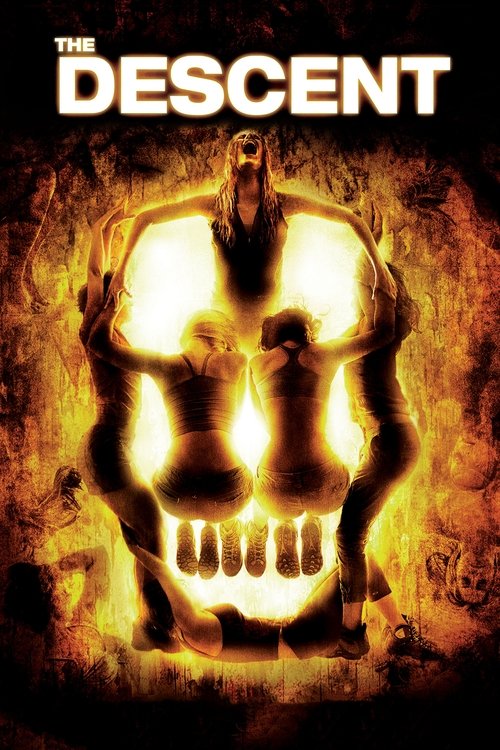
Film · 2005
The Descent
Neil Marshall
Claustrophobia first, creatures second. The cave was already enough.
Most extreme on TONE — a bleak, unforgiving tone at 014
On VHSCREAM’s six-axis scale, The Descent (2005) is most extreme on the tone axis: 14 out of 100, where 0 is a bleak, unforgiving tone and 100 is gleeful black comedy. 29% of the 105 horror works we have scored come in lower on that axis. How we score →
The Descent is a 2005 British horror film written and directed by Neil Marshall. Six women enter an uncharted cave system in the Appalachians and find it occupied. We score it 014 on tone — only 30 works in the index are bleaker — and 074 on pace, which makes it one of the fastest things we hold.
Scored and reviewed by VHSCREAM on · how we score
The Descent: the review
The best creature feature of its decade spends forty minutes without a creature, and that is the whole trick. The Descent is frightening before anything is hunting anybody, because Marshall understands that the cave is the monster and the crawlers are a complication.
The first act does two jobs at once. It establishes a group of women who have an actual history — a dead husband, an affair, a grief nobody is handling well — and it gets them underground into a system that Juno has not told them is unmapped. By the time the passage collapses behind them, the film has already delivered its worst sequence: Sarah stuck in a crawl, the rock moving, and no way to go but forward. People who are not remotely claustrophobic discover in that scene that they are.
The creatures are the least interesting thing in it, deliberately
The crawlers are well designed and barely explained — pale, blind, adapted, hunting by sound. Marshall gives them no mythology, no origin and almost no screen time in full light, which keeps them at the level of a hazard rather than a villain. That is correct. The film's actual antagonist is the group, and the crawlers mainly function to remove the option of cooperating.
What elevates it is that the betrayal is not a twist. Juno's affair and her decision to take them somewhere uncharted are both established before anything attacks, so when she puts a pick through Beth's throat in the dark and leaves her, it reads as a person already established as reckless making one more reckless choice. The film's cruellest scene is not a kill. It is Beth, dying, telling Sarah the truth.
Why it has survived
Because it is a horror film about women that is not about what is done to women, with six distinct characters and a cast that was largely unknown and is uniformly good. Because the creature work is practical. And because it is genuinely hard to sit through for reasons that have nothing to do with gore — the aspect ratio closes in, the light sources are all diegetic and failing, and the geography stops making sense.
Marshall never matched it. The 2009 sequel exists and should not. For the same subterranean dread at a fraction of the speed, Session 9 is the one to follow it with.
The ending of The Descent explained
Total spoilers from here. Everything above this line is spoiler-free.
The short answer: there are two endings, and the original British one is the real film. In it, Sarah does not escape. She hallucinates a successful escape — crawling out, driving away — and then wakes still in the cave, in the dark, with a vision of her dead daughter's birthday cake in front of her and the crawlers approaching. The American cut stops at the escape and adds a jump scare of Juno in the car.
Why are there two endings?
The distributor judged the original too bleak for American audiences and cut the final beat, so the US theatrical release ends with Sarah getting out. That version is not a different interpretation; it is the same film with the last ninety seconds removed, and it inverts the meaning completely. The British cut is Marshall's and is the one on most home releases now.
What happens to Juno?
Sarah finds her, and Sarah already knows about the affair and about Beth. She drives the pick into Juno's leg, disabling her, and leaves her alive in the dark to be found by the crawlers. The film does not show the end of it and does not need to. Whether this is justice or the cave finishing the job on Sarah is the question the ending is built to leave open.
What does the cake mean?
Sarah's daughter Jessica died in a car crash a year earlier, and the film opens on her birthday. The vision of the lit cake is Sarah's mind delivering the one thing she wants, at the moment she stops being able to tell the difference. On the bleakest reading she has been dead or dying for some time and the escape sequence is the last thing her brain produces. On the gentler reading she is simply finished, and the cave has given her something kind to look at.
Did Sarah ever get out?
In the film Marshall made, no. The escape is explicitly shown to be a hallucination, which is what the cut back to the dark establishes. The American ending is the only version where she survives, and it was not his choice.
How scary is The Descent, actually?
Scored against the published rubric, here is what the numbers mean.
Tone 014 is the signature. Only 30 works in the index are bleaker. There is no survivor in the real cut, no cost imposed on anybody who deserves it, and the film's last gesture is a kindness that is also a delusion.
Pace 074 makes this one of the fastest things we score — 98 works are slower. Once the passage collapses the film does not stop, and the back half is close to continuous.
Viscera 074 is high and earned — 87 works score lower. There is a great deal of blood, several extended injuries, and one sequence involving a pool of it. This is not a restrained film.
Reality anchor 024 keeps it grounded, with only 11 works lower. The crawlers are the one impossible element and they are presented as biology. Everything else — the geology, the equipment, the injuries, the group dynamics — behaves.
On jump scares: several, and the famous one is a masterclass. The first full view of a crawler arrives in the background of a shot where the camera is looking at something else entirely.
The Descent on six axes of fear
Every work in the index is scored on six continuous axes of fear. This is what The Descent looks like as a vector.
Where that puts it: #6 relentless · #10 grounded · #14 goriest
Disagree with a number? Say so on the axis itself. Nobody has confirmed this vector yet, and a score you challenge goes to the top of the queue to be re-scored by a human. Votes do not move the numbers — they decide what gets looked at first. How the scoring works →
Scored against the published rubric. This vector is a draft awaiting review — the method is public so you can argue with it.
Who should skip The Descent
Skip it if you are claustrophobic. Not as a figure of speech. The crawl sequence in the first act is the most effective depiction of being stuck in a confined space ever filmed, and there is no way to watch the film without it.
Skip it if you need a survivor. The real ending has none.
Skip it if blood is a problem. At 074 on viscera this is a wet film, and the practical effects are good enough to be convincing.
Content notes: the death of a child in a car accident, extreme claustrophobia, a compound fracture, a mercy killing, a deliberate maiming, drowning in blood, and an extended sequence of a character being eaten.
Watch it if you want the best creature feature since The Thing, you can take a confined space, and you want to see a horror film do character work most of the genre does not bother with.
Where to find it
Streaming on Philo · BFI Player · MovieSphere+ ↗Physical copies on eBay ↗Availability from JustWatch via TMDB. We earn nothing from these links.
Nothing loads from YouTube until you press play.
If The Descent is your kind of fear
The eight works closest to The Descent in the index, ranked by distance across all six axes — not by genre label, and not by what other people watched.
Evil Dead
Fede Alvarez · 2013 · Film
Shares a bleak, unforgiving tone.
78% shared signal
28 Days Later
Danny Boyle · 2002 · Film
Shares grounded realism.
78% shared signal
Final Destination
James Wong · 2000 · Film
Shares relentless shock.
77% shared signal
Between Two Fires
Christopher Buehlman · 2012 · Book
Shares explicit viscera.
77% shared signal
The Thing
John Carpenter · 1982 · Film
Shares a supernatural threat.
76% shared signal
Talk to Me
Danny & Michael Philippou · 2022 · Film
Shares a bleak, unforgiving tone.
74% shared signal
The Fly
David Cronenberg · 1986 · Film
Shares explicit viscera.
72% shared signal
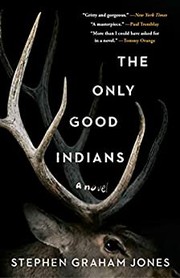
The Only Good Indians
Stephen Graham Jones · 2020 · Book
72% shared signal
See the full list of movies like The Descent →
Questions about The Descent
The things people actually ask about this film, answered.
What happens at the end of The Descent?
In the original British cut, Sarah hallucinates escaping the cave — crawling out and driving away — then wakes still underground with a vision of her dead daughter's birthday cake as the crawlers approach. The American cut removes that final beat and ends with her escape, adding a jump scare of Juno in the car.
Which ending of The Descent is the real one?
The British one. Neil Marshall shot the film to end in the cave, and the American distributor removed the last ninety seconds for being too bleak. Most home releases now carry the original. The difference is not interpretive — it is the same film with the ending cut off.
Did Sarah escape at the end of The Descent?
Not in the film as made. The escape is explicitly revealed as a hallucination when the film cuts back to her still in the dark. She survives only in the American theatrical version, which was not the director's choice.
Why does Sarah leave Juno to die?
Because Juno had been having an affair with Sarah's husband and had just put a pick through Beth's throat and abandoned her. Sarah learns both facts from Beth as she dies. She disables Juno and leaves her alive in the dark, and the film declines to say whether that is justice.
How gory is The Descent?
Very. We score it 074 on viscera, higher than 87 of the 105 works in our index. There is sustained blood, several extended injuries and one sequence in a pool of it, all practical.
What are the creatures in The Descent?
The film barely says. They are pale, blind, cave-adapted humanoids that hunt by sound, and Marshall deliberately gives them no origin story or mythology — they function as a hazard rather than a villain, which keeps the group's own betrayals at the centre of the film.
These are ranked against The Descent, not against you.
Build your own tape →