
Book · 2014
The Troop
Nick Cutter
Five scouts, one island, and a worm engineered to make its host starve while eating.
85Punishing to sit through, out of 100 — mostly how bleak it is
- PaceBuilds, then strikes52
- ThreatMostly supernatural30
- GoreUnflinching92
- ToneNo relief at all6
- RealityGrounded30
Era bias 88 · Thoroughly modern. Texture rather than fear, so it is not part of the grade. All six scores →
The bleakest horror novels ever written →
On VHSCREAM’s six-axis scale, The Troop (2014) is most extreme on the tone axis: 6 out of 100, where 0 is a bleak, unforgiving tone and 100 is gleeful black comedy. 3% of the 320 horror works we have scored come in lower on that axis. How we score →
The Troop is a 2014 novel by Nick Cutter. Five teenage scouts and their scoutmaster camp on an uninhabited island off Prince Edward Island. A starving man arrives by boat carrying an engineered parasite that makes its host ravenously, fatally hungry. We score it 092 on viscera, which puts it among the most explicit works in this index, and 006 on tone.
Scored and reviewed by VHSCREAM on · how we score
How scary is The Troop, actually?
Scored against the published rubric, here is what the numbers mean for a reader.
Viscera 092 is the signature and it is not an exaggeration. Only 7 works score higher. Bodies open, parasites in detail, self-inflicted injury, a turtle, and a great deal of blood and worse. If gore is a limit, stop here.
Tone 006 is near the floor of the index. 9 works score lower. Five children and an adult die, the rescue is a firebombing, the only survivor is ruined, and the thing that caused it is still in a freezer somewhere.
Threat 030 is the supernatural end of the axis, which needs explaining. 186 works score higher. The worm is engineered rather than occult, and it has no intent whatsoever — it is closer to weather than to a villain. The human threat in the novel is Shelley, and he is not what the score is measuring.
Pace 052 is just on the shock side. 151 works are slower. There is a slow opening and then an escalation that never pauses, punctuated by documents that function as the only breathing space.
Era bias 088 is modern. 30 works score higher. Contemporary prose, contemporary biotech, mobile phones that do not work.
Reality anchor 030 is grounded. There is nothing supernatural. Everything in the novel follows from a parasite doing what it was designed to do on an island nobody can leave.
On jump scares: none, but several images that will arrive uninvited later.
Who should skip The Troop
Skip it if gore is a limit. We score this 092 on viscera and mean it. There is no version of reading The Troop in which you avoid the worst of it.
Skip it if animal cruelty will stop you. There is an extended sequence involving a turtle that is the single most common reason readers abandon this book, and they are not wrong to.
Skip it if you want anybody to be all right. Five of six die, the survivor is destroyed, and the institutional response is to burn the island.
Content notes: extreme body horror and parasitic infestation, self-cannibalism, extended animal torture, the deaths of children, self-harm, suicide, a child psychopath depicted at length, and institutional abandonment of minors.
Read it if you want the hardest thing on this print shelf, you rate Stephen King's It for the children and want that structure pointed somewhere far worse, and a document-interleaved survival novel sounds like the right way to be made uncomfortable.
The Troop on six axes of fear
Every work in the index is scored on six continuous axes of fear. This is what The Troop looks like as a vector — and what each ten-point band looks like across everything else we hold.
Where that puts it: joint #3 goriest · joint #4 bleakest
Draft score — awaiting human review. About these scores
Disagree with a number? Say so on the axis itself. Nobody has confirmed this vector yet, and a score you challenge goes to the top of the queue to be re-scored by a human. Votes do not move the numbers — they decide what gets looked at first. How the scoring works →
Scored against the published rubric. This vector is a draft awaiting review — the method is public so you can argue with it.
Where to start with horror books →
Where to find it
Buy from an indie bookshop ↗Out-of-print copies on eBay ↗We earn nothing from these links.
The Troop: the review
The most physically unpleasant book on this shelf
That is the review, and whether it is a recommendation depends entirely on you. The Troop is extremely well built and it is also a sustained exercise in making the reader flinch: a hydatid worm, engineered to grow without limit, whose hosts eat continuously and starve continuously, and five boys on an island with it. Cutter has a genuine gift for the specific physical detail that cannot be unread, and he deploys it roughly every six pages.
The structure is the thing that lifts it above its content. The narrative is interleaved with documents — trial transcripts, interviews, newspaper pieces, lab notes — which establish from the first chapter that this went badly, that there was an inquiry, and that somebody survived to testify. So the novel is not asking whether the boys get off the island. It is asking which one, and in what condition, and the documents keep narrowing it.
The boys are the reason it works
Cutter does Stephen King's trick well: five adolescents drawn precisely enough that their dynamics are the actual plot. Kent is the alpha whose authority is institutional and brittle. Ephraim is rage looking for a target. Max is the ordinary decent one through whom most of it is seen. Newton is the fat, clever, scouting-badge boy whose competence nobody will credit until it is too late, and he is the best character in the book by a distance.
And Shelley. Shelley is not infected and does not need to be, and the novel's most disturbing passages have nothing to do with the parasite at all. He is a child with no interior weather whatsoever, conducting experiments, and Cutter has the discipline never to explain him. The worm is a biological disaster; Shelley is the argument that the island was going to go wrong anyway.
Where it strains
The scientist's motivation is thin and the documents explaining the parasite's origin are the least interesting pages in the book. There is a sequence of animal cruelty — Shelley and a turtle — that a great many readers put the book down at permanently, and it is not necessary at the length Cutter gives it. And the prose reaches for intensity so often that the genuinely horrifying moments have to compete with the merely loud ones.
What it earns, unambiguously, is its place at the top of the viscera axis in print. The Girl Next Door and Off Season both score higher, and both are about people; Books of Blood is more inventive. This is the one where the horror is your own body and there is no version of it that ends well.
The ending of The Troop explained
The ending, in full. Open it when you have seen it.
The short answer: all five boys and the scoutmaster die except Max. The island is firebombed by the authorities who have been containing the situation from offshore the entire time. Max is rescued, testifies, and the closing documents make clear that the parasite is not contained — samples survive, and the economic interest in what it can do survives with them.
Here is how the novel gets there.
What is the worm?
An engineered hydatid: a tapeworm redesigned to reproduce without the normal limits and to drive its host to constant eating. The host starves while consuming everything available, including, eventually, themselves. It was developed in a lab, and the documents make the intended application — appetite suppression, weight loss, enormous money — perfectly clear.
How does it spread?
By ingestion, and the novel is horribly good about the ways that happens on an island with no clean food, frightened children and a great deal of blood. The infected also become unreliable about what they are putting in their mouths, which accelerates everything.
Were the authorities there the whole time?
Yes, and this is the detail that gives the book its politics. The interleaved documents reveal a containment operation sitting offshore for the duration, observing, declining to intervene, and finally sterilising the island by fire. Nobody comes to help because helping was never the plan.
Who survives?
Max, alone, and the structure has been telling you somebody survived since the first interview transcript. His survival is not a victory and the closing material presents him as a damaged adult rather than a rescued child.
What is Shelley's role in the ending?
Shelley is the one who makes the final stretch unsurvivable, and he does it without being infected. The novel's last movement belongs to him rather than to the parasite, which is the correct choice and the bleakest available one.
Is the parasite contained?
No. The final documents establish that material survived the fire, and that the commercial interest in a worm that eliminates appetite has not gone anywhere. The island was closed; the project was not.
If The Troop is your kind of fear
The eight works closest to The Troop in the index on the five axes that describe fear, the same medium first — not by genre label, and not by what other people watched.
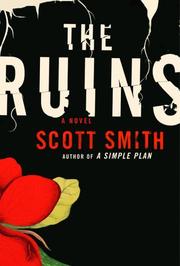
The Ruins
Scott Smith · 2006 · Book
Shares a bleak, unforgiving tone.
89% shared signal
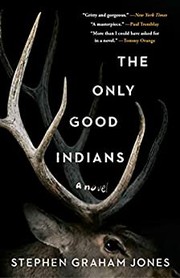
The Only Good Indians
Stephen Graham Jones · 2020 · Book
Shares modern craft.
81% shared signal
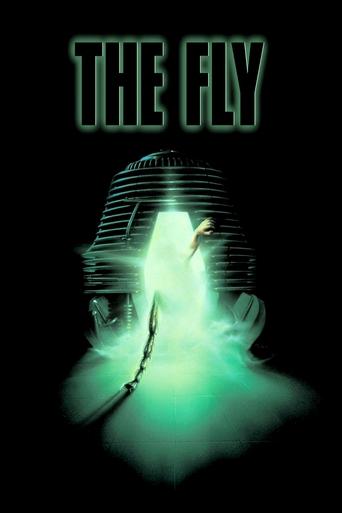
The Fly
David Cronenberg · 1986 · Film
Shares explicit viscera.
90% shared signal
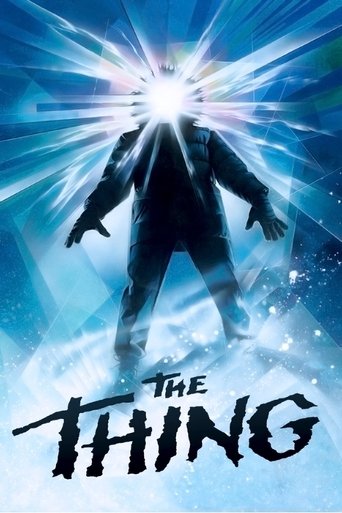
The Thing
John Carpenter · 1982 · Film
Shares a threat that is not human.
87% shared signal
The Autopsy of Jane Doe
André Øvredal · 2016 · Film
Shares a bleak, unforgiving tone.
87% shared signal
Alien: Covenant
Ridley Scott · 2017 · Film
Shares explicit viscera.
84% shared signal
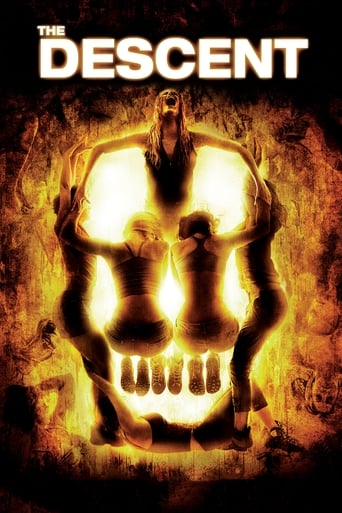
The Descent
Neil Marshall · 2005 · Film
Shares grounded realism.
82% shared signal
Incantation
Kevin Ko · 2022 · Film
Shares a threat that is not human.
81% shared signal
More lists like these: Movies like The Thing · Movies like The Descent
Questions about The Troop
The things people actually ask about this book, answered — including how it ends.
How does The Troop end?
Everyone dies except Max. The containment operation that has been watching from offshore throughout firebombs the island, and Max is recovered and testifies. The closing documents establish that samples of the parasite survived and that commercial interest in it has not stopped.
What is the worm in The Troop?
An engineered hydatid tapeworm designed to reproduce without limit and to drive its host to eat constantly. The host starves while eating everything available. It was developed as an appetite suppressant, and the novel's documents are explicit about the money involved.
Who survives The Troop?
Max, alone. The interleaved transcripts tell you from the first chapter that someone survived to give evidence, so the novel's tension is about which boy and in what state rather than whether anyone does.
How gory is The Troop?
Extremely. We score it 092 on viscera, higher than 302 of the 320 works in this index, with sustained parasitic body horror, self-cannibalism and an animal-cruelty sequence many readers abandon the book over.
Is The Troop like Lord of the Flies?
In structure, yes — boys on an island, authority collapsing — and the novel knows it. The difference is that the collapse here has a biological cause and an adult containment operation watching it happen and choosing not to intervene.
What should I read after The Troop?
The Girl Next Door and Off Season, the two books on this shelf that score higher on viscera, Books of Blood for the same explicitness with more invention, and Tender is the Flesh for body horror with an argument behind it.
These are ranked against The Troop, not against you.
Build your own tape →