
Book · 2006
The Ruins
Scott Smith
Six tourists on a Mayan hill, kept there by armed villagers, with a plant that learns voices.
81Punishing to sit through, out of 100 — mostly how bleak it is
- PaceBuilds, then strikes40
- ThreatHuman and not44
- GoreUnflinching88
- ToneNo relief at all6
- RealityGrounded34
Era bias 64 · Neither era. Texture rather than fear, so it is not part of the grade. All six scores →
The bleakest horror novels ever written →
On VHSCREAM’s six-axis scale, The Ruins (2006) is most extreme on the tone axis: 6 out of 100, where 0 is a bleak, unforgiving tone and 100 is gleeful black comedy. 3% of the 320 horror works we have scored come in lower on that axis. How we score →
The Ruins is a 2006 novel by Scott Smith. Four American graduates on holiday in the Yucatán walk off the trail with a German and a Greek to find a missing brother, and reach a hill covered in a flowering vine. The villagers at the bottom then refuse to let anybody come down. We score it 088 on viscera and 006 on tone.
Scored and reviewed by VHSCREAM on · how we score
How scary is The Ruins, actually?
Scored against the published rubric, here is what the numbers mean for a reader.
Viscera 088 is high and clinical rather than lurid. 23 works score higher. A double amputation without anaesthetic, repeated self-surgery, flesh dissolving, and a long sequence with a broken back. Smith reports it; he does not decorate it.
Tone 006 is deep in the bleak end. 9 works score lower and 12 works tie it. Six people die, no lesson is learned by anybody, and the last chapter starts the whole thing over with new people.
Threat 044 sits almost exactly in the middle, and the split is the novel. 145 works score higher. The thing that kills them is a plant with no motive. The reason they cannot leave is people with bows. Neither half of that is the villain, which is why this number refuses to go to either end.
Pace 040 is on the dread side, which will surprise people who read it in two days. 201 works are faster. It is a propulsive book about a static threat: the vine never rushes, the days are counted, and there are perhaps four sudden events in four hundred pages.
Era bias 064 is middling. 174 works score higher. A 2006 novel of a phone with no signal, a disposable camera and a Lonely Planet, written before any of those stopped being how you got lost.
Reality anchor 034 is grounded. A hill, a shaft, a tent, a ring of cleared earth. One impossible plant, and everything else is heat, thirst and arithmetic.
On jump scares: almost none. The vine's imitation of a ringing phone is the closest the book comes, and it is a trap rather than a shock.
Who should skip The Ruins
Skip it if you want anybody to be all right. Nobody is. There is no survivor, no rescue and no consolation, and the final chapter exists specifically to remove the last of it.
Skip it if amputation and self-mutilation are limits. We score this 088 on viscera. The legs come off on the page, and a character spends days opening himself up with a knife.
Skip it if you have seen the film and want the same thing. The 2008 adaptation is faster, shorter and lets somebody leave. The novel is a fortnight of logistics and has no exit in it at all.
Content notes: amputation without anaesthetic, extended self-mutilation, suicide, a mercy killing, severe injury and dehydration, animal death, and the deaths of all six central characters.
Read it if you want survival horror where the besieging force is in the right, the best use of an unexplained organism in a modern horror novel, and a last page that is worth four hundred of build-up.
The Ruins on six axes of fear
Every work in the index is scored on six continuous axes of fear. This is what The Ruins looks like as a vector — and what each ten-point band looks like across everything else we hold.
Where that puts it: joint #4 bleakest · #6 goriest
Draft score — awaiting human review. About these scores
Disagree with a number? Say so on the axis itself. Nobody has confirmed this vector yet, and a score you challenge goes to the top of the queue to be re-scored by a human. Votes do not move the numbers — they decide what gets looked at first. How the scoring works →
Scored against the published rubric. This vector is a draft awaiting review — the method is public so you can argue with it.
Where to start with horror books →
Where to find it
Buy from an indie bookshop ↗Out-of-print copies on eBay ↗We earn nothing from these links.
The Ruins: the review
A siege novel where the besieging army is correct
Everything that makes The Ruins work is in its first fifty pages, and almost none of it is the plant. Six young people on a hill. At the bottom, Mayan villagers with bows, a rifle and horses, who arrive within minutes of the group stepping onto the vine and who will kill anybody who tries to walk back out. They are not cultists and they are not sacrificing anyone. They are running a quarantine, they have been running it for generations, and they are entirely right to.
That is the structural move the novel is built on and it is a very good one. The horror is not that the villagers are cruel; it is that there is no argument available. Nobody up the hill has done anything wrong, nobody down the hill is doing anything wrong, and the arrangement is still fatal. Smith stages the realisation slowly — the group spends a long time believing this is a misunderstanding that an explanation will fix — and the moment it lands is better than anything the vine does afterwards.
The vine
A flowering creeper that covers the hill and the ruins under it, secretes something that dissolves tissue, moves at night, drinks blood, and — the detail the novel is remembered for — reproduces sound. It learns a mobile phone's ringtone and uses it. It learns the characters' voices and uses those, in conversations, from inside the shaft. Smith never explains where it came from and never gives it a point of view, and the restraint is the right call: it is weather with an appetite.
What makes it frightening on the page rather than on screen is that it is patient and the characters are not. It does not need to attack. It needs them to be there for two weeks.
It is a novel about logistics, and that is the compliment
The middle of the book is water, shade, rationing, a tent, rain collection, and the arithmetic of how long six people can last on what they walked in with. Jeff — the one with a plan, a pre-med future and an increasingly brittle competence — runs the camp, and his plans are all sensible and all insufficient, which is the most upsetting thing in the book after the amputation. Smith is unusually good at the way a group under pressure assigns roles and then resents them, and at how quickly a decent person becomes a person who is managing a dying one.
Then Pablo falls down the mine shaft and breaks his back, and the novel's clinical register starts paying off. The vine gets into the wounds. The legs come off with a knife, no anaesthetic, and tequila, and Smith writes it with the flat attention of somebody reporting rather than relishing. The Troop is more explicit and considerably more theatrical about it. This is worse because it is so procedural.
Where it strains
It is long, and the back half repeats beats. There is a sexual-jealousy strand among the four Americans that belongs to a different novel and gets picked up and dropped. The German's missing brother is a mechanism rather than a person. And a handful of decisions are stupid in the way that fiction needs rather than the way people are — the shaft in particular is entered more times than six intelligent adults would enter it.
The ending redeems all of it. See below.
The ending of The Ruins explained
The ending, in full. Open it when you have seen it.
The short answer: nobody gets off the hill. All six die there, across roughly a fortnight. Eric, convinced the vine is growing inside him, cuts himself open repeatedly until Stacy stops him, and Stacy then kills herself. Pablo dies of the amputations. Jeff is shot by the villagers when he finally tries to force his way down. Mathias and Amy are not spared either. The final pages follow the two Greek friends who said they would come looking for Pablo — up the same trail, toward the same clearing, with the villagers waiting. The arrangement simply continues.
Here is how the novel gets there.
What is the vine?
An unexplained plant. It dissolves flesh, moves in the dark, feeds on blood, and imitates sounds it has heard — a ringing phone, and then the voices of the people on the hill. Smith supplies no origin, no biology and no intelligence you could negotiate with, and the novel is far better for refusing all three.
Why do the villagers keep them there?
Containment. The vine spreads by contact, anything that leaves the hill can carry it, and the village has evidently learned this the hard way over a very long time. They keep a cleared ring at the base, they watch it in shifts, they bring their children so the children will know, and they kill anybody who crosses. It is the only functional response available and the novel never pretends otherwise.
What happens to Pablo?
He falls down the mine shaft early and breaks his back. They haul him up. The vine reaches the wounds, and the group amputate both of his legs with a knife and tequila to stop it spreading. He does not survive it, and the sequence is the novel's hardest passage.
What happens to Eric and Stacy?
Eric becomes convinced the vine is inside him and begins cutting pieces out of himself to find it, repeatedly, over days — and the novel is deliberately ambiguous about whether he is right. Stacy eventually ends it, and then ends herself. Their strand is where the book stops being a survival story and becomes something closer to extreme horror.
Does anybody survive The Ruins?
No. Not one of the six. This is the single largest difference from the 2008 film, which lets one of them off the hill carrying the vine, and it is why the novel is the harder object: the film ends on an infection spreading, which is a threat, and the book ends on nothing spreading at all, which is worse.
What is the last scene?
The Greeks arriving. Two friends of Pablo's had arranged to follow a few days later, and the closing pages put them on the trail, approaching the village, with everything that happened to the first group waiting to happen again in the same order. It is one of the bleakest final pages in modern horror fiction and it is the reason the book is worth the two weeks it spends on a hill.
If The Ruins is your kind of fear
The eight works closest to The Ruins in the index on the five axes that describe fear, the same medium first — not by genre label, and not by what other people watched.
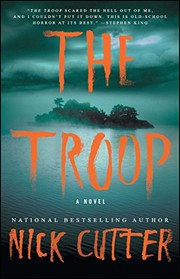
The Troop
Nick Cutter · 2014 · Book
Shares a bleak, unforgiving tone.
89% shared signal
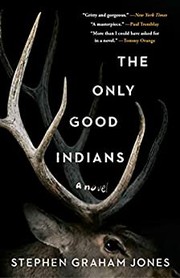
The Only Good Indians
Stephen Graham Jones · 2020 · Book
Shares explicit viscera.
85% shared signal
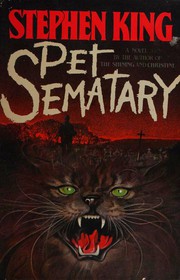
Pet Sematary
Stephen King · 1983 · Book
Shares a bleak, unforgiving tone.
82% shared signal
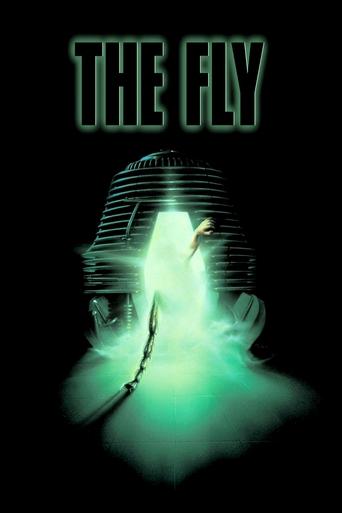
The Fly
David Cronenberg · 1986 · Film
Shares explicit viscera.
90% shared signal
The Autopsy of Jane Doe
André Øvredal · 2016 · Film
85% shared signal
Day of the Dead
George A. Romero · 1985 · Film
83% shared signal
The Mist
Frank Darabont · 2007 · Film
82% shared signal
Alien: Covenant
Ridley Scott · 2017 · Film
82% shared signal
Questions about The Ruins
The things people actually ask about this book, answered — including how it ends.
How does The Ruins end?
All six characters die on the hill. Eric mutilates himself and is stopped by Stacy, who then kills herself; Pablo dies of his amputations; Jeff is shot trying to break out; Mathias and Amy also die there. The closing pages follow Pablo's two friends up the same trail, so it begins again.
Does anyone survive The Ruins book?
No. Not one of the six, which is the biggest difference from the 2008 film. The film lets a character off the hill carrying the vine; the novel lets nobody off and ends with a new group walking in, which is considerably worse.
What is the vine in The Ruins?
An unexplained flowering plant that covers the hill and the ruins beneath it. It dissolves flesh, moves at night, feeds on blood, and imitates sounds it has heard — a ringing phone first, then the voices of the people trapped above it. Smith never explains where it came from.
Why won't the Mayans let them leave in The Ruins?
Because the vine spreads by contact and anybody coming down could carry it. The village maintains a cleared ring at the base of the hill, watches it in shifts, brings its children to learn the rule, and kills anybody who crosses. It is a quarantine, not a ritual.
Is the book or the film better?
The book, by a distance, and they are not really the same story. The film is a ninety-minute creature feature with a survivor. The novel is four hundred pages of rationing, amputation and arithmetic in which the plant barely has to do anything, and its ending is the point of it.
How gory is The Ruins?
Very. We score it 088 on viscera, higher than 291 of the 320 works in this index, with an amputation performed with a knife and tequila and a character opening his own body repeatedly over several days. The register is clinical rather than gleeful, which does not make it easier.
What should I read after The Ruins?
The Troop for the other great modern novel about a group and a biological threat on an island, Off Season for the siege with no organism in it at all, and bleak horror for everything here that refuses a consolation.
These are ranked against The Ruins, not against you.
Build your own tape →