Film · 1985
Day of the Dead
Soldiers, scientists and one thoughtful zombie, sealed underground at the world's end.
78Hard going to sit through, out of 100 — mostly how bleak it is
- PaceBuilds, then strikes52
- ThreatHuman and not62
- GoreUnflinching92
- ToneBleak20
- RealityGrounded20
Era bias 10 · Analog to the bone. Texture rather than fear, so it is not part of the grade. All six scores →
The goriest horror movies ever made →
On VHSCREAM’s six-axis scale, Day of the Dead (1985) is most extreme on the viscera axis: 92 out of 100, where 0 is restraint over gore and 100 is explicit viscera. 94% of the 320 horror works we have scored come in lower on that axis. How we score →
Day of the Dead is a 1985 American zombie horror film written and directed by George A. Romero. With the dead overrunning the world, a handful of scientists and soldiers share an underground bunker and turn on each other faster than the zombies outside can. We score it 092 on viscera and 020 on tone.
Scored and reviewed by VHSCREAM on · how we score
How scary is Day of the Dead, actually?
Scored against the published rubric, here is what the numbers mean.
The threat at 062 leans human — 215 works score lower. The zombies are the setting, but the harm that drives the story is done by Rhodes and his soldiers, and the dead only get in because a man opens the gate.
Viscera 092 is explicit — 302 works score lower. Tom Savini's effects show disembowelling, dismemberment, an amputation and men torn apart, and the film was released unrated rather than cut.
Tone 020 is bleak — 136 works score lower. The world is lost before the film begins, the base is destroyed, and three people escape to an island with nowhere left to go.
Pace 052 sits in the middle — 151 works score lower. A long, argumentative middle and a final act of sustained carnage.
Era bias 010 reads analog — 29 works score lower. Film grain, practical make-up and blood effects, and the look of a mid-1980s independent production.
Reality anchor 020 is grounded — 29 works score lower. The dead walk; everything else is people, guns and a corral.
On jump scares: a few, mostly the dead lunging out of the corral or the dark, though the film's fear is in the build to the final massacre.
Who should skip Day of the Dead
Skip it if extreme gore is a hard limit. The last act is a sustained display of disembowelling and dismemberment, shown at length.
Skip it if shouting characters wear you out. The middle hour is mostly arguments between scientists and soldiers, and they are loud.
Skip it if you want the satire of Dawn of the Dead. This is a much angrier, less playful film.
Content notes: disembowelling, dismemberment, an arm amputation, men torn apart, shootings, a man beaten, experiments on corpses, and suicide.
Watch it if you want Romero's darkest zombie film, Tom Savini's best effects work, and a zombie with a memory who is more sympathetic than most of the living.
Day of the Dead on six axes of fear
Every work in the index is scored on six continuous axes of fear. This is what Day of the Dead looks like as a vector — and what each ten-point band looks like across everything else we hold.
Where that puts it: joint #6 goriest · joint #14 analog era
Draft score — awaiting human review. About these scores
Disagree with a number? Say so on the axis itself. Nobody has confirmed this vector yet, and a score you challenge goes to the top of the queue to be re-scored by a human. Votes do not move the numbers — they decide what gets looked at first. How the scoring works →
Scored against the published rubric. This vector is a draft awaiting review — the method is public so you can argue with it.
Day of the Dead: the review
Day of the Dead is the angriest of Romero's original three, and the one that took longest for people to forgive.
Night of the Living Dead trapped strangers in a farmhouse. Dawn of the Dead trapped them in a shopping mall and let them enjoy it for a while. Day traps them underground, in a missile bunker, with the world above already lost, and gives them no pleasure in it at all. It is a film about what is left when the argument over how to survive has nothing left to win.
It was meant to be bigger. Romero's budget was cut from $7 million to $3.5 million after a dispute over the rating and the scope, and he chose to release the film unrated rather than cut it for an R. It was shot in the autumn of 1984, above ground in Florida and underground near Wampum, Pennsylvania, and it shows the compromise: much of the film is a few rooms, a corral and a lift shaft. It took $5.8 million in American cinemas and about $34 million worldwide, and found most of its audience later on video.
Science against the army
The three factions in the bunker are a short, brutal argument about authority. Sarah Bowman, played by Lori Cardille, is a scientist looking for a cure, steady and exhausted, holding together a partner, Miguel, who is falling apart. Joseph Pilato's Captain Rhodes is the soldier in charge, a bully who declares martial law and threatens to abandon the scientists. And Dr. Logan, nicknamed Frankenstein by the soldiers, is the lead scientist, who has decided that the dead can be domesticated by conditioning.
Between them are John, the helicopter pilot, and Bill McDermott, the radio operator, who believe in neither the soldiers' guns nor the scientists' research. John thinks the plague is a judgment on mankind. Terry Alexander gives him the film's few moments of calm, and the film is plainly on his side.
Bub
The film's heart is Logan's star pupil, a zombie called Bub, played by Sherman Howard. Bub remembers fragments of his past life. He shows rudimentary human behaviour, responds to his teacher, and is capable of something like grief. It is a performance built entirely from gesture and a face under make-up, and it changes the series: Romero's dead are no longer only a force but something with a memory. When Rhodes discovers that Logan has been rewarding Bub with the flesh of dead soldiers, he kills Logan, and it is Bub, not any of the living, who mourns him.
Savini's best work
Tom Savini returned for the make-up effects, with Greg Nicotero and Howard Berger assisting, and won a Saturn Award for it. The last act is a showcase of disembowelling and dismemberment on a scale that was rare in 1985. It is a deliberate payoff: the film has spent an hour making you hate the soldiers, and then it lets the dead in.
The film's first real disaster is a small one. During a roundup of zombies for Logan's research, Miguel, already fraying, loses focus; a zombie slips its harness, the soldiers Miller and Johnson are killed, and another zombie bites Miguel on the arm. Sarah, John and Bill amputate the arm and cauterise it to stop the infection. It is a hard, plain scene, and it is the turning point: Rhodes orders all the captive zombies destroyed, the fragile truce between soldiers and scientists collapses, and from then on everyone is waiting for the fight.
Romero's script went through five drafts before the shooting script of 88 pages, and you can feel the reductions. The bigger film he had planned survives in fragments: the sense that this bunker is one of the last outposts of anything, the conviction that the people in it are already finished, and the decision to make a zombie the most sympathetic person on screen. John, who later knocks out Rhodes and Torrez to rescue Sarah and Bill from the corral, is the closest the film comes to a hero, and he has no interest in winning anything. He just wants to leave.
The performances are pitched at a level of rage that can be hard to sit through, but it is the point. Joseph Pilato's Rhodes threatens to execute anyone who gets in his way, Richard Liberty's Logan is cheerfully indifferent to everything but his experiments, and Lori Cardille's Sarah is the one adult in the room. Watching them is like watching the end of the world as an office dispute.
Where it falls down
The shouting. The film's middle hour is a sequence of rooms in which people scream at each other, and Rhodes in particular is played so far over the top that the threat he poses dissolves into noise. The budget cut is visible in how little of the world we see; the scale Romero clearly wanted is only implied. Sarah is a strong lead but the script gives her little to do except argue and endure. And after Dawn of the Dead's satire, Day's ideas about science and the military are blunt where the earlier film was sly.
For the film that started it all, Night of the Living Dead; for the one that also came out in 1985 and treated the zombie apocalypse as a punk joke, The Return of the Living Dead. More of George A. Romero's work is on his page.
The ending of Day of the Dead explained
The ending, in full. Open it when you have seen it.
The short answer: the bunker falls. Miguel, bitten and suicidal, opens the perimeter fence to let hundreds of zombies in, then brings them down into the complex on the elevator and dies on the platform as they attack him. The soldiers are overrun. Rhodes abandons his remaining men and flees, but runs into a crowd of the dead; Bub, who has freed himself and taken a pistol, shoots him in the stomach and gives him a mocking salute, and the zombies tear Rhodes apart. John, Sarah and Bill escape in the helicopter to a tropical island.
What happens at the end of Day of the Dead?
Miguel lets the zombies into the base and rides the elevator down with them, the soldiers are torn apart, and Bub takes revenge on Rhodes for killing Logan. John, Sarah and Bill escape the compound by helicopter and reach a tropical island. The film shows no one else escaping.
Who is Bub in Day of the Dead?
A zombie, played by Sherman Howard, whom Dr. Logan has been conditioning. Bub remembers parts of his past life and shows rudimentary human behaviour, and he is attached enough to Logan to mourn him. After Rhodes kills Logan, Bub frees himself, mourns his teacher, takes a pistol and goes looking for revenge.
How does Captain Rhodes die?
He abandons his men as the zombies flood the base and tries to escape alone, but runs into a mass of the dead. Bub shoots him in the stomach and salutes him mockingly, and the zombies tear him apart. It is the death the whole film has been building towards.
Why does Rhodes kill Dr. Logan?
Because he discovers Logan has been rewarding Bub with the flesh of dead soldiers, the men under Rhodes's command. Logan had also been experimenting on the bodies of dead soldiers, including Major Cooper. Rhodes shoots him, and later kills Dr. Fisher as well, before locking Sarah and Bill in the zombie corral.
Why does Miguel let the zombies in?
He has been deteriorating mentally throughout the film, and after a zombie bites his arm during a botched roundup, Sarah, John and Bill amputate and cauterise it to stop the infection. Broken and suicidal, he opens the perimeter fence and brings the dead down into the complex on the elevator, dying as they reach him.
If Day of the Dead is your kind of fear
The eight works closest to Day of the Dead in the index on the five axes that describe fear, the same medium first — not by genre label, and not by what other people watched.
Barbarian
Zach Cregger · 2022 · Film
Shares explicit viscera.
87% shared signal
Halloween Kills
David Gordon Green · 2021 · Film
Shares a bleak, unforgiving tone.
87% shared signal
28 Years Later
Danny Boyle · 2025 · Film
Shares a bleak, unforgiving tone.
86% shared signal
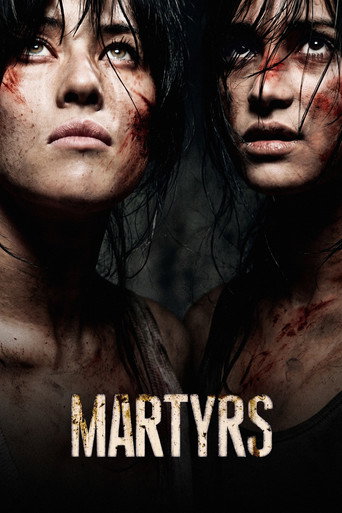
Martyrs
Pascal Laugier · 2008 · Film
Shares grounded realism.
85% shared signal
Saw X
Kevin Greutert · 2023 · Film
Shares explicit viscera.
82% shared signal
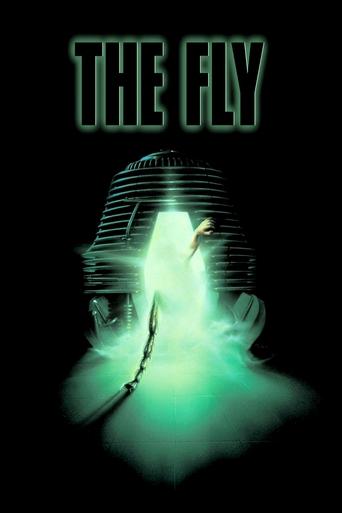
The Fly
David Cronenberg · 1986 · Film
81% shared signal
Halloween II
Rob Zombie · 2009 · Film
81% shared signal
The Ruins
Scott Smith · 2006 · Book
83% shared signal
More lists like these: Movies like 28 Years Later · Movies like Martyrs
Questions about Day of the Dead
The things people actually ask about this film, answered — including how it ends.
What happens at the end of Day of the Dead (1985)?
Miguel opens the perimeter fence and rides the elevator down with the zombies, dying as they attack him. The soldiers are overrun. Bub shoots Captain Rhodes in the stomach and salutes him before the dead tear him apart. John, Sarah and Bill escape by helicopter to a tropical island.
Is Day of the Dead the third Romero zombie film?
Yes. It follows Night of the Living Dead (1968) and Dawn of the Dead (1978) in George A. Romero's series. It was released in July 1985, written and directed by Romero, with Tom Savini returning for the make-up effects after Dawn.
Why was Day of the Dead released unrated?
Romero chose to release it without a rating rather than cut it for the R the distributor wanted. That dispute over the rating and scope is also why the budget was cut from about $7 million to $3.5 million, reducing the scale of the film he had planned.
Who plays Captain Rhodes in Day of the Dead?
Joseph Pilato. The cast also includes Lori Cardille as Dr. Sarah Bowman, Terry Alexander as John, Jarlath Conroy as Bill McDermott, Anthony Dileo Jr. as Miguel, Richard Liberty as Dr. Logan and Sherman Howard as Bub.
How gory is Day of the Dead?
Extremely. We score it 092 on viscera. Tom Savini's make-up effects, which won him a Saturn Award, include disembowelling, dismemberment and an arm amputation, and the final act is an extended sequence of soldiers being torn apart by the dead.
Did Day of the Dead make money?
Not in cinemas. It took about $5.8 million in the United States and about $34 million worldwide on a budget of roughly $3.5 to 4 million, and it earned most of its money later through VHS and then DVD and Blu-ray.
These are ranked against Day of the Dead, not against you.
Build your own tape →