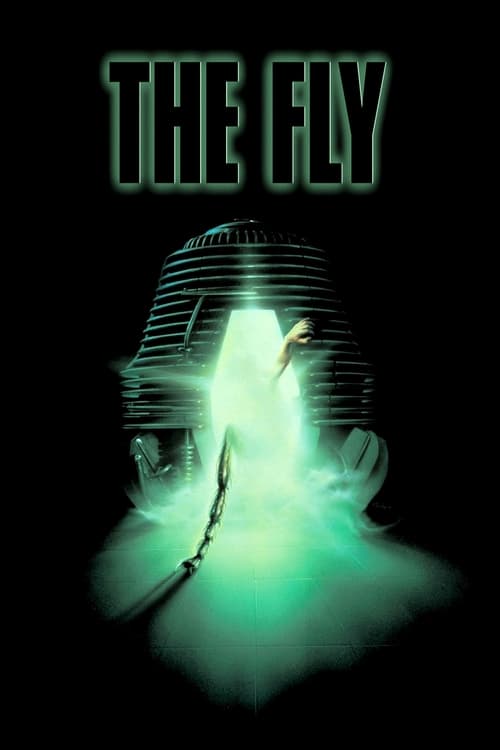
Film · 1986
The Fly
A love story documented as a decline. Practical effects as grief.
Most extreme on VISCERA — explicit viscera at 092
On VHSCREAM’s six-axis scale, The Fly (1986) is most extreme on the viscera axis: 92 out of 100, where 0 is restraint over gore and 100 is explicit viscera. 94% of the 105 horror works we have scored come in lower on that axis. How we score →
The Fly is a 1986 body horror film directed by David Cronenberg, loosely remaking the 1958 film. A scientist tests his own teleporter with a housefly in the pod and begins to fuse with it. We score it 092 on viscera — joint-fourth of 105 works — and 020 on tone, which makes it one of the bleaker things we hold.
Scored and reviewed by VHSCREAM on · how we score
The Fly: the review
The Fly is the best film about illness ever made inside a genre, and it gets there by being a romance first.
The first forty minutes are two people being funny and smart at each other. Seth Brundle is a brilliant, socially underdeveloped man who owns one suit in multiple copies because choosing clothes wastes thinking time; Veronica Quaife is a journalist who is better at reading people than he is at reading anything. Jeff Goldblum and Geena Davis were together at the time and it is all over the screen. By the time the teleporter works you care, which is the only reason the next hour functions.
Then Cronenberg does the thing nobody else does: he makes the deterioration gradual, legible and medically shaped. Brundle does not become a monster. He loses a fingernail. His back produces coarse hairs he keeps in a bathroom cabinet. He gets stronger and more arrogant and then he starts failing, and he narrates it himself with scientific interest because the one thing the disease does not take is his curiosity.
Chris Walas's effects are doing argument, not spectacle
The design works because each stage is plausibly the next one. Teeth come out, a jaw deforms, an ear comes away in his hand. Walas won the Oscar and deserved it, and the sequence where Brundle vomits enzyme onto a doughnut is more upsetting than anything in the index's goriest films because it is presented as eating.
The pregnancy is the hardest thing in it
Veronica's dream — the maggot birth — was cut from some early prints and is the film's clearest statement of what it is about. Cronenberg has said he was not thinking about AIDS and that the reading is the audience's; he has also said it is about ageing and death generally. Both can be true. The film is about a body that has been given a diagnosis and a partner who has to decide what to do with it.
For the same transformation played for laughs, Re-Animator; for the same body-as-subject with a cult attached, Videodrome.
The ending of The Fly explained
Total spoilers from here. Everything above this line is spoiler-free.
The short answer: Brundle, now barely humanoid, tries to fuse himself with Veronica and their unborn child to dilute the insect genes. Stathis severs the pod cables with a shotgun; Brundle fuses with the telepod itself instead and emerges as a ruined hybrid of flesh and metal. It drags itself to Veronica and presses the shotgun barrel to its own head. She pulls the trigger, and the film cuts to black on her face.
What is Brundlefly?
A genetic fusion of Seth Brundle and a housefly, produced because the telepod's computer had no concept of two separate organisms and interpreted them as one. The film's key line is Brundle's own diagnosis: the computer did not know what to make of them, so it made them into one thing. The insect emerges gradually because the human genes are dominant at first and lose.
Why does Veronica kill him?
Because he asks. The creature cannot speak by then, so it takes the shotgun barrel, places it against its own head and looks at her. The film gives her no other option worth taking — there is no cure, no authority to call, and what is left is in pain. It is a mercy killing and the film stages it as one, which is why the last shot is her and not the body.
Is Veronica pregnant with Brundle's child?
Yes, conceived after the first teleportation, which is why the film will not tell her whether the child is human. Her dream of giving birth to a giant maggot is the fear rather than a fact, and the ending removes the question by removing the pregnancy's future — Brundle's final plan is to fuse with her and the child, and Stathis stops it.
What does the ending mean?
That there is no version of this where anybody is saved. Brundle's last act is an attempt to survive by absorbing the two people who love him, which is the disease thinking rather than the man. Veronica's last act is to end it. The film has spent ninety minutes making you like somebody and then requires you to want him dead, and it does not offer any comfort for having wanted it.
How scary is The Fly, actually?
Scored against the published rubric, here is what the numbers mean.
Viscera 092 is near the ceiling — only 3 works score higher. The effects are sustained, practical and escalating, and the film shows almost every stage.
Tone 020 is bleak — 54 works score lower. There is no cure, no reprieve and no survivor who is unharmed.
Era bias 016 is deep analog, with only 28 works lower. 1986 film stock, latex, animatronics, Howard Shore's orchestral score recorded live.
Pace 044 sits just on the dread side, with 61 works slower. The deterioration is the plot and it is paced like a diagnosis.
The threat at 035 leans supernatural, which reads oddly for a film with no supernatural element — the axis is measuring that the thing destroying Brundle cannot be reasoned with. It is a process, not a person.
Reality anchor 036 is grounded — 23 works score lower. A loft, a lab, a magazine office, a hospital.
On jump scares: almost none. The film never surprises you; it shows you what is coming and then shows it to you.
The Fly on six axes of fear
Every work in the index is scored on six continuous axes of fear. This is what The Fly looks like as a vector.
Where that puts it: #4 goriest
Disagree with a number? Say so on the axis itself. Nobody has confirmed this vector yet, and a score you challenge goes to the top of the queue to be re-scored by a human. Votes do not move the numbers — they decide what gets looked at first. How the scoring works →
Scored against the published rubric. This vector is a draft awaiting review — the method is public so you can argue with it.
Who should skip The Fly
Skip it if you are ill or caring for somebody who is. This is a film about watching a body fail, narrated by the person it is happening to, and it is extremely precise about it.
Skip it if pregnancy horror is a hard limit. The maggot-birth dream is brief and among the most upsetting images in the index.
Skip it if practical body horror is a problem. At 092 on viscera only a handful of works we score are more explicit, and the effects are relentless in the final half hour.
Content notes: graphic bodily deterioration, vomiting of digestive fluid, a limb broken on screen, a pregnancy termination sought and interrupted, a maggot-birth dream sequence, acid injury including a severed hand and foot, and a mercy killing.
Watch it if you want the best body horror ever filmed, you can take the effects, and you want a horror film that spends forty minutes making you fond of somebody for entirely structural reasons.
Where to find it
Rent or buy from Amazon Video · Apple TV Store · Google Play Movies +2 ↗Physical copies on eBay ↗Availability from JustWatch via TMDB. We earn nothing from these links.
Nothing loads from YouTube until you press play.
If The Fly is your kind of fear
The eight works closest to The Fly in the index, ranked by distance across all six axes — not by genre label, and not by what other people watched.
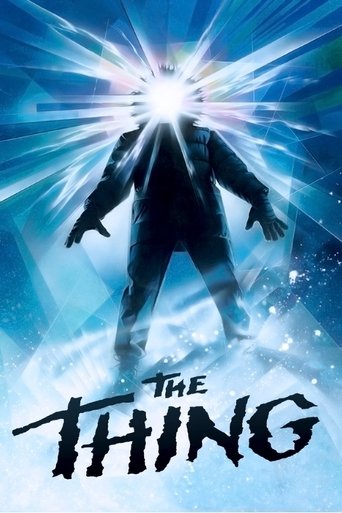
The Thing
John Carpenter · 1982 · Film
Shares explicit viscera.
89% shared signal
Pet Sematary
Stephen King · 1983 · Book
Shares analog-era texture.
80% shared signal
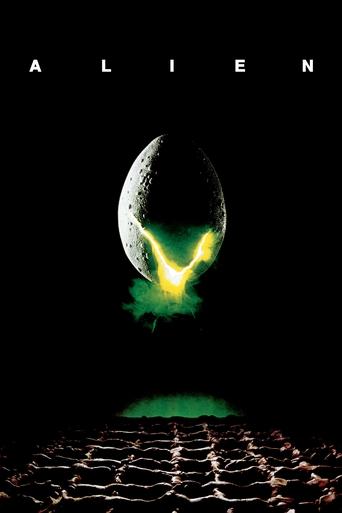
Alien
Ridley Scott · 1979 · Film
Shares a bleak, unforgiving tone.
79% shared signal
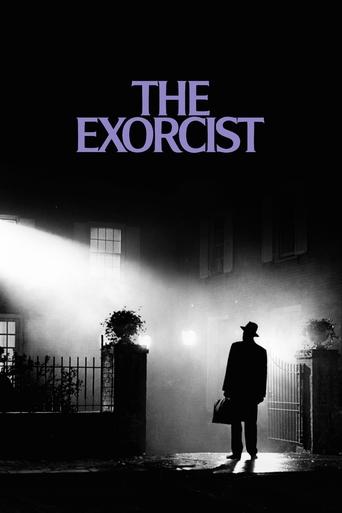
The Exorcist
William Friedkin · 1973 · Film
Shares analog-era texture.
79% shared signal
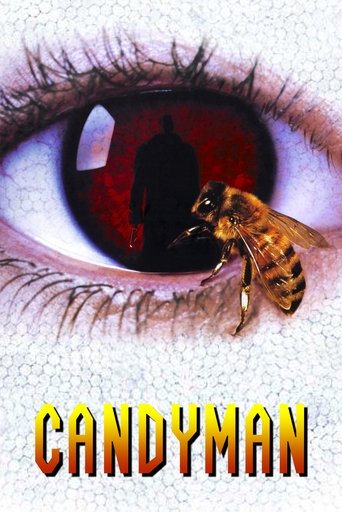
Candyman
Bernard Rose · 1992 · Film
Shares a bleak, unforgiving tone.
78% shared signal
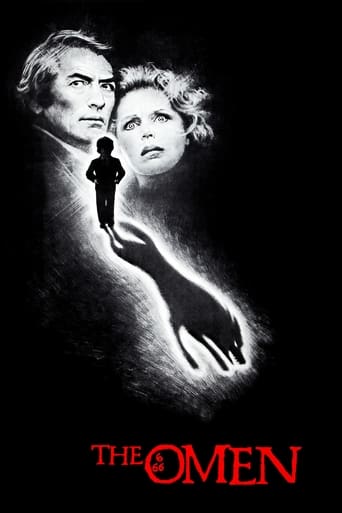
The Omen
Richard Donner · 1976 · Film
75% shared signal
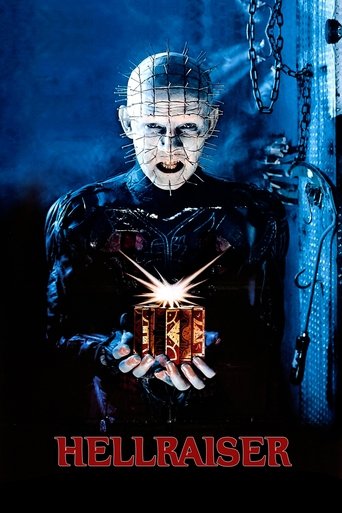
Hellraiser
Clive Barker · 1987 · Film
Shares explicit viscera.
75% shared signal

Books of Blood
Clive Barker · 1984 · Book
75% shared signal
See the full list of movies like The Fly →
Questions about The Fly
The things people actually ask about this film, answered.
What happens at the end of The Fly?
Brundle tries to fuse with Veronica and their unborn child to dilute the insect genes. Stathis shoots the pod cables, so Brundle merges with the telepod instead and emerges as a ruin of flesh and metal. It presses a shotgun to its own head and Veronica pulls the trigger.
What is Brundlefly?
A genetic fusion of Seth Brundle and a housefly. The telepod's computer had no concept of two organisms in one pod and interpreted them as a single creature. The human genes dominate at first, which is why the insect emerges gradually rather than at once.
Why does Veronica shoot Brundle?
Because the creature asks her to. It can no longer speak, so it takes the shotgun barrel, holds it to its own head and looks at her. There is no cure and no authority to call, and the film stages it unambiguously as a mercy killing.
Is The Fly about AIDS?
Cronenberg has said he was not thinking about it and that the reading belongs to the audience, and that for him the subject is ageing and death generally. Released in 1986, a film about a man's body failing while his partner watches was always going to be read that way, and the reading works.
How gory is The Fly?
Very. We score it 092 on viscera, with only a handful of works in our index scoring higher. The deterioration is shown at almost every stage with practical effects, and the final half hour is close to continuous.
Is The Fly a remake?
Loosely. It shares a premise with the 1958 film and almost nothing else — Cronenberg discarded the original's man-with-a-fly's-head design and its detective framing in favour of a gradual genetic fusion, and turned the story into a two-hander about a relationship.
These are ranked against The Fly, not against you.
Build your own tape →