Film · 2016
The Autopsy of Jane Doe
André Øvredal
Two morticians, one unmarked body, and every incision reports something worse.
75Hard going to sit through, out of 100 — mostly how bleak it is
- PaceBuilds, then strikes42
- ThreatMostly supernatural22
- GoreExplicit80
- ToneBleak15
- RealityTilts unreal38
Era bias 85 · Thoroughly modern. Texture rather than fear, so it is not part of the grade. All six scores →
The bleakest horror movies ever made →
On VHSCREAM’s six-axis scale, The Autopsy of Jane Doe (2016) is most extreme on the tone axis: 15 out of 100, where 0 is a bleak, unforgiving tone and 100 is gleeful black comedy. 32% of the 320 horror works we have scored come in lower on that axis. How we score →
The Autopsy of Jane Doe is a 2016 film directed by André Øvredal, in which a father-and-son pair of coroners are asked to establish cause of death for an unidentified woman overnight. We score it 080 on viscera — 266 works in an index of 320 score lower — and 022 toward inhuman threat, because the thing on the table does not move and does not need to.
Scored and reviewed by VHSCREAM on · how we score
How scary is The Autopsy of Jane Doe, actually?
Scored against the published rubric, here is what the numbers mean.
Viscera 080 is high and it is clinical — 266 works score lower. Nothing in the film is gore for impact; it is all procedure, which is a different and in some ways worse thing. The closest comparison on this shelf is the examination scenes in Session 9, scaled up.
Threat 022 is at the inhuman end, with 75 works lower. The antagonist is a corpse that never sits up.
Pace 042 sits on the dread side, with 119 works slower. The first half is almost entirely procedure; the second half is conventionally quick.
Tone 015 is bleak — 102 works score lower. Two decent men die and the cause of it is driven away to do it again.
Reality anchor 038 leans grounded. A morgue, a storm, a power cut. The supernatural is established through pathology reports.
On jump scares: several in the second half, and they are the weakest part of the film.
Who should skip The Autopsy of Jane Doe
Skip it if surgical detail is a problem. This is an autopsy procedural and the camera does not look away from the Y-incision, the rib shears or the organ tray.
Skip it if you need the monster to have a plan. Jane Doe has no scheme and no dialogue; she has a reflex.
Watch it for the best use of a two-hander in a single location in recent horror, for Brian Cox doing careful work, and for a first half that is almost a procedural drama. If you want the same trick — dread assembled from documentation rather than events — Lake Mungo does it with a different set of papers.
The Autopsy of Jane Doe on six axes of fear
Every work in the index is scored on six continuous axes of fear. This is what The Autopsy of Jane Doe looks like as a vector — and what each ten-point band looks like across everything else we hold.
Draft score — awaiting human review. About these scores
Disagree with a number? Say so on the axis itself. Nobody has confirmed this vector yet, and a score you challenge goes to the top of the queue to be re-scored by a human. Votes do not move the numbers — they decide what gets looked at first. How the scoring works →
Scored against the published rubric. This vector is a draft awaiting review — the method is public so you can argue with it.
The Autopsy of Jane Doe: the review
The best procedural horror film in some time works because it takes the procedure completely seriously for forty minutes before it does anything else.
Tommy and Austin Tilden run a family morgue in the basement of their Virginia house. A body arrives from a crime scene where everyone else died violently and she did not. The sheriff wants a cause of death by morning. She is unblemished: no bruising, no lividity, clean skin, clear eyes.
Then they open her.
What follows is an escalation built entirely out of medical findings, and it is the smartest structural choice in the film. The wrists and ankles are shattered without a mark on the skin above them. The tongue has been cut out. The lungs look as though she inhaled fire. The internal organs are scarred in patterns that do not match any injury the exterior can account for. Each discovery is delivered flatly by two professionals doing their jobs, and each one quietly removes a possible explanation until only the impossible one is left standing.
Why the restraint works
Øvredal understands that an autopsy is already a horror film. The sounds are the sounds; the instruments are the instruments. He does not need to invent anything for the first half because the procedure supplies dread on its own — and because Brian Cox plays Tommy as a man for whom none of this is remarkable until it is.
The relationship carries the rest. Tommy has not grieved his wife; Austin is about to leave and has not said so; the film puts both admissions in the middle of a dissection, which is the only place these two would ever make them. It is a small, well-written family drama happening inside a locked basement, and when the basement turns it has something to take away.
Where it frustrates
The second half trades its method for conventional haunted-building business: lights, a lift, a figure in a corridor, a radio that will not switch off. None of it is badly done and all of it is less frightening than a man quietly reporting that the lungs are blackened.
Emma, the girlfriend, exists to be in danger and is given nothing else.
The ending of The Autopsy of Jane Doe explained
The ending, in full. Open it when you have seen it.
What happens at the end of The Autopsy of Jane Doe?
Having worked out that the body's injuries are being mirrored onto them, Tommy offers himself: he tells her he understands what was done to her, and invites her to take her pain out on him instead of his son. She accepts. His bones break as hers knit; the corpse on the table becomes visibly whole, and Tommy dies.
Austin, already fatally injured, dies shortly after. In the morning the police find the basement, and the body — now unmarked again — is loaded for transport to another facility. In the van, the radio plays, and her toe twitches.
What is Jane Doe?
A woman tortured as a witch who was not one, and who became one as a consequence.
The evidence is laid out as findings rather than exposition. The shattered joints are consistent with being stretched and broken. The lungs are consistent with inhaled smoke. The scarred waist and the missing tongue are consistent with documented torture practice. Inside her stomach is a cloth printed with numerals that read 1693, and peat and jimsonweed — a plant used for its hallucinogenic effect.
The reading the film offers is that a New England community did this to an innocent woman in the belief she was a witch, and that the ritual they used to destroy her instead made her into something that cannot die and is in a great deal of pain.
Why does she kill the people who cut her?
She does not kill them for cutting her. She transfers what was done to her onto whoever is examining her, in the order it was done. That is why the deaths escalate in step with the autopsy: the film's horror engine is that the examination is the attack, and that stopping would require the coroners to refuse to do their jobs.
Tommy's offer works because it is the first time anyone has volunteered. He gives her a recipient for the pain who is not being forced.
What does the ending mean?
It means it does not end. The body is intact, unidentified, and on its way to another morgue, where another pathologist will open her and begin the sequence again.
Hearing a bright 1960s pop song over that image is the joke the film has been building to, and it is a good one. The song is "Open Up Your Heart (And Let the Sunshine In)", which has been playing on the morgue radio all night.
Is the 1693 date a reference to Salem?
It sits immediately after the Salem trials of 1692, and the film clearly wants the association. It does not claim Jane Doe was tried at Salem — the location is unstated — but the date, the New England setting and the method all point at that period of witch panic.
The film's thesis is in that gap: the people who did this were wrong about her, and their being wrong is what made them right.
If The Autopsy of Jane Doe is your kind of fear
The eight works closest to The Autopsy of Jane Doe in the index on the five axes that describe fear, the same medium first — not by genre label, and not by what other people watched.
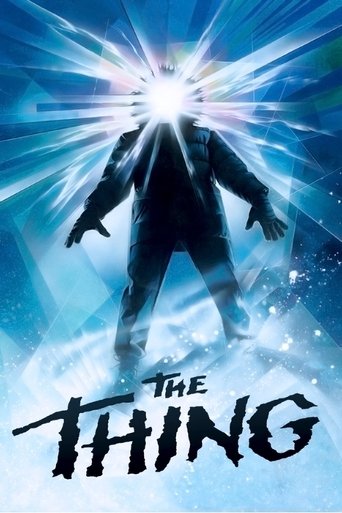
The Thing
John Carpenter · 1982 · Film
Shares explicit viscera.
90% shared signal
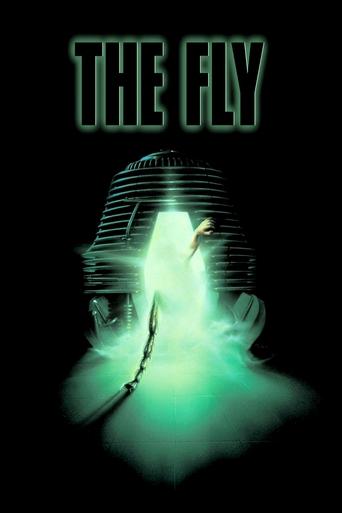
The Fly
David Cronenberg · 1986 · Film
Shares a bleak, unforgiving tone.
89% shared signal
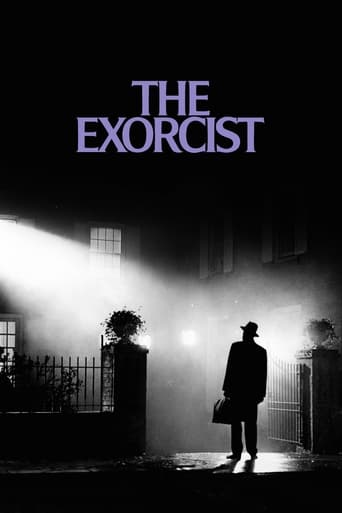
The Exorcist
William Friedkin · 1973 · Film
Shares a threat that is not human.
88% shared signal
Alien 3
David Fincher · 1992 · Film
Shares a bleak, unforgiving tone.
88% shared signal
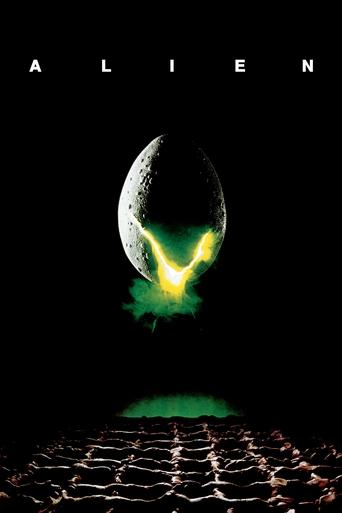
Alien
Ridley Scott · 1979 · Film
Shares a threat that is not human.
87% shared signal
Incantation
Kevin Ko · 2022 · Film
Shares explicit viscera.
87% shared signal
The Dark and the Wicked
Bryan Bertino · 2020 · Film
86% shared signal
The Troop
Nick Cutter · 2014 · Book
87% shared signal
More lists like these: Movies like The Thing · Movies like The Exorcist · Movies like Alien
Questions about The Autopsy of Jane Doe
The things people actually ask about this film, answered — including how it ends.
What is Jane Doe in The Autopsy of Jane Doe?
A woman tortured as a witch in the late seventeenth century who was innocent, and whom the torture turned into something that cannot die. The findings — shattered joints, missing tongue, scorched lungs, a cloth reading 1693 — are presented as evidence rather than explanation.
What happens at the end of The Autopsy of Jane Doe?
Tommy offers himself in his son's place, telling Jane Doe he understands what was done to her. She accepts: his bones break as her injuries heal. Both Tildens die, and the now-unmarked body is driven to another morgue, where her toe twitches.
Why do the Tildens start dying?
Because examining her transfers her injuries onto the examiner, in the order they were originally inflicted. The autopsy is the attack. That is why the deaths escalate exactly in step with the dissection and why stopping work is the only defence available.
What does 1693 mean in The Autopsy of Jane Doe?
It is the date on a cloth recovered from her stomach, placing her a year after the Salem trials of 1692. The film does not say she was tried at Salem, but the date, the New England setting and the torture methods all point at that period.
Is The Autopsy of Jane Doe based on a true story?
No. The witch panics it draws on were real, and the torture methods described are documented, but Jane Doe and the Tilden morgue are inventions. The film's authenticity comes from the accuracy of the autopsy procedure, not from a specific case.
How gory is The Autopsy of Jane Doe?
Very, but clinically. We score it 080 on viscera. There is no gore staged for shock; it is all dissection, shot in detail and in sequence. Viewers who are fine with slasher violence sometimes find this much harder to watch.
These are ranked against The Autopsy of Jane Doe, not against you.
Build your own tape →