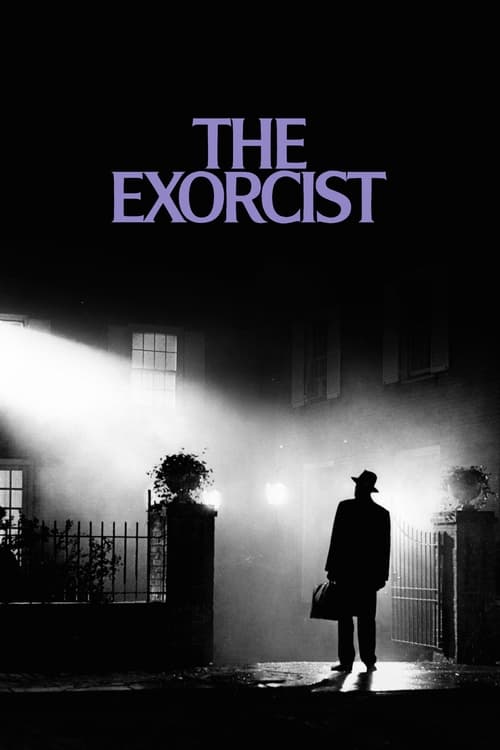
Film · 1973
The Exorcist
William Friedkin
Faith tested to destruction in a child's bedroom. Still nasty.
Most extreme on THE THREAT — a supernatural threat at 008
On VHSCREAM’s six-axis scale, The Exorcist (1973) is most extreme on the threat axis: 8 out of 100, where 0 is a supernatural threat and 100 is human monsters. 1% of the 105 horror works we have scored come in lower on that axis. How we score →
The Exorcist is a 1973 horror film directed by William Friedkin, adapted by William Peter Blatty from his own novel. A twelve-year-old girl in Georgetown is possessed and two priests are sent to remove it. We score it 008 on the threat axis — joint-second of 105 works, about as purely supernatural as horror gets — and 066 on viscera.
Scored and reviewed by VHSCREAM on · how we score
The Exorcist: the review
The reason The Exorcist still works when almost nothing from 1973 does is that it spends an hour being a medical film.
Chris MacNeil takes her daughter to doctors. There are X-rays, a spinal tap, an arteriogram filmed in clinical detail with real equipment and real blood, a stammering specialist recommending psychiatry. Friedkin shoots all of it like documentary, because he had made one, and the effect is that by the time anybody says the word possession the audience has watched every rational explanation get used up on screen. The exorcism is not where the film asks you to believe. It is where the film has run out of alternatives.
It is about a priest losing an argument with himself
The possession is the engine; Damien Karras is the film. He is a Jesuit psychiatrist whose mother has just died alone in a ward he could not afford to move her out of, and who no longer believes. Jason Miller plays him exhausted rather than tortured, and the film's real subject is a man who wants the thing in the room to be a medical condition because the alternative would require God to exist and to have allowed this.
Max von Sydow's Merrin gets the iconography — the hat, the bag, the lit doorway — and almost no interiority, correctly. He is what faith looks like when it has stopped asking.
What the craft actually does
Almost everything famous is practical and in-camera: the rotating head on a rig, the levitation on wires, the bile fired from a tube, the room chilled to minus ten so the breath is real. Mercedes McCambridge's voice work is a separate performance layered over Linda Blair's. And the sound design — doors, dogs, a dentist's drill under the arteriogram — is doing more than the score, which is mostly absent apart from the Tubular Bells fragment that the film barely uses.
Where it strains
The Iraq prologue is beautiful and does very little. Some of the possessed dialogue has curdled into quotation. And the film's theology is strict enough that viewers without any purchase on it may find the final act operating on rules nobody explains.
For the same possession machine built as a procedural, The Conjuring is the modern descendant; for the same faith-under-pressure, A Dark Song is the patient, unglamorous version.
The ending of The Exorcist explained
Total spoilers from here. Everything above this line is spoiler-free.
The short answer: Merrin dies mid-exorcism of a heart attack. Karras finds him, beats the possessed Regan, and then invites the demon into himself — take me, come into me. It does. In the instant he has control of his own body he throws himself out of the bedroom window and dies on the steps below, taking the demon with him. Regan wakes with no memory of any of it.
Who is Pazuzu?
The demon is named only obliquely in the film — the statue Merrin confronts in the Iraq prologue is Pazuzu, an Assyrian wind demon, and Blatty's novel identifies it. The film is deliberately vague, having the entity claim to be the Devil, a nobody, and Karras's dead mother in the same scene. That inconsistency is the point: it lies to find the softest place to press.
Why does Karras invite the demon into himself?
Because he has worked out that it is the only move available. Merrin is dead, Regan is dying, and the ritual has failed. Taking the demon into his own body gives him one moment of agency with it trapped inside him, and he spends that moment killing himself. It is a priest who had lost his faith performing the most explicitly Christian act in the film.
Is Regan cured at the end?
Yes, and the film is careful that she does not remember. She wakes with no recollection of the possession, kisses Father Dyer when she notices his collar — a flicker of something retained — and leaves Georgetown. The novel is clearer that nothing of the demon remains in her.
What does the final scene mean?
Father Dyer, Karras's friend, is left on the steps where he died, keeping the medal Karras had given away. The film ends on grief rather than triumph. Something was defeated, two priests are dead, and the one person who was saved cannot remember needing saving.
How scary is The Exorcist, actually?
Scored against the published rubric, here is what the numbers mean.
The threat at 008 is near the floor. Only 1 work scores lower, which makes this one of the most purely supernatural things we hold. Nothing human causes any of the harm; the doctors and the priests are all trying to help.
Viscera 066 is higher than most people remember — 81 works score lower. The arteriogram, the vomit, the self-harm with a crucifix and the bleeding are all explicit, and the medical material is arguably harder than the demonic.
Tone 012 is bleak — 22 works score lower. Two priests die, a mother watches her child tortured for an hour, and the victory costs everything.
Era bias 008 is deep analog, with only 9 works lower. 1973 film stock, practical rigs, a mono-era mix rebuilt for every reissue.
Pace 046 is close to the middle. The first hour is a slow medical procedural; the last forty minutes do not stop.
Reality anchor 038 keeps it grounded — 24 works score lower. Georgetown, a hospital, a film set, a staircase. The impossible thing happens in an ordinary bedroom.
The Exorcist on six axes of fear
Every work in the index is scored on six continuous axes of fear. This is what The Exorcist looks like as a vector.
Where that puts it: #3 supernatural · #9 analog era · #15 bleakest
Disagree with a number? Say so on the axis itself. Nobody has confirmed this vector yet, and a score you challenge goes to the top of the queue to be re-scored by a human. Votes do not move the numbers — they decide what gets looked at first. How the scoring works →
Scored against the published rubric. This vector is a draft awaiting review — the method is public so you can argue with it.
Who should skip The Exorcist
Skip it if medical procedure distresses you. The arteriogram sequence is real equipment, real blood and several minutes long, and more viewers report struggling with it than with anything the demon does.
Skip it if child abuse is a hard limit. The film's content is a twelve-year-old being physically and verbally degraded for an hour, and it does not stylise it.
Skip it if you need the religion to be optional. The last act runs on Catholic rules the film assumes rather than explains.
Content notes: sustained abuse of a child, graphic medical procedures, self-harm with a crucifix, blasphemous sexual language from a child, animal cruelty referenced, suicide, and two deaths.
Watch it if you want the most influential horror film ever made, you can take an hour of hospitals before anything supernatural is conceded, and you want a film whose actual subject is a man who cannot make himself believe.
Where to find it
Rent or buy from Amazon Video · Apple TV Store · Google Play Movies +3 ↗Physical copies on eBay ↗Availability from JustWatch via TMDB. We earn nothing from these links.
Nothing loads from YouTube until you press play.
If The Exorcist is your kind of fear
The eight works closest to The Exorcist in the index, ranked by distance across all six axes — not by genre label, and not by what other people watched.
The Omen
Richard Donner · 1976 · Film
Shares a supernatural threat.
93% shared signal
Alien
Ridley Scott · 1979 · Film
Shares analog-era texture.
91% shared signal
The Thing
John Carpenter · 1982 · Film
Shares a bleak, unforgiving tone.
83% shared signal
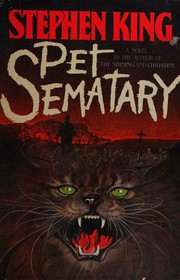
Pet Sematary
Stephen King · 1983 · Book
Shares a bleak, unforgiving tone.
82% shared signal
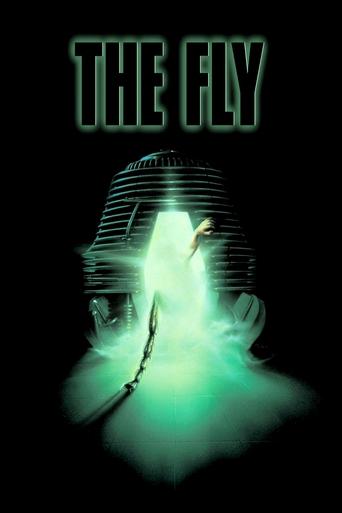
The Fly
David Cronenberg · 1986 · Film
Shares analog-era texture.
79% shared signal

Candyman
Bernard Rose · 1992 · Film
78% shared signal
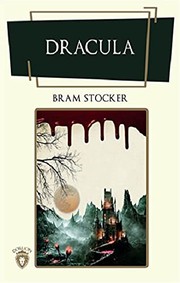
Dracula
Bram Stoker · 1897 · Book
Shares a supernatural threat.
72% shared signal
Ghost Story
Peter Straub · 1979 · Book
72% shared signal
See the full list of movies like The Exorcist →
Questions about The Exorcist
The things people actually ask about this film, answered.
What happens at the end of The Exorcist?
Merrin dies of a heart attack during the ritual. Karras invites the demon into himself, and in the moment he has control he throws himself out of the window and dies on the steps, taking it with him. Regan wakes with no memory of the possession.
Who is the demon in The Exorcist?
Pazuzu, an Assyrian wind demon — the statue Merrin confronts in the Iraq prologue, named explicitly in Blatty's novel. The film keeps it vague on purpose, letting the entity claim to be the Devil, a nobody and Karras's dead mother within one scene, because it lies to find weak points.
Why does Karras sacrifice himself?
Because nothing else is left. Merrin is dead, the ritual has failed and Regan is dying, so he takes the demon into his own body to get one moment of control over it — and uses that moment to kill himself. A priest who had lost his faith performs the film's most Christian act.
How gory is The Exorcist?
More than its reputation suggests. We score it 066 on viscera, higher than most of our index. The vomit and self-harm are explicit, and the arteriogram sequence — real medical equipment, real blood, several minutes long — is the part most viewers struggle with.
Is The Exorcist based on a true story?
It draws on the 1949 case of a Maryland boy, referred to as Roland Doe, whom Catholic priests subjected to an exorcism. Blatty changed the child's age, sex and city and invented the demon, the priests and the outcome. The documented case involved no levitation or rotating heads.
Is The Exorcist still scary?
For many viewers, yes, and for an unexpected reason. The supernatural material has been quoted into familiarity, but the first hour of hospitals and failing doctors still works exactly as designed, and the film's cruelty toward a child has not softened at all.
These are ranked against The Exorcist, not against you.
Build your own tape →