
Book · 1971
The Exorcist (1971)
William Peter Blatty
Half a novel of failed diagnoses, and then a priest who defeats a demon by volunteering.
67Hard going to sit through, out of 100 — mostly how bleak it is
- PaceSlow burn32
- ThreatSomething not human8
- GoreShows some of it58
- ToneNo relief at all14
- RealityGrounded34
Era bias 6 · Analog to the bone. Texture rather than fear, so it is not part of the grade. All six scores →
Carries a true-story claim — a real case, heavily changed
On VHSCREAM’s six-axis scale, The Exorcist (1971) is most extreme on the era-bias axis: 6 out of 100, where 0 is analog-era texture and 100 is modern craft. 3% of the 320 horror works we have scored come in lower on that axis. How we score →
The Exorcist is a 1971 novel by William Peter Blatty. An actress's eleven-year-old daughter begins behaving strangely in a rented house in Georgetown; the medical profession spends two hundred pages failing to explain it. We score it 008 on threat, which is nearly the floor of the supernatural end, and 032 on pace. The 1973 film is in this index separately, and the differences matter.
Scored and reviewed by VHSCREAM on · how we score
How scary is The Exorcist, actually?
Scored against the published rubric, here is what the numbers mean for a reader.
Threat 008 is almost the floor of the supernatural end. Only 1 work scores lower. Nothing human threatens anybody in this novel. There is a demon, a sick child and a great many adults doing their best, and the entity has no motive that can be bargained with.
Pace 032 is dread. 227 works are faster. The novel withholds the exorcism until its last quarter and spends the preceding three hundred pages on tests, specialists and a mother's deteriorating composure.
Era bias 006 is deep in the analog end. 303 works score higher. 1971 Georgetown, 1971 medicine, 1971 Catholicism, a film shoot with real film in it.
Viscera 058 is higher than the restraint of the prose suggests. 147 works score higher. Self-harm, a broken neck, the physical degradation of a child's body described clinically over weeks, and the medical procedures — which are the hardest passages in the book.
Tone 014 is bleak. 84 works score lower. The child is saved and both priests die for it, one of them having lost his faith on the way.
Reality anchor 034 is grounded. A rented house, a hospital, a police investigation, a university. The novel's whole strategy is to keep everything else ordinary.
On jump scares: none, in the way a novel cannot have them. The dread is cumulative and the worst material is medical.
Who should skip The Exorcist
Skip it if harm to a child is a limit. The subject is an eleven-year-old's body and mind being destroyed over several weeks, described in detail, including self-injury and sexual obscenity forced through her.
Skip it if you have read it for the film. The novel is slower, more medical and less visually frightening, and a reader expecting the film's pace will find the first half inert.
Skip it if religious despair is close to home. Karras's crisis is the real subject and the novel does not resolve it comfortingly.
Content notes: extended abuse and degradation of a child including sexual content, self-harm, a death by falling, animal cruelty described, blasphemy throughout by design, invasive medical procedures on a minor, and a suicide the novel frames as sacrifice.
Read it if you want the source rather than the adaptation, you are interested in a horror novel that is mostly about diagnosis, and an ending where a priest defeats a demon by making himself the better offer sounds worth four hundred pages.
The Exorcist on six axes of fear
Every work in the index is scored on six continuous axes of fear. This is what The Exorcist looks like as a vector — and what each ten-point band looks like across everything else we hold.
Where that puts it: #1 supernatural
Draft score — awaiting human review. About these scores
Disagree with a number? Say so on the axis itself. Nobody has confirmed this vector yet, and a score you challenge goes to the top of the queue to be re-scored by a human. Votes do not move the numbers — they decide what gets looked at first. How the scoring works →
Scored against the published rubric. This vector is a draft awaiting review — the method is public so you can argue with it.
Where to start with horror books →
Where to find it
Buy from an indie bookshop ↗Out-of-print copies on eBay ↗We earn nothing from these links.
The Exorcist: the review
A procedural about doctors, and then a novel about doubt
The thing nobody remembers about The Exorcist is how much of it is medicine. Blatty gives something close to half his novel to the investigation: EEGs, pneumoencephalograms, a parade of specialists, a psychiatrist, the suggestion of a temporal lobe lesion, and Chris MacNeil being told, repeatedly and with total professional confidence, things that turn out to be wrong. It reads as a hospital novel with something terrible in the upstairs bedroom, and the accumulation is why the eventual recourse to a priest lands as desperation rather than as superstition.
Blatty was a Catholic who wanted to write an argument for belief, and the novel is stranger than that intention. What it actually dramatises is how little comfort belief provides to the person who has it. Damien Karras does not doubt that God might exist; he doubts that it matters, and he is a psychiatrist as well as a priest, which means every instinct he has tells him the girl is ill and every instinct is being overridden by the evidence in front of him.
Regan, and what the novel does that the film cannot
The film is more frightening. The novel is more upsetting, and the difference is interiority. We are inside Chris MacNeil's head for most of it — a mother watching her daughter be replaced, managing a film shoot, lying to the staff, and eventually sitting in a room while something uses her child's larynx to describe her own private failures. Blatty writes the exhaustion of it: the laundry, the sedatives, the restraints, the sheer domestic labour of a possession.
He also keeps more ambiguity than the film has room for. The demon's claims are not reliable. Its knowledge is not demonstrably supernatural until quite late. And Blatty includes Lieutenant Kinderman, a detective investigating the death of the director Burke Dennings, who is both a comic creation and the novel's way of insisting that a crime has been committed in a world that has police in it.
Where it strains
The prose is often clumsy, Blatty's ear for dialogue deserts him with anybody under twenty, and Kinderman's columbo-ish circling is one scene too many. Merrin, so monumental in the film, is thin on the page — he arrives late, speaks in aphorisms and dies. And the obscenity of the possession, which was genuinely shocking in 1971, now reads in places as a man enumerating taboos rather than as a thing in a room.
What survives entirely is the ending, which is better than the film's and is the reason this is in the index.
The ending of The Exorcist explained
The ending, in full. Open it when you have seen it.
The short answer: Merrin dies of a heart attack mid-exorcism. Karras, alone with the thing in Regan, abandons the ritual and invites it into himself. It accepts. He then throws himself out of the bedroom window before it can take hold, and dies on the steps below, absolved by a fellow priest. Regan wakes with no memory of any of it.
Here is how the novel gets there.
Who or what is possessing Regan?
The novel points to Pazuzu, an Assyrian wind demon, through the statue Merrin encounters at the dig in Iraq in the opening pages. It is never stated outright in the text, and the demon itself claims to be the devil at one point and nobody in particular at another. Blatty's position is that its identity is less important than its method, which is not terror but demoralisation — it is there to make the people around Regan despair.
What does Karras actually do?
He makes the demon an offer. Having watched Merrin die and seen Regan failing, he stops performing the rite and simply says: take me. Come into me. The demon does. And Karras, in the few seconds he has before it takes hold, throws himself through the window — using his own death to remove it from the house and from the child.
Is that a suicide?
The novel treats it as the opposite, and deliberately leaves the theology open. Father Dyer administers the last rites and Karras responds — a hand squeeze — which is Blatty's way of saying the act was not despair. Whether the Church would agree is a question the novel raises and declines to settle.
What is different in the film?
Several things. The novel is far more medical and spends much longer on the failed diagnoses. Kinderman's investigation into Dennings's death is a substantial strand that the film reduces to a few scenes. The film adds the famous staircase and gives Merrin a visual grandeur he does not have on the page. And the film's ending is compressed to the point where some viewers do not register that Karras invites the demon in on purpose, which is the whole point.
Does Regan remember?
No, and the novel is careful about it. She wakes knowing nothing, is told nothing, and the final scene has Chris preparing to leave Georgetown with a daughter who is simply well. The cost was paid entirely by the two priests.
If The Exorcist is your kind of fear
The eight works closest to The Exorcist in the index on the five axes that describe fear, the same medium first — not by genre label, and not by what other people watched.
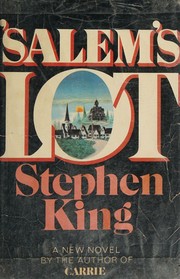
'salem's Lot
Stephen King · 1975 · Book
Shares a bleak, unforgiving tone.
90% shared signal
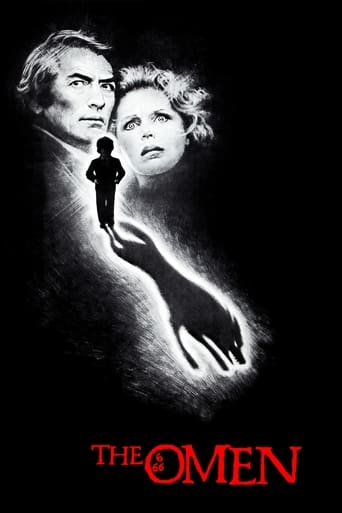
The Omen
Richard Donner · 1976 · Film
Shares a threat that is not human.
90% shared signal
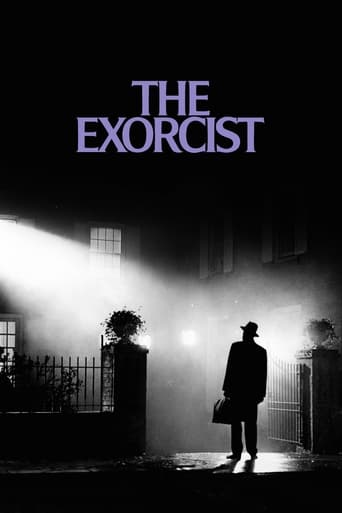
The Exorcist
William Friedkin · 1973 · Film
Shares a threat that is not human.
90% shared signal
The Ritual
David Bruckner · 2017 · Film
Shares a bleak, unforgiving tone.
89% shared signal
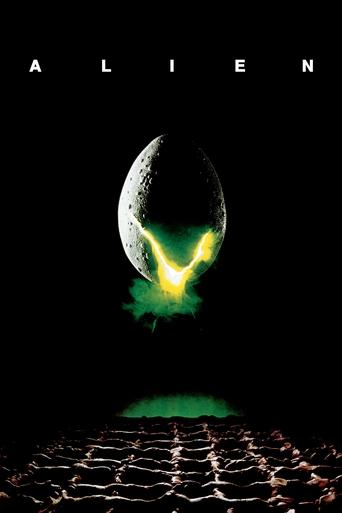
Alien
Ridley Scott · 1979 · Film
88% shared signal
The Dark and the Wicked
Bryan Bertino · 2020 · Film
Shares slow-burn dread.
88% shared signal
Nosferatu
Robert Eggers · 2024 · Film
Shares slow-burn dread.
88% shared signal
Hereditary
Ari Aster · 2018 · Film
88% shared signal
The Exorcist in another form
The index links works across media, so an adaptation sits beside its source and a score beside the film it haunts.
More lists like these: Movies like The Omen · Movies like The Exorcist · Movies like Alien · Movies like Hereditary
Questions about The Exorcist
The things people actually ask about this book, answered — including how it ends.
How does The Exorcist novel end?
Merrin dies of a heart attack during the rite. Karras, alone with the entity, stops the ritual and invites it into himself. When it accepts, he throws himself out of the window and dies on the steps below, receiving last rites from Father Dyer. Regan wakes with no memory of the possession.
What demon is in The Exorcist?
The novel points to Pazuzu, an Assyrian wind demon, through the statue Merrin finds at the Iraqi dig in the opening chapter. It is never named in the text, and the entity itself gives inconsistent answers. Blatty's interest is in its method — demoralisation rather than terror.
Why does Karras jump out of the window?
Because he has just invited the demon into himself to get it out of Regan, and he has only seconds before it takes control. The fall is the only way to remove it. The novel frames this as sacrifice rather than suicide and has a priest absolve him as he dies.
How is the book different from the film?
The novel gives far more space to the medical investigation and to Lieutenant Kinderman's inquiry into Burke Dennings's death, and far less to spectacle. The film is more frightening; the novel is more interior, and its ending is clearer about Karras making the demon an offer.
Is The Exorcist based on a true story?
On a real case, loosely. Blatty drew on the 1949 exorcism of a boy in Maryland, which he read about as a student. Everything else — the family, the actress, the priests, Georgetown — is invented.
What should I read after The Exorcist?
A Dark Song for a ritual filmed as procedure, The Omen for the other great 1970s religious horror, and possession horror for the guide to the subgenre with every work in this index scored.
These are ranked against The Exorcist, not against you.
Build your own tape →