Film · 1976
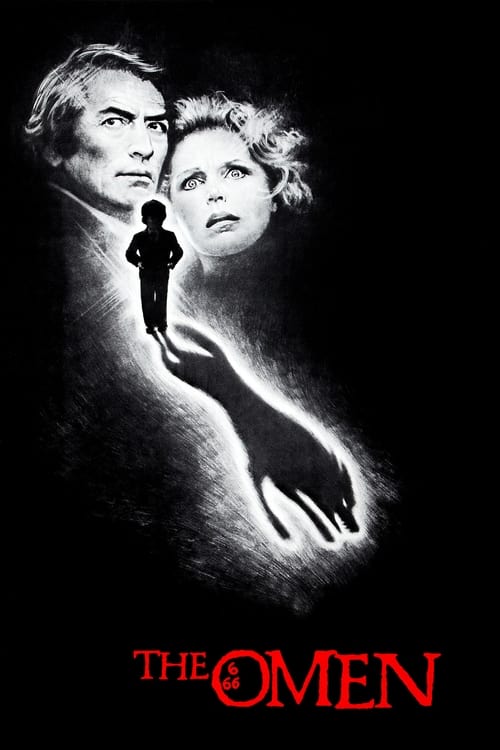
The Omen
Richard Donner
Stately, humourless, and it kills people in ways you remember for thirty years.
Most extreme on THE THREAT — a supernatural threat at 006
On VHSCREAM’s six-axis scale, The Omen (1976) is most extreme on the threat axis: 6 out of 100, where 0 is a supernatural threat and 100 is human monsters. 0% of the 105 horror works we have scored come in lower on that axis. How we score →
The Omen is a 1976 horror film directed by Richard Donner. An American diplomat is persuaded to substitute a newborn for his own stillborn son without telling his wife, and the child he raises is the Antichrist. We score it 006 on the threat axis — 104 of 105 works score higher, which puts it at the supernatural floor — and 008 on tone.
Scored and reviewed by VHSCREAM on · how we score
The Omen: the review
The Omen is a film about an institution, and the institution is a family with a staff.
Donner's decision — and it is the one that separates this from the decade's other occult films — was to shoot it as a prestige drama. Gregory Peck plays Robert Thorn with the gravity of a man in an adaptation of a serious novel, the locations are embassies and country houses and Pyrford church, Gilbert Taylor's photography is cold and formal, and nothing in the staging winks. The horror arrives inside that register: the nanny stopping in the middle of a children's party to look up at a window, say "look at me, Damien, it's all for you", and step off a roof with a noose on.
That is the film's method throughout. The deaths are enormous, elaborate and delivered deadpan — a lightning rod through a priest in a churchyard, a sheet of plate glass sliding off a lorry and decapitating a photographer, a mother tipped over a landing by a child on a tricycle and later put through a hospital window. Each one is staged as a set piece and played as an inquest.
Jerry Goldsmith's score is the film
"Ave Satani" — a Latin black mass sung by a choir over a driving orchestral figure — is the only Academy Award Goldsmith ever won and it does something no other horror score of the period does: it tells you, from the first frame, what the film will spend two hours proving. Without it this is a well-made thriller about a worried diplomat.
Harvey Stephens is not doing much and that is correct
Damien has very few lines and almost no behaviour. He rides a tricycle, he screams at a church, he smiles at the end. The film understands that an articulate evil child is a different and lesser proposition, and keeps him as an object the adults are frightened of rather than a performer.
Where it is weak
Billie Whitelaw's Mrs Baylock is wonderful and the Rottweilers are not, and the dog attack in the cemetery is the one sequence where the film's seams show. The Megiddo exposition is a lump. And David Warner's Jennings, who is the best company in the film, exists to be killed by a plate of glass.
For the possession film it is in direct commercial conversation with, The Exorcist; for the conspiracy-against-a-mother version of the same idea, Rosemary's Baby; for the modern studio franchise built on this template, The Nun.
The ending of The Omen explained
Total spoilers from here. Everything above this line is spoiler-free.
The short answer: Thorn confirms everything — the jackal skeleton in the Cerveteri cemetery, his own murdered infant beside it with a crushed skull, and the birthmark under Damien's hair. He kills Mrs Baylock, drags Damien out of the house and into a church to kill him on consecrated ground with the daggers of Megiddo, as Bugenhagen instructed. He has the boy on the altar and the first dagger raised when armed police, called after the struggle, shoot him dead. The final scene is a state funeral for Robert and Katherine Thorn, attended by the President of the United States, who with the First Lady has become Damien's guardian. Damien, holding the First Lady's hand, turns and looks into the camera and smiles.
Is Damien the Antichrist in The Omen?
Yes, and the film establishes it as fact rather than suspicion. The evidence stacks in order: a jackal's skeleton in the grave recorded as his mother's, the Thorns' own murdered newborn buried beside it, Father Brennan's account of the birth, Bugenhagen's reading of the Book of Revelation, and finally the 666 birthmark. Nothing in the film offers a rational alternative, which is a very different structure from The Exorcist and from Rosemary's Baby.
Where is the 666 birthmark?
On Damien's scalp, under his hair. Brennan tells Thorn to look for the mark of the beast on the boy's body; Bugenhagen says it may be beneath the hair if it is nowhere else. Thorn finds it by cutting Damien's hair while he sleeps, which is the most frightening scene in the film precisely because it is a father with scissors over a sleeping child, and the child wakes.
What are the daggers of Megiddo?
Seven ceremonial daggers given to Thorn by Carl Bugenhagen, an archaeologist excavating at Megiddo, with instructions for killing the Antichrist: it must be done on consecrated ground, and the first blade must go into the heart, the remaining six forming a cross. Bugenhagen also tells him the child's blood must be spilled on holy ground — which is why the film's climax is in a church rather than in the house.
How do Katherine and Robert Thorn die?
Katherine is first pushed over an upstairs landing by Damien riding his tricycle into her stepladder, falling two floors and losing the pregnancy; she survives in hospital and is then thrown through the window of her room by Mrs Baylock. Robert is shot by police inside the church, with the dagger raised over Damien, in the last seconds of the film. Both get a state funeral and neither is believed.
Who is Father Brennan?
The priest who was present at Damien's birth and who tries to warn Thorn in a park and then in his office, speaking in Revelation and asking to be allowed to confess. He is dying, his body is marked, and he is killed in a churchyard during a storm by a lightning rod driven off a spire through his back. His rented room is papered with pages of scripture and he leaves behind the poem that tells Thorn where to go.
Is The Omen connected to The Exorcist?
Only commercially. It has no shared characters or continuity; it was written by David Seltzer and made by Twentieth Century Fox in the wake of The Exorcist's success, and it takes the opposite approach — an institutional thriller with an unambiguous supernatural cause, rather than an ambiguous assault on one household.
How scary is The Omen, actually?
Scored against the published rubric, here is what the numbers mean.
The threat at 006 is at the supernatural floor — 104 works score higher. The cause is biblical prophecy, the agents are a priest, a nanny and a dog, and the film permits no mundane reading.
Tone 008 is bleak — 11 works score lower. Every sympathetic character in the film dies and the Antichrist is adopted by the President of the United States.
Viscera 062 is above the median — 77 works score lower. A decapitation shown in full, an impalement, a hanging, two falls from height and a dog attack.
Era bias 010 is deep analog — only 17 works score lower. 1976 Panavision, in-camera effects, practical stunts and a choral score recorded live.
Pace 044 sits just on the dread side — 61 works are slower. It is paced like a procedural and the set pieces are widely spaced.
Reality anchor 026 is grounded — 14 works score lower. Embassies, hospitals, a churchyard, a cemetery in Italy. No sequence bends.
On jump scares: two, and the film's effects are built on dread and on the score instead.
The Omen on six axes of fear
Every work in the index is scored on six continuous axes of fear. This is what The Omen looks like as a vector.
Where that puts it: #1 supernatural · #5 bleakest · #11 analog era · #13 grounded
Disagree with a number? Say so on the axis itself. Nobody has confirmed this vector yet, and a score you challenge goes to the top of the queue to be re-scored by a human. Votes do not move the numbers — they decide what gets looked at first. How the scoring works →
Scored against the published rubric. This vector is a draft awaiting review — the method is public so you can argue with it.
Who should skip The Omen
Skip it if a child in danger is a hard limit. The film's last twenty minutes consist of a father attempting to murder a five-year-old, and it is shot to be horrifying from the child's side as well.
Skip it if animal attacks are a problem. The Rottweilers are used heavily and the cemetery sequence is a sustained mauling.
Skip it if the elaborate deaths will strike you as silly. The plate-glass decapitation and the lightning rod are played with total seriousness and some viewers cannot take them that way.
Content notes: the murder of a newborn, a nanny's suicide by hanging shown on screen, a decapitation, an impalement, a fall causing a miscarriage, a woman thrown from a hospital window, a dog attack in a graveyard, and a parent attempting to kill a child at length.
Watch it if you want the most straight-faced occult film of the seventies, you can take set-piece deaths played as inquests, and you want to hear the only horror score ever to win an Academy Award.
Where to find it
Rent or buy from Amazon Video · Apple TV Store · Google Play Movies +2 ↗Physical copies on eBay ↗Availability from JustWatch via TMDB. We earn nothing from these links.
Nothing loads from YouTube until you press play.
If The Omen is your kind of fear
The eight works closest to The Omen in the index, ranked by distance across all six axes — not by genre label, and not by what other people watched.
The Exorcist
William Friedkin · 1973 · Film
Shares a supernatural threat.
93% shared signal
Alien
Ridley Scott · 1979 · Film
Shares analog-era texture.
86% shared signal
Pet Sematary
Stephen King · 1983 · Book
Shares a bleak, unforgiving tone.
81% shared signal
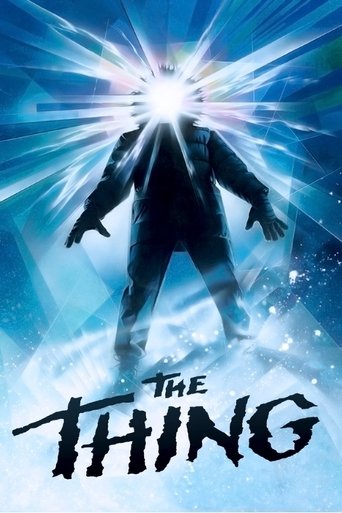
The Thing
John Carpenter · 1982 · Film
Shares analog-era texture.
79% shared signal
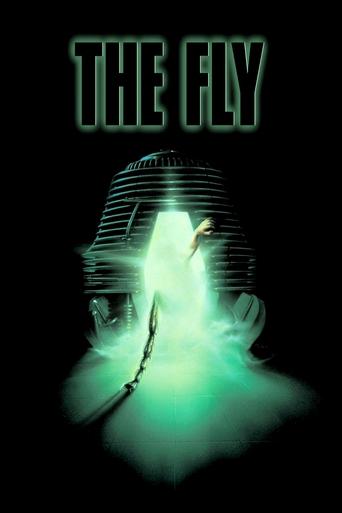
The Fly
David Cronenberg · 1986 · Film
Shares a bleak, unforgiving tone.
75% shared signal
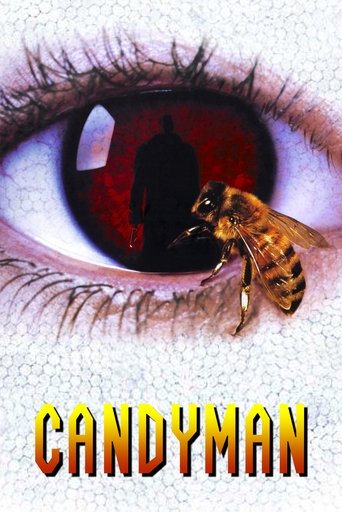
Candyman
Bernard Rose · 1992 · Film
74% shared signal
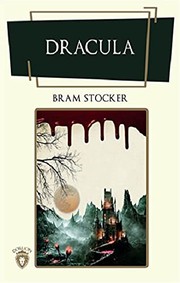
Dracula
Bram Stoker · 1897 · Book
71% shared signal
Ring
Koji Suzuki · 1991 · Book
Shares a supernatural threat.
70% shared signal
See the full list of movies like The Omen →
Questions about The Omen
The things people actually ask about this film, answered.
What happens at the end of The Omen?
Thorn confirms Damien's birthmark, kills Mrs Baylock and drags the boy into a church to stab him with the daggers of Megiddo. Police shoot him before he can. The last scene is the Thorns' state funeral, with Damien now the ward of the President of the United States, turning to smile at the camera.
Where is Damien's 666 birthmark in The Omen?
On his scalp, beneath his hair. Bugenhagen tells Thorn that if the mark is nowhere on the body it will be under the hair, and Thorn finds it by cutting the sleeping child's hair with scissors — at which point Damien wakes.
What are the daggers of Megiddo?
Seven ritual blades given to Thorn by the archaeologist Bugenhagen, the only means the film offers of killing the Antichrist. The killing must happen on consecrated ground, the first dagger into the heart and the other six arranged as a cross.
Is Damien actually the Antichrist?
The film says yes and offers no alternative. A jackal's skeleton lies in his mother's grave with the Thorns' murdered infant beside it, Father Brennan was present at the birth, and the 666 mark is found. Unlike The Exorcist, The Omen never entertains a rational explanation.
How does Katherine Thorn die in The Omen?
In two stages. Damien rides his tricycle into her stepladder and she falls two floors, losing her pregnancy. She survives in hospital and is then thrown through the window of her room by Mrs Baylock, the nanny sent to protect Damien.
Is The Omen gory?
More than its reputation. We score it 062 on viscera, above the median for our index, largely on the strength of one full decapitation, an impalement through the body, a hanging and a sustained dog attack.
These are ranked against The Omen, not against you.
Build your own tape →