
Book · 1975
'salem's Lot (1975)
A vampire picks a dying Maine town because a dying town has stopped asking where people went.
66Hard going to sit through, out of 100 — mostly how bleak it is
- PaceBuilds, then strikes38
- ThreatMostly supernatural18
- GoreShows some of it48
- ToneNo relief at all12
- RealityTilts unreal42
Era bias 14 · Analog to the bone. Texture rather than fear, so it is not part of the grade. All six scores →
The bleakest horror novels ever written →
On VHSCREAM’s six-axis scale, 'salem's Lot (1975) is most extreme on the tone axis: 12 out of 100, where 0 is a bleak, unforgiving tone and 100 is gleeful black comedy. 19% of the 320 horror works we have scored come in lower on that axis. How we score →
'Salem's Lot is a 1975 novel by Stephen King, his second. A writer returns to the Maine town he grew up in to write about its derelict house, and arrives in the same week as a man called Barlow, who has bought it. We score it 012 on tone, which is bleaker than most of this index, because the question the novel answers is not whether the vampire is stopped but how much of the town is left.
Scored and reviewed by VHSCREAM on · how we score
How scary is 'salem's Lot, actually?
Scored against the published rubric, here is what the numbers mean for a reader.
Tone 012 is the signature. 60 works score lower. The love interest is staked by the hero, the priest is broken rather than martyred, the teacher dies of a heart attack, and the resolution is arson. Nothing about this book is the romp it is remembered as.
Threat 018 is deep in the supernatural end. 257 works score higher. Barlow is a vampire with no human motive to appeal to, and the human characters who help him are servants rather than threats.
Era bias 014 is analog. 261 works score higher. A 1975 Maine of party lines, drive-ins, a dump with a caretaker and a school bus driver who knows every child by name. The texture is the novel's main pleasure.
Viscera 048 is middling and placed carefully. 194 works score higher. Several stakings described in full, one death by knives, and a great deal of blood — but King's instinct here is for the moment before rather than the moment itself.
Pace 038 is on the dread side. 210 works are faster. The first act is a town census. The acceleration, once it starts, does not stop.
Reality anchor 042 is grounded. The Lot is a real place with a real economy, and the one element the novel leaves unexplained is the house, which is the right thing to leave unexplained.
On jump scares: one, and it is the most famous image in the book. A boy floating outside a bedroom window, asking to be let in.
Who should skip 'salem's Lot
Skip it if a slow first act will defeat you. Two hundred pages of small-town business precede the horror, and that is the book's method rather than a flaw to be endured.
Skip it if you need the hero to save the woman. Susan is turned and Ben kills her, and the novel offers no version where this is avoidable.
Skip it if a priest's faith failing will land badly. Callahan's scene with Barlow is a sustained spiritual humiliation and the novel does not give it back to him.
Content notes: child death and child vampires, the staking of a sympathetic character, domestic violence and child abuse depicted among the townspeople, animal death, a murder-suicide, alcoholism, and 1970s language about race and sexuality throughout.
Read it if you want the best small-town horror novel anybody has written, you can take two hundred pages of groundwork, and a vampire story where the vampire wins the town and loses only the fight sounds like the right correction to the genre.
'salem's Lot on six axes of fear
Every work in the index is scored on six continuous axes of fear. This is what 'salem's Lot looks like as a vector — and what each ten-point band looks like across everything else we hold.
Where that puts it: #7 supernatural
Draft score — awaiting human review. About these scores
Disagree with a number? Say so on the axis itself. Nobody has confirmed this vector yet, and a score you challenge goes to the top of the queue to be re-scored by a human. Votes do not move the numbers — they decide what gets looked at first. How the scoring works →
Scored against the published rubric. This vector is a draft awaiting review — the method is public so you can argue with it.
Where to start with horror books →
Where to find it
Buy from an indie bookshop ↗Out-of-print copies on eBay ↗We earn nothing from these links.
'salem's Lot: the review
The book where King worked out what he was for
Carrie was a good first novel. 'Salem's Lot is the one where the method arrives: take a real town, build it out of forty people's private business until the reader knows whose marriage is failing and who waters the beer, and then introduce something that eats it. The vampire is almost incidental for the first two hundred pages. What you get instead is the dump, the school bus, the realtor, the drunk, the bad father, the gossip, the priest who has stopped believing in a way he has not admitted to himself.
King said he was trying to put Dracula in twentieth-century America, and the specific insight is the best idea in the book: Stoker's vampire fails because Victorian London is full of people who notice things and write them down. A dying small town is a far better hunting ground, because it is already losing people and has stopped asking where they went.
The Marsten House
The house is doing something the plot does not require and the novel is better for it. It is a bad house before Barlow arrives — a murder-suicide, a view over the town, a thing Ben Mears saw inside it as a child that the book never fully explains. Barlow does not make it evil; he recognises it. That the novel leaves the relationship between the house and the vampire unresolved is a choice King has not often repeated and should have.
It is crueller than its reputation
People remember 'Salem's Lot as the fun one, the Hammer-film one, the boy at the window. It is not. Susan Norton, the romantic lead, is turned at the midpoint and Ben has to put a stake through her himself. Father Callahan, the novel's moral centre, fails — not heroically, not tragically, but in a scene of total humiliation where his faith is tested on Barlow's terms and found insufficient, and he spends the rest of his life knowing it. Matt Burke dies in a hospital bed of an ordinary heart attack. Jimmy Cody dies on a staircase in a trap made of kitchen knives.
The survivors are a writer and a child, and what they do at the end is burn the town down.
Where it strains
The first act is long by any standard and the roll-call of townspeople will lose readers who want the vampire to arrive. Barlow himself, once he speaks, is less frightening than his absence was — a problem Stoker also had. Mark Petrie is a boy of a kind that exists mainly in King novels: resourceful, unshakeable, correct. And the prose is 1975 King, which means some of the worst similes of his career sit alongside some of the best writing about small towns anybody has done.
Even so: this and Dracula are the two vampire novels that matter, and only one of them has a priest who loses.
The ending of 'salem's Lot explained
The ending, in full. Open it when you have seen it.
The short answer: Ben Mears and Mark Petrie kill Barlow with a stake. It is too late — most of the town is already turned, and the two of them leave. A year later they come back and set fire to Jerusalem's Lot, intending to burn out what is left in the cellars and under the floorboards. The novel's last pages are a fire that may or may not be enough.
Here is how the novel gets there.
Who is Barlow?
An ancient vampire who buys the Marsten House through a human familiar, Richard Straker, and establishes himself in a town small enough and tired enough that the disappearances take weeks to register. He is articulate, contemptuous and entirely confident, and the novel is careful to show that he is not the first bad thing to occupy that house.
What happens to Father Callahan?
The novel's hardest sequence. Callahan confronts Barlow with his faith and his crucifix and is beaten on exactly those terms — the cross's power fades as his conviction does, and Barlow forces him to drink his blood. He is not killed and not turned. He is made unclean, unable to enter his own church, and he leaves town. It is the most unsparing thing in the book and King thought enough of it to bring him back decades later in the Dark Tower novels.
What happens to Susan Norton?
She goes into the Marsten House alone, is taken, and returns as a vampire. Ben Mears stakes her himself. The novel gives this no triumph whatsoever; it is simply the price of his having been right.
Who survives?
Ben and Mark, and that is all that matters to the plot. A handful of residents left before it was too late and do not reappear. The town itself does not survive in any sense — by the final movement, Jerusalem's Lot is a place where the remaining population is under the houses.
Why do they burn the town?
Because staking Barlow does not undo the vampires he made, and because the two of them cannot work through a town's worth of cellars one at a time. A forest fire spreading into the Lot is the only tool available at the right scale. The novel ends on the fire rather than after it, which is deliberate: King does not confirm that it worked.
If 'salem's Lot is your kind of fear
The eight works closest to 'salem's Lot in the index on the five axes that describe fear, the same medium first — not by genre label, and not by what other people watched.
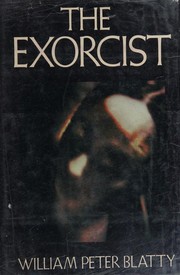
The Exorcist
William Peter Blatty · 1971 · Book
Shares a bleak, unforgiving tone.
90% shared signal
The Ritual
David Bruckner · 2017 · Film
Shares a threat that is not human.
95% shared signal
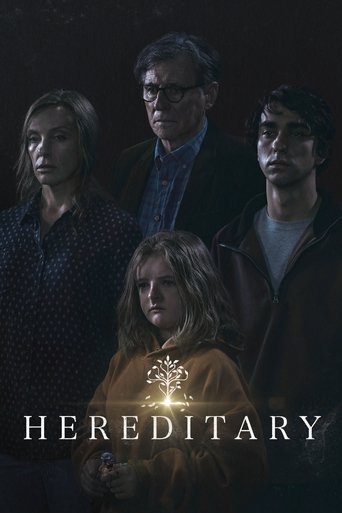
Hereditary
Ari Aster · 2018 · Film
Shares a bleak, unforgiving tone.
92% shared signal
Paranormal Activity: Next of Kin
William Eubank · 2021 · Film
Shares a threat that is not human.
89% shared signal
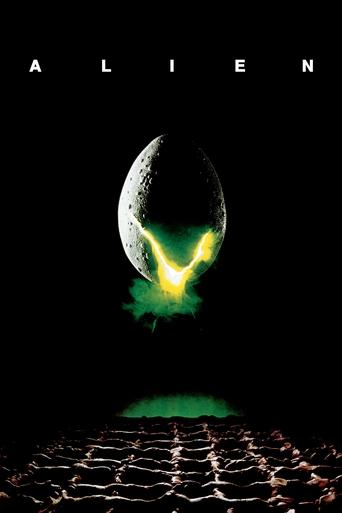
Alien
Ridley Scott · 1979 · Film
89% shared signal
Alien 3
David Fincher · 1992 · Film
89% shared signal
'salem's Lot
Tobe Hooper · 1979 · Television
87% shared signal
Nosferatu
Robert Eggers · 2024 · Film
87% shared signal
'salem's Lot in another form
The index links works across media, so an adaptation sits beside its source and a score beside the film it haunts.
More lists like these: Movies like Hereditary · Movies like Alien
Questions about 'salem's Lot
The things people actually ask about this book, answered — including how it ends.
How does 'Salem's Lot end?
Ben Mears and Mark Petrie stake Barlow, but most of the town has already been turned and the two of them leave. A year later they return and start a fire intended to burn out the vampires still hiding in the cellars. The novel ends on the fire without confirming that it worked.
Who is Barlow in 'Salem's Lot?
An ancient vampire who buys the Marsten House through his human familiar Richard Straker and feeds on a Maine town small enough that the disappearances take weeks to be noticed. The novel's premise is that a dying town is a better hunting ground than Stoker's London.
What happens to Father Callahan?
He confronts Barlow on the strength of his faith, and his crucifix fails as his conviction does. Barlow forces him to drink his blood. He is neither killed nor turned — he is made unable to enter his own church, and he leaves. King returned to him decades later in the Dark Tower books.
Is 'Salem's Lot based on Dracula?
Deliberately. King set out to put Stoker's vampire in 1970s America, and the novel's central idea is the inversion: Dracula is defeated by a city of people who notice and record things, so Barlow chooses a town that has stopped doing either.
Is 'Salem's Lot scary or sad?
Both, and we score it 012 on tone, which is bleaker than most of this index. The famous image is a child at a window; the actual weight of the book is a staked girlfriend, a broken priest and a burning town.
What should I read after 'Salem's Lot?
Dracula for the original it is answering, Pet Sematary for King at his most merciless, and vampire horror for every vampire work in this index with its scores.
These are ranked against 'salem's Lot, not against you.
Build your own tape →