
Book · 1897
Dracula
Bram Stoker
Epistolary, bureaucratic, and far stranger than its adaptations.
Most extreme on ERA BIAS — analog-era texture at 004
On VHSCREAM’s six-axis scale, Dracula (1897) is most extreme on the era-bias axis: 4 out of 100, where 0 is analog-era texture and 100 is modern craft. 3% of the 105 horror works we have scored come in lower on that axis. How we score →
Dracula is an 1897 novel by Bram Stoker, told entirely through journals, letters, telegrams, newspaper cuttings and phonograph recordings. A Transylvanian nobleman buys property in England and moves there. We score it 004 on era bias — only 3 works read more analog — and 030 on the threat axis.
Scored and reviewed by VHSCREAM on · how we score
Dracula: the review
Dracula is a novel about office technology and that is why it is still frightening.
Everybody remembers the first eighty pages: Jonathan Harker's coach through the Borgo Pass, the castle with no servants, the shaving mirror with no reflection, the three women in the moonlit room, the crawling descent down the wall, the baby in the sack. It is the best opening in Victorian horror and it is also unrepresentative of the book, because once Harker escapes, Dracula becomes a procedural about a small committee defeating a supernatural threat with filing.
The novel's method is its argument. Mina Harker is a typist who transcribes everyone's shorthand, collates Seward's phonograph cylinders with Harker's diary and the Demeter's log and the Whitby newspaper, and produces a single chronological document — and it is that document, not a crucifix, that locates Dracula's fifty boxes of earth. Stoker's monster is ancient, feudal and solitary; the people who kill him have railway timetables, a stenographer, blood transfusion, a Winchester and the telegraph. It is a book about the nineteenth century winning.
Mina is the protagonist and the book knows it
Van Helsing says so explicitly. She is the only member of the group who has read everything, she volunteers for the hypnosis that turns her own infection into a tracking device, and she insists on the clause that the others must kill her if she turns. The novel's sexual politics are of their period and worse in places, but its best character is a working woman who does the intellectual labour.
Where it drags
The middle act is repetitive: Lucy declines, is transfused, declines again. Van Helsing's dialect English is close to unreadable in long speeches. Quincey Morris exists mainly to be American. And Stoker loses interest in Dracula himself for two hundred pages — the Count barely appears between Whitby and the chase.
Renfield is the best thing in the second half
A patient in Seward's asylum who eats flies, then spiders, then birds, building a hierarchy of consumed life, and who is in contact with something outside. His arc is the only place the novel lets the horror be psychological, and his death — spine broken on his cell floor after being used and discarded — is the one genuinely pitiable thing in it.
For the novel that preceded it and argued the opposite case about monstrousness, Frankenstein; for the modern vampire story that inverts its morality completely, Let the Right One In; for the same epistolary apparatus used to generate dread, House of Leaves.
The ending of Dracula explained
Total spoilers from here. Everything above this line is spoiler-free.
The short answer: the group pursues Dracula's last box of earth up the Sereth and the Bistritz towards his castle. Van Helsing goes ahead with Mina and destroys the three women in the castle. The others intercept the gypsies' wagon at sunset on the road below. Harker and Quincey Morris cut through the escort, prise the lid off the box, and kill him: Harker's kukri knife across the throat, Morris's bowie knife through the heart. Dracula crumbles to dust in the same instant, with what Mina records as a look of peace on his face. Mina's scar vanishes. Quincey Morris dies of a wound taken in the fight. A note seven years later records that the Harkers have a son named Quincey, and that the pile of paper is the only evidence any of it happened.
How is Dracula actually killed?
With two knives, at sunset, in a road. Harker uses a Nepalese kukri on the throat and Morris drives a bowie knife into the heart. He is not staked through the heart, not burned, not beheaded with a ritual implement and not destroyed by sunlight — the novel's sunlight merely limits his powers. The staking in popular memory belongs to Lucy, who is staked, beheaded and has her mouth filled with garlic, and to the three women in the castle.
Who is Van Helsing in Dracula?
Abraham Van Helsing, a Dutch physician, lawyer, philosopher and philologist, brought in by his former student John Seward to diagnose Lucy. He is not a professional vampire hunter; he is a polymath who recognises what he is looking at and then improvises a method from folklore and medicine. The novel gives him the transfusions, the host wafer, the hypnosis of Mina and most of its theology, and also the worst prose in it.
Why is Dracula written as letters and diaries?
Because the horror depends on documentation. Each narrator knows only part of what is happening, so the reader assembles the threat ahead of the characters — the Demeter's log, read alone, is a ship's crew vanishing one by one for no reason. And the plot is literally solved by collation: Mina types everything into one chronology, which is what reveals the pattern of the property purchases. The form is also the novel's final joke, since Harker's closing note points out that nothing in the pile is admissible as proof.
What happens to Lucy Westenra?
She is bitten over weeks while sleepwalking in Whitby, receives four transfusions from four different men, dies, and returns as a vampire preying on children near her tomb in Hampstead, where the newspapers call her the "bloofer lady". Arthur Holmwood, her fiancé, drives the stake; Seward beheads her and fills her mouth with garlic. Her death is the novel's model for how this is done, which is why readers assume Dracula dies the same way.
Who is Renfield?
A patient in Seward's asylum who consumes flies, then feeds the flies to spiders and the spiders to birds, accumulating what he calls lives. He is in psychic contact with Dracula, who has promised him something and who uses his invitation to enter the asylum. When Renfield objects to how Mina is being treated, Dracula breaks his back and leaves him on the floor of his cell to die.
Is Dracula based on Vlad the Impaler?
Loosely and late. Stoker's notes show the character began as "Count Wampyr" of Styria and acquired the name Dracula from a single library source on Wallachian history, which gave him a name, a nationality and a line about a voivode who fought the Turks. There is no impalement, no 1462 campaign and no Romanian biography in the novel. The modern identification of the Count with the historical Vlad III is a twentieth-century addition.
How scary is Dracula, actually?
Scored against the published rubric, here is what the numbers mean.
Era bias 004 is deep analog — only 3 works read more analog. Shorthand, phonograph cylinders, typewriters, telegrams and railway timetables are the novel's actual technology.
The threat at 030 is on the supernatural side — 35 works score lower. Dracula is unambiguously not human, and the novel's only human cruelty is the asylum.
Viscera 032 is low — 37 works score lower. A staking, a beheading, a throat cut, a broken spine and a forced blood-drinking, all reported rather than dwelt on.
Pace 024 is slow — 29 works are slower. The middle three hundred pages are correspondence, diagnosis and property records.
Tone 030 is less bleak than most of the index — 77 works score lower. The committee wins, the marriage survives, the child is born and the monster dies with peace on his face.
Reality anchor 044 is just under the midpoint. The rules are consistent, stated and testable, which is unusual for a supernatural novel and is most of why it works.
On shocks: a handful, almost all of them in the Transylvanian opening.
Dracula on six axes of fear
Every work in the index is scored on six continuous axes of fear. This is what Dracula looks like as a vector.
Where that puts it: #6 supernatural · #7 without gore · #9 slow burn
Disagree with a number? Say so on the axis itself. Nobody has confirmed this vector yet, and a score you challenge goes to the top of the queue to be re-scored by a human. Votes do not move the numbers — they decide what gets looked at first. How the scoring works →
Scored against the published rubric. This vector is a draft awaiting review — the method is public so you can argue with it.
Who should skip Dracula
Skip it if Victorian prose defeats you. The novel is long, repetitive in the middle, and Van Helsing's speeches are written in a deliberate broken English that many readers cannot get through.
Skip it if you want the Count on the page. Dracula appears in perhaps a fifth of the book and vanishes almost completely between Whitby and the final chase.
Skip it if the period's sexual politics will spoil it. The novel's treatment of Lucy's desire as a symptom, and of Mina's worth as an exception, is of 1897 and is not interrogated.
Content notes: an infant fed to vampires, the killing of children implied, a woman staked and beheaded, forced blood-drinking framed in sexual terms, a patient killed by having his spine broken, animal consumption described in detail, and a sustained depiction of asylum confinement.
Read it if you want the novel that set every vampire rule still in use, you can take a long epistolary middle, and you want to see Victorian bureaucracy beat a feudal monster with a typewriter and a train schedule.
Where to start with horror books →
Where to find it
Buy from an indie bookshop ↗Out-of-print copies on eBay ↗We earn nothing from these links.
If Dracula is your kind of fear
The eight works closest to Dracula in the index, ranked by distance across all six axes — not by genre label, and not by what other people watched.
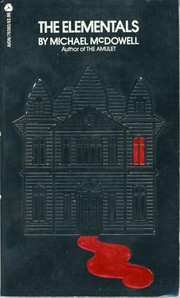
The Elementals
Michael McDowell · 1981 · Book
Shares analog-era texture.
91% shared signal

The Fog (OST)
John Carpenter · 1980 · Record
Shares a bleak, unforgiving tone.
89% shared signal
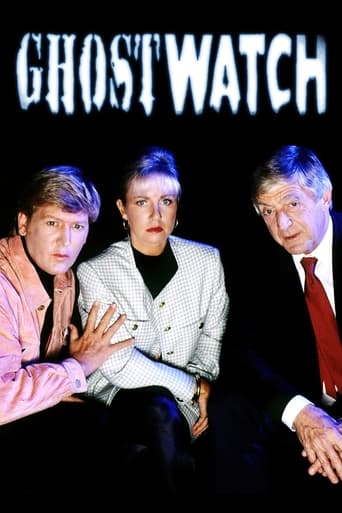
Ghostwatch
BBC · 1992 · Television
Shares slow-burn dread.
87% shared signal
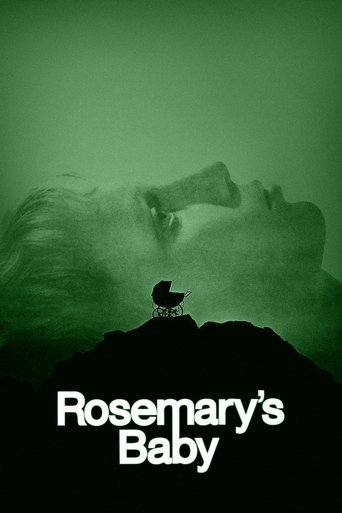
Rosemary's Baby
Roman Polanski · 1968 · Film
Shares restraint over gore.
85% shared signal
Ghost Story
Peter Straub · 1979 · Book
Shares analog-era texture.
85% shared signal
Ring
Koji Suzuki · 1991 · Book
Shares a supernatural threat.
83% shared signal

Frankenstein
Mary Shelley · 1818 · Book
Shares slow-burn dread.
82% shared signal
The Shining
Stephen King · 1977 · Book
Shares a bleak, unforgiving tone.
81% shared signal
See the full list of books like Dracula →
Questions about Dracula
The things people actually ask about this book, answered.
How does Dracula die in the novel?
Jonathan Harker cuts his throat with a kukri knife and Quincey Morris drives a bowie knife into his heart, at sunset, on the road below the castle. He crumbles to dust immediately. He is not staked, not beheaded with a ritual blade and not destroyed by sunlight.
What happens at the end of Dracula?
Van Helsing destroys the three women in the castle while the others intercept the wagon carrying Dracula's box and kill him with two knives. Mina's scar disappears and Quincey Morris dies of his wounds. A note seven years later records the Harkers' son, named after him.
Who is Van Helsing in Dracula?
A Dutch physician, lawyer and philologist called in by his former student John Seward to diagnose Lucy Westenra. He is a polymath rather than a vampire hunter, and he assembles a method out of folklore and medicine as he goes.
Why is Dracula written as diaries and letters?
Because the dread depends on partial knowledge and the solution depends on collation. Each narrator sees a fragment, the reader assembles the threat first, and the plot is literally cracked when Mina types every document into one chronology.
Is Dracula based on Vlad the Impaler?
Barely. Stoker's working notes show the character started as a Styrian "Count Wampyr" and picked up the name from one book on Wallachian history. The novel contains no impalement and no Romanian biography; the identification with Vlad III was made in the twentieth century.
Is Dracula scary to read now?
The first eighty pages are, and so is Renfield. We score the novel 004 on era bias and 024 on pace — among the oldest and slowest things we hold — and its fear is cumulative and procedural rather than immediate.
These are ranked against Dracula, not against you.
Build your own tape →