Television · 2018
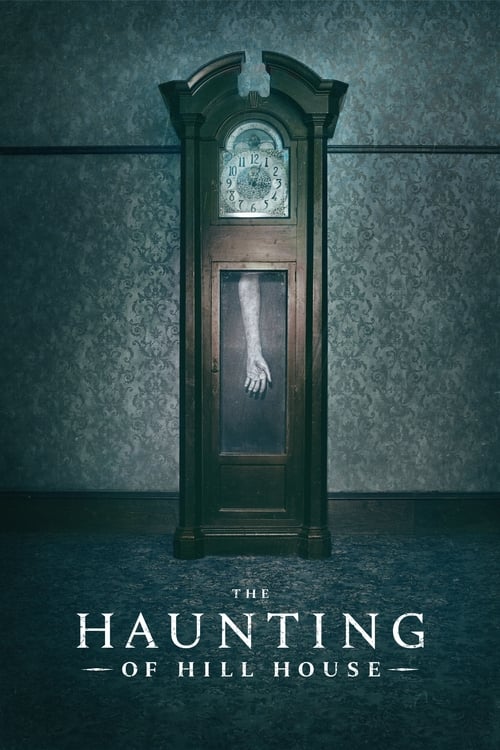
The Haunting of Hill House
Family trauma with a bent-neck lady standing in the back of every frame.
Most extreme on ERA BIAS — modern craft at 088
On VHSCREAM’s six-axis scale, The Haunting of Hill House (2018) is most extreme on the era-bias axis: 88 out of 100, where 0 is analog-era texture and 100 is modern craft. 87% of the 105 horror works we have scored come in lower on that axis. How we score →
The Haunting of Hill House is a ten-part 2018 series written and directed by Mike Flanagan, which takes Shirley Jackson's title and builds an entirely new story around it. Five adult siblings are forced back to the house their parents were renovating in 1992, where their mother died. We score it 018 on the threat axis — only 14 works score lower, the supernatural end of the scale — and 022 on pace.
Scored and reviewed by VHSCREAM on · how we score
The Haunting of Hill House: the review
The Haunting of Hill House is a family drama with a haunted house in it, and the reason it worked on a scale nobody expected is that the grief is load-bearing rather than decorative.
Flanagan's structure is the achievement. The first five episodes each take one sibling, cutting between their 1992 childhood in the house and their present-day adulthood, and each one is built so that a thing you saw in a previous episode acquires a new meaning. Steven is a writer who has made money from a book about a haunting he does not believe in. Shirley runs a funeral home and controls everything she can reach. Theodora is a child psychologist who cannot touch anything without gloves. Luke is a heroin addict. Nell has sleep paralysis and has seen a woman with a broken neck at the end of her bed since she was six.
The sixth episode, "Two Storms", is the series' showpiece: a funeral home in the present and a storm in 1992, staged as a handful of extremely long takes that move between the two time periods inside the same shot, with actors swapped out behind furniture. It is a technical stunt and it is also the episode where the family finally has the argument the preceding five hours have been building.
It is scarier than its reputation among purists allows
The Tall Man in the basement. The floating man in the kitchen. Mrs Dudley's story about why she leaves before dark. The statue in the garden that is not a statue. And, in a sequence that became the most-discussed hidden detail on television, the dozens of background ghosts Flanagan placed in shots without ever cutting to them — standing in doorways, sitting in rooms, visible for a second behind a conversation.
The Bent-Neck Lady is one of the best reveals in television
It is a five-episode construction and it pays in a single cut. Nell has been seeing a woman with a snapped neck lurch towards her, in her bedroom, in a car, at a hospital, since childhood. Episode five establishes what she is: she is Nell, at the moment of her own death on the spiral staircase, flung backwards and forwards through her own life by the house. The line she delivers — that there is no between for her, that it is all now, all at once — reframes every earlier appearance as a woman watching herself be frightened by herself.
Where it goes soft
The last twenty minutes. Flanagan gives the surviving siblings a coda of recovery, reconciliation and voiceover that is tonally at odds with everything before it, and a house that has eaten three people is left standing with the family at peace. Jackson's novel ends on a woman driving into a tree and a paragraph that closes a loop; this ends on a wedding toast. It is the single most criticised decision in the series and the criticism is fair.
It is not the novel
Almost nothing is carried over except the title, the house, five character names and the themes. Eleanor Vance, Dr Montague, Theodora as a guest, the four-person experiment and the ambiguity are all absent. Treated as an adaptation it is a failure; treated as its own thing it is the best American horror series of its decade.
For the book it borrows from and does not adapt, The Haunting of Hill House; for Flanagan's later and better series, Midnight Mass; for the same family-grief-as-haunting structure at feature length, Hereditary and Oculus.
The ending of The Haunting of Hill House explained
Total spoilers from here. Everything above this line is spoiler-free.
The short answer: Luke goes back to Hill House to burn it down and the house takes him. The others follow. Inside, each of them is given the Red Room in the form they most want — Theo's dance studio, Shirley's family room, Steven's study, Luke's treehouse — and sedated by it. Hugh gets them out by making a bargain: he offers himself to the house in Luke's place. He dies there, and remains, with Olivia and with Nell. The four surviving siblings walk out at dawn. Hill House stands, unburned, with the family's dead in it; the closing voiceover has Steven reading his own book's opening lines back with their meaning changed, and the siblings in the present having rebuilt their lives — Luke two years sober, Theo in a relationship, Shirley reconciled with her husband, Steven's marriage repaired.
Who is the Bent-Neck Lady?
Nell. The figure with the broken neck that has terrorised her since she was a child is her own corpse, at the moment of her death on the spiral staircase at Hill House, unstuck in time and dragged through every frightening moment of her own life. The reveal is staged as a single cut at the end of episode five: Nell falls, the rope catches, and the series shows her looking down at herself as a child in the bed she has just left. Her explanation — that for her there is no "then", that it is all happening at once — is the series' only real piece of cosmology.
What is the Red Room in Hill House?
The locked room at the centre of the house, which Flanagan describes through a character as its stomach. It appears to each person as the room they most need and will not leave: Olivia's reading room, Theo's dance studio, Shirley's family room, Luke's treehouse, Nell's toy room, Steven's study. Every family member has already spent long periods inside it without knowing. The series reveals this as a single rotation of one space, and the detail that none of them could open the same door is the best idea in it.
Why does Olivia Crain die?
Because the house works on her through Poppy Hill, one of its dead, who persuades her that the only way to protect her children from the world is to make sure they never wake up. Olivia drugs tea with rat poison intending to kill Nell and Luke; Abigail Dudley — the caretakers' daughter, whom the Crain children believed was imaginary — drinks it instead and dies. Olivia then falls from the Red Room balcony. Hugh takes the children off the property that night and spends twenty-six years refusing to explain why.
Who are the ghosts in Hill House?
The house's accumulated dead, most of them Hills: William Hill, the Tall Man in the basement with his hat; his wife Poppy, who was committed and who is the house's most active agent; their daughter Hazel; the bowler-hatted figure the children call the floating man; Abigail Dudley; and eventually Olivia, Nell and Hugh. Flanagan also seeded dozens of unremarked background ghosts into ordinary shots across all ten episodes, which the series never acknowledges.
How faithful is it to Shirley Jackson's novel?
Barely at all. It keeps the title, the house, and the names Hugh, Luke, Theodora, Eleanor and Mrs Dudley, and it keeps the themes of a place that finds the weakest person in it. Everything else — the Crain family, the five-sibling structure, the Red Room, the Bent-Neck Lady, the 1992 timeline, the ending — is invented. Jackson's novel is about four strangers in an experiment and ends in a suicide; the series is about one family and ends in a reconciliation.
Does Hill House get destroyed at the end?
No. Luke goes there intending to burn it and fails; the house is standing in the final episode and nothing in the series suggests it has stopped. The siblings simply leave, having lost their father to it on top of their mother and their sister. The series' closing line, about a house that is not sane, is borrowed from Jackson and is the one place the ending's optimism is undercut.
How scary is The Haunting of Hill House, actually?
Scored against the published rubric, here is what the numbers mean.
The threat at 018 is deep into the supernatural — only 14 works score lower. Nobody in the family harms anybody except under the house's direction, and the series has no human antagonist at all.
Pace 022 is very slow — 25 works are slower. Ten hours, five of them structured as character studies, with the incident concentrated in episodes five, six and ten.
Viscera 025 is low — 25 works score lower. A hanging, a fall, a poisoning, a self-inflicted wound in a bathtub, and almost no blood.
Era bias 088 reads modern — 91 works score lower. Digital capture, very long takes made possible by digital, a 2018 grade, and a streaming structure that assumes you will watch ten hours.
Tone 020 is bleak — 54 works score lower, which is worth stating against the series' reputation for a warm ending: a mother, a daughter and a father all die in the house, and the coda does not undo any of it.
Reality anchor 040 is grounded — 26 works score lower. The house's geography is mostly consistent, and only the Red Room and Nell's timeline bend.
On jump scares: several, and the bent-neck figure at the foot of a bed is the most effective of them.
The Haunting of Hill House on six axes of fear
Every work in the index is scored on six continuous axes of fear. This is what The Haunting of Hill House looks like as a vector.
Disagree with a number? Say so on the axis itself. Nobody has confirmed this vector yet, and a score you challenge goes to the top of the queue to be re-scored by a human. Votes do not move the numbers — they decide what gets looked at first. How the scoring works →
Scored against the published rubric. This vector is a draft awaiting review — the method is public so you can argue with it.
Who should skip The Haunting of Hill House
Skip it if suicide is a hard limit. The series opens towards one, stages it in detail at the end of episode five, and returns to it repeatedly.
Skip it if a parent harming a child is a hard limit. Olivia's attempt to poison her own children is the series' central event.
Skip it if a sentimental ending will spoil the preceding nine hours. The last twenty minutes are a reconciliation, and a substantial number of viewers find them unearned.
Content notes: a suicide by hanging shown at length, a mother's attempt to poison her children, the death of a child, heroin addiction and relapse depicted in detail, a self-inflicted injury in a bathtub, involuntary psychiatric confinement in the house's history, sleep paralysis, and a family's sustained unresolved grief.
Watch it if you want the best American horror series of its decade, you can take ten hours in which the scares are mostly in service of a family argument, and you want to see one of television's great reveals built patiently over five episodes.
Where to find it
Streaming on Netflix ↗Physical copies on eBay ↗Availability from JustWatch via TMDB. We earn nothing from these links.
Nothing loads from YouTube until you press play.
If The Haunting of Hill House is your kind of fear
The eight works closest to The Haunting of Hill House in the index, ranked by distance across all six axes — not by genre label, and not by what other people watched.
The Witch
Robert Eggers · 2015 · Film
Shares a bleak, unforgiving tone.
85% shared signal
The Fisherman
John Langan · 2016 · Book
Shares modern craft.
85% shared signal
Les Revenants
Canal+ · 2012 · Television
Shares slow-burn dread.
84% shared signal
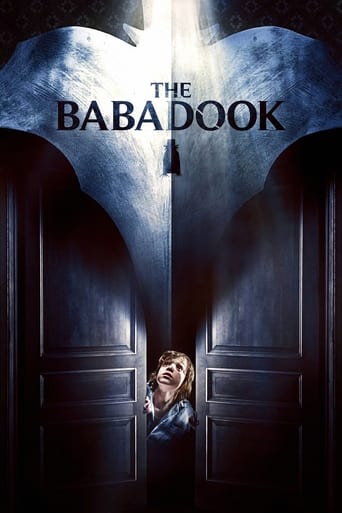
The Babadook
Jennifer Kent · 2014 · Film
Shares restraint over gore.
83% shared signal
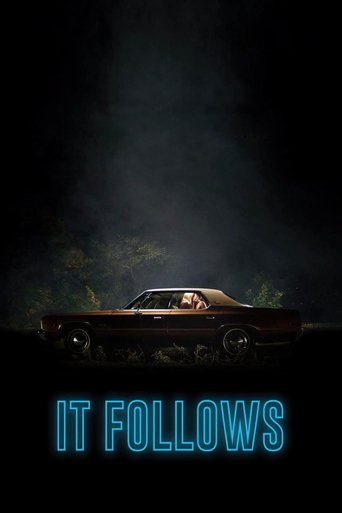
It Follows
David Robert Mitchell · 2014 · Film
Shares a bleak, unforgiving tone.
81% shared signal
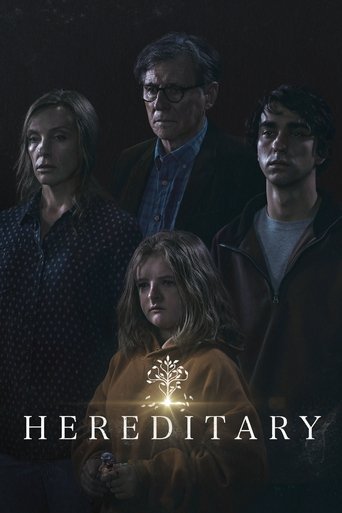
Hereditary
Ari Aster · 2018 · Film
Shares a supernatural threat.
81% shared signal
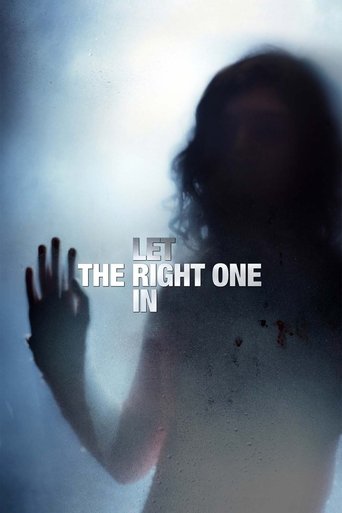
Let the Right One In
Tomas Alfredson · 2008 · Film
Shares slow-burn dread.
80% shared signal
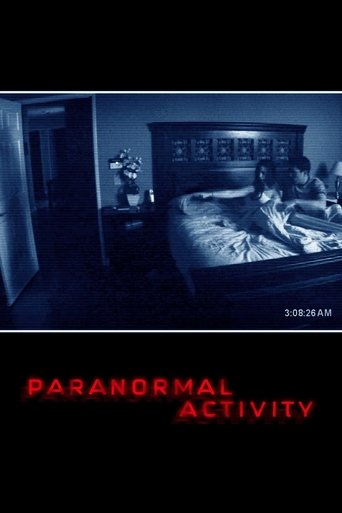
Paranormal Activity
Oren Peli · 2007 · Film
Shares a supernatural threat.
79% shared signal
The Haunting of Hill House in another form
The index links works across media, so an adaptation sits beside its source and a score beside the film it haunts.

See the full list of shows like The Haunting of Hill House →
Questions about The Haunting of Hill House
The things people actually ask about this series, answered.
What happens at the end of The Haunting of Hill House?
Luke tries to burn the house down and is taken. The siblings follow and are sedated by the Red Room, and Hugh offers himself to the house in Luke's place. He dies and stays there with Olivia and Nell. The four survivors leave, the house stands, and a coda shows them rebuilding their lives.
Who is the Bent-Neck Lady in The Haunting of Hill House?
Nell herself. The figure with the broken neck is her own corpse at the moment of her death on the spiral staircase, pulled through every frightening moment of her life by the house. The reveal arrives in a single cut at the end of episode five.
What is the Red Room in The Haunting of Hill House?
The locked room at the centre of the house, described as its stomach. It presents itself to each person as a room they will not want to leave — a dance studio, a treehouse, a family room, a reading room — and every member of the family has spent long periods inside it without knowing.
Why does Olivia Crain try to poison her children?
Because the house, working through the ghost of Poppy Hill, convinces her that the only way to protect Nell and Luke from the world is to make sure they never wake up. She poisons tea; Abigail Dudley drinks it and dies; Olivia then falls from the Red Room balcony.
Is the Netflix series faithful to Shirley Jackson's novel?
No. It keeps the title, the house, five names and the central theme, and invents everything else — the Crain family, the Red Room, the Bent-Neck Lady, the timelines and the ending. Jackson's novel is about four strangers in an experiment and ends in a suicide.
Is The Haunting of Hill House scary?
Yes, though the fear is spread thin over ten hours. We score it 022 on pace and 018 on the threat axis. The best scares are quiet — a figure at the foot of a bed, a statue in the garden, and the dozens of background ghosts Flanagan hid in ordinary shots and never cut to.
These are ranked against The Haunting of Hill House, not against you.
Build your own tape →