
Book · 1959
The Haunting of Hill House
Whatever walked there, walked alone. The gold standard for restraint.
Most extreme on VISCERA — restraint over gore at 008
On VHSCREAM’s six-axis scale, The Haunting of Hill House (1959) is most extreme on the viscera axis: 8 out of 100, where 0 is restraint over gore and 100 is explicit viscera. 4% of the 105 horror works we have scored come in lower on that axis. How we score →
The Haunting of Hill House is a 1959 novel by Shirley Jackson, in which an investigator of the supernatural rents a notorious house for a summer and invites three strangers to stay in it. We score it 010 on pace — only 8 works are slower — and 008 on viscera, which makes it one of the least explicit things we hold.
Scored and reviewed by VHSCREAM on · how we score
The Haunting of Hill House: the review
The Haunting of Hill House is the best haunted-house novel in English and the haunting is almost entirely a matter of carpentry.
Jackson's house is wrong in a way that can be measured. Every angle in it is very slightly off true; the doors are hung so that they swing closed on their own; the rooms are concentric, so that a corridor returns you to where you began; the windows are set at a height that makes you feel watched from outside; and the result, which the characters describe repeatedly, is nausea, disorientation and an inability to say which direction they are facing. Nothing supernatural is required for any of it. The house was built by a man whose mind was not right, and it reproduces his mind in anyone who sleeps in it.
Against that, Jackson puts Eleanor Vance, and Eleanor is the achievement. Thirty-two, with no life of her own, eleven years spent nursing a mother who died blaming her, sleeping on a cot in her sister's flat, she arrives at Hill House on the first day she has ever chosen anything. She is enchanted. She has friends by the second afternoon. She invents, out loud and compulsively, a life she does not have — stone lions, a cup of stars, a little apartment of her own — and the novel's cruelty is that the house is the only thing that has ever wanted her.
The famous set pieces still work
The cold spot outside the nursery, which no thermometer explains. The hammering on the doors at night, which comes down the corridor as a weight rather than a sound. The chalk writing in the hallway — HELP ELEANOR COME HOME — and then the same words in blood. And the single best sentence in twentieth-century horror, which arrives after Eleanor has spent a night lying in the dark gripping Theodora's hand for comfort, and then looks across a lit room: whose hand was I holding?
Jackson's method is point of view
The novel is third person but locked so tightly to Eleanor that the reader cannot get outside her, and Jackson withholds the one thing that would settle everything: whether the others experience what Eleanor experiences. They respond to some of it. They do not respond to all of it. By the final third, Eleanor's narration has begun to merge with the house's and the prose stops marking the join.
Where modern readers stall
Nothing explodes. There is no history dump, no exorcism and no confrontation; Dr Montague's research is mostly withheld and his wife's planchette séances are played as farce. The novel is short, extremely interior, and will feel like nothing is happening to anyone who needs an event.
For the series that adapted its title and almost nothing else, The Haunting of Hill House; for Jackson's other and stranger masterpiece, We Have Always Lived in the Castle; for the same unmeasurable interior a generation later, House of Leaves.
The ending of The Haunting of Hill House explained
Total spoilers from here. Everything above this line is spoiler-free.
The short answer: Eleanor's behaviour deteriorates — she climbs the rotten iron staircase in the library, which nearly kills her, and has to be talked down — and the others agree she must leave Hill House for her own safety. She is devastated: the house is the only place she has ever belonged, and being sent away is being returned to nothing. They put her in her car and she drives down the long drive, exhilarated, thinking that they cannot stop her now. Then she deliberately turns the wheel and drives into the big tree at the curve of the drive. In the last instant before impact a thought arrives that is hers and is also not: why am I doing this, why don't they stop me. The novel's closing paragraph repeats its opening almost word for word, with Eleanor's name added to the list of what walks there alone.
Does Eleanor die at the end of The Haunting of Hill House?
Yes. She drives into the tree at the bend of the drive and is killed — the tree Mrs Crain's carriage overturned against, in the same spot, which the novel establishes early and does not underline. Whether it is a suicide, a possession or the house completing a transaction is the question the ending exists to leave open. Her final thought, which asks why nobody is stopping her, is the strongest evidence that some part of her did not choose it.
Is Hill House actually haunted?
Jackson never answers it, and the novel is built so that both readings are complete. For: the cold spot, the pounding, the writing, the hand. Against: every reported event passes through Eleanor, she arrives mentally fragile, she has a childhood history of a poltergeist incident involving stones, and she is the only person the house addresses by name. The most defensible reading is that the question is wrong — the house is an instrument that finds the weakest person in it and amplifies her.
Whose hand was Eleanor holding?
Nothing in the novel's. In the dark, something pounds down the corridor and Eleanor grips what she believes is Theodora's hand, so hard it hurts, for a long time. When the lights come up, Theodora is on the other side of the room and has been all along. Jackson does not return to it, does not explain it and does not let anybody discuss it, which is exactly why it is the most frightening moment in the book.
Who built Hill House and why is it wrong?
Hugh Crain, a wealthy Victorian with severe religious mania, built it as a family house and then supervised every angle of it himself, out of true. Jackson gives him two dead wives — the first killed when her carriage overturned in the drive before she ever saw the house, the second in a fall — two daughters raised inside it, and a hand-made scrapbook of moral instruction for his children, illustrated with anatomical horrors, which is the most disturbing document in the novel.
What is the opening paragraph of The Haunting of Hill House?
Its first lines — on no live organism being able to continue for long sensibly under conditions of absolute reality, and on Hill House standing by itself against its hills, holding darkness within, and whatever walked there walking alone — are among the most quoted in the language. The paragraph returns verbatim as the final one, with Eleanor added to it. The structure is a closed loop, and that is the novel's real statement about what happened to her.
How scary is The Haunting of Hill House, actually?
Scored against the published rubric, here is what the numbers mean.
Pace 010 is extremely slow — only 8 works are slower. The novel is short and almost entirely interior; the pounding in the corridor is the loudest event in it.
Viscera 008 is near the floor — only 4 works score lower. One car crash, reported in a sentence, and the words written in blood. Nothing else.
Era bias 008 is deep analog — only 9 works score lower. A 1959 novel about a Victorian house, with no technology in it beyond a car and a thermometer.
Tone 018 is bleak — 47 works score lower. The only character with nothing in her life is killed by the only place that wanted her, and the others go home.
The threat at 045 is just under the midpoint, which is the correct score for a book that will not say whether the antagonist is a house or a woman's mind.
Reality anchor 052 is almost exactly the midpoint. Nothing in it is impossible, and nothing in it is reliable.
On shocks: one. The question about the hand, and it needs no others.
The Haunting of Hill House on six axes of fear
Every work in the index is scored on six continuous axes of fear. This is what The Haunting of Hill House looks like as a vector.
Where that puts it: #2 without gore · #2 slow burn
Disagree with a number? Say so on the axis itself. Nobody has confirmed this vector yet, and a score you challenge goes to the top of the queue to be re-scored by a human. Votes do not move the numbers — they decide what gets looked at first. How the scoring works →
Scored against the published rubric. This vector is a draft awaiting review — the method is public so you can argue with it.
Who should skip The Haunting of Hill House
Skip it if you need to know what happened. The novel declines to confirm a single supernatural event and ends on an ambiguity it has no intention of resolving.
Skip it if interior narration without incident will bore you. Most of the book is Eleanor thinking, and the plot could be summarised in two paragraphs.
Skip it if suicide is a hard limit. The ending is a woman driving deliberately into a tree, and the preceding chapters are about her having nowhere to go.
Content notes: a suicide that may not be one, a protracted depiction of psychological deterioration, a childhood history of parental cruelty, an invalid mother's death used as a source of guilt, and a Victorian scrapbook of anatomical and moral horrors described in detail.
Read it if you want the novel every haunted-house story since has borrowed from, you can take a short book in which almost nothing happens, and you want to read the single most frightening question in English fiction.
Where to start with horror books →
Where to find it
Buy from an indie bookshop ↗Out-of-print copies on eBay ↗We earn nothing from these links.
If The Haunting of Hill House is your kind of fear
The eight works closest to The Haunting of Hill House in the index, ranked by distance across all six axes — not by genre label, and not by what other people watched.
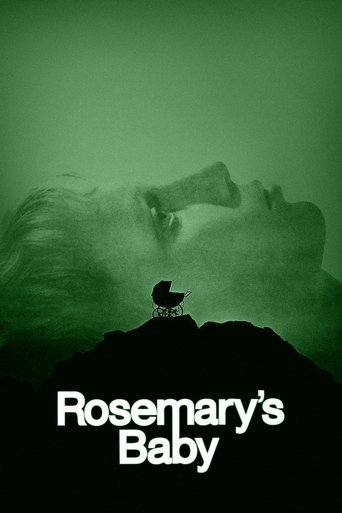
Rosemary's Baby
Roman Polanski · 1968 · Film
Shares analog-era texture.
93% shared signal
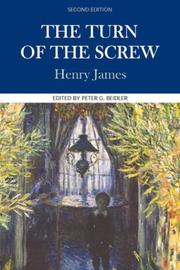
The Turn of the Screw
Henry James · 1898 · Book
Shares restraint over gore.
91% shared signal

Frankenstein
Mary Shelley · 1818 · Book
Shares a bleak, unforgiving tone.
85% shared signal
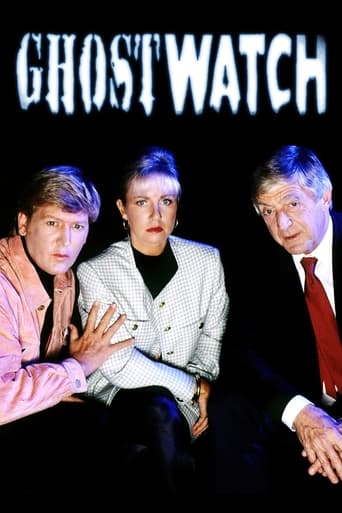
Ghostwatch
BBC · 1992 · Television
Shares slow-burn dread.
82% shared signal
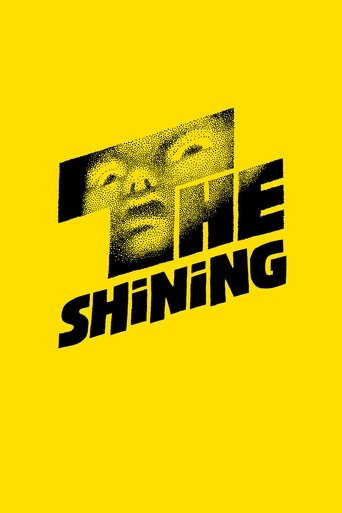
The Shining
Stanley Kubrick · 1980 · Film
Shares analog-era texture.
82% shared signal
The Blair Witch Project
D. Myrick & E. Sánchez · 1999 · Film
Shares restraint over gore.
81% shared signal

The Fog (OST)
John Carpenter · 1980 · Record
Shares a bleak, unforgiving tone.
81% shared signal
Dracula
Bram Stoker · 1897 · Book
Shares slow-burn dread.
81% shared signal
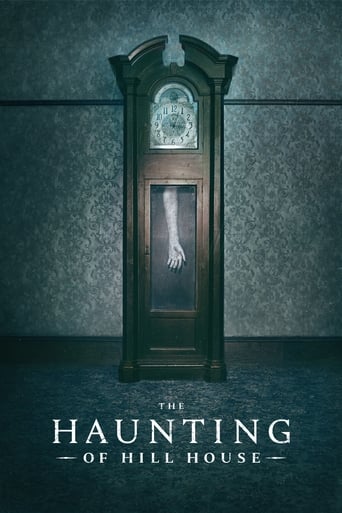
The Haunting of Hill House in another form
The index links works across media, so an adaptation sits beside its source and a score beside the film it haunts.
Questions about The Haunting of Hill House
The things people actually ask about this book, answered.
What happens at the end of The Haunting of Hill House?
The others decide Eleanor must leave for her own safety. She drives down the long drive, elated that they cannot stop her, and then deliberately turns the car into the tree at the bend. Her last thought asks why she is doing it and why nobody is stopping her. The closing paragraph repeats the opening with her name in it.
Does Eleanor die in The Haunting of Hill House?
Yes, in the crash — at the same bend where Hugh Crain's first wife was killed in a carriage accident. Whether it is suicide, possession or the house collecting is left open, and her final thought is the argument against it being wholly her own decision.
Is Hill House really haunted?
Jackson never says. Every event reaches the reader through Eleanor, who is fragile on arrival and has a childhood poltergeist incident in her history; against that, the cold spot, the pounding and the writing are witnessed. The most defensible reading is that the house amplifies the weakest person inside it.
Whose hand was Eleanor holding?
Not Theodora's. She grips what she thinks is Theo's hand through a long night of pounding in the corridor, and when the light comes on Theo is across the room. Jackson never explains it and never lets the characters discuss it.
Is the Netflix series the same as the book?
No. The 2018 series keeps the title, the house, some character names and the theme of a family damaged by it, and invents an entirely new plot, cast of relationships and ending. Eleanor's story, the four-guest structure and the ambiguity are not in it.
Is The Haunting of Hill House scary?
Yes, and almost without incident. We score it 010 on pace and 008 on viscera — among the slowest and least explicit things we hold — and the fear comes from architecture that makes people ill and from a narrator the reader cannot get outside of.
These are ranked against The Haunting of Hill House, not against you.
Build your own tape →