Film · 2001
The Others
Alejandro Amenábar
A woman keeps every curtain drawn because her children are allergic to light.
51Strong to sit through, out of 100 — mostly how bleak it is
- PaceSlow burn18
- ThreatHuman and not38
- GoreShows almost nothing8
- ToneNo relief at all10
- RealityTilts unreal44
Era bias 44 · Neither era. Texture rather than fear, so it is not part of the grade. All six scores →
Frightening horror movies with almost nothing shown →
On VHSCREAM’s six-axis scale, The Others (2001) is most extreme on the viscera axis: 8 out of 100, where 0 is restraint over gore and 100 is explicit viscera. 1% of the 320 horror works we have scored come in lower on that axis. How we score →
The Others is a 2001 horror film written and directed by Alejandro Amenábar. A woman keeps her two photosensitive children in a darkened house on Jersey in 1945, waiting for a husband who has not come back from the war. We score it 008 on viscera and 010 on tone, which puts it in the quietest and least forgiving corner of this index. The twist is famous and the film does not depend on it.
Scored and reviewed by VHSCREAM on · how we score
How scary is The Others, actually?
Scored against the published rubric, here is what the numbers mean for a viewer.
Viscera 008 is near the floor of the index. 312 works score higher. There is no blood in this film. The most explicit image in it is a photograph of a dead stranger with their eyes open, in a Victorian mourning album.
Tone 010 is near the floor too. 40 works score lower. A mother smothers her children and spends the film unable to know it, and the kindest thing anybody says is that nobody can make them leave the house.
Pace 018 is dread. 277 works are faster. Long candle-lit sequences, doors and corridors, and perhaps five constructed scares in a hundred minutes.
The threat at 038 sits below the midpoint, and the axis is the twist. The threat presents as inhuman for ninety minutes and is revealed as entirely human: the frightening thing in this house is a woman, and she has been the point of view all along.
Reality anchor 044 is grounded for a ghost story. One house, one set of rules, no cosmology. Everything supernatural in the film follows from a single premise that the ending states plainly.
Era bias 044 is analog, which is low for 2001 and deliberate. Candle, lamp, fog and no fill light, shot on film, in a 1945 setting — the image is doing period rather than quoting it, and we score the texture a work actually has.
On jump scares: two, and both are earned by twenty minutes of setup.
Who should skip The Others
Skip it if you already know the twist and that is all you wanted. The film survives knowing, but a viewer who only came for the reveal will find the first hour very quiet.
Skip it if you need something to happen. There are five scares in a hundred minutes and the rest is a household routine in the dark.
Skip it if a parent harming a child is a line. It is not shown, it is central, and the last twenty minutes sit on it.
Content notes: the smothering of two children by their mother, suicide by firearm, religious coercion of children, grief, and Victorian post-mortem photography.
Watch it if you want the most disciplined haunted-house film of its decade, Nicole Kidman's best work in the genre, and a ghost story whose rules are stated in the first act and honoured in the last.
The Others on six axes of fear
Every work in the index is scored on six continuous axes of fear. This is what The Others looks like as a vector — and what each ten-point band looks like across everything else we hold.
Where that puts it: #4 without gore · joint #13 slow burn
Draft score — awaiting human review. About these scores
Disagree with a number? Say so on the axis itself. Nobody has confirmed this vector yet, and a score you challenge goes to the top of the queue to be re-scored by a human. Votes do not move the numbers — they decide what gets looked at first. How the scoring works →
Scored against the published rubric. This vector is a draft awaiting review — the method is public so you can argue with it.
The Others: the review
A haunted house film where the rules come first
The best thing Amenábar does here is procedural. Before anything frightening happens, the film spends twenty minutes teaching you how the house works: fifty-odd doors, never more than one open at a time, every curtain drawn, keys carried on a ring, the children moved room to room ahead of the light. Anne and Nicholas have xeroderma pigmentosum, and daylight will kill them.
This is not atmosphere for its own sake. It is a closed system with stated rules, and every scare in the film is a violation of one: a curtain gone, a door open, a piano playing in a locked room. Horror that establishes its physics and then breaks them is doing something much harder than horror that is simply dark, and The Others is one of the cleanest examples anybody has shot.
Javier Aguirresarobe photographs the whole film in candle, oil lamp and fog, with almost no fill, and the result is a 2001 production that looks like it was made in 1945. Amenábar wrote the score himself, in a restrained late-romantic idiom that never signals a scare it has not earned.
Nicole Kidman's best horror performance
Grace is written as a woman holding a household together through rigidity, and Kidman plays the rigidity as a physical fact — the straightness of the back, the clipped delivery, the control of volume in a house where noise is forbidden. What makes it a great performance rather than a mannered one is how much of the film is her being frightened in front of her children and not allowing it to show, and how precisely Kidman lets it show anyway at the edges.
The religious material is the character work. Grace drills the children in catechism, threatens Anne with limbo, and uses the faith as the instrument of control. On a rewatch the catechism scenes are the most painful thing in the film, because you know what she is defending herself against.
Fionnula Flanagan is the other reason it works. Mrs Mills is kind, maternal, and slightly wrong in a way that is impossible to locate on a first viewing — she knows things, she forgives things, and she is waiting for Grace to arrive somewhere.
The scares are built, not sprung
There are perhaps five frightening sequences and all of them are constructed out of sound and withheld information. The piano. The sheeted figure in the sewing room. The sequence where Anne's voice comes out of a face Grace is not expecting, which is still one of the most effective reveals in the genre and does it with a veil and a cut rather than an effect. And the one everybody remembers: a mother shouting at a child through a door for not answering, while the thing in the room answers in her place.
Where it strains
It is a thin film by design and that thinness has costs. Charles's return is the one sequence that does not work — it is required by the plot, it is played at a pitch the rest of the film avoids, and Christopher Eccleston is given nothing. The children are written as functions more than people, Nicholas in particular. And the final twenty minutes are busy: the film has three separate revelations to deliver and stacks them, so the third arrives while the audience is still absorbing the first.
Watch it for the house, the sound design and Kidman. It is the most disciplined ghost film of its decade.
The ending of The Others explained
The ending, in full. Open it when you have seen it.
The short answer: Grace and her children are the ghosts. The "intruders" Grace has been hunting are a living family who have just bought the house, and the old woman in the sewing room is a medium they hired. The three servants are also dead — they died of tuberculosis in the house in 1891, and their graves are in the garden. The revelation Grace reaches last is the one about herself: in a fit after her husband failed to return, she smothered Anne and Nicholas with a pillow and then shot herself, and then got up and carried on as though nothing had happened. At the end the family accepts what they are, and refuses to leave. "This house is ours."
Here is how the film gets there.
Who are the intruders?
The living. Every event Grace reads as a haunting is a new family moving in: the sheets coming off the furniture, doors opened, curtains drawn back, voices and footsteps upstairs, a child's crying. The film is a conventional haunted house story told from the point of view of the haunting, which is why every scare in it is a mundane domestic action — somebody uncovering furniture in a house they have just bought.
Who is the old woman?
A medium, brought in by the living family, and the only person in the film who can see both sides. The sequence Grace experiences as a séance invaded by a malevolent crone is, from the other side of the room, a séance in which a medium holding a planchette is writing down what a frightened dead woman is saying. When Grace tears the veil off "Anne" and finds the old woman's face, the two timelines are briefly occupying the same chair.
What did Grace do?
She killed her children and then herself. The film gives it to you through Mrs Mills rather than in flashback: the husband did not come home, the servants had gone, something broke, and Grace put a pillow over Anne and Nicholas and then used a rifle. The moment afterwards is the one she cannot remember and has been editing out for the whole film — she describes waking up to the sound of the children laughing and deciding that nothing had happened.
Why do the children have a light allergy?
Because Grace needs them to. It is real as far as the film is concerned, and it is also the mechanism by which the house becomes a closed world with her as its only authority: the curtains, the locked doors, the keys, the rules. When the truth arrives the allergy stops mattering, and Amenábar makes the point in one shot of Anne standing in daylight.
Who are Mrs Mills, Mr Tuttle and Lydia?
Servants who died of consumption in the house in 1891, and who came back deliberately to help the family understand what they are. Grace finds their gravestones under leaves in the garden, which is the film's quietest horror beat: three people who have been kind to her all week and whose kindness has had a purpose. Lydia's muteness is never explained and does not need to be.
What happens to Charles?
He died at the front. His return is real within the film's terms — a dead man passing through on his way somewhere else — and he leaves again because he cannot stay. Grace's refusal to hear what he is telling her in that sequence is the clearest demonstration of what she has been doing for the entire film.
Is the ending sad or hopeful?
Both, and the film earns both. The living family moves out; the dead one stays. Grace tells her children that they are not in limbo and that nobody will make them leave, which is the first true comfort she has offered either of them, and it is offered by a woman who killed them. The last line is a claim of ownership over a house she will never leave.
If The Others is your kind of fear
The eight works closest to The Others in the index on the five axes that describe fear, the same medium first — not by genre label, and not by what other people watched.
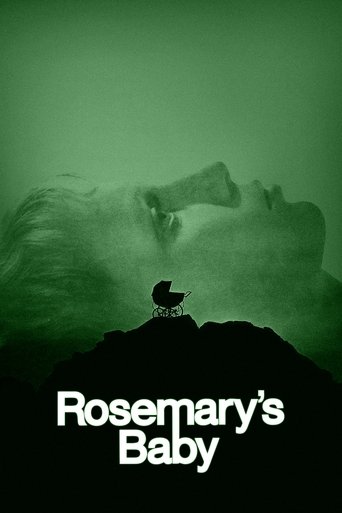
Rosemary's Baby
Roman Polanski · 1968 · Film
Shares restraint over gore.
90% shared signal
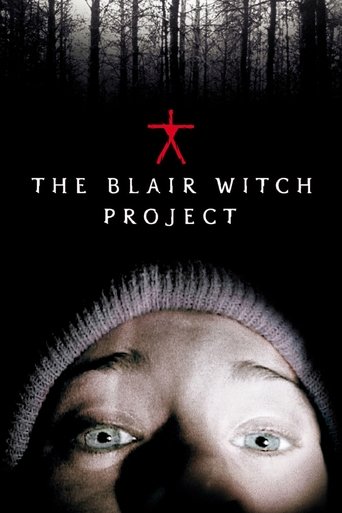
The Blair Witch Project
D. Myrick & E. Sánchez · 1999 · Film
Shares a bleak, unforgiving tone.
89% shared signal

The Haunting of Hill House
Shirley Jackson · 1959 · Book
Shares slow-burn dread.
91% shared signal
The Haunting of Bly Manor
Mike Flanagan · 2020 · Television
Shares restraint over gore.
89% shared signal
The Woman in Black
Susan Hill · 1983 · Book
Shares a bleak, unforgiving tone.
88% shared signal
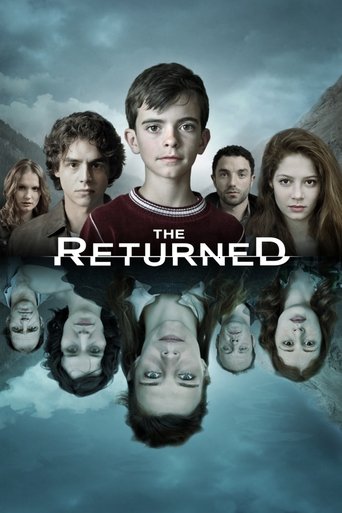
Les Revenants
Canal+ · 2012 · Television
Shares slow-burn dread.
88% shared signal

The Thing (OST)
Ennio Morricone · 1982 · Record
88% shared signal

Rosemary's Baby (OST)
Krzysztof Komeda · 1968 · Record
87% shared signal
More lists like these: Movies like Rosemary's Baby · Movies like The Blair Witch Project · Movies like Lake Mungo
Questions about The Others
The things people actually ask about this film, answered — including how it ends.
What is the twist in The Others?
Grace and her children are the ghosts. The intruders she has been hunting are a living family who have just bought the house, the old woman is a medium they hired, and the three servants died of tuberculosis there in 1891. Grace smothered her children and shot herself, and had edited it out.
Who are the intruders in The Others?
The living. Every haunting Grace experiences is a new family moving in — sheets coming off furniture, curtains opened, doors unlocked, footsteps and a crying child. The film is a standard ghost story told from the point of view of the ghosts, so each scare is somebody's ordinary afternoon.
What did Grace do to her children in The Others?
After her husband failed to return from the war and the servants left, she smothered Anne and Nicholas with a pillow and then shot herself. She then got up and continued as though nothing had happened, which is the state the film finds her in.
Who is the old woman in The Others?
A medium hired by the living family, and the only character who perceives both households. What Grace experiences as a séance invaded by a crone is, from the other side, a medium writing down the words of a frightened dead woman in the same room.
Are the servants in The Others ghosts too?
Yes. Mrs Mills, Mr Tuttle and Lydia died of consumption in the house in 1891, and Grace finds their gravestones under leaves in the garden. They returned on purpose, to bring the family to the point of understanding what they are.
Is The Others actually scary?
Quietly, and by construction rather than shock. We score it 008 on viscera and 018 on pace: no blood, five scares in a hundred minutes, and all of them built out of a rule the first act established. The sewing-room reveal still works on viewers who know it is coming.
What should I watch after The Others?
The Haunting of Hill House for the same grief structure at length, Lake Mungo for a ghost story even further toward showing you nothing, and gothic horror for the whole mode.
These are ranked against The Others, not against you.
Build your own tape →