
Film · 2014
The Babadook
Jennifer Kent
Grief with a pop-up book. The monster is not subtle and doesn't need to be.
Most extreme on TONE — a bleak, unforgiving tone at 014
On VHSCREAM’s six-axis scale, The Babadook (2014) is most extreme on the tone axis: 14 out of 100, where 0 is a bleak, unforgiving tone and 100 is gleeful black comedy. 29% of the 105 horror works we have scored come in lower on that axis. How we score →
The Babadook is a 2014 Australian horror film written and directed by Jennifer Kent, her debut. A widowed mother and her difficult six-year-old son are haunted by a figure from a children's book that appears in their house. We score it 014 on tone — 30 works in an index of 105 score lower — and 026 on viscera, which makes it far less explicit than its reputation.
Scored and reviewed by VHSCREAM on · how we score
The Babadook: the review
The most frightening thing in The Babadook is Amelia's face when Samuel will not stop talking. Kent's film is about a woman who has not slept properly in six years, whose son is exhausting in ways nobody around her will acknowledge, and whose husband died driving her to the hospital to give birth to him. The monster is almost a technicality.
Essie Davis's performance is the reason it works, and it is a harder performance than it looks. She has to be sympathetic while doing things that are not — snapping at a child, lying to a social worker, saying the unforgivable thing out loud — and she has to make the audience complicit in finding Samuel unbearable before the film turns and asks what that cost him. Noah Wiseman is extraordinary and was reportedly protected from the worst of the material during filming, which was the correct call.
The design is a deliberate refusal
The Babadook itself is a pop-up book figure, a coat and a hat and a silent film gesture, shot in flickers and at the edge of frame. Kent has said she borrowed from Méliès and Lon Chaney, and the creature is barely in the film — maybe ninety seconds of visible screen time. Everything else is sound: the clicking, the voice, the knocking in threes.
That choice is why the film has aged better than almost anything from the same wave. There is no CGI to date and no monster reveal to be disappointed by.
Where it is weaker than its reputation
The middle act repeats itself. There are three or four separate sequences of Amelia being unable to sleep while something moves in the house, and the film does not escalate much between them. And the social-realist half and the fairy-tale half never fully fuse — the police station and the social worker belong to a different register than the pop-up book, which some viewers find clumsy rather than disorienting.
But the ending is one of the best in modern horror, and it is the thing almost nobody expects. For the same grief-as-monster logic handled bleaker, Hereditary; for the same mother-and-son isolation, Lake Mungo is the gentler, sadder cousin.
The ending of The Babadook explained
Total spoilers from here. Everything above this line is spoiler-free.
The short answer: the Babadook is not destroyed. Amelia confronts it, refuses it the house and her son, and forces it into the cellar. The film ends with her and Samuel living normally in the same house, and Amelia going down to the basement with a bowl of worms to feed it. It is still there. It will always be there. It is manageable now.
Why isn't the Babadook killed?
Because the film is about grief, and grief is not killed. The book's own rule — you can't get rid of the Babadook — is stated early and the ending honours it literally. A version where Amelia destroys it would be a film arguing that bereavement can be finished, which Kent plainly does not believe.
What does the basement mean?
The cellar is where Oskar's things are, and the film establishes it as the room Amelia will not enter. Putting the creature there is explicit: the thing she could not look at is now in the place where her husband's belongings are, contained, visited deliberately, on a schedule.
What is she feeding it?
Worms, dug from the garden, which Samuel helps gather. The detail matters more than it looks. The feeding is a chore the family does together, calmly, as part of a normal day. That is the film's whole argument about living with loss, and it is delivered as gardening.
Is the Babadook real or is Amelia having a breakdown?
The film supports both and commits to neither, and unusually it does not need to choose. Everything the creature does could be Amelia — the dog, the glass, the voice — and the film is careful to give her the agency for all of it. But Samuel sees it too, and Samuel believed in it first.
The strongest reading is that the distinction is not the point. Whether the thing in the house is a monster or a mother's untreated grief, the solution is identical: name it, stop pretending it is not there, and feed it in the basement.
How scary is The Babadook, actually?
Scored against the published rubric, here is what the numbers mean.
Tone 014 is the signature. 30 works score lower, which puts it among the bleaker things in the index — but note that it is one of very few films at this level with something like a hopeful ending. The bleakness is in the middle, not the end.
Viscera 026 is low — only 27 works score lower. There is one hard act of violence involving an animal and one brief injury. Almost nothing else. The film's difficulty is emotional.
Pace 030 is dread — 42 works are slower. The horror accumulates through sleeplessness rather than incident.
Era bias 080 is modern craft, with 72 works lower. Clean digital photography, a contemporary sound design, and the creature's silent-film styling sitting inside it as a deliberate anachronism.
Threat 040 leans supernatural, though the film's most frightening scenes contain nothing supernatural at all.
On jump scares: a handful, and the sound design does more than any of them. The knocking is the thing people remember.
The Babadook on six axes of fear
Every work in the index is scored on six continuous axes of fear. This is what The Babadook looks like as a vector.
Where that puts it: #15 without gore
Disagree with a number? Say so on the axis itself. Nobody has confirmed this vector yet, and a score you challenge goes to the top of the queue to be re-scored by a human. Votes do not move the numbers — they decide what gets looked at first. How the scoring works →
Scored against the published rubric. This vector is a draft awaiting review — the method is public so you can argue with it.
Who should skip The Babadook
Skip it if you are a new or exhausted parent. The film is extremely accurate about the specific rage of being unable to sleep and unable to say so, and it is not gentle about it.
Skip it if you are grieving a partner, particularly one lost around a birth. That is the film's exact subject.
Skip it if animal harm is a hard limit. One sequence is brief, off-centre and genuinely upsetting.
Content notes: the death of a dog, a child in danger from a parent, graphic self-harm implied, a car accident described in detail, vomiting, and sustained psychological distress involving a young child.
Watch it if you want the best horror debut Australia has produced, you can take a film about a hard mother–child relationship, and you want an ending that offers something other than despair.
Where to find it
Streaming on Philo · AMC Plus · AMC+ +4 ↗Physical copies on eBay ↗Availability from JustWatch via TMDB. We earn nothing from these links.
Nothing loads from YouTube until you press play.
If The Babadook is your kind of fear
The eight works closest to The Babadook in the index, ranked by distance across all six axes — not by genre label, and not by what other people watched.
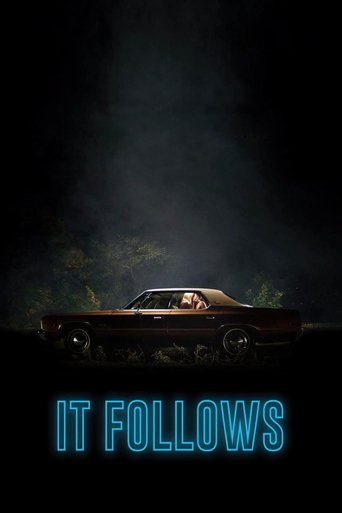
It Follows
David Robert Mitchell · 2014 · Film
Shares a bleak, unforgiving tone.
93% shared signal
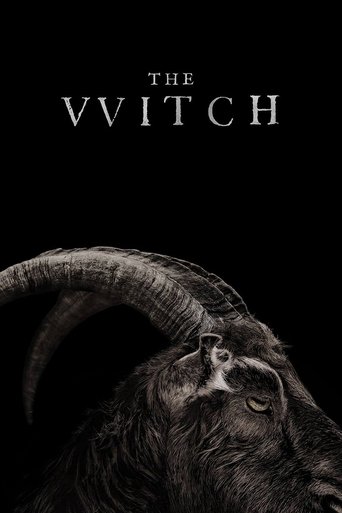
The Witch
Robert Eggers · 2015 · Film
Shares modern craft.
88% shared signal

Abyss
Chelsea Wolfe · 2015 · Record
Shares restraint over gore.
88% shared signal
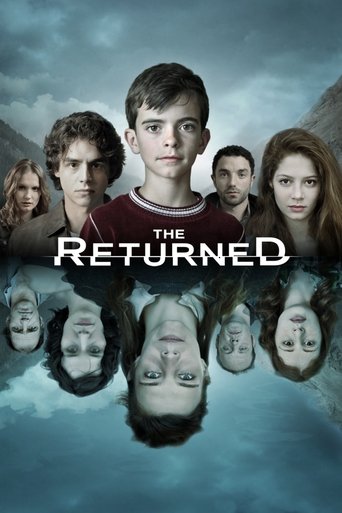
Les Revenants
Canal+ · 2012 · Television
Shares slow-burn dread.
87% shared signal
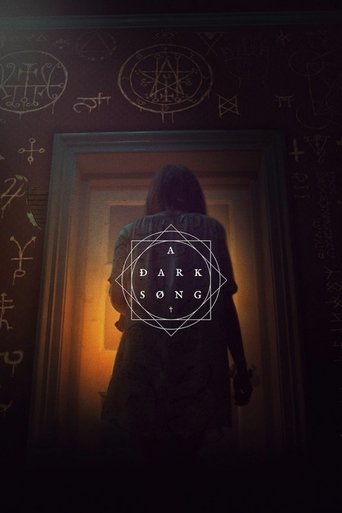
A Dark Song
Liam Gavin · 2016 · Film
Shares a bleak, unforgiving tone.
87% shared signal

It Follows (OST)
Disasterpeace · 2014 · Record
Shares modern craft.
86% shared signal

Under the Skin (OST)
Mica Levi · 2013 · Record
Shares restraint over gore.
84% shared signal
The Haunting of Hill House
Mike Flanagan · 2018 · Television
Shares slow-burn dread.
83% shared signal
See the full list of movies like The Babadook →
Questions about The Babadook
The things people actually ask about this film, answered.
What happens at the end of The Babadook?
Amelia confronts the creature, refuses it her son and the house, and forces it into the cellar. The film ends with mother and son living normally, and Amelia taking a bowl of worms down to the basement to feed it. The Babadook is not destroyed — it is contained and visited.
What does the Babadook represent?
Grief, and specifically unprocessed bereavement — Amelia's husband died driving her to give birth to Samuel, and she has never been able to say so. The creature cannot be killed because grief cannot be, which is why the ending contains it rather than defeating it.
Why does Amelia feed the Babadook at the end?
Because the film's argument is that loss becomes survivable when it is acknowledged on a schedule rather than denied. The feeding is a calm family chore in the room where her husband's belongings are kept. It is the opposite of the denial that let the thing into the house.
Is the Babadook real?
The film deliberately supports both readings. Every event could be Amelia, and the film gives her the agency for all of it — but Samuel sees the creature too and believed in it first. The distinction does not change the ending, which is the point.
Is The Babadook actually scary?
More unsettling than frightening. We score it 026 on viscera, lower than all but a handful of works in our index, and the creature has perhaps ninety seconds of visible screen time. The fear is a sleepless mother and a sound in the house rather than a monster.
These are ranked against The Babadook, not against you.
Build your own tape →