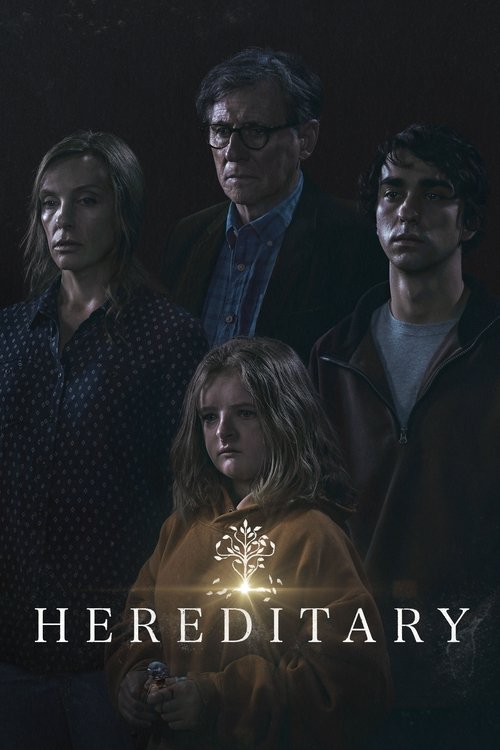
Film · 2018
Hereditary
Grief that curdles into something much older. Slow, then unsurvivable.
Most extreme on TONE — a bleak, unforgiving tone at 008
On VHSCREAM’s six-axis scale, Hereditary (2018) is most extreme on the tone axis: 8 out of 100, where 0 is a bleak, unforgiving tone and 100 is gleeful black comedy. 10% of the 105 horror works we have scored come in lower on that axis. How we score →
Hereditary is a 2018 American supernatural horror film written and directed by Ari Aster, his debut feature. A family's apparently inherited mental illness turns out to be a coven's decades-long arrangement to install the demon Paimon in a male body. We score it 008 on tone — joint-twelfth-bleakest of 105 works, and joint-third-bleakest among our films — and 030 on pace: patient, not glacial.
Scored and reviewed by VHSCREAM on · how we score
Hereditary: the review
The dollhouse is the argument
Aster opens on a miniature. The camera drifts through Annie Graham's workshop, finds a scale model of the family house, pushes in on a doll's bedroom — and the bedroom is real, and Steve walks into frame to wake his son. It takes seconds and it gives away the whole film. These people are figures in somebody else's model. You have been shown the ending before the funeral.
Almost nobody catches it the first time. That is the method in miniature too. Hereditary withholds nothing and explains nothing, and it trusts you to be looking at the wrong thing.
A grief film with a trapdoor under it
For roughly a hundred minutes this is a bereavement drama, and a very good one. Ellen Taper Leigh dies. Her daughter eulogises a woman she did not like, in a room full of mourners she does not recognise. Charlie — thirteen, odd, entirely herself — finds a dead pigeon in the schoolyard and takes its head off with a pair of scissors. Then the party, the cake, the nut allergy, the car, the telephone pole, and the film hands its surviving son a horror that no plot can relieve.
What follows is the most accurate account of a family failing to survive a death that the genre has produced. Toni Collette's dinner-table monologue is the scene everyone quotes, and it is quoted because it is not horror acting — it is somebody saying the unforgivable thing because the alternative is saying nothing at all. Alex Wolff spends the back half being hollowed out in real time, and his is the least discussed and possibly the best performance in it.
Then the trapdoor. The support group, Joan, the séance, the sigils, a word painted on an attic wall above a headless body. The film has spent an hour letting you hold a reading — that this is a story about inherited illness, that Annie is becoming her mother and Peter will become Annie — and it takes that reading away. Not because it was wrong about the pain. Because the pain was load-bearing. The grief was the mechanism. Charlie was never a daughter at all; she was a placeholder in the wrong body, waiting.
Why that is worse than a twist
A twist rewards a rewatch. This one punishes it. Once you know, every tender scene becomes procedure: the grief group was recruitment, the grandmother's affection was logistics, the decapitation was scheduling. There is no point in the film at which any Graham could have chosen differently — and the last shot, a boy crowned in a treehouse by kneeling strangers while a voice calls him by a demon's name, is not a defeat. It is a coronation. It is scored like a hymn. The film plays it straight as a happy ending for everyone except the four people you have just spent two hours with.
That is the case for Hereditary over the many films that have since borrowed its grammar. Anything can make you flinch with a cut and a loud noise. Very little can make the kindest scene in the first act retroactively cruel.
It is not flawless. The closing fifteen minutes abandon the register the rest of it built so carefully — the floating, the crawling, the explicit demonology — and part of the audience Aster earned over ninety patient minutes will get off at the treehouse. The miniatures occasionally announce themselves as symbolism rather than work. Colin Stetson's score is extraordinary and is carrying more of the dread in the quiet stretches than the images are.
None of which touches the central achievement. Hereditary is a film about a family discovering that they were furniture, and nothing in modern horror does that better. If you want the same director without the demonology, Midsommar is the sunlit version of the same idea.
The ending of Hereditary explained
Total spoilers from here. Everything above this line is spoiler-free.
The short answer: Peter is possessed by Paimon, one of the kings of Hell, in a ritual his grandmother spent decades preparing. The coven needed a male host. Charlie had been carrying Paimon since birth in the wrong body, so Charlie had to die and Peter had to be broken first.
Here is the full chain, in order.
Who is Paimon, and what does he want?
Paimon is a real figure in grimoire literature, not an invention of the film. He appears in the Ars Goetia, the first part of the seventeenth-century Lesser Key of Solomon, listed as one of the kings of Hell and described as commanding legions, teaching all arts and sciences, and revealing hidden things — which is why Ellen's inscription frames him as a source of knowledge and wealth rather than as a destroyer.
What the film adds is the requirement. Aster's Paimon wants a male human body, and the whole apparatus of the Graham family exists to produce one. That single invented rule is what converts a demonology footnote into a plot: it makes Charlie wrong, it makes Peter necessary, and it makes every act of apparent love in the film a logistical step.
Who was Ellen Taper Leigh?
Ellen ran the coven. Annie's mother was its leader, not its victim. The dedication in the book Annie finds, the photographs of Ellen with Joan, the necklace, the symbol carved into the house — all of it predates the film. The funeral in the first scene is not the inciting incident. It is the handover.
Why was Paimon put in Charlie and not Peter?
Ellen wanted Peter and was refused. Annie kept her mother away from her son as an infant. So Ellen took the daughter instead, and the result is Charlie: a girl who does not behave like one, who sleeps in the treehouse, who clicks her tongue, who is close to her grandmother and to nobody else. Paimon was placed in her as a stopgap.
Why did Charlie have to die?
Charlie's death is not an accident. The pole her head strikes carries Paimon's sigil, and the bird that draws her to lean out of the window is not a coincidence in a film with no coincidences. She is beheaded specifically, because the head is what the cult needs to enthrone.
Was Joan part of the cult?
Joan is not a grieving stranger. The woman Annie meets at the support group is coven. The séance she teaches is not a comfort; it is the transfer beginning, and the moment Annie says the demon has no power over her is the moment it has all of it.
Why does Annie decapitate herself?
Annie is no longer driving by the attic scene. When she hovers in the corner of the ceiling and saws through her own neck with piano wire, that is not suicide and it is not grief. Her body is completing a task. Steve has already burned. The family has been reduced to the one component the ritual wants.
What happens to Peter in the treehouse?
Peter jumps, and something comes back up. He throws himself from the attic window; the thing that enters him arrives as a light. What walks to the treehouse afterwards is wearing Peter but is not Peter. Inside, Charlie's severed head sits crowned on an effigy, the headless bodies of Annie and Ellen bow, naked members of the coven kneel, and Joan hails Paimon — confirming that Charlie was always him, and presenting the corrected male host.
What does the ending of Hereditary mean?
The title is the whole thesis. The film spends two hours offering you mental illness as the inheritance — Ellen's dementia and secrecy, Annie's sleepwalking and the paint-thinner story, Peter's dissociation — and then replaces it with something literal. The decoy reading is the humane one. The real one is a demon and a debt.
That is why the ending lands as despair rather than spectacle. A possession story usually asks whether the family can be saved. This one reveals that there was never a family to save, only a vessel being grown, and that every moment of love in it was part of the arrangement.
How scary is Hereditary, actually?
Scored against the published rubric, here is what the numbers actually mean for a viewer.
Tone 008 is the headline, and it is the real warning. Only 11 works in the whole index score lower, and only 2 films — Martyrs at 003 and Possession at 006. There is no relief valve, no comic beat, no survivor. If you are the kind of viewer who needs one character to get out, this film does not have one.
Viscera 055 means it is not the gore film its reputation suggests. 67 works score lower, which puts it barely above the median film in the index at 044. There are perhaps three explicit images in 127 minutes, and the two famous ones are hard because of what they mean rather than what they show — the camera is not interested in lingering. Anyone who sat through Terrifier 2 will find this restrained. Anyone who finds the idea of those images unbearable will not be rescued by the restraint.
Pace 030 means dread, but not slow cinema. The film sits on the patient side and never stops moving; a genuinely glacial horror film in this index is Lake Mungo at 006 or Skinamarink at 002. Hereditary has a plot and it advances.
On jump scares: there are almost none, and that is the point. The shocks here are held shots you cannot look away from, not stings you flinch at and recover from. Nothing jumps out. That makes it far more frightening for most people and far less frightening for a few — if what you enjoy is the rollercoaster, this is the wrong ride.
Threat 025 and reality anchor 045 describe the trick. The danger is supernatural, but the film keeps it domestic and withholds the supernatural framing for most of its runtime, so the fear you feel for the first hour is fear of a family, a kitchen, a mother. That is why it follows people home.
Hereditary on six axes of fear
Every work in the index is scored on six continuous axes of fear. This is what Hereditary looks like as a vector.
Where that puts it: #3 bleakest · #6 modern · #15 slow burn
Disagree with a number? Say so on the axis itself. Nobody has confirmed this vector yet, and a score you challenge goes to the top of the queue to be re-scored by a human. Votes do not move the numbers — they decide what gets looked at first. How the scoring works →
Scored against the published rubric. This vector is a draft awaiting review — the method is public so you can argue with it.
Who should skip Hereditary
Skip it if you have been recently bereaved, and skip it without apology if you have lost a child or a parent. This is not squeamishness. The film's subject is the specific texture of a household after a death, it is rendered accurately, and it ends by telling you the death was arranged. Nothing in horror is worse timing.
Skip it if you need resolution. There is no survivor, no cost imposed on the antagonists, no reading in which anyone did better. The ending is a victory for the people who did this.
Skip it if you want to be startled rather than disturbed. The fear is cumulative and it does not discharge. People who like a scare and a laugh afterwards tend to find this joyless rather than frightening, which is a fair reaction to a film scored 008 on tone.
Content notes: the death of a child, two decapitations, a body burning alive, graphic self-harm, the mutilation of a dead bird, insects, and a sustained depiction of a parent's rage at a child.
Watch it if you want the best-made horror debut of the last decade, you can take a film that means it, and you would rather be unsettled for a week than scared for ninety minutes.
Where to find it
Streaming on HBO Max ↗Physical copies on eBay ↗Availability from JustWatch via TMDB. We earn nothing from these links.
Nothing loads from YouTube until you press play.
If Hereditary is your kind of fear
The eight works closest to Hereditary in the index, ranked by distance across all six axes — not by genre label, and not by what other people watched.

Hereditary (OST)
Colin Stetson · 2018 · Record
Shares a bleak, unforgiving tone.
88% shared signal
The Terror
AMC · 2018 · Television
Shares modern craft.
86% shared signal
The Witch
Robert Eggers · 2015 · Film
Shares a supernatural threat.
86% shared signal
The Fisherman
John Langan · 2016 · Book
Shares slow-burn dread.
83% shared signal
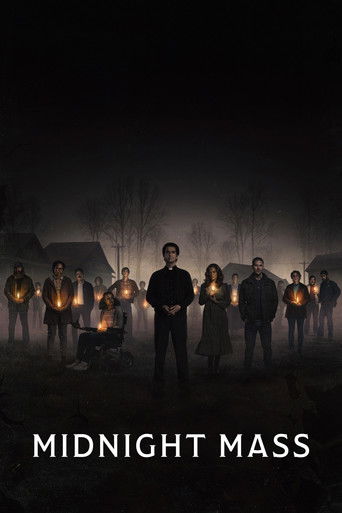
Midnight Mass
Mike Flanagan · 2021 · Television
Shares modern craft.
83% shared signal
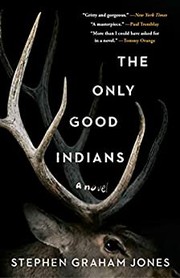
The Only Good Indians
Stephen Graham Jones · 2020 · Book
Shares a bleak, unforgiving tone.
82% shared signal
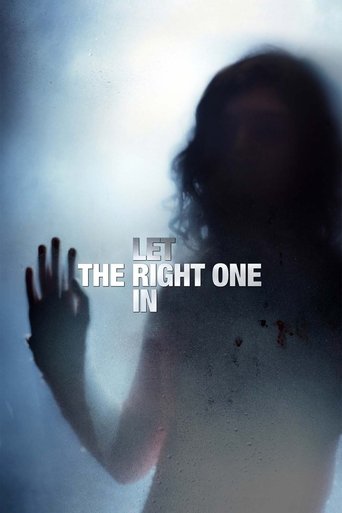
Let the Right One In
Tomas Alfredson · 2008 · Film
Shares a supernatural threat.
81% shared signal
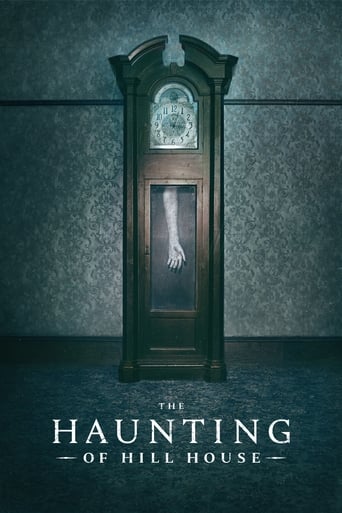
The Haunting of Hill House
Mike Flanagan · 2018 · Television
Shares slow-burn dread.
81% shared signal
Hereditary in another form
The index links works across media, so an adaptation sits beside its source and a score beside the film it haunts.
See the full list of movies like Hereditary →
Questions about Hereditary
The things people actually ask about this film, answered.
What happens at the end of Hereditary?
Peter is possessed by the demon Paimon. After Annie decapitates herself with piano wire, Peter falls from the attic window and a spirit enters his body. He walks to the treehouse, where the coven has enthroned Charlie's severed head on an effigy, and Joan crowns him as Paimon's new male host.
Was Charlie Paimon the whole time?
Yes. Ellen placed Paimon in Charlie as an infant after Annie refused to let her near Peter, which is why Charlie is withdrawn, clicks her tongue and is close only to her grandmother. Charlie was a stopgap in the wrong body, and her death was the coven correcting that mistake.
Is Hereditary gory?
Less than its reputation suggests. We score it 055 on viscera, with 67 of the 105 works we score coming in lower — only just above the median film. There are around three explicit images in 127 minutes, and the notorious ones are hard because of what they mean rather than how much they show.
Does Hereditary have jump scares?
Almost none. The film works through held shots and accumulating dread rather than sudden stings, so there is very little to flinch at and a great deal to sit with. Viewers who want a startle-driven scare often find it slow; viewers who want to be genuinely disturbed rate it among the most frightening films ever made.
Is Hereditary based on a true story?
No. Ari Aster wrote it as an original screenplay, drawing on family tragedy as a theme rather than a specific case. The demon Paimon comes from real grimoire literature, which is why the occult detail feels researched, but the Graham family and their coven are invented.
Do I need to watch Hereditary before Midsommar?
No. They share a director and a preoccupation with grief and cults, but they are unconnected stories set in different worlds. Watch them in either order — Midsommar is the brighter, more exposed treatment of a similar idea.
These are ranked against Hereditary, not against you.
Build your own tape →