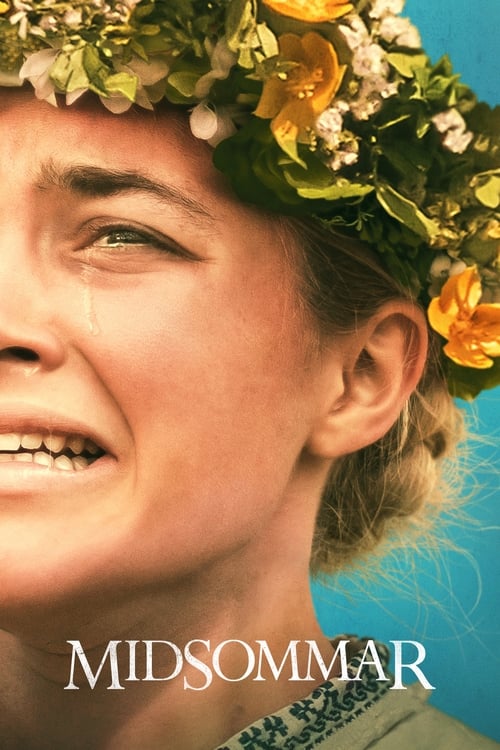
Film · 2019
Midsommar
Broad daylight, no shadows, nowhere to look away.
Most extreme on ERA BIAS — modern craft at 090
On VHSCREAM’s six-axis scale, Midsommar (2019) is most extreme on the era-bias axis: 90 out of 100, where 0 is analog-era texture and 100 is modern craft. 91% of the 105 horror works we have scored come in lower on that axis. How we score →
Midsommar is a 2019 folk horror film written and directed by Ari Aster, set over nine days at a midsummer festival in a remote Swedish commune. A grieving woman travels there with a boyfriend who should have left her a year ago, and the Hårga give her something he never did. We score it 080 on the threat axis — human monsters, higher than 91 of 105 works — and 090 on era bias.
Scored and reviewed by VHSCREAM on · how we score
Midsommar: the review
A breakup film with a body count
Aster has said Midsommar is a breakup film and he is not being coy. Everything structurally important happens between Dani and Christian, and the cult is the mechanism that resolves it. The opening twenty minutes are the best thing in the film and have no horror in them at all: a woman's catastrophic loss, and a boyfriend on the phone performing concern to a friend who is telling him to end it. Florence Pugh's single held sob in Christian's arms, with the camera on her and his face going slack over her shoulder, is the whole film.
Then they go to Sweden, and the film tells you what it is going to do, and does it, slowly, in daylight, for two hours.
The daylight is the formal idea
Horror in the dark is a solved problem. Midsommar removes the dark. Nothing hides, nothing jumps, nobody sees less than you do — the sun does not set, the camera has nowhere to put a shadow, and the dread has to come from composition and anticipation instead. Pawel Pogorzelski shoots the meadow flat and bright and lets the tapestries on the wall tell you the plot before it happens.
That choice is the film's real achievement and also its cost. Shown everything in advance, you spend much of the runtime waiting, and whether that reads as mounting inevitability or as a long wait for a bad outcome you already guessed is the single biggest predictor of whether somebody loves this film or finds it a slog.
It is funnier and crueller than its reputation
Midsommar is a comedy about tourists. Mark pissing on an ancestral tree, Josh trying to get a dissertation out of people who are planning to kill him, Christian accepting a thesis topic that belongs to his friend — these men are not victims of a cult so much as of their own incuriosity. The film finds this very funny, and the laughter is what makes the ättestupa land: a sequence played with total ritual dignity by the Hårga and total horror by the visitors, and the film does not flinch from either reading.
Where it is weaker than Hereditary is in its people. The Hårga have no interiority at all — they are a beautifully designed delivery system. The three men are written thin enough that their deaths are satisfying rather than frightening, which drains tension from an entire act. Only Dani is fully alive, and the film is only fully alive when she is on screen.
The ending is the argument
What makes Midsommar genuinely unusual is that its climax is, for its protagonist, good news. She has lost her family, she has a boyfriend who treats her as an obligation, and she is handed a crown, a role and a community that has been engineered to welcome her. Aster's trick is to make that liberation legible and leave you to decide what it cost. There is no scene of Dani realising she has made a mistake. There is only the smile.
If you want the same director with the comfort of darkness and an explanation, Hereditary is on the shelf. This one keeps the lights on and makes you decide for yourself.
The ending of Midsommar explained
Total spoilers from here. Everything above this line is spoiler-free.
The short answer: Dani, newly crowned May Queen, is given the right to choose the ninth and final sacrifice — Christian or a Hårgan volunteer. She chooses Christian. He is sewn into the carcass of a bear and burned alive in the ritual temple with the other bodies, and the film's last image is Dani watching it burn and beginning to smile.
Here is how the film gets there.
Why are there nine sacrifices in Midsommar?
Nine is the number, and it was always the number. The festival held every ninety years requires nine sacrifices. The count fills out across the film: the two elders who go over the cliff at the ättestupa, the four outsiders brought specifically to be used, two Hårgan volunteers, and a ninth left open. The ninth is Dani's to name.
Did Pelle plan it from the beginning?
Pelle brought them for this. The friend who invites the group is Hårgan, and he has been selecting. He tells Dani, in the only genuine conversation anyone has with her all film, that Christian does not make her feel held — and he is right, which is what makes it effective recruitment rather than a lie.
Why does Dani choose Christian?
Christian hands them every excuse. He forgets her bereavement, takes Josh's thesis subject, and finally participates in the fertility rite with Maja while Dani watches through a gap in a wall. By the time she chooses, the film has made the choice look less like murder than like a verdict.
Does it matter that Dani is drugged?
The drugs are not incidental. Dani is dosed repeatedly and is tripping during the maypole dance and the crowning. The film is careful that her liberation is chemically assisted and never says whether that invalidates it.
Why does Dani smile at the end of Midsommar?
Two readings, and the film supports both.
She has been freed. Her family is dead, her relationship was a slow humiliation, and the Hårga have given her a role, a title and a hundred people who mirror her grief back at her — literally, keening alongside her on the floor. Read this way the ending is a horror film with a happy ending for its heroine, which is the most disquieting thing in it.
She has been harvested. Everything that looks like love is the output of a system that needed a May Queen and arranged for one. On this reading Dani has swapped a man who did not see her for a village that sees only her usefulness, and the smile is the moment she stops being able to tell the difference.
Aster does not adjudicate. The temple burns, Christian screams inside the bear, and the film cuts to black on a woman looking happier than she has looked in two hours.
How scary is Midsommar, actually?
Scored against the published rubric, here is what the numbers mean for a viewer.
Threat 080 is the signature and the warning. 91 works in the index score lower, which makes this one of the most purely human threats we hold. No demon, no curse, no ghost: a village of people who have decided something and are being polite about it. If what frightens you is other people agreeing with each other, this is close to a worst case.
Viscera 062 is higher than most people remember. 77 works score lower, and Midsommar earns it with perhaps four images rather than a sustained assault — but two of them are among the hardest in the index, and one arrives early and without warning in bright sunlight. It is more explicit than The Shining at 030 and less than The Thing at 088.
Era bias 090 means it looks and sounds completely contemporary. 96 works score lower. There is no grain, no analog hum, no VHS texture anywhere — this is clean modern digital craft, which is part of why the brightness is so effective.
Pace 026 means dread, and a lot of it. Only 35 works in the index are slower. This is a 147-minute film (171 in the director's cut) in which the plot is visible on a wall by the end of act one. Patience is not optional.
Tone 030 is less bleak than you would guess — 77 works score lower — because the film is funny, and because its ending is, for one person, a win. That is a real distinction from Hereditary at 008, where nobody wins anything.
On jump scares: there are essentially none. No shadows, no stings, nothing hiding. Everything frightening in this film happens in full view at a reasonable volume.
Midsommar on six axes of fear
Every work in the index is scored on six continuous axes of fear. This is what Midsommar looks like as a vector.
Where that puts it: #5 modern · #9 human monsters · #13 slow burn
Disagree with a number? Say so on the axis itself. Nobody has confirmed this vector yet, and a score you challenge goes to the top of the queue to be re-scored by a human. Votes do not move the numbers — they decide what gets looked at first. How the scoring works →
Scored against the published rubric. This vector is a draft awaiting review — the method is public so you can argue with it.
Who should skip Midsommar
Skip it if you are grieving a family death, and particularly a suicide. The first fifteen minutes depict a murder-suicide and its immediate aftermath in close detail, and the film returns to that loss repeatedly. It is the most effective part of the film and the most likely to do actual harm.
Skip it if a long wait for a known outcome frustrates you. The film announces its ending in the first act via a wall hanging and then takes two hours. People who find that unbearable are not missing the point; they have understood the structure and do not want it.
Skip it if you need a cult film where someone escapes. Nobody does, and the film does not regard that as a tragedy.
Content notes: a murder-suicide shown in detail, graphic suicide by falling, the deliberate killing of an injured person, mutilation of corpses, a person burned alive, an explicit sex scene filmed as a ritual with a non-consenting-feeling participant, drug administration without consent, and animal death.
Watch it if you want the best-looking horror film of its decade, you can take a slow one, and you are interested in a film that ends in liberation and expects you to be disturbed by that.
Where to find it
Streaming on HBO Max ↗Physical copies on eBay ↗Availability from JustWatch via TMDB. We earn nothing from these links.
Nothing loads from YouTube until you press play.
If Midsommar is your kind of fear
The eight works closest to Midsommar in the index, ranked by distance across all six axes — not by genre label, and not by what other people watched.
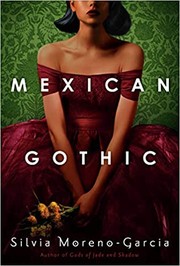
Mexican Gothic
Silvia Moreno-Garcia · 2020 · Book
Shares modern craft.
85% shared signal
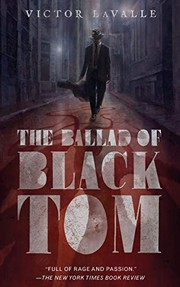
The Ballad of Black Tom
Victor Lavalle · 2016 · Book
Shares a bleak, unforgiving tone.
84% shared signal
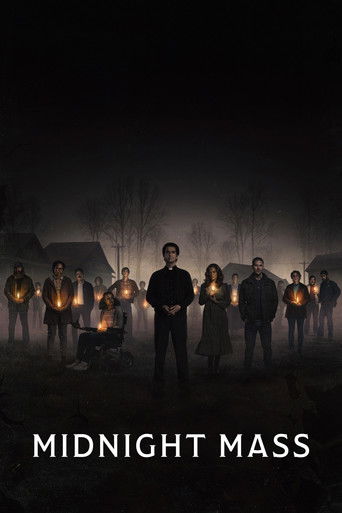
Midnight Mass
Mike Flanagan · 2021 · Television
Shares slow-burn dread.
82% shared signal
Get Out
Jordan Peele · 2017 · Film
Shares human monsters.
80% shared signal
Kill List
Ben Wheatley · 2011 · Film
Shares human monsters.
80% shared signal

The Lighthouse
Robert Eggers · 2019 · Film
Shares modern craft.
76% shared signal
The Only Good Indians
Stephen Graham Jones · 2020 · Book
Shares a bleak, unforgiving tone.
75% shared signal
Tender Is the Flesh
Agustina Bazterrica · 2017 · Book
Shares slow-burn dread.
74% shared signal
See the full list of movies like Midsommar →
Questions about Midsommar
The things people actually ask about this film, answered.
What happens at the end of Midsommar?
As the newly crowned May Queen, Dani chooses the ninth and final sacrifice and picks Christian over a Hårgan volunteer. He is sewn into a bear carcass and burned alive in the ritual temple with the other bodies. The final shot holds on Dani watching the fire and starting to smile.
Why does Dani smile at the end of Midsommar?
Because the ending is, for her, a release. She has lost her family, her boyfriend treated her as an obligation, and the Hårga have given her a role and a community that mirrors her grief. The film deliberately does not say whether that is liberation or harvesting, and leaves the smile to carry both.
Is Midsommar scarier than Hereditary?
It is less bleak and more explicit. We score Midsommar 030 on tone against Hereditary's 008, and 062 on viscera against 055. Hereditary ends with nobody saved; Midsommar ends with its protagonist happier than she has been all film, which some viewers find more disturbing and others find less.
How gory is Midsommar?
Moderately, and in concentrated bursts. We score it 062 on viscera, higher than 77 of the 105 works we score. There are roughly four explicit sequences rather than sustained gore, but two are among the hardest images in the index and the first arrives early and in full daylight.
Is the cult in Midsommar based on a real tradition?
No. The Hårga are invented, though Aster and his designers borrowed real Scandinavian folk art, runic lettering, dress and midsummer imagery, and the ättestupa is a genuine Nordic legend about elderly suicide that historians regard as a myth rather than a practice.
Should I watch the theatrical cut or the director's cut?
Start with the 147-minute theatrical cut. The 171-minute director's cut adds a significant argument between Dani and Christian that strengthens the breakup reading and makes his fate land harder, but it also lengthens a film whose main difficulty is already its pace.
Do I need to watch Hereditary first?
No. Hereditary and Midsommar share a director, a preoccupation with grief and cults, and nothing else — no characters, no world, no continuity. Either order works.
These are ranked against Midsommar, not against you.
Build your own tape →