
Record · 1974
The Texas Chain Saw Massacre (OST)
Tobe Hooper & Wayne Bell
The point at which a score and a sound design stop being separable objects.
73Hard going to sit through, out of 100 — mostly how bleak it is
- PaceBuilds, then strikes40
- ThreatPeople, entirely92
- GoreShows some of it62
- ToneNo relief at all8
- RealityTilts unreal58
Era bias 2 · Analog to the bone. Texture rather than fear, so it is not part of the grade. All six scores →
On VHSCREAM’s six-axis scale, The Texas Chain Saw Massacre (OST) (1974) is most extreme on the threat axis: 92 out of 100, where 0 is a threat that is not human and 100 is human monsters. 89% of the 320 horror works we have scored come in lower on that axis. How we score →
The Texas Chain Saw Massacre is the 1974 score by Tobe Hooper and Wayne Bell, and calling it a score is already a stretch. It is musique concrète assembled from prepared instruments, bowed metal, animal noises and slowed tape, and it is frequently indistinguishable from the film's sound design. We score it 002 on era bias, which ties the floor of this index, and 092 on threat.
Scored and reviewed by VHSCREAM on · how we score
How scary is The Texas Chain Saw Massacre (OST), actually?
Scored against the published rubric, here is what the numbers mean for a listener.
Threat 092 is the signature. Only 23 works score higher. There is nothing supernatural in the film and nothing supernatural in the sound. What you are hearing is a family, a generator and a slaughterhouse.
Era bias 002 ties the floor of this index. 314 works score higher and nothing is further down the axis — Frankenstein and The King in Yellow tie it at 002. 1974, 16mm, a four-track recorder, tape handled by hand, and fidelity that is partly poverty and partly intent.
Viscera 062 is the number that needs the asterisk. 178 works score lower. The film shows little; the audio is an abattoir. We score what the work does to a listener, and this does more with noise than most records do with content.
Tone 008 is near the floor. 22 works score lower. There is no warmth, no relief and no closing cue. The record offers nothing at any point.
Pace 040 is just on the dread side, which may surprise you. 201 works are faster. The assault is sustained rather than sudden — the audio does not spike, it simply never stops.
Reality anchor 058 is above the midpoint for a film this grounded. The sound is not representational. Nothing in it maps onto an object you could point at, which is precisely why the location feels wrong.
On jump scares: none, and the absence is the problem. There is nowhere to recover.
Who should skip The Texas Chain Saw Massacre (OST)
Skip it as a record unless you have seen the film. It does not work as a listening experience on its own and we would not pretend otherwise.
Skip it if abrasive noise is physically unpleasant for you. The dinner-sequence audio is forty minutes of metal, screaming and animal sound at a level designed to be unbearable.
Skip it if poor fidelity will bother you. The available masters are rough and no reissue has fixed that, because fixing it would destroy the thing.
Content notes: sustained screaming, animal slaughter sounds, and audio built to be distressing. The score accompanies a film containing abduction, cannibalism and the prolonged terrorising of a woman.
Listen to it if you want to hear the moment film score and sound design became the same object, you are interested in musique concrète arriving in horror by accident, and the least listenable record in this index sounds like a useful thing to have heard once.
The Texas Chain Saw Massacre (OST) on six axes of fear
Every work in the index is scored on six continuous axes of fear. This is what The Texas Chain Saw Massacre (OST) looks like as a vector — and what each ten-point band looks like across everything else we hold.
Where that puts it: joint #8 bleakest
Draft score — awaiting human review. About these scores
Disagree with a number? Say so on the axis itself. Nobody has confirmed this vector yet, and a score you challenge goes to the top of the queue to be re-scored by a human. Votes do not move the numbers — they decide what gets looked at first. How the scoring works →
Scored against the published rubric. This vector is a draft awaiting review — the method is public so you can argue with it.
The Texas Chain Saw Massacre (OST): the review
The point at which score and sound design stop being separable
Most horror scores comment on a film. This one is in it. Hooper directed and Bell was his sound man, and the two of them built the audio out of whatever was available: a bowed double bass, a prepared piano, cymbals dragged across concrete, metal objects struck and recorded close, animal sounds, and tape manipulated by hand. There are no themes, no cues in the conventional sense, and frequently no way to tell whether what you are hearing is the room, the generator, the family or an instrument.
That ambiguity is the achievement. A conventional score tells you when to be frightened, which is a form of reassurance — somebody is organising this. Chain Saw removes the organiser. The audio is continuous, abrasive, and seems to be emitted by the location rather than placed over it, and the result is a film that feels less directed than recorded.
The dinner sequence
The last twenty minutes are the test case. The audio there is a sustained assault of screaming, animal noise, metal and something like strings, mixed at a level that makes dialogue secondary, and it does not relent or resolve or breathe. Hooper's instruction to himself seems to have been that the audience should want it to stop, and the industry's response at the time — an X certificate in Britain, bans across several countries, the film's reputation for being more extreme than it visually is — is substantially a response to this audio rather than to anything on screen. The film shows remarkably little. It sounds like the worst thing ever made.
It is a hard record to own
There is no clean original soundtrack album in the sense the other entries on this shelf have one; the material has surfaced across reissues, anniversary editions and separate releases of varying provenance, and some of what circulates is lifted from the film mix. As a listening experience away from the picture it is punishing and formless, forty minutes of noise with nothing to hold onto.
Which is why it is here. This index measures what a work is rather than how pleasant it is, and on five of six axes this is the most extreme thing on our record shelf.
Where it strains
As music, nowhere and everywhere — the question does not apply. As an album, it is the least listenable object in this index, and we would not recommend it as a record to anybody who had not seen the film and wanted to understand what had happened to them. The 1974 recording is also genuinely poor in fidelity, which is partly the budget and partly the intent, and the available masters do not help.
The ending of The Texas Chain Saw Massacre (OST) explained
The ending, in full. Open it when you have seen it.
How it resolves: it does not. The final audio is the saw, in daylight, swung at nothing, over the last shot — a sound that has been the film's organising pulse now doing no work at all, and then a cut to black with no closing cue. There is no end-title music. The absence is the most deliberate decision on the record.
Is The Texas Chain Saw Massacre score actually music?
Barely, and not by intention. Hooper and Bell built it from prepared and bowed instruments, struck metal, animal sounds and manipulated tape, with no themes and no conventional cues. Much of it is not separable from the film's sound design, which is the reason it works.
Who composed it?
Tobe Hooper, the director, and Wayne Bell, his sound man, jointly. Neither was a trained film composer and the score's construction reflects that: it is assembled from recorded objects rather than written and performed.
Why does the film feel more graphic than it is?
Largely because of this audio. The film shows very little explicit gore — considerably less than its reputation implies — and the audio is relentless. The censorship history across several countries is in substantial part a response to how the film sounds.
Is there a proper soundtrack album?
Not in the way there is for Jaws or Psycho. The material has appeared across reissues and anniversary editions of varying quality, some of it taken from the film mix. There is no single canonical release.
Can you listen to it on its own?
You can, and it is a grim forty minutes with nothing to hold onto. We would not recommend it as a record except to somebody who has seen the film and wants to understand why it did what it did.
If The Texas Chain Saw Massacre (OST) is your kind of fear
The eight works closest to The Texas Chain Saw Massacre (OST) in the index on the five axes that describe fear, the same medium first — not by genre label, and not by what other people watched.

Threnody for the Victims of Hiroshima
Krzysztof Penderecki · 1960 · Record
Shares a bleak, unforgiving tone.
88% shared signal
Us
Jordan Peele · 2019 · Film
Shares human monsters.
87% shared signal
Yellowjackets
Ashley Lyle & Bart Nickerson · 2021 · Television
Shares human monsters.
86% shared signal
The Platform
Galder Gaztelu-Urrutia · 2019 · Film
Shares a bleak, unforgiving tone.
85% shared signal
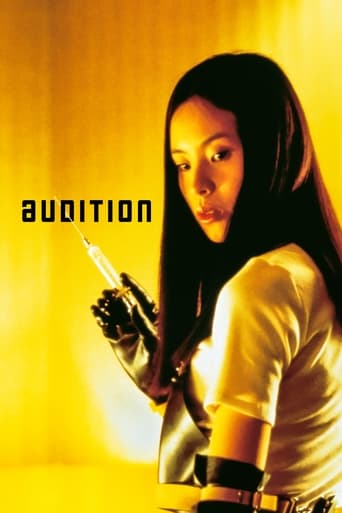
Audition
Takashi Miike · 1999 · Film
83% shared signal

Midsommar
Ari Aster · 2019 · Film
83% shared signal
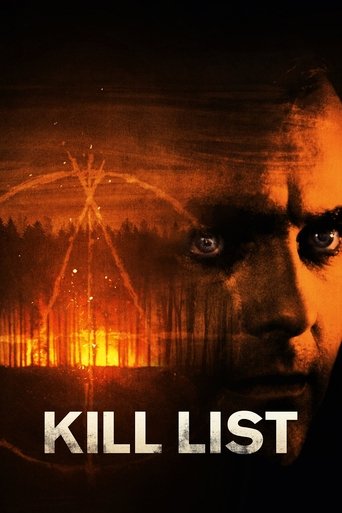
Kill List
Ben Wheatley · 2011 · Film
83% shared signal
Gerald's Game
Mike Flanagan · 2017 · Film
83% shared signal
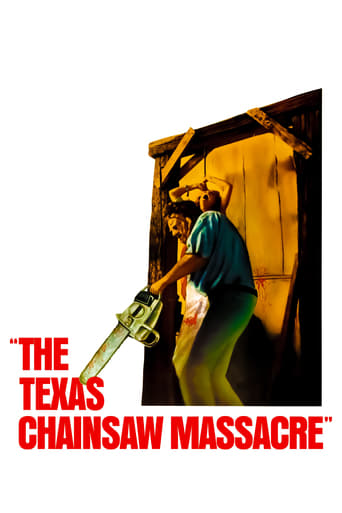
The Texas Chain Saw Massacre (OST) in another form
The index links works across media, so an adaptation sits beside its source and a score beside the film it haunts.
More lists like these: Movies like Us · Movies like Midsommar
Questions about The Texas Chain Saw Massacre (OST)
The things people actually ask about this record, answered — including how it ends.
Who composed The Texas Chain Saw Massacre score?
Tobe Hooper, the director, and Wayne Bell, his sound man, together. Neither was a trained film composer, and the score was assembled from prepared and bowed instruments, struck metal, animal sounds and hand-manipulated tape rather than written and performed.
Is the Texas Chain Saw Massacre score even music?
Barely. It has no themes and no conventional cues, and much of it cannot be separated from the film's sound design. That inseparability is the reason it is effective: there is no composer organising your fear, so the sound appears to come from the location itself.
Why does the film seem gorier than it is?
Because of the audio. The film shows considerably less explicit violence than its reputation suggests, and the sound is relentless. Its censorship history across several countries is in large part a reaction to how it sounds rather than what it shows.
Is there an official soundtrack album?
Not a canonical one. The material has surfaced across reissues and anniversary editions of varying provenance, some of it taken straight from the film mix, and no single release is definitive.
How does it score compared with other horror soundtracks?
It is the most extreme thing on our record shelf on most axes — 092 on threat, 008 on tone, and 002 on era bias, which ties the floor of the whole index. Horror movie soundtracks has every score here with its numbers.
What should I listen to after it?
Threnody for the Victims of Hiroshima for the same abrasion written down and performed, Khanate for the modern equivalent made deliberately, and the film for what the sound was built to do.
These are ranked against The Texas Chain Saw Massacre (OST), not against you.
Build your own tape →