Film · 2017
Gerald's Game
Handcuffed to a bed, with two hallucinations arguing and a real man in the corner.
75Hard going to sit through, out of 100 — mostly how bleak it is
- PaceSlow burn30
- ThreatMostly people78
- GoreExplicit82
- ToneNo relief at all12
- RealityTilts unreal48
Era bias 88 · Thoroughly modern. Texture rather than fear, so it is not part of the grade. All six scores →
The bleakest horror movies ever made →
On VHSCREAM’s six-axis scale, Gerald's Game (2017) is most extreme on the tone axis: 12 out of 100, where 0 is a bleak, unforgiving tone and 100 is gleeful black comedy. 19% of the 320 horror works we have scored come in lower on that axis. How we score →
Gerald's Game is a 2017 American film directed by Mike Flanagan, adapted from Stephen King's 1992 novel. A woman is left handcuffed to a bed in a remote lake house after her husband dies mid-game. We score it 082 on viscera — 271 works in an index of 320 score lower — and 078 toward human threat, because almost everything that hurts her is a man she knows or a memory of one.
Scored and reviewed by VHSCREAM on · how we score
How scary is Gerald's Game, actually?
Scored against the published rubric, here is what the numbers mean.
Viscera 082 is high, and it is concentrated — 271 works score lower. The runtime is almost bloodless until it is not. One sustained sequence does the entire score's work, which puts it in company with Kill List rather than with a splatter film.
Threat 078 sits toward the human end, with 240 works lower. Every injury in the film is inflicted by a person: a husband, a father, a grave robber, and finally Jessie herself with a piece of glass. The supernatural reading is offered and then withdrawn.
Tone 012 is bleak — 60 works score lower. The epilogue reaches for uplift and does not reach far.
Pace 030 is on the dread side, with 74 works slower. The structure is a slow accumulation of dehydration and memory, broken once.
Reality anchor 048 is just under the midpoint. Two of the three figures in the bedroom are not there, which should push it surreal; the film's insistence that everything has a mundane explanation pulls it back.
On jump scares: a handful, mostly at night. The Moonlight Man's appearances are staged as shocks and they work.
Who should skip Gerald's Game
Skip it if childhood sexual abuse is not something you can watch. It is not a background detail or an implication; it is a staged sequence with a child actor, and it is the reason the rest of the film exists.
Skip it if hand injuries are your particular thing. The degloving is long, close and unhurried.
Watch it if you want Flanagan before the Netflix house style set — this is tighter and meaner than most of what followed — or if you have read the novel and assumed it could not be filmed. If you want the same director working colder, Oculus is the other end of his range.
Gerald's Game on six axes of fear
Every work in the index is scored on six continuous axes of fear. This is what Gerald's Game looks like as a vector — and what each ten-point band looks like across everything else we hold.
Draft score — awaiting human review. About these scores
Disagree with a number? Say so on the axis itself. Nobody has confirmed this vector yet, and a score you challenge goes to the top of the queue to be re-scored by a human. Votes do not move the numbers — they decide what gets looked at first. How the scoring works →
Scored against the published rubric. This vector is a draft awaiting review — the method is public so you can argue with it.
Gerald's Game: the review
A woman alone in a room for ninety minutes should not work, and the reason this one does is that Flanagan never pretends the room is the problem.
The setup is brisk and nastier than it looks. Jessie and Gerald Burlingame drive to a lake house in the off-season to repair a marriage neither of them can describe accurately. He has brought handcuffs and a pill. She agrees to the first and then does not want the second, and the argument that follows is the real horror of the opening act: a man explaining, patiently, that her objection is a stage in a script he has already written. Then his heart stops and he falls off the bed, and the script ends with her still attached to it.
What Flanagan does next is the adaptation's central decision. King's novel is largely interior monologue, which is unfilmable as written. The film externalises it: Jessie hallucinates a composed, caustic version of herself, and a version of Gerald who is free to say the cruelties the living one dressed up. They argue across the bedroom while the real woman dehydrates. It is a theatrical device and it should feel like one, and it does not, because Carla Gugino is playing three registers at once and Bruce Greenwood is visibly enjoying the licence of being a dead man's worst opinion of his wife.
What the film is actually about
The cuffs are the situation. The subject is an afternoon in 1963, during a solar eclipse, when Jessie was twelve and her father arranged for them to be alone.
Flanagan handles this with more restraint than the rest of the film's reputation suggests. The abuse is staged in a single long sequence that depends on the child's confusion rather than the adult's horror, and its worst moment is not the act but the conversation afterwards, in which Tom secures his daughter's silence by making her responsible for the family's survival. Every adult decision Jessie has made since — including marrying a man who liked an argument he could win — is laid at that afternoon without the film ever saying so aloud.
That connective tissue is why the handcuffs are not a gimmick. The film is about a woman who has spent thirty years cuffed to something, discovering that the physical version is the easier one.
Where it frustrates
The final ten minutes are a courtroom coda that tells you what the preceding hour showed you. It gives Jessie a declarative speech and a tidy act of defiance, and it closes a film whose power was in refusing to be tidy. Some of this is King's — the novel has the same epilogue problem — but the film had the option of stopping at the car and did not take it.
The dog, too, is a device the film reaches for twice when once was enough.
The ending of Gerald's Game explained
The ending, in full. Open it when you have seen it.
What happens at the end of Gerald's Game?
Dehydrated and hallucinating, Jessie realises the only way out of the cuff is to make her hand smaller than her wrist. She breaks a water glass on the shelf above the bed, uses a shard to open her wrist to the bone, and pulls the hand through the bracelet, degloving it — the skin comes off like a sleeve. She crosses the house bleeding, gets into the car, and drives into the man she has been calling the Moonlight Man, then past him, and out.
Is the Moonlight Man real?
Yes. This is the detail the film saves. Through the night sequences Jessie takes the enormous, misshapen figure at the foot of the bed for Death, or for a hallucination her mind has assembled out of fear and blood loss, and every cue the film gives you supports that reading.
The epilogue corrects it. He is Raymond Andrew Joubert, a man with acromegaly who robbed graves and mutilated corpses, and he had been in the house. The bag of bones and jewellery was his collection. He was standing in the room because he goes into rooms.
Why does Jessie confront him at the trial?
Because a hallucination cannot be told anything. The film's whole movement is from a woman who narrates her own helplessness to one who gets to issue a verdict, and Joubert is the only antagonist left alive to receive one. Gerald is dead, her father is dead, and the version of herself that argued with her in the bedroom was never separate.
The line she gives him — that he is far smaller than she remembers — is doing double work, and the second meaning is the one the film cares about. She is not describing a man in a dock.
What does the eclipse mean in Gerald's Game?
It is the event the abuse happened under, and the film uses it as the image for a thing that is in plain view and cannot be looked at directly. Jessie's father gave her a reason not to look up. The adult Jessie spends the film learning to.
Is the degloving scene real?
It is physically possible and, as staged, broadly accurate: the hand's widest point is across the metacarpals, and skin will shear off before bone will compress. The film shoots it in close, continuous detail, with the sound doing most of the work.
Viewers faint at this scene with some regularity. It is the one part of the film that earns a content warning on its own terms rather than the subject matter's.
If Gerald's Game is your kind of fear
The eight works closest to Gerald's Game in the index on the five axes that describe fear, the same medium first — not by genre label, and not by what other people watched.
Bring Her Back
Danny & Michael Philippou · 2025 · Film
Shares a bleak, unforgiving tone.
95% shared signal

Kill List
Ben Wheatley · 2011 · Film
Shares explicit viscera.
91% shared signal
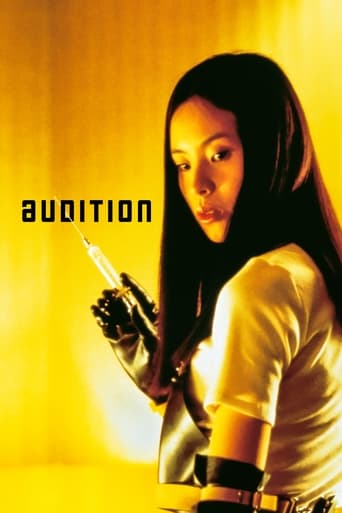
Audition
Takashi Miike · 1999 · Film
Shares human monsters.
90% shared signal
Infinity Pool
Brandon Cronenberg · 2023 · Film
Shares a bleak, unforgiving tone.
90% shared signal
The Platform
Galder Gaztelu-Urrutia · 2019 · Film
Shares explicit viscera.
87% shared signal
Goodnight Mommy
V. Franz & S. Fiala · 2014 · Film
Shares slow-burn dread.
86% shared signal
Yellowjackets
Ashley Lyle & Bart Nickerson · 2021 · Television
Shares human monsters.
87% shared signal
Hannibal
Bryan Fuller · 2013 · Television
Shares slow-burn dread.
84% shared signal
More lists like these: Movies like Bring Her Back
Questions about Gerald's Game
The things people actually ask about this film, answered — including how it ends.
What happens at the end of Gerald's Game?
Jessie cuts her wrist with a shard of glass and pulls her hand through the handcuff, degloving it, then drives away bleeding. An epilogue six months later reveals the Moonlight Man was real — a grave robber named Raymond Andrew Joubert — and she confronts him at his trial.
Is the Moonlight Man real in Gerald's Game?
Yes. For most of the film he reads as a hallucination or as Death, and the film encourages that. The epilogue identifies him as Raymond Andrew Joubert, a man with acromegaly who robbed graves and had been inside the house. The bag of bones was his.
What is the eclipse scene in Gerald's Game?
A flashback to 1963, when Jessie was twelve and her father arranged to be alone with her during a solar eclipse. He abuses her and then secures her silence by making her responsible for holding the family together. Every later choice in her life traces back to it.
Is the degloving scene in Gerald's Game accurate?
Broadly, yes. The hand is widest across the knuckles and skin shears before bone compresses, so removing the skin is the only way through a fixed cuff. The film shoots it in close continuous detail and the sound design carries most of it.
Is Gerald's Game based on a true story?
No. It adapts Stephen King's 1992 novel of the same name. Joubert is a King invention, though the novel ties him loosely to the serial killer in King's Dolores Claiborne, which shares the 1963 eclipse as a fixed point.
How scary is Gerald's Game?
It is more distressing than frightening. We score it 030 on pace, toward dread, and 082 on viscera, which is concentrated almost entirely in one sequence. The lasting difficulty is the abuse flashback rather than anything that jumps.
These are ranked against Gerald's Game, not against you.
Build your own tape →