Film · 2014
Goodnight Mommy
V. Franz & S. Fiala
Their mother comes home with her face bandaged, and the twins decide she is not their mother.
75Hard going to sit through, out of 100 — mostly how bleak it is
- PaceSlow burn32
- ThreatPeople, entirely86
- GoreExplicit74
- ToneNo relief at all8
- RealityGrounded26
Era bias 80 · Modern. Texture rather than fear, so it is not part of the grade. All six scores →
The bleakest horror movies ever made →
On VHSCREAM’s six-axis scale, Goodnight Mommy (2014) is most extreme on the tone axis: 8 out of 100, where 0 is a bleak, unforgiving tone and 100 is gleeful black comedy. 7% of the 320 horror works we have scored come in lower on that axis. How we score →
Goodnight Mommy is a 2014 Austrian horror film written and directed by Veronika Franz and Severin Fiala, released in German as Ich seh, Ich seh. Twin boys in an isolated lakeside house decide that the woman who has come home with her face bandaged is not their mother. We score it 086 on the threat axis and 074 on viscera, which for a film this quiet is unusual. The twist is not the point and the last half hour is.
Scored and reviewed by VHSCREAM on · how we score
How scary is Goodnight Mommy, actually?
Scored against the published rubric, here is what the numbers mean for a viewer.
The threat at 086 is human, and it is a child. 58 works score higher. There is nothing supernatural in this film and no intruder. Everything that happens is done by a nine-year-old with the run of an empty house and a conviction he cannot be argued out of.
Viscera 074 is high for a film this restrained. 75 works score higher. Superglued lips cut open, a burn, insects placed on a bound woman's face, and a fire. It is sparing, slow, and almost all of it happens in daylight to somebody who cannot move.
Tone 008 is near the floor of the index. 22 works score lower. A bereaved mother is tortured to death by her surviving child for refusing to speak to the one who died, and the film's last image is his version of a happy ending.
Pace 032 is dread with a cliff in it. 227 works are faster. An hour of household routine and growing suspicion, then a final act that does not pause.
Reality anchor 026 is grounded. 55 works score lower. One house, one lake, no supernatural content at all. The only unreality in the film is a child's and it is in his head.
Era bias 080 is modern. Flat digital daylight, glass and concrete, no texture claimed and none performed.
On jump scares: two or three, and they are the weakest thing in the film.
Who should skip Goodnight Mommy
Skip it if the torture of a bound parent is a line. The last half hour is a sustained sequence of a restrained woman being hurt slowly by children, in daylight, without music.
Skip it if being ahead of a twist spoils a film for you. It is signposted by the half-hour mark and the picture is not constructed to survive that.
Skip it if you want the photograph explained. The film offers a clue about a second woman and never returns to it, which has kept arguments running for a decade.
Content notes: the torture of a bound adult by children, superglue and scissors used on a mouth, burns, insects placed on a person's face, a child's death discussed, bereavement and denial, a house fire with a person tied up inside it, and animal cruelty.
Watch it if you want the best film about a child's denial anybody has made, two performances by children that do not condescend to being children, and a last act that refuses every exit.
Goodnight Mommy on six axes of fear
Every work in the index is scored on six continuous axes of fear. This is what Goodnight Mommy looks like as a vector — and what each ten-point band looks like across everything else we hold.
Where that puts it: joint #9 bleakest
Draft score — awaiting human review. About these scores
Disagree with a number? Say so on the axis itself. Nobody has confirmed this vector yet, and a score you challenge goes to the top of the queue to be re-scored by a human. Votes do not move the numbers — they decide what gets looked at first. How the scoring works →
Scored against the published rubric. This vector is a draft awaiting review — the method is public so you can argue with it.
Goodnight Mommy: the review
A house that was built to be a horror film and was not
The setting is a modernist private house by a lake: glass, concrete, hard surfaces, a long drive, no neighbours in sight. Martin Gschlacht photographs it in flat daylight with almost no shadow, which is the opposite of the choice almost every haunted-mother film makes, and it works because it leaves nowhere for anything to hide. The horror is all in the open and nobody is coming.
The rules the mother brings home are the first act's whole engine: curtains closed, no visitors, no noise, and she will speak to one boy and not the other. Franz and Fiala stage these as household administration rather than menace, which means the audience's sympathies move with the children for a long time before the film asks whether they should have.
Two children carrying a feature film
Elias and Lukas Schwarz are real twins, their own first names are used, and the performances are extraordinary in a specific way: they are not precocious. They behave like nine-year-olds — bored, cruel to insects, fixated, incapable of scale — and the film's horror comes from exactly that. A child who has decided something and has the run of a house with nobody in it but one adult is a genuinely frightening proposition, and the film never asks them to act frightening.
Susanne Wuest's mother is the harder role, because for most of the running time she is a bandaged face and a set of prohibitions and the film is withholding her interiority on purpose. What she does with it is make the coldness legible as something other than threat — she is exhausted, embarrassed, grieving, and badly out of her depth, and on a rewatch almost every scene plays as a woman failing to manage a child's delusion.
The last half hour is the film
When the boys tie her to the bed the picture changes register completely and does not soften again. It is a sustained domestic-torture sequence, played slowly, in daylight, by children: the lips, the magnifying glass, the cockroaches, the demand repeated in the same flat voice. Franz and Fiala shoot it without music and mostly in static mid-shots, and it is among the hardest twenty minutes in this index to sit through — harder than a great deal of what we score far higher on viscera, because of who is doing it and what they want.
Where it strains
The twist is signposted early enough that a practised viewer will have it by the thirty-minute mark, and the film is not really built to withstand being ahead of. There is a photograph of two similar-looking women that the film offers as a clue and then declines to resolve, which has kept arguments going for a decade and reads to me as a loose end rather than an ambiguity. And the middle act repeats its structure — a rule, a doubt, a test — a couple of times more than the escalation requires.
The 2022 American remake exists and is a straight retelling with the same reveal. It is not worth the time; this is a film made out of texture and patience and the remake has neither.
Watch it for the children, the house, and a final act almost nothing in mainstream horror would attempt.
The ending of Goodnight Mommy explained
The ending, in full. Open it when you have seen it.
The short answer: Lukas has been dead the whole time. He died in an accident the family does not speak about, and Elias has continued to live with him — talking to him, saving food for him, speaking for him — while his mother has been trying, catastrophically, not to participate in it. Her rule that she will speak to one boy and not the other is not evidence that she is an impostor; it is a bereaved woman refusing to address a dead child. Elias ties her to the bed and tortures her for an answer she cannot give, and when she will not say Lukas's name he sets the house on fire. She dies in it. The last image is the mother and both boys walking together in sunlight outside the house, which is not an event. It is the reunion Elias wanted.
Here is how the film gets there.
What happened to Lukas?
He died before the film starts, in an accident the script refers to only obliquely. The family's silence about it is the condition everything else grows out of: the mother's withdrawal, her surgery, her rules, and Elias's refusal. The film never stages the death, which is the right choice — it is not a mystery to be solved, it is a thing being avoided by everybody on screen.
What are the clues that Lukas is dead?
Nobody but Elias ever interacts with him. The mother sets one place at the table and speaks to one boy. The visitors who come to the door — a Red Cross collection, a priest — register one child. Elias is the only one who hears Lukas speak, and every plan the pair make is executed by Elias alone. The film plays fair and it plays early.
Why is the mother's face bandaged?
She has had cosmetic surgery, which the film presents as a woman in public-facing work trying to repair herself after something she cannot repair. The bandages do the plot work — they make the impostor theory available to a child who wants one — but their real function is thematic: she has had her face changed because her son died and she could not change anything that mattered.
What is the photograph of the two women?
A burnt or torn picture showing the mother beside a woman who closely resembles her, which Elias takes as proof of a double. The film offers it as a clue and never resolves it. The reading most viewers land on is that it is a sister or a twin; the reading I think the film supports is that it is a red herring built out of a child's need for one, and that the ambiguity is the only place where Franz and Fiala's restraint tips into withholding for its own sake.
How does the house burn?
Elias, having failed to get the admission he wants, sets a fire. He is nine and the fire is not a plan. His mother is still bound. The film does not stage her death for effect and it does not cut away from the fact of it either.
What does the final scene mean?
It is not a survival. The three of them walking in sunlight outside the house is Elias's resolution rather than the film's: the mother who would not say his brother's name, the brother who is not there, and the boy, all finally together on his terms. Nothing in it is happening. It is the only comfort the film offers and it is offered to the person who destroyed everybody in it.
If Goodnight Mommy is your kind of fear
The eight works closest to Goodnight Mommy in the index on the five axes that describe fear, the same medium first — not by genre label, and not by what other people watched.
Bring Her Back
Danny & Michael Philippou · 2025 · Film
Shares a bleak, unforgiving tone.
86% shared signal
Gerald's Game
Mike Flanagan · 2017 · Film
Shares human monsters.
86% shared signal
It Comes at Night
Trey Edward Shults · 2017 · Film
Shares grounded realism.
86% shared signal
Pearl
Ti West · 2022 · Film
Shares explicit viscera.
84% shared signal
Halloween Ends
David Gordon Green · 2022 · Film
Shares human monsters.
84% shared signal
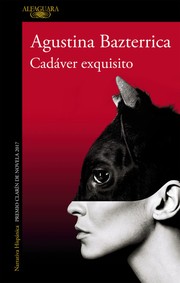
Tender Is the Flesh
Agustina Bazterrica · 2017 · Book
Shares slow-burn dread.
93% shared signal
Yellowjackets
Ashley Lyle & Bart Nickerson · 2021 · Television
Shares a bleak, unforgiving tone.
84% shared signal
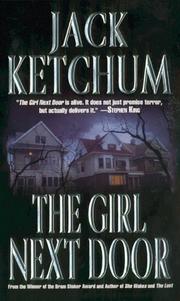
The Girl Next Door
Jack Ketchum · 1989 · Book
Shares grounded realism.
83% shared signal
More lists like these: Movies like Bring Her Back · Books like Tender Is the Flesh
Questions about Goodnight Mommy
The things people actually ask about this film, answered — including how it ends.
What is the twist in Goodnight Mommy?
Lukas is dead. He died in an accident the family will not discuss, and Elias has continued living with him — talking to him, speaking for him, saving him food. His mother's refusal to address one of the boys is not proof she is an impostor; it is a bereaved woman refusing to speak to a dead child.
How does Goodnight Mommy end?
Elias ties his mother to the bed, tortures her for an admission she cannot give, and when she will not say Lukas's name he sets the house on fire with her still bound. She dies. The final image of the three of them in sunlight is Elias's reunion, not an event.
What happened to Lukas in Goodnight Mommy?
He died before the film begins, in an accident referred to only obliquely. The family's silence about it is the condition everything in the film grows out of — the mother's withdrawal and surgery, her rules, and Elias's refusal to accept it. The death is never staged.
Why is the mother's face bandaged in Goodnight Mommy?
She has had cosmetic surgery. It does the plot work by making the impostor theory available to a child who wants one, and it does thematic work too: she has had her face changed because her son died and there was nothing about that she could change.
What is the photograph of the two women in Goodnight Mommy?
A damaged picture of the mother beside a woman who looks like her, which Elias takes as proof of a double. The film never resolves it. Most viewers read it as a sister or twin; it reads to me as a red herring built out of a child's need for one, and as the film's one loose end.
Is Goodnight Mommy actually scary?
Yes, and not through shocks — we score it 032 on pace with two or three jumps in the whole film. The fear is that a convinced child with the run of an empty house is unanswerable, and the last half hour is among the hardest twenty minutes in this index.
Is the 2022 Goodnight Mommy remake worth watching?
No. It keeps the reveal and discards everything the Austrian film is made of — the flat daylight, the patience, the real twins, the refusal to editorialise. Watch this one, with subtitles.
What should I watch after Goodnight Mommy?
The Others for the other great film about a parent who cannot say what happened, Hereditary for grief doing structural damage to a family, and horror about grief for the whole shelf.
These are ranked against Goodnight Mommy, not against you.
Build your own tape →