Television · 2021
Yellowjackets
Ashley Lyle & Bart Nickerson
A soccer team builds a religion in the snow, because a religion makes it collective.
65Hard going to sit through, out of 100 — mostly how bleak it is
- PaceSlow burn34
- ThreatPeople, entirely88
- GoreExplicit70
- ToneBleak26
- RealityTilts unreal48
Era bias 86 · Thoroughly modern. Texture rather than fear, so it is not part of the grade. All six scores →
On VHSCREAM’s six-axis scale, Yellowjackets (2021) is most extreme on the threat axis: 88 out of 100, where 0 is a threat that is not human and 100 is human monsters. 82% of the 320 horror works we have scored come in lower on that axis. How we score →
Yellowjackets is a television series that began in 2021, created by Ashley Lyle and Bart Nickerson. A girls' high school soccer team survives a plane crash in the Canadian wilderness in 1996 and is not rescued for nineteen months. The series runs that story alongside the survivors' adult lives in the present. We score it 088 on threat and 026 on tone.
Scored and reviewed by VHSCREAM on · how we score
How scary is Yellowjackets, actually?
Scored against the published rubric, here is what the numbers mean for a viewer.
Threat 088 is the signature and it is almost entirely other people. Only 47 works score higher. The wilderness kills by cold and hunger; everything deliberate is done by teammates, and in the present by middle-aged women protecting a secret.
Viscera 070 is high and intermittent. 215 works score lower. Butchery, a compound fracture, an amputation, cannibalism, and a plane crash — concentrated in a handful of episodes with long stretches of nothing in between.
Tone 026 is bleak with a vicious sense of humour. 172 works score lower. The present-day strand is frequently a comedy, and the series uses that to make the 1996 material land harder.
Pace 034 is dread. 219 works are faster. Nineteen months of winter told across dozens of hours, with the plot advancing by inches and the dread by feet.
Reality anchor 048 is the honest number. This sits almost exactly on the midpoint because the series refuses to resolve whether anything supernatural is happening, and we are not going to resolve it for them.
Era bias 086 is modern. 54 works score higher. Prestige-television photography in both timelines, with the 1996 scenes styled rather than shot to look like 1996.
On jump scares: a handful, mostly in the present-day strand.
Who should skip Yellowjackets
Skip it if cannibalism is a limit. It is the destination the series is walking toward from its first scene, and it arrives in detail.
Skip it if you need the supernatural question settled. Multiple seasons in, it is not, and the show's whole method is to keep it open.
Skip it if an unresolved series will frustrate you. It is ongoing. There is no ending to watch toward yet.
Content notes: cannibalism, the deaths of teenagers, a plane crash with graphic injury, amputation, self-harm, suicide, teenage pregnancy and abortion, animal killing and butchery, drug use, and infidelity and emotional abuse in the present timeline.
Watch it if you want the most convincing account of collective moral collapse on television, you can take a present-day strand that is weaker than its past, and a horror series that builds a religion rather than a monster sounds like the right idea.
Yellowjackets on six axes of fear
Every work in the index is scored on six continuous axes of fear. This is what Yellowjackets looks like as a vector — and what each ten-point band looks like across everything else we hold.
Where that puts it: #3 goriest
Draft score — awaiting human review. About these scores
Disagree with a number? Say so on the axis itself. Nobody has confirmed this vector yet, and a score you challenge goes to the top of the queue to be re-scored by a human. Votes do not move the numbers — they decide what gets looked at first. How the scoring works →
Scored against the published rubric. This vector is a draft awaiting review — the method is public so you can argue with it.
Yellowjackets: the review
Two shows, and the 1996 one is the horror
The dual structure is the series' best idea and its biggest liability. In 1996 a group of teenagers starve through a Canadian winter in a hunting cabin and arrive, by stages that the show is careful to make plausible, at eating each other. In the present, four middle-aged women lie to their families, blackmail each other and dispose of bodies. The 1996 material is extraordinary. The present-day material is a dark comedy about suburban failure that happens to share its cast.
When the series is working, the two halves comment on each other precisely: you watch a seventeen-year-old make a decision and then watch the forty-year-old she became still organising her life around it. When it is not working, the present is a plot-delivery system for information the past has already shown you.
The best thing on television about hunger
What distinguishes Yellowjackets from every other survival-cannibalism story is that it takes ritual seriously as a coping mechanism rather than as a sign of madness. The girls do not descend into savagery. They build a religion, because a religion makes the unbearable decision collective, and the show understands that this is a rational thing for frightened people to do. The cannibalism, when it arrives, is the least shocking part of it — the shocking part is the ceremony around it, and how quickly a card game becomes a liturgy.
Sophie Nélisse and Melanie Lynskey as the two Shaunas are the strongest pairing. Christina Ricci's Misty is the series' comic engine and its most frightening person. Juliette Lewis, Tawny Cypress and Lauren Ambrose all do real work in a present-day strand that frequently does not deserve them.
Is there something out there?
The series will not say, and that refusal is deliberate and sustained. Everything supernatural has a sufficient natural explanation — starvation, hypothermia, grief, mushrooms, a group of teenagers who need their choices to mean something — and the show keeps the option open without ever cashing it. We score reality anchor 048, almost exactly the midpoint, because that is honestly where it sits.
Where it strains
The present-day timeline accumulates plot it cannot service, and the second season's adult strand in particular spends hours on a problem the audience is not invested in. Characters withhold information from each other for structural rather than psychological reasons. And the series has a habit of ending episodes on a shock that the next episode declines to address, which works twice and then stops working.
Still: the cabin, the winter, the pit, the ceremony. No other series has filmed collective moral collapse this patiently or this convincingly.
The ending of Yellowjackets explained
The ending, in full. Open it when you have seen it.
The series has not ended. It is ongoing, and anything written here about a conclusion would be a guess. What follows is what the series has established and what it has deliberately left open.
Is the wilderness supernatural?
Unresolved on purpose. Lottie's visions, the symbol, the apparent efficacy of the ritual and the uncanny timing of the hunts are all available as either genuine contact with something or as what starving, traumatised teenagers construct when they need their decisions to be sanctioned. The series has repeatedly offered a natural explanation and then undercut it by a degree, and has never committed.
Who is the Antler Queen?
The figure in the antlered mask presiding over the hunt in the pilot's cold open. The series has withheld her identity as its central structural question. What is established is that the mask is a role rather than a person, that the ceremony it belongs to was built collectively, and that the hierarchy it implies was contested.
What is the symbol?
A mark found carved in the wilderness before the girls arrive, which they adopt. Its origin predates them, which is the strongest single piece of evidence that something was there first — and the series has also shown it on a wall belonging to somebody with a natural explanation for being there.
Who dies in the wilderness?
Jackie, in the first season, of exposure, after an argument, in a sequence the series frames as the moment the group becomes something else. What the survivors do with her body is the show's point of no return, and it is filmed as a meal and a dream at once.
Why does the present-day story exist?
Because the series' subject is not survival but aftermath — what it costs to have done the unforgivable and then be rescued into a life that requires you to be normal. The present timeline is where the show makes the argument that nobody got out.
If Yellowjackets is your kind of fear
The eight works closest to Yellowjackets in the index on the five axes that describe fear, the same medium first — not by genre label, and not by what other people watched.
The Fall of the House of Usher
Mike Flanagan · 2023 · Television
Shares a bleak, unforgiving tone.
85% shared signal
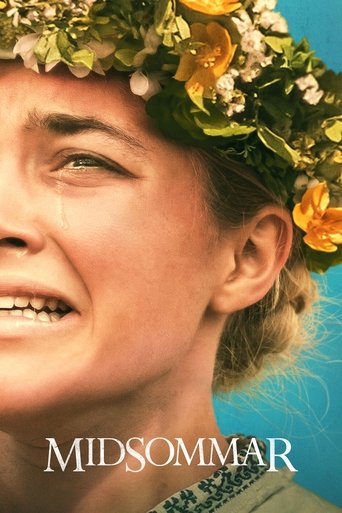
Midsommar
Ari Aster · 2019 · Film
Shares human monsters.
90% shared signal
Gerald's Game
Mike Flanagan · 2017 · Film
Shares explicit viscera.
87% shared signal
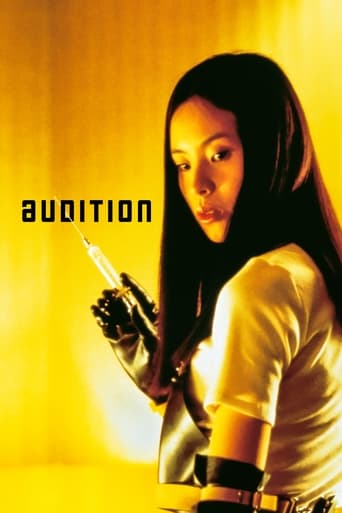
Audition
Takashi Miike · 1999 · Film
Shares human monsters.
87% shared signal

The Texas Chain Saw Massacre (OST)
Tobe Hooper & Wayne Bell · 1974 · Record
Shares a bleak, unforgiving tone.
86% shared signal
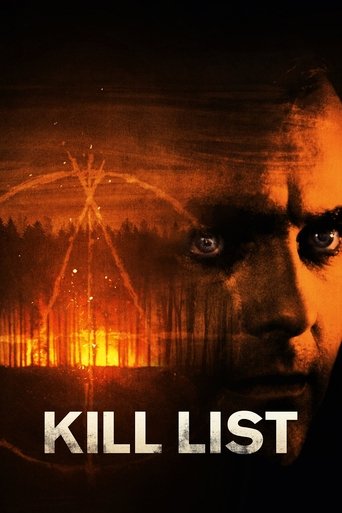
Kill List
Ben Wheatley · 2011 · Film
Shares explicit viscera.
86% shared signal
Us
Jordan Peele · 2019 · Film
85% shared signal
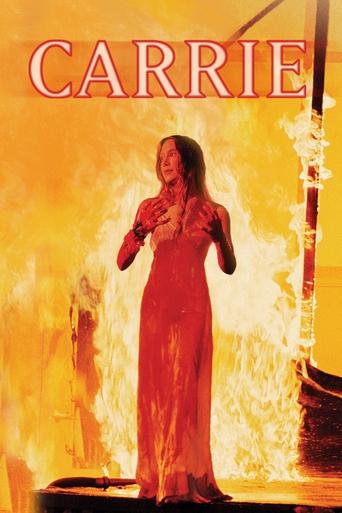
Carrie
Brian De Palma · 1976 · Film
85% shared signal
More lists like these: Movies like Midsommar · Movies like Us · Movies like Carrie
Questions about Yellowjackets
The things people actually ask about this series, answered — including how it ends.
Is Yellowjackets supernatural?
Deliberately unresolved. Every apparently supernatural event — Lottie's visions, the symbol, the hunts — has a sufficient natural explanation in starvation, cold and trauma, and the series keeps undercutting that explanation by a degree without ever committing. We score reality anchor 048, almost exactly the midpoint, for that reason.
Who is the Antler Queen?
Not yet revealed. She is the masked figure presiding over the hunt in the pilot's opening, and the series has established that the mask is a role rather than one person, and that the hierarchy around it was contested.
What happens to Jackie?
She dies of exposure in the first season after an argument, and what the group does with her body is the moment the series marks as the point of no return. It is filmed as a meal and a dream simultaneously.
Has Yellowjackets finished?
No. It is ongoing, which is why this page explains what the series has established and what it has deliberately left open rather than how it ends. The central questions — whether anything supernatural is out there and who wears the antlered mask — are unresolved by design, and any account of a conclusion here would be a guess.
Is Yellowjackets actually horror?
On the measurement, yes. We score the threat at 088 — near the ceiling of the human end — and the viscera at 070. The subject is people doing the unforgivable to each other, which is what the top of that axis means.
What should I watch after Yellowjackets?
The Terror for a group starving in a landscape with something possibly in it, The Troop for the same island logic at its most explicit, and Midsommar for a ceremony that makes an unbearable decision collective.
These are ranked against Yellowjackets, not against you.
Build your own tape →