Film · 2019
Us
A family meets itself in the driveway, and the copy left underneath has been waiting since 1986.
66Hard going to sit through, out of 100 — mostly how bleak it is
- PaceBuilds, then strikes52
- ThreatPeople, entirely88
- GoreShows some of it62
- ToneBleak26
- RealityTilts unreal62
Era bias 88 · Thoroughly modern. Texture rather than fear, so it is not part of the grade. All six scores →
Horror movies where the monster is a person →
On VHSCREAM’s six-axis scale, Us (2019) is most extreme on the threat axis: 88 out of 100, where 0 is a threat that is not human and 100 is human monsters. 82% of the 320 horror works we have scored come in lower on that axis. How we score →
Us is a 2019 horror film written and directed by Jordan Peele, his second feature. A family on holiday in Santa Cruz find four people standing in their driveway at night, and the four are them. We score it 088 on the threat axis — nothing supernatural happens in it — and 062 on viscera. The ending reframes the entire film and most first-time viewers miss it.
Scored and reviewed by VHSCREAM on · how we score
How scary is Us, actually?
Scored against the published rubric, here is what the numbers mean for a viewer.
Threat 088 is the signature and the film's whole argument. 47 works score higher. There is nothing supernatural in Us. The antagonists are people, the mechanism is a government programme, and the most frightening thing in it is a policy decision taken decades before the film starts.
Viscera 062 is moderate and front-loaded. 127 works score higher. Scissors used repeatedly, several stabbings, a throat, a car, and the Tyler house — bloody, but the camera is interested in choreography rather than injury.
Era bias 088 is modern. 267 works score lower. Clean 2019 digital photography, a contemporary suburban holiday, and a score that cuts between choral dread and a hip-hop needle drop.
Pace 052 is just on the shock side. 151 works are slower. A long, patient first act, then an invasion with a set piece roughly every ten minutes and almost no rest until the tunnels.
Reality anchor 062 is a shade surreal. The world is a recognisable California and the thing under it is not a place that could exist. The film is scrupulous about the surface and waves a hand at the basement.
Tone 026 is bleak. 172 works score lower. The family survives, which usually lifts this number, and the reveal makes the survival worse rather than better.
On jump scares: a handful, and the driveway is not one of them — it is four people standing still.
Who should skip Us
Skip it if the mythology will annoy you. The second half explains the Tethered at length, and the explanation is an allegory rather than a mechanism. Viewers who need the plumbing to work report being thrown out of it permanently.
**Skip it if you want another Get Out.** This is bigger, messier and far less tightly engineered, and it is a creature-of-the-week home invasion for half an hour before it becomes anything else.
Skip it if home invasion is a specific fear. The first act is a long, quiet, extremely effective version of exactly that, with no supernatural distance to hide behind.
Content notes: the abduction and chaining of a child, home invasion, the deaths of a family including children's doubles, stabbings with scissors, drowning, and an extended sequence of a child in danger underground.
Watch it if you want the best twenty minutes Peele has directed, Lupita Nyong'o doing two full performances in one film, and an ending that makes the second viewing a different film from the first.
Us on six axes of fear
Every work in the index is scored on six continuous axes of fear. This is what Us looks like as a vector — and what each ten-point band looks like across everything else we hold.
Draft score — awaiting human review. About these scores
Disagree with a number? Say so on the axis itself. Nobody has confirmed this vector yet, and a score you challenge goes to the top of the queue to be re-scored by a human. Votes do not move the numbers — they decide what gets looked at first. How the scoring works →
Scored against the published rubric. This vector is a draft awaiting review — the method is public so you can argue with it.
Us: the review
The driveway
The best twenty minutes in Peele's filmography are the ones in the house. Four figures in red, holding hands at the end of the drive, and the long stretch in the living room before anybody is hurt, with Lupita Nyong'o's Red talking in that strangled voice about a girl and a shadow. It is staged as a home invasion and played as a hostage negotiation with somebody who has rehearsed this conversation for thirty years, and the film never gets better than it, which is a complaint about the back half rather than about the scene.
The invasion sequence works because each double is a reading of the person they copy. Gabe's Abraham is the same man with the humour and the capability stripped out. Zora's Umbrae is a sprinter who grins. Jason's Pluto crawls and burns and does everything backwards. And Adelaide's Red is the only one who can speak, which is the clue and nobody notices it the first time.
Nyong'o is doing two things nobody asked her to do
The performance is the film. Adelaide is a woman managing an old fear in front of her children, and Red is a woman who has been building a sentence since 1986 and has damaged her own throat getting it out. Nyong'o gives them different postures, different breathing, different amounts of blinking, and in the last scene she has to play a reversal that recolours both — which she does, mostly with her eyes, while fighting on a dirt floor.
Winston Duke is the other reason the house works. Gabe is a dad in a Howard sweatshirt with a boat he is embarrassed about, and the film's funniest and most frightening idea is that his usefulness in a crisis is approximately zero.
Then the film explains itself
The back half leaves the house and the mythology arrives: an abandoned government programme, miles of tunnels, thousands of Tethered living on raw rabbit and mirroring the movements of the people above. As allegory it is legible and generous — a story about an underclass produced deliberately and then abandoned, which rises holding hands in the shape of a 1986 charity stunt. As mechanics it does not survive a second look, and the film knows it is not supposed to be examined, which is a different thing from being able to withstand examination. Where Get Out has a plot that tightens as it explains, Us has one that loosens.
Where it strains
The exposition in the underground is a monologue delivered to the audience. The scissors are an image before they are a weapon and the film relies on them doing both. The Tyler family sequence is brilliant and tonally belongs to a broader comedy. And the Hands Across America material is the kind of idea that is better the less it is confirmed; by the time a helicopter shot explains it, the chill has gone out of it.
What survives all of that is the driveway, Nyong'o twice over, and a last five minutes that quietly makes you the kind of audience that was rooting for the wrong person.
The ending of Us explained
The ending, in full. Open it when you have seen it.
The short answer: Adelaide goes into the tunnels, finds Red, and kills her. Then the film shows what happened in 1986: the girl who went into the funhouse was taken by her double, chained up underground, and left there — and the girl who walked out and grew up as Adelaide Wilson is the Tethered one. The Adelaide we have followed all film is the copy. Red was the original. Jason, in the car at the end, appears to work it out.
Here is how the film gets there.
Who are the Tethered?
Clones, produced by an abandoned government project that intended to use them to control their counterparts on the surface. The project failed, the people running it left, and the copies were shut in a network of tunnels with no purpose, no food beyond rabbits and no way out. Each one involuntarily mirrors the movements of the person they are tethered to, so a wedding above is a wedding below with no groom and a birth above is a birth below on a concrete floor.
What is the twist at the end of Us?
That the protagonist is a Tethered. In 1986 the young Adelaide wandered into the funhouse on the Santa Cruz boardwalk and met her double, who knocked her out, handcuffed her to a bed in the tunnels and took her place. The child who came out traumatised and silent was the copy learning to be a person; the child left behind spent thirty years planning the Untethering. Everything the film has framed as Adelaide's recovery — the dance lessons, the therapy, the difficulty speaking — was a copy acquiring a life.
Why can only Red speak?
Because she is the original and learned to talk above ground as a child. The strangled quality of her voice is the damage from being strangled during the swap, and from decades of disuse. It is the film's fairest clue and it is in the first scene she appears in.
What do the rabbits mean?
They are what the Tethered eat, and the film opens on a wall of them in cages. They also do the structural work: prolific, caged, bred for a purpose nobody has to think about, and the thing you keep when you want a great many lives that do not count. The opening shot is a thesis statement.
What is Hands Across America?
A real 1986 charity event in which several million people formed a line across the United States, advertised with the same red-and-white iconography the Tethered adopt. Young Adelaide is given the T-shirt in the first scene. The Untethering takes the image of a feel-good national gesture and makes it a line of people in jumpsuits who have nothing else to say.
Does Jason know?
The film ends on his face and leaves it there. He has watched his mother move and fight in ways that do not fit, he saw Pluto obey her, and the look he gives her in the ambulance is the only acknowledgement anybody offers. Peele has kept it deliberately unresolved, and the mask Jason wears throughout is the film's last joke about what is hidden and who is doing the hiding.
If Us is your kind of fear
The eight works closest to Us in the index on the five axes that describe fear, the same medium first — not by genre label, and not by what other people watched.

Midsommar
Ari Aster · 2019 · Film
Shares human monsters.
83% shared signal
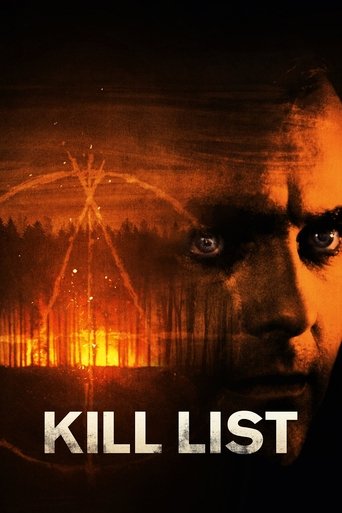
Kill List
Ben Wheatley · 2011 · Film
Shares a bleak, unforgiving tone.
82% shared signal
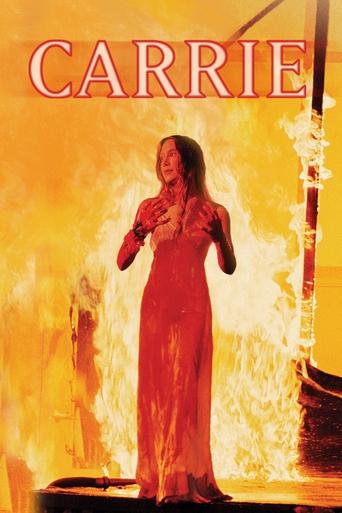
Carrie
Brian De Palma · 1976 · Film
Shares a bleak, unforgiving tone.
82% shared signal
The Platform
Galder Gaztelu-Urrutia · 2019 · Film
Shares human monsters.
81% shared signal

The Texas Chain Saw Massacre (OST)
Tobe Hooper & Wayne Bell · 1974 · Record
87% shared signal
Yellowjackets
Ashley Lyle & Bart Nickerson · 2021 · Television
85% shared signal
The Fall of the House of Usher
Mike Flanagan · 2023 · Television
85% shared signal

Threnody for the Victims of Hiroshima
Krzysztof Penderecki · 1960 · Record
84% shared signal
See the full list of movies like Us →
More lists like these: Movies like Midsommar · Movies like Carrie
Questions about Us
The things people actually ask about this film, answered — including how it ends.
What is the twist at the end of Us?
The Adelaide we follow is a Tethered. In 1986 her double overpowered her in the funhouse, chained her underground and took her place, so the woman we have followed all film is the copy and Red was the original girl. Jason appears to realise it in the final shot.
Who are the Tethered in Us?
Clones made by an abandoned government programme that meant to use them to control their surface counterparts. When it failed they were shut in tunnels with no food but rabbits, mirroring the movements of the people above them, for decades.
Why can Red talk but the other Tethered cannot?
Because Red is the original Adelaide and learned to speak above ground as a child. Her damaged voice is the result of being strangled during the swap and of thirty years without using it, and it is the clearest clue the film plants.
What do the rabbits in Us mean?
They are the Tethered's food and the film's thesis, delivered in the first shot: animals bred prolifically, kept in cages, maintained for a purpose nobody above ground has to think about. The image does the work that the underground monologue later explains.
Is Us scary or is it a thriller?
Both, and we score it as horror. The driveway and the home invasion are straight horror filmmaking, and the threat score of 088 means every danger in it is a person — closer to Scream than to anything supernatural.
Do I need to have seen Get Out?
No. They share a director and nothing else. Get Out is the tighter film and this is the stranger one, and we score them identically on the threat axis at 088 — in both, every danger is a person.
What should I watch after Us?
Get Out for the tighter version of the same preoccupations, Ready or Not for a home under siege played faster, and psychological horror for everything here where the threat is an arrangement rather than a monster.
These are ranked against Us, not against you.
Build your own tape →