Television · 2022
Interview with the Vampire
Rolin Jones
A second interview, decades on, with the tapes from the first one on the table.
59Strong to sit through, out of 100 — mostly how bleak it is
- PaceSlow burn30
- ThreatHuman and not40
- GoreExplicit66
- ToneBleak34
- RealityTilts unreal44
Era bias 90 · Thoroughly modern. Texture rather than fear, so it is not part of the grade. All six scores →
The slowest-burning horror television ever made →
On VHSCREAM’s six-axis scale, Interview with the Vampire (2022) is most extreme on the pace-of-fear axis: 30 out of 100, where 0 is slow-burn dread and 100 is relentless shock. 23% of the 320 horror works we have scored come in lower on that axis. How we score →
Interview with the Vampire is a television series that began in 2022 on AMC, developed by Rolin Jones from Anne Rice's novel. Louis de Pointe du Lac, now a Black businessman in 1910s New Orleans, gives a second interview to the journalist who botched the first one in 1973. We score it 030 on pace and 066 on viscera, and it is the best adaptation of Rice anybody has managed.
Scored and reviewed by VHSCREAM on · how we score
How scary is Interview with the Vampire, actually?
Scored against the published rubric, here is what the numbers mean for a viewer.
Pace 030 is the signature and it is deep in dread. 232 works are faster. This is a chamber piece: long conversations, decades passing in a sentence, and perhaps three sequences across two seasons that could be called action.
Viscera 066 is higher than the lushness suggests. 198 works score lower. Feeding shown in full, domestic violence shown rather than implied, a body disposed of in detail, and a theatre sequence played for an audience within the show.
Threat 040 leans supernatural, with the usual vampire caveat. 154 works score higher. The monsters are vampires and the harm in the series is almost entirely interpersonal — a marriage, a child, a coven with rules.
Era bias 090 is at the modern end. 11 works score higher. The series is set across a century and photographed with complete contemporary gloss; nothing about the image is trying to look like 1910.
Tone 034 is bleak with real wit. 222 works score lower. Lestat is funny, the series knows it, and the comedy is part of how it makes the relationship legible before it makes it unbearable.
Reality anchor 044 keeps it grounded. Vampires exist and the world is otherwise exactly itself: Jim Crow New Orleans, a Paris theatre, a Dubai penthouse with a nurse in it.
On jump scares: almost none. The series has no interest in startling anybody.
Who should skip Interview with the Vampire
Skip it if domestic abuse is a limit. The central relationship becomes violent and the series films it directly and repeatedly, including one incident that is the turning point of the first season.
Skip it if a child vampire is too much. Claudia is fourteen, permanently, and the series does not use that for shock — it uses it for sustained, specific misery.
Skip it if you want the novel. Almost every major element is altered. Readers attached to Rice's text have found the changes either the point of the series or unforgivable, with very little in between.
Content notes: domestic violence and coercive control, a child turned into a vampire, racial violence and lynching in period New Orleans, sexual content, suicide, graphic feeding and body disposal, and terminal illness in the framing story.
Watch it if you want the best Anne Rice adaptation there has been, two outstanding central performances, and a horror series whose real subject is which version of a shared history gets written down.
Interview with the Vampire on six axes of fear
Every work in the index is scored on six continuous axes of fear. This is what Interview with the Vampire looks like as a vector — and what each ten-point band looks like across everything else we hold.
Where that puts it: #5 goriest · #5 grounded
Draft score — awaiting human review. About these scores
Disagree with a number? Say so on the axis itself. Nobody has confirmed this vector yet, and a score you challenge goes to the top of the queue to be re-scored by a human. Votes do not move the numbers — they decide what gets looked at first. How the scoring works →
Scored against the published rubric. This vector is a draft awaiting review — the method is public so you can argue with it.
Interview with the Vampire: the review
The adaptation works because it changes almost everything
Moving Louis from a plantation owner to the proprietor of a Storyville brothel is the single best decision in the series, and it is not a cosmetic update. Rice's Louis is a man guilty about an abstraction. This Louis is a man navigating a specific, documented, lethal set of racial rules in New Orleans, who is then offered power by a European who does not have to think about any of them, and whose guilt afterwards is about what he did with that power and who he did it to. Every theme in the novel gets sharper.
The second change is the frame. The interview is a second interview, decades later, conducted by a dying Daniel Molloy who has the 1973 tapes and keeps catching Louis in contradictions. That turns the whole series into an argument about testimony: Louis is not a reliable narrator, he knows he is not, and Molloy's job is to keep asking why the story has changed. It is a genuinely sophisticated structure and it pays off in the second season in a way almost nothing on television does.
Jacob Anderson and Sam Reid
Anderson plays Louis as exhausted rather than tortured, which is a harder and better reading. Reid's Lestat is the performance that makes the series work — charming, genuinely funny, musically gifted, and violent in a domestic register that the show has the nerve to film as what it is. The relationship is written as a marriage and then as an abusive one, and the series does not soften the turn.
Claudia is the series' hardest material, and the right call: a girl turned at fourteen, who will never be an adult and never stop wanting to be, whose diaries the show uses to narrate her own account against Louis's. The second season's use of those diaries is the best thing in it.
Where it strains
The pacing in the first season sags in the middle — two episodes of domestic unhappiness that could be one. The visual effects are thin in places and the series is noticeably happier on a stage than in the air. And the Théâtre des Vampires material in the second season is a tonal gear change that some viewers never accept, going from intimate chamber drama to grand guignol in one episode.
The cast change for Claudia between seasons is handled as well as it could be and remains a change.
Why the viscera is 066
Because the show is far more explicit than its reputation. Feeding is filmed at length, the violence inside the relationship is shown rather than implied, and there is a sequence of a body being disposed of that is as grim as anything in this index's television shelf. It is a lush, beautiful series about appalling people doing appalling things to each other, and it never pretends the beauty cancels it.
The ending of Interview with the Vampire explained
The ending, in full. Open it when you have seen it.
The series is ongoing. The second season concludes the novel's main narrative and the interview frame, and the story continues. What follows avoids spoiling the second season's final turns while explaining what the series does differently.
How does the series change the novel?
Three substantial ways. Louis is Black and runs a Storyville business, which replaces Rice's abstract guilt with a specific political situation. The interview is a second interview conducted in the present by a dying Daniel Molloy, who has the original tapes and uses them to contradict Louis. And Claudia narrates part of her own story through her diaries, which the novel does not allow her.
Is Louis telling the truth?
No, and the series makes this its subject rather than a twist. Molloy catches him altering, omitting and softening, and the second season turns on the question of whose account of a shared life survives. The show's position is that Louis is not lying so much as remembering survivably.
What happens to Claudia?
The series follows the novel's shape — her resentment of Louis and Lestat, her attempt to make a companion, and the trial at the Théâtre des Vampires — and gives her far more agency and far more voice than the novel or the 1994 film does. Her diaries are the reason.
Should I watch the 1994 film first?
No need, and it may get in the way. The film is a reasonably faithful adaptation with none of the series' structural ideas, and the series is not in conversation with it.
Where does it go next?
Into the wider Rice material; AMC holds the rights to the Vampire Chronicles and the Mayfair Witches and has been building toward connecting them. The second season closes the interview and opens that door.
If Interview with the Vampire is your kind of fear
The eight works closest to Interview with the Vampire in the index on the five axes that describe fear, the same medium first — not by genre label, and not by what other people watched.
Penny Dreadful
John Logan · 2014 · Television
88% shared signal
Ginger Snaps
John Fawcett · 2000 · Film
89% shared signal
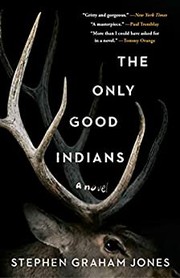
The Only Good Indians
Stephen Graham Jones · 2020 · Book
86% shared signal
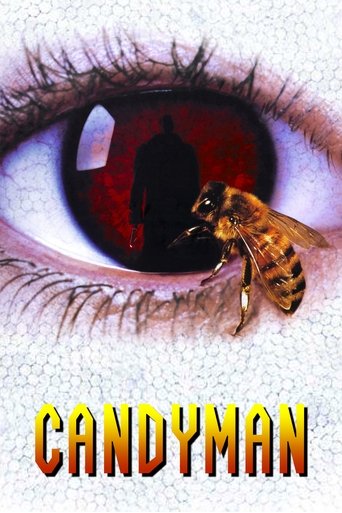
Candyman
Bernard Rose · 1992 · Film
86% shared signal
The Wailing
Na Hong-Jin · 2016 · Film
Shares slow-burn dread.
86% shared signal
Curse of Chucky
Don Mancini · 2013 · Film
86% shared signal
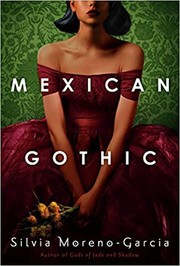
Mexican Gothic
Silvia Moreno-Garcia · 2020 · Book
Shares slow-burn dread.
85% shared signal
Prometheus
Ridley Scott · 2012 · Film
83% shared signal
More lists like these: Books like Mexican Gothic
Questions about Interview with the Vampire
The things people actually ask about this series, answered — including how it ends.
Is the series faithful to the Interview with the Vampire novel?
No, deliberately. Louis is Black and runs a Storyville business rather than a plantation, the interview is a second interview conducted in the present by a dying Daniel Molloy who has the original tapes, and Claudia narrates part of her story through diaries. The themes are the novel's; most of the specifics are not.
Is Louis a reliable narrator?
No, and the series makes that its subject. Molloy repeatedly catches him altering and omitting, and the second season turns on whose account of a shared life survives. The show's view is that he is remembering survivably rather than lying.
Do I need to watch the 1994 film first?
No, and it may get in the way. The film adapts the novel faithfully and has none of the series' structural ideas; the series is not responding to it.
How gory is Interview with the Vampire?
More than people expect. We score it 066 on viscera, higher than 198 of the 320 works in this index, with feeding filmed in full and one extended body-disposal sequence that is among the grimmest things on our television shelf.
Has Interview with the Vampire finished?
No. The second season completes the novel's main narrative and closes the interview frame, and the series continues into the wider Vampire Chronicles — AMC holds the rights to those books and to the Mayfair Witches, and has been building toward connecting them. So the first two seasons are a complete adaptation of the novel and not a complete story.
What should I watch after Interview with the Vampire?
'Salem's Lot for the vampire as an infestation rather than a relationship, Let the Right One In for a child vampire handled with the same seriousness, and vampire horror for every vampire work in this index with its scores.
These are ranked against Interview with the Vampire, not against you.
Build your own tape →