Television · 1992
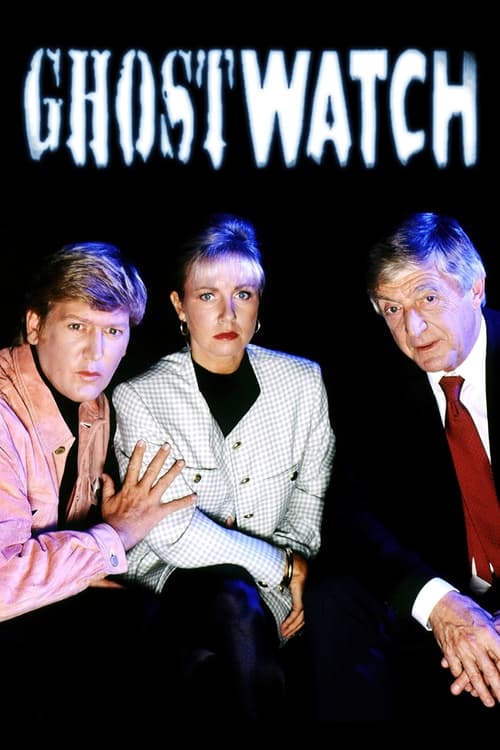
Ghostwatch
BBC
A live broadcast hoax that genuinely traumatised a country.
Most extreme on ERA BIAS — analog-era texture at 012
On VHSCREAM’s six-axis scale, Ghostwatch (1992) is most extreme on the era-bias axis: 12 out of 100, where 0 is analog-era texture and 100 is modern craft. 20% of the 105 horror works we have scored come in lower on that axis. How we score →
Ghostwatch is a ninety-minute drama broadcast once by BBC1 on Halloween night in 1992, written by Stephen Volk and directed by Lesley Manning, presented throughout as a live outside broadcast from a haunted council house. We score it 012 on era bias — only 21 works score lower — and 030 on reality anchor.
Scored and reviewed by VHSCREAM on · how we score
Ghostwatch: the review
Ghostwatch is the most effective horror ever made for television and it worked because every single element of it was a lie the audience had no reason to question.
It went out at 9.25pm on 31 October 1992 in the BBC1 schedule, in the studio set and house style of a live factual programme. Michael Parkinson anchored from a studio. Mike Smith, then a genuinely ubiquitous BBC presenter, ran a phone desk with a real on-screen telephone number. Sarah Greene and Craig Charles — both best known from children's television and light entertainment — were on location at 94 Foxhill Drive in Northolt with the Early family. Everyone played themselves. There was a studio audience, a parapsychologist being politely sceptical, a thermal camera, a live two-way with a hesitant delay, and a running gag about the cameraman. The word "drama" appeared in the Radio Times listing and nowhere in the programme.
Volk's script is a masterpiece of escalation disguised as broadcast structure. For the first forty minutes almost nothing happens, which is exactly what a live ghost hunt would look like: hoax accusations, a cat, a bit of banter, a sceptic, a phone caller who is clearly making it up. The scares are all in the recorded inserts and the background of shots — a figure standing behind a curtain, a face in a window, something at the back of a group of children — and a great many viewers did not see them at all on first broadcast and still felt the dread.
Pipes and the architecture of the haunting
The entity is nicknamed Pipes because Pamela Early told her daughters that the banging in the house was the plumbing. That single detail is the best thing in the script: a mother's ordinary reassurance becomes the name of the thing, and the children use it affectionately. The programme builds his history in fragments across the broadcast — a previous tenant, a man who hanged himself in a cupboard under the stairs, and behind him something considerably older and worse that had been using him.
Why nothing like it has been possible since
The programme depended on an audience that trusted a BBC continuity announcement and a Parkinson studio. It depended on a single live-feeling transmission with no pause button. It depended on the fact that you could not check. Every found-footage film since is working with an audience that knows the form, and Ghostwatch is the only one that got to do it to people who did not.
For the film that industrialised what this invented, The Blair Witch Project; for the best use of the fake-documentary form since, Lake Mungo; for the same domestic British dread, Kill List.
The ending of Ghostwatch explained
Total spoilers from here. Everything above this line is spoiler-free.
The short answer: the broadcast loses control of itself. The activity at Foxhill Drive escalates — the girls' bedroom, the glory hole under the stairs, a cat in a basket, Suzanne scratched on camera — and Dr Lin Pascoe arrives at the programme's actual thesis: that a national live broadcast inviting millions of viewers to focus on one haunted house has turned the transmission itself into a séance, and that the BBC has spent ninety minutes feeding the thing. The location feed degrades. Sarah Greene goes into the cupboard under the stairs after one of the children and the camera light goes out; the line dies and she does not come back. The studio has nothing to cut to. Lights fail in the gallery, the phone lines are a wall of noise, and Parkinson is left alone in a dark studio with no autocue and no outside broadcast — and then begins to speak in a voice that is not his, reciting the words the children had attributed to Pipes. The programme ends on him, possessed, in a studio nobody is controlling, and goes to black.
Who is Pipes in Ghostwatch?
The name the Early children give the presence, taken from their mother's explanation that the banging noises were the central heating. The programme assembles his identity over the ninety minutes: Raymond Tunstall, a disturbed former tenant who hanged himself in the cupboard under the stairs of the house and whose body was not found for some time. Tunstall is not the whole answer. The programme's implication is that he was himself being used by something far older — a presence associated with a woman who killed children, whose influence the house has carried for much longer than Tunstall's tenancy.
What happens to Sarah Greene?
She is lost. Following one of the Early girls into the cupboard under the stairs — the "glory hole" the programme has been building towards for an hour — she goes out of shot, the camera light dies and the location feed is cut off. Nothing in the broadcast resolves it. The choice to do this to Sarah Greene specifically is the most calculated thing in the programme: she was the presenter of Going Live! and a figure of total safety to a generation of children, and the production had her appear on the following week's show to reassure them.
What happens to Michael Parkinson at the end?
He is possessed. With the outside broadcast gone, the studio lights failing and nothing left to present, Parkinson is alone on camera and begins reciting the Pipes material in another voice, staring into the lens. It is roughly ninety seconds, performed almost without movement, and it is the most frightening thing in British television. The programme ends there with no resolution, no credits reassurance and no return to normal transmission.
Was Ghostwatch really live?
No. It was recorded weeks in advance and broadcast as if live, with every convention of a live programme carefully reproduced: the studio clock, the two-way delay, the phone number on screen, the presenters apparently reacting in real time, the technical hitches. The BBC's own listings described it as a drama and it carried a writer's credit, but it was transmitted inside the factual furniture of the channel and most viewers who tuned in late had no indication at all.
What happened after Ghostwatch was broadcast?
It caused the largest complaint response the BBC had seen for a single programme: roughly thirty thousand calls on the night, many from viewers who believed what they were watching. The Broadcasting Standards Council censured the BBC for misleading the audience, finding that the use of real presenters and a live format went too far. Five days after transmission, eighteen-year-old Martin Denham, who had learning difficulties, took his own life, and his family attributed it to the programme; the coroner referred to it. The BBC did not repeat Ghostwatch for a decade and has never rebroadcast it on television in the UK.
Can I still watch Ghostwatch?
Yes. The BFI released it on DVD and it has had occasional streaming availability and anniversary screenings. It has never been shown again on British television. Watching it now requires supplying the context yourself, which is why it tends to land harder on viewers who are told nothing about it first.
How scary is Ghostwatch, actually?
Scored against the published rubric, here is what the numbers mean.
Era bias 012 is deep analog — only 21 works score lower. 1992 broadcast video, a studio gallery, a phone desk, a thermal camera and an outside broadcast van. The programme could not exist in any other format.
Reality anchor 030 is grounded — 17 works score lower. One house, one studio, one evening, and a format the audience had every reason to read literally.
Viscera 020 is very low — 16 works score lower. A scratch on a child's face, a dead cat, and nothing else at all.
Tone 024 is bleak — 67 works score lower. A presenter is lost, a family is destroyed on air, and the programme ends with the broadcast itself compromised.
Pace 030 is slow — 42 works are slower. Forty minutes pass before anything happens, which is the single most important decision in it.
The threat at 040 is on the supernatural side — 54 works score lower, though the human history behind Pipes — a man who hanged himself, a woman who killed children — is where the programme's worst material is.
On jump scares: perhaps four, and the best of them is a figure standing still behind a curtain that nobody on screen notices.
Ghostwatch on six axes of fear
Every work in the index is scored on six continuous axes of fear. This is what Ghostwatch looks like as a vector.
Disagree with a number? Say so on the axis itself. Nobody has confirmed this vector yet, and a score you challenge goes to the top of the queue to be re-scored by a human. Votes do not move the numbers — they decide what gets looked at first. How the scoring works →
Scored against the published rubric. This vector is a draft awaiting review — the method is public so you can argue with it.
Who should skip Ghostwatch
Skip it if suicide is a hard limit. A hanging is central to the house's history, and the programme's real-world aftermath includes a death.
Skip it if children in danger is a hard limit. The Early girls are on camera throughout and the programme's climax puts both of them at risk.
Skip it if you need a resolution. It ends mid-collapse with nothing explained and nobody rescued, which is the format's whole trick.
Content notes: a hanging described in detail, the historical murder of children referred to repeatedly, a child injured on camera, animal death, children in sustained danger, a possession depicted on screen, and a programme whose real broadcast was followed by a young man's death that his family attributed to it.
Watch it if you want the most effective horror broadcast ever made, you can accept a slow first half that is slow on purpose, and you want to see the one time this trick was played on an audience that had no idea it was a trick.
Where to find it
Streaming on Philo · AMC Plus · AMC+ +2 ↗Physical copies on eBay ↗Availability from JustWatch via TMDB. We earn nothing from these links.
Nothing loads from YouTube until you press play.
If Ghostwatch is your kind of fear
The eight works closest to Ghostwatch in the index, ranked by distance across all six axes — not by genre label, and not by what other people watched.
Dracula
Bram Stoker · 1897 · Book
Shares analog-era texture.
87% shared signal
Rosemary's Baby
Roman Polanski · 1968 · Film
Shares restraint over gore.
87% shared signal
The Blair Witch Project
D. Myrick & E. Sánchez · 1999 · Film
Shares a bleak, unforgiving tone.
85% shared signal

The Fog (OST)
John Carpenter · 1980 · Record
Shares slow-burn dread.
85% shared signal

Halloween (OST)
John Carpenter · 1978 · Record
Shares grounded realism.
84% shared signal
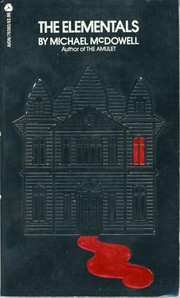
The Elementals
Michael McDowell · 1981 · Book
Shares analog-era texture.
82% shared signal

The Haunting of Hill House
Shirley Jackson · 1959 · Book
Shares restraint over gore.
82% shared signal

Frankenstein
Mary Shelley · 1818 · Book
Shares a bleak, unforgiving tone.
82% shared signal
Questions about Ghostwatch
The things people actually ask about this series, answered.
What happens at the end of Ghostwatch?
The location feed dies after Sarah Greene disappears into the cupboard under the stairs. The studio loses its lights and its lines, and Michael Parkinson, alone on camera, begins reciting the entity's words in another voice. The programme ends on him, possessed, and cuts to black.
Who is Pipes in Ghostwatch?
The children's name for the presence, taken from their mother's claim that the banging was the plumbing. The programme identifies him as Raymond Tunstall, a disturbed former tenant who hanged himself under the stairs — and implies that something much older, associated with the murder of children, was using him.
Was Ghostwatch actually live?
No. It was recorded weeks earlier and transmitted as though live, reproducing every convention of a live broadcast — the phone number, the two-way delay, the technical hitches, real presenters playing themselves. It was listed as a drama, but it went out inside BBC1's factual furniture.
What happens to Sarah Greene in Ghostwatch?
She follows one of the girls into the cupboard under the stairs, the camera light dies and the feed is lost. She never returns and nothing in the programme resolves it. She was a children's television presenter, which is exactly why the production chose her for it.
Why was Ghostwatch never shown again?
Because of the response. Around thirty thousand viewers called the BBC on the night, many believing it was real, and the Broadcasting Standards Council censured the corporation for misleading the audience. Five days later a young man with learning difficulties took his own life and his family blamed the programme. It has never been rebroadcast on British television.
Is Ghostwatch the first found-footage horror?
It predates the form's commercial breakthrough by seven years and does something the films cannot: it used a real broadcaster, real presenters and a real phone number on an audience with no way to check. The Blair Witch Project industrialised the idea; Ghostwatch got to do it once, for real.
These are ranked against Ghostwatch, not against you.
Build your own tape →