Television · 1990
It (1990)
One excellent miniseries and one poor one, in that order, with a stop-motion spider.
44Strong to sit through, out of 100 — mostly how bleak it is
- PaceBuilds, then strikes46
- ThreatMostly supernatural16
- GoreHolds back24
- ToneGrim, with air44
- RealityTilts unreal58
Era bias 22 · Analog-leaning. Texture rather than fear, so it is not part of the grade. All six scores →
The most purely supernatural horror television →
On VHSCREAM’s six-axis scale, It (1990) is most extreme on the threat axis: 16 out of 100, where 0 is a threat that is not human and 100 is human monsters. 14% of the 320 horror works we have scored come in lower on that axis. How we score →
IT is a 1990 ABC miniseries directed by Tommy Lee Wallace from Stephen King's novel, in two parts. Tim Curry plays Pennywise, seven children in Derry, Maine fight something in 1960 and come back as adults in 1990 to finish it. We score it 016 on threat and 024 on viscera, and it is the clearest two-halves object in this index: the first part is excellent and the second is not.
Scored and reviewed by VHSCREAM on · how we score
How scary is It, actually?
Scored against the published rubric, here is what the numbers mean for a viewer.
Threat 016 is the signature, deep in the supernatural end. Only 46 works score lower. It is not a person and has no human motive, and the adults who enable it by looking away are negligent rather than malevolent.
Viscera 024 is restrained, and that is a schedule rather than a choice. 267 works score higher. This went out at eight in the evening on ABC. There is blood in a sink and a severed arm implied, and nothing else.
Tone 044 is the highest on our television shelf. 257 works score lower. Curry is funny, the children's half has real warmth, and the ending is a victory. This is the least bleak thing we hold on television by a clear margin.
Pace 046 is a shade on the dread side. 178 works are faster. Four hours with a set piece roughly every twenty minutes, built for commercial breaks.
Era bias 022 is analog. 224 works score higher. 1990 network television photography of a 1960 small town, on tape, with an orchestral score.
Reality anchor 058 is a shade surreal. Derry is a solid place and the thing in it changes shape, which is exactly the right split.
On jump scares: several, and the drain is not one of them — it is a conversation.
Who should skip It
Skip part two if you want to keep liking it. The adults' half is slack and the finale is the most famous anticlimax in television horror.
Skip it if you have seen the 2017 film and want something comparable. This is softer, cheaper and far less graphic, and the pleasure of it is almost entirely Curry and the children.
Skip it if clowns are a genuine phobia. Curry's Pennywise is chatty and present for a great deal of the first part.
Content notes: the abduction and killing of children, a child's severed arm, suicide, bullying and physical assault of children, implied child sexual abuse by a father, domestic violence, and a racist arson attack.
Watch it if you want the best Pennywise, the best version of the drain scene in any medium, and four hours that contain one excellent miniseries and one poor one in that order.
It on six axes of fear
Every work in the index is scored on six continuous axes of fear. This is what It looks like as a vector — and what each ten-point band looks like across everything else we hold.
Where that puts it: #1 supernatural · #4 without gore · joint #5 surreal
Draft score — awaiting human review. About these scores
Disagree with a number? Say so on the axis itself. Nobody has confirmed this vector yet, and a score you challenge goes to the top of the queue to be re-scored by a human. Votes do not move the numbers — they decide what gets looked at first. How the scoring works →
Scored against the published rubric. This vector is a draft awaiting review — the method is public so you can argue with it.
It: the review
Part one is the best King adaptation on television
The children's half works for the same reason the novel's does: seven specific kids, each with a specific fear, in a town that is indifferent to all of them. Wallace casts it beautifully — Jonathan Brandis, Emily Perkins, Seth Green, Brandon Crane and the rest are recognisable children rather than television children, and the bullying, the stammer, the inhaler and the parents are all played straight.
And it understands the novel's actual proposition, which is that the monster is a landlord. Pennywise does not haunt Derry; Derry is his arrangement, and the adults' refusal to notice anything is the horror the film is really about. The missing-children posters, the shrugging police, the mother who will not let her son out — those are the frightening parts, and the clown is the thing that happens to be eating.
Tim Curry
The performance is why this exists in cultural memory and it is better than its reputation. Curry plays Pennywise not as a monster in a clown suit but as a comedian with a hostile audience: he does bits, he waits for laughs, he gets annoyed when the children do not play along. The Georgie scene in the drain is still the best version of that scene in any medium, and it is almost entirely Curry's timing.
He also stays funny, which is the hard part. A great deal of later Pennywise performance is loud; Curry is chatty, and chatty is worse.
Part two is the problem
The adults' half collapses. The structure that works on the page — alternating timelines, memory recovering as the characters return — becomes, on television, two hours of middle-aged people reminiscing in hotel rooms, and the budget that stretched to a 1960 small town does not stretch to anything the adults have to face.
And then the ending. The novel's cosmology is unfilmable and the miniseries attempts it anyway, so the thing under Derry turns out to be a giant stop-motion spider with wobbling legs. It is the most famous anticlimax in television horror and it is as bad as you have heard. The final twenty minutes undo a considerable amount of goodwill.
Where it strains
Beyond the spider: Part two's adult casting is uneven, the Henry Bowers material in 1990 goes nowhere, and the four-hour runtime with network breaks removed is slack in both halves. The violence is entirely implied — this went out at eight o'clock — which works for the children's half and leaves the adults' half with nothing to escalate to.
Watch part one. Watch part two knowing. It is still the version that frightened a generation of people who are now old enough to have children of their own, and the Georgie scene has lost none of it.
The ending of It explained
The ending, in full. Open it when you have seen it.
The short answer: the surviving Losers descend into the sewers, find It in a lair under Derry, and face it in its true form — a giant spider, rendered in poor stop-motion. Eddie is killed. Bill, Ben, Beverly, Richie and Mike kill the creature by tearing out its heart. The Losers surface, Audra recovers from catatonia, and they go their separate ways and forget again.
Here is how the series gets there.
What is It?
An ancient creature that lives under Derry, wakes roughly every thirty years to feed on children, and takes the shape of whatever each victim is most frightened of. The novel supplies a large cosmology about where it came from; the miniseries gestures at this and does not attempt it, which is defensible until the final act requires a true form.
Why is the spider so bad?
Because the novel's true form is not an image — King describes something closer to a presence than a shape, and the correct adaptation choice is to show very little. The miniseries instead builds a large stop-motion spider on a 1990 network television budget, and the result is a creature with visibly wobbling legs arriving directly after four hours of restraint.
What happens to Stan?
He kills himself in the first scene, on receiving Mike's call, rather than return to Derry. The miniseries keeps this from the novel and it is the most effective thing in its opening — the audience is told, before meeting anybody, that one of them would rather die than go back.
Who dies at the end?
Eddie, in the lair. In the novel the deaths are differently distributed and the aftermath is longer; the miniseries compresses it, and the survivors leave Derry with the memory already fading.
Should I watch part two?
With managed expectations. It contains the reunion material, Curry's remaining scenes and the ending, and it is a real step down. A viewer who stops after part one will have seen the good miniseries and will not have seen the spider, which is a reasonable trade.
How does it compare with the 2017 film?
The 2017 film is a better-made object with more money, more explicit horror and no adults. We score it 062 on pace against 046 here and 058 on viscera against 024 — it is faster and considerably more graphic. Curry is funnier than Skarsgård and the 1990 Georgie scene is still the best one.
If It is your kind of fear
The eight works closest to It in the index on the five axes that describe fear, the same medium first — not by genre label, and not by what other people watched.
Insidious: The Red Door
Patrick Wilson · 2023 · Film
Shares a threat that is not human.
89% shared signal
Annabelle Comes Home
Gary Dauberman · 2019 · Film
Shares restraint over gore.
89% shared signal
The Fog
John Carpenter · 1980 · Film
Shares a threat that is not human.
86% shared signal
Paranormal Activity: The Marked Ones
Christopher Landon · 2014 · Film
Shares restraint over gore.
85% shared signal
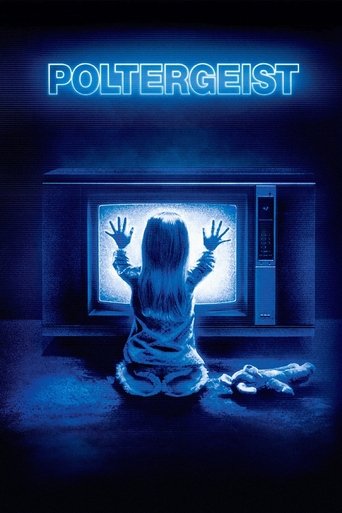
Poltergeist
Tobe Hooper · 1982 · Film
85% shared signal

The Fog (OST)
John Carpenter · 1980 · Record
84% shared signal
The Conjuring 2
James Wan · 2016 · Film
84% shared signal
Insidious: The Last Key
Adam Robitel · 2018 · Film
84% shared signal
It in another form
The index links works across media, so an adaptation sits beside its source and a score beside the film it haunts.
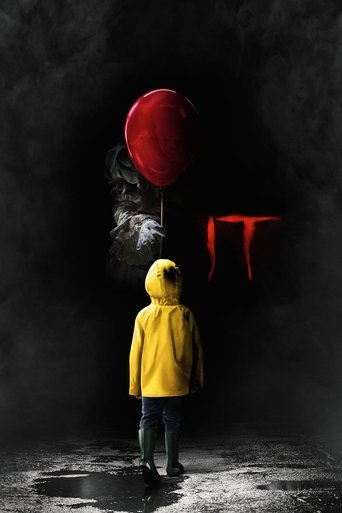
More lists like these: Movies like Poltergeist
Questions about It
The things people actually ask about this series, answered — including how it ends.
How does the 1990 IT miniseries end?
The surviving Losers go into the sewers and face It in its true form — a giant stop-motion spider. Eddie is killed, and the others destroy the creature by tearing out its heart. They surface, Audra recovers, and they separate as their memories of Derry fade again.
Why is the spider at the end of IT so bad?
Because King's "true form" is described as a presence rather than a shape, and the correct adaptation choice is to show almost nothing. The miniseries instead built a large stop-motion spider on a 1990 network budget, arriving straight after four hours of restraint.
Is Tim Curry's Pennywise better than Bill Skarsgård's?
Different and, on our reading, funnier. Curry plays a comedian with a hostile audience rather than a monster, and the chattiness is what makes him frightening. The 2017 film is the better-made object: we score it 058 on viscera against 024 here.
Should I watch both parts of IT 1990?
Part one is excellent and part two is slack and ends badly, so stopping after the children's half is a defensible choice and a great many people make it. What you lose is the reunion material, Curry's remaining scenes and the ending; what you avoid is the stop-motion spider. On balance we would call that a fair trade.
Is the 1990 IT scary?
In its first half, yes, and the drain scene remains the best version of that scene anywhere. We score it 024 on viscera, so nothing is shown, and 044 on tone, which makes it the least bleak thing on our television shelf.
What should I watch after it?
IT (2017) for the better-funded version, 'Salem's Lot (1979) for the other great King miniseries made under broadcast restrictions, and the monster tag for everything here built around a thing rather than a person.
These are ranked against It, not against you.
Build your own tape →