
On VHSCREAM’s six-axis scale, The Terror (2018) is most extreme on the tone axis: 10 out of 100, where 0 is a bleak, unforgiving tone and 100 is gleeful black comedy. 16% of the 105 horror works we have scored come in lower on that axis. How we score →
The Terror is a ten-part 2018 series adapting Dan Simmons's novel about the Franklin expedition, which sailed in 1845 to find the Northwest Passage and was never seen again. Two Royal Navy ships are frozen into the ice for three winters and something is hunting the men. We score it 010 on tone — 17 works score lower — and 086 on era bias.
Scored and reviewed by VHSCREAM on · how we score
The Terror: the review
The Terror is the bleakest thing on this list that is also, in large part, documented history, and the creature is the least frightening element in it.
The series' method is attrition. HMS Erebus and HMS Terror are beset in the ice north of King William Island in September 1846 and never float again. What follows over ten hours is lead poisoning from badly soldered food tins, scurvy, frostbite, tuberculosis, botulism, snow blindness, hunger, and the slow discovery that nobody is coming. The series is extraordinarily patient about the specifics — the rationing arithmetic, the man-hauling sledges, the cairn messages left under stones, the difference between what the officers tell the men and what they write in the log — and the effect is that every death feels procedural rather than dramatic.
Jared Harris's Crozier is the best thing in it: an Irish captain passed over for command because he is Irish, a functioning alcoholic who dries out on the ice because the situation requires it, and the only man aboard who listens to the Inuit. Tobias Menzies's Fitzjames, who begins as a preening careerist and ends as something considerably better, has the series' best arc. Ciarán Hinds plays Franklin as a man whose certainty is itself the fatal condition.
The Tuunbaq is the series' most divisive element
A bear-shaped spirit creature, immense, intelligent and not an animal, which takes men off the ice and arranges their bodies. It is the one element that is not history, it is held back for a long time, and it is at its best when it is a noise and a shape in a whiteout. When it is fully rendered in daylight it is less interesting than the ice.
What the series does well with it is make it a relationship rather than a monster: it is bound to Lady Silence, it was kept in check by an arrangement the expedition has broken, and the question of what the English did to deserve it is answered in a way that implicates them specifically.
Hickey is the real antagonist and the series knows it
Adam Nagaitis plays a caulker's mate who is not who his papers say he is, and the back half of the series is a mutiny led by a man with no loyalty to anything, improvising a cult around himself on a gravel beach. It is a performance of total conviction and the series is clear-eyed that the Navy's own hierarchy — its contempt for its own men, its deference to class — is what gives him his opening.
Where it is weak
Episodes two and three are slow without being ominous. The Lady Silence material is underwritten and her agency arrives late. And the carnivale set piece, which is magnificent, is also the one place the series reaches for spectacle over accumulation.
For the same closed group destroyed from inside in extreme cold, The Thing; for the same faith and hierarchy turning lethal in an isolated community, Midnight Mass; for the same medieval-register attrition on a journey, Between Two Fires.
The ending of The Terror explained
Total spoilers from here. Everything above this line is spoiler-free.
The short answer: Hickey's mutiny takes most of the surviving men to a beach, where he has Dr Goodsir killed and butchered so the party can eat — not knowing that Goodsir has deliberately poisoned himself first, so that his flesh will kill whoever consumes it. Crozier is held captive by the mutineers. When the Tuunbaq finally comes, Hickey, by now entirely convinced of his own significance, cuts his own throat and offers himself to it: the creature takes him, and the poisoned, corrupted thing it has swallowed kills it. The Tuunbaq dies on the gravel with Crozier beside it. Crozier, the only man left, is found by Lady Silence's people and nursed back; he loses a foot and learns their language. In the final scene a Royal Navy search party reaches an Inuit camp years later and asks after the lost expedition, and Crozier — living there now, with a family, under a name they have given him — has the interpreter tell them that the men are all dead and that they should stop looking. He does not go home.
What is the Tuunbaq in The Terror?
A spirit creature in the shape of an enormous bear, drawn from Inuit cosmology as Simmons reworks it: made of muscle and the shaman's magic, bound to a human keeper who feeds it and holds it in check. Lady Silence's father is that keeper when the series begins, and the arrangement collapses when the expedition kills him. The series is specific that the Tuunbaq is not a punishment sent for the English; it is a thing that was already being managed, and they broke the management.
Who is Cornelius Hickey really?
Not Cornelius Hickey. Late in the series he explains that he murdered the real Hickey, a man with papers and a berth, and took his identity to get aboard — and that he has done this before, that he has no name of his own worth using, and that he is not from anywhere. It recasts everything he has done: he is not a sailor who mutinied, he is someone who boarded a ship to see what would happen.
How does the Tuunbaq die?
By eating Hickey. Goodsir, knowing he is going to be butchered, takes poison so that his body will kill the men who eat him; the mutineers consume him and begin dying. Hickey, dying himself and convinced he has become something, cuts his own throat and holds his arms out to the Tuunbaq, which takes him into its mouth — and chokes and dies on what he has become. The series stages it as the creature being destroyed by human corruption rather than by force.
Does Crozier survive The Terror?
Yes, and he is the only one. He loses a foot, is taken in by the Netsilik, learns the language, takes a place among them and is living there when a Royal Navy party finally arrives. He tells them, through an interpreter, that everyone is dead and that they should go home, and he stays. The series' last image is a man who has chosen the Arctic over England.
Is The Terror based on a true story?
The frame is history and the monster is not. Sir John Franklin's 1845 expedition with Erebus and Terror, 129 men, both ships beset in the ice, the Victory Point note, the abandonment, the retreat south, the cairns, the evidence of cannibalism in the remains, the lead and the scurvy, Crozier and Fitzjames and Goodsir and Hickey as names on the muster: all real. Both wrecks have since been found, Erebus in 2014 and Terror in 2016. The Tuunbaq, the mutiny as dramatised, and Crozier's survival are Simmons's invention.
What actually killed the Franklin expedition?
The series shows the historical consensus rather than a single cause: lead leaching from the solder of cheaply contracted tinned provisions, scurvy from exhausted supplies, botulism, tuberculosis, starvation, exposure, and the catastrophic decision to abandon the ships and man-haul sledges south across the ice. The Tuunbaq is additional. The series' argument is that the expedition was lost by procurement, pride and a chain of command that could not revise a plan.
How scary is The Terror, actually?
Scored against the published rubric, here is what the numbers mean.
Tone 010 is bleak — 17 works score lower. One hundred and twenty-nine men sail and one survives, by leaving his own country behind.
Era bias 086 reads modern — 87 works score lower, which is about the production rather than the setting: a 2018 digital shoot with digital ice, digital creature work and a contemporary sound mix, over an immaculately researched 1845.
Viscera 054 is just above the median — 65 works score lower. Amputations without anaesthetic, scurvy and frostbite in detail, bodies arranged by the creature, a butchering, a throat cut, and a man shot.
The threat at 045 is just under the midpoint, which is the right reading: the Tuunbaq is not human and almost everything that destroys the expedition is a human decision.
Reality anchor 032 is grounded — 19 works score lower. Real geography, real ships, real disease, and one creature that obeys consistent rules.
Pace 022 is very slow — 25 works are slower. Three winters pass and the series takes its time over all of them.
On jump scares: perhaps three in ten hours. The series would rather show you a man's gums.
The Terror on six axes of fear
Every work in the index is scored on six continuous axes of fear. This is what The Terror looks like as a vector.
Disagree with a number? Say so on the axis itself. Nobody has confirmed this vector yet, and a score you challenge goes to the top of the queue to be re-scored by a human. Votes do not move the numbers — they decide what gets looked at first. How the scoring works →
Scored against the published rubric. This vector is a draft awaiting review — the method is public so you can argue with it.
Who should skip The Terror
Skip it if cannibalism is a hard limit. It is historical fact in this case and the series stages it directly, including a named character being butchered.
Skip it if medical horror is difficult. Amputation without anaesthetic, scurvy, dental decay, frostbite and lead poisoning are all shown in close detail across ten hours.
Skip it if you need hope. The expedition's outcome is known before the series starts and the series does not soften it.
Content notes: cannibalism including the butchering of a named character, amputation without anaesthetic, graphic scurvy and frostbite, a suicide by throat-cutting, the killing of young crewmen, a coercive sexual relationship between crew members, mass death by starvation and exposure, and the killing of an Inuit elder by naval officers.
Watch it if you want the most rigorously researched horror series ever made, you can take ten hours of men getting slowly worse, and you want to see a monster that is the least of a crew's problems.
Where to find it
Streaming on Philo · AMC Plus · AMC+ +5 ↗Physical copies on eBay ↗Availability from JustWatch via TMDB. We earn nothing from these links.
Nothing loads from YouTube until you press play.
If The Terror is your kind of fear
The eight works closest to The Terror in the index, ranked by distance across all six axes — not by genre label, and not by what other people watched.
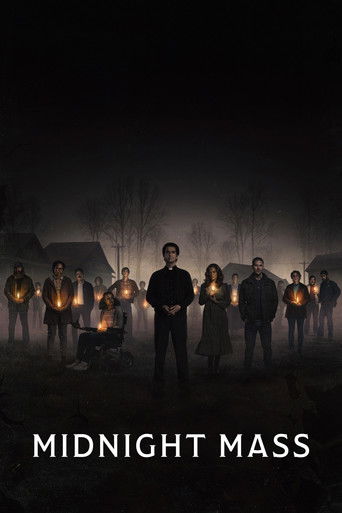
Midnight Mass
Mike Flanagan · 2021 · Television
Shares modern craft.
90% shared signal
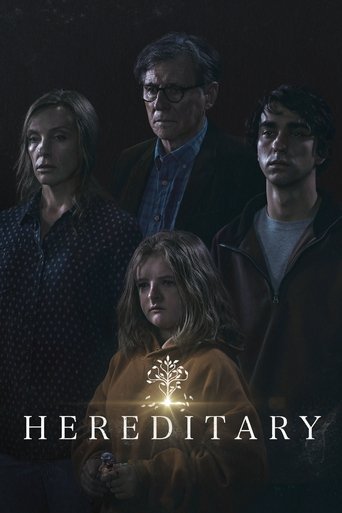
Hereditary
Ari Aster · 2018 · Film
Shares a bleak, unforgiving tone.
86% shared signal
Mexican Gothic
Silvia Moreno-Garcia · 2020 · Book
Shares slow-burn dread.
83% shared signal
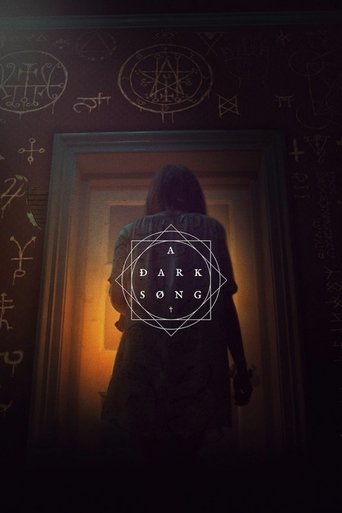
A Dark Song
Liam Gavin · 2016 · Film
Shares a bleak, unforgiving tone.
83% shared signal
The Witch
Robert Eggers · 2015 · Film
Shares slow-burn dread.
83% shared signal
Let the Right One In
Tomas Alfredson · 2008 · Film
82% shared signal
It Follows
David Robert Mitchell · 2014 · Film
Shares modern craft.
79% shared signal
The Only Good Indians
Stephen Graham Jones · 2020 · Book
79% shared signal
See the full list of shows like The Terror →
Questions about The Terror
The things people actually ask about this series, answered.
What happens at the end of The Terror?
Hickey's mutineers butcher and eat Goodsir, who has poisoned himself first. Dying, Hickey offers himself to the Tuunbaq, which chokes on him and dies. Crozier, the only survivor, is taken in by the Netsilik, and when a Navy search party finally arrives he tells them everyone is dead and stays.
What is the Tuunbaq in The Terror?
A bear-shaped spirit creature drawn from Inuit cosmology, bound to a human keeper who feeds it and holds it in check. Lady Silence's father is that keeper, and the expedition's killing of him is what releases it. It is the only element of the series that is not historical.
Who is Cornelius Hickey in The Terror?
Not the real Cornelius Hickey. He admits late in the series that he murdered a man with papers and a berth and took his name to get aboard, and that he has no identity of his own. He leads the mutiny and ends by offering himself to the creature.
How is the Tuunbaq killed?
By eating Hickey, who has consumed Goodsir's deliberately poisoned flesh and then cuts his own throat and holds his arms out to it. The creature chokes and dies on what he has become. The series frames it as the Tuunbaq being destroyed by human corruption.
Does Crozier survive in The Terror?
Yes, and alone. He loses a foot, is nursed by Lady Silence's people, learns their language and takes a place among them. When the Royal Navy finds the camp years later he has them told that the expedition is dead, and he does not return to England.
Is The Terror a true story?
The expedition is. Franklin's 1845 voyage with Erebus and Terror, 129 men, both ships beset in the ice, the abandonment, the retreat south, the lead-contaminated tins, the scurvy and the evidence of cannibalism are all documented, and both wrecks were found in 2014 and 2016. The Tuunbaq and Crozier's survival are fiction.
These are ranked against The Terror, not against you.
Build your own tape →