Film · 2003
A Tale of Two Sisters
Kim Jee-Woon
Two sisters, a stepmother and a house where the chronology is the thing that is wrong.
61Hard going to sit through, out of 100 — mostly how bleak it is
- PaceSlow burn18
- ThreatHuman and not48
- GoreShows some of it42
- ToneNo relief at all10
- RealityTilts unreal58
Era bias 58 · Neither era. Texture rather than fear, so it is not part of the grade. All six scores →
The bleakest horror movies ever made →
On VHSCREAM’s six-axis scale, A Tale of Two Sisters (2003) is most extreme on the tone axis: 10 out of 100, where 0 is a bleak, unforgiving tone and 100 is gleeful black comedy. 12% of the 320 horror works we have scored come in lower on that axis. How we score →
A Tale of Two Sisters is a 2003 South Korean film directed by Kim Jee-woon, in which two sisters come home from a hospital to a lake house, a father who will not speak and a stepmother they refuse to acknowledge. We score it 018 on pace — 32 works in an index of 320 are slower — and 058 on reality anchor.
Scored and reviewed by VHSCREAM on · how we score
How scary is A Tale of Two Sisters, actually?
Scored against the published rubric, here is what the numbers mean.
Pace 018 is deep on the dread side — 32 works are slower and 10 tie it. There are perhaps five scares in two hours and the rest is a household.
Reality anchor 058 sits just past the midpoint into surreal, with 109 works further out. Most of the film is a reconstruction and the film says so, but it does not account for everything in it.
Tone 010 is well into the bleak half — 40 works score lower. Three deaths, none of them preventable by the time the film starts, and a last act that assigns the blame correctly and helps nobody.
Threat 048 is almost exactly balanced. The cruelty is human and the thing under the table is not.
Viscera 042 is below the midpoint. The violence is brief and mostly in flashback; the blood in the cupboard is the most explicit image in the film.
On jump scares: two, both excellent. Kim spends an hour earning them and then does not go back to the well.
Who should skip A Tale of Two Sisters
Skip it if you need the chronology to be legible on first viewing. It is not, deliberately, and the film expects a rewatch.
Skip it if suicide or a child's death is too near. Both are the film's foundation and both are shown.
Skip it if subtitles and a two-hour domestic first act are a hard sell. Very little happens for a long time and everything that happens matters.
Watch it for Yum Jung-ah's double performance, for the dinner party, and for one of the genre's great uses of a single piece of furniture. If you want the same reconstruction played from the ghost's point of view, The Others is the companion; Goodnight Mommy is the closer match for two children and a mother nobody will identify.
A Tale of Two Sisters on six axes of fear
Every work in the index is scored on six continuous axes of fear. This is what A Tale of Two Sisters looks like as a vector — and what each ten-point band looks like across everything else we hold.
Where that puts it: joint #13 slow burn
Draft score — awaiting human review. About these scores
Disagree with a number? Say so on the axis itself. Nobody has confirmed this vector yet, and a score you challenge goes to the top of the queue to be re-scored by a human. Votes do not move the numbers — they decide what gets looked at first. How the scoring works →
Scored against the published rubric. This vector is a draft awaiting review — the method is public so you can argue with it.
A Tale of Two Sisters: the review
One of the most beautiful horror films of its decade, and one of the few whose twist improves on rewatch rather than evaporating.
Su-mi and her younger sister Su-yeon are driven out to a wooden house by water. Their father, Moo-hyun, is distracted and tired. Their stepmother, Eun-joo, is bright, attentive and desperate to be liked, and Su-mi will not look at her. Su-yeon is frightened of her and frightened of the house, and sleeps in her sister's bed.
Kim takes his time. The first hour is domestic: a bird in a cage, a dinner that goes badly, a bag of something in a cupboard, a wardrobe nobody opens, and the slow accumulation of a household in which three women are each conducting a different argument.
It is made with absurd care
Lee Mo-gae's photography is the thing people remember and it is not decoration. The house is all amber wood, green wallpaper and deep brown shadow, shot in long takes that keep two characters in frame at opposite ends of a corridor. The production design is period-indeterminate on purpose — nothing in the house tells you what year it is, which is part of why the film's chronology can hide in plain sight.
The scares are sparing and two of them are among the best constructed anywhere. The dinner-party sequence, in which a guest has a seizure under the table and sees something, is a masterpiece of staging: the camera stays above the tablecloth for far too long, and the information arrives as a sentence rather than an image.
Im Soo-jung plays Su-mi with a hardness that keeps resolving into panic, and Yum Jung-ah's Eun-joo is the film's real achievement — a performance that has to read as a cruel stepmother on first viewing and as something else entirely on second, without changing a single beat.
Where it frustrates
The film's last twenty minutes carry an enormous amount of exposition, and Kim chooses to deliver most of it in flashback with dialogue over the top. It works, but it is the only inelegant stretch in a film that is otherwise almost unreasonably controlled.
The folktale the title points at — Janghwa, Hongryeon, a story about two sisters and a murderous stepmother — is doing work for Korean audiences that it cannot do for anybody who does not know it.
The ending of A Tale of Two Sisters explained
The ending, in full. Open it when you have seen it.
What happens at the end of A Tale of Two Sisters?
Su-yeon has been dead the whole film, and the Eun-joo we have been watching for most of it is Su-mi.
Su-mi's mother hanged herself in the wardrobe in Su-yeon's room. Su-yeon found her, and in trying to get her down she pulled the wardrobe over on herself and was pinned beneath it. Eun-joo — the real one, in the house that day — heard her under it, stood in the doorway, and chose to walk away.
Su-mi arrived home in time to pass Eun-joo on the stairs. They argued. Su-mi did not go up. By the time anybody went into that room, both her mother and her sister were dead.
What the film has shown us is Su-mi's reconstruction: a version of the house in which Su-yeon is alive to be protected and the stepmother is present to be punished, performed by Su-mi herself. The real Eun-joo appears in the last act, which is the moment the two timelines are forced into the same frame, and Su-mi is taken back to the hospital.
Who is Eun-joo in A Tale of Two Sisters?
Both of them are. Eun-joo is the father's second wife, a real woman who was in the house the day the other two died and who did nothing. She is also a role Su-mi performs, for most of the film's runtime, so that there is somebody in the house to be guilty.
That is why the performance is the film's central technical problem and its central triumph. Every cruelty we watch Eun-joo commit is Su-mi assigning herself the part, and every moment of her desperation to be accepted is Su-mi's own, which is why it reads as menace the first time and as grief the second.
Why does Su-mi think her sister is alive?
Because she was on the stairs and did not go up.
The film is extremely precise about this. Su-mi's guilt is not that she failed to save her sister in some general sense; it is that she was in the building, close enough to hear an argument, and she chose the argument. The reconstruction she builds gives her a Su-yeon to walk beside, protect and be thanked by, and a villain who is not herself.
What is in the wardrobe in A Tale of Two Sisters?
Nothing, by the time the film opens. The wardrobe is where the mother hanged herself and where Su-yeon was crushed, and it stands in the room all film as a piece of furniture nobody will approach or explain.
It is the film's best piece of restraint. A house with one object in it that the camera keeps including and the characters keep editing out of their conversation does more work than any reveal.
Is A Tale of Two Sisters a ghost story?
Partly, and it is careful not to resolve the question. Most of what we see is a mind reconstructing a day, and the film gives that a psychiatric frame it does not disown.
But the dinner-party guest sees something, in a sequence Su-mi is not present for and could not be narrating, and the last act puts the real Eun-joo alone in the house with something that is not Su-mi. The film leaves both registers live, which is the same move The Others makes from the other direction and the one Ringu refuses entirely.
If A Tale of Two Sisters is your kind of fear
The eight works closest to A Tale of Two Sisters in the index on the five axes that describe fear, the same medium first — not by genre label, and not by what other people watched.
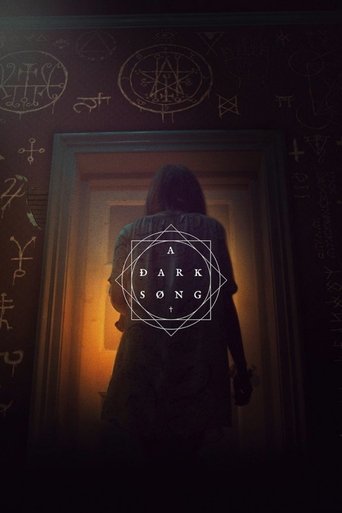
A Dark Song
Liam Gavin · 2016 · Film
Shares a bleak, unforgiving tone.
93% shared signal
The Killing of a Sacred Deer
Yorgos Lanthimos · 2017 · Film
Shares slow-burn dread.
92% shared signal
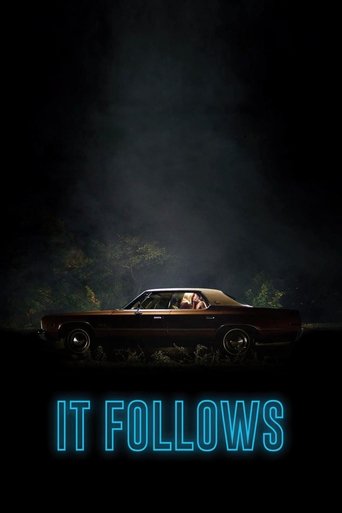
It Follows
David Robert Mitchell · 2014 · Film
Shares a bleak, unforgiving tone.
89% shared signal

The Witch
Robert Eggers · 2015 · Film
Shares slow-burn dread.
89% shared signal

Ghost Story
Peter Straub · 1979 · Book
92% shared signal
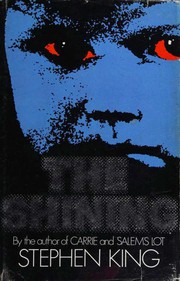
The Shining
Stephen King · 1977 · Book
91% shared signal
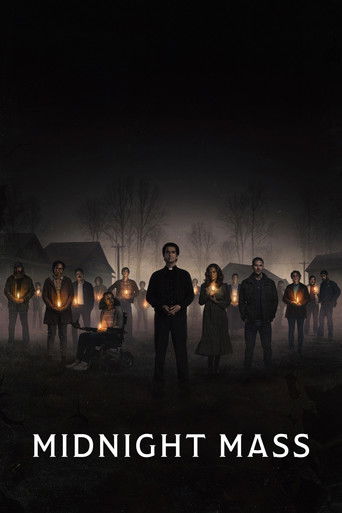
Midnight Mass
Mike Flanagan · 2021 · Television
89% shared signal

Frankenstein
Mary Shelley · 1818 · Book
89% shared signal
More lists like these: Movies like A Dark Song · Movies like It Follows · Movies like The Witch · Shows like Midnight Mass · Books like Frankenstein
Questions about A Tale of Two Sisters
The things people actually ask about this film, answered — including how it ends.
What is the twist in A Tale of Two Sisters?
Su-yeon has been dead since before the film began, and the stepmother we watch for most of it is Su-mi performing her. Su-mi has built a version of the house in which her sister is alive to be protected and somebody other than herself is to blame.
What happened to Su-yeon in A Tale of Two Sisters?
Their mother hanged herself in the wardrobe in Su-yeon's room. Su-yeon tried to get her down, pulled the wardrobe over onto herself and was pinned. Eun-joo heard her underneath it, stood in the doorway and walked away.
Who is the real Eun-joo in A Tale of Two Sisters?
The father's second wife, a real woman who was in the house the day the other two died and did nothing about it. She appears in the last act, which is the point at which Su-mi's reconstruction and the actual household are forced into one frame.
Why does Su-mi pretend her sister is alive?
Because she was on the stairs when it happened and chose to argue with Eun-joo rather than go upstairs. Her guilt is proximity, not distance, and the version of the house she builds gives her a sister to walk beside and a villain who is not her.
Is A Tale of Two Sisters a ghost story or a psychological thriller?
Both, and the film declines to settle it. Most of what we see is a mind reconstructing one day, with a psychiatric frame the film does not disown — but a dinner guest sees something in a scene Su-mi is not in, and the last act leaves the real Eun-joo alone with it.
Is A Tale of Two Sisters scary?
It has about five scares in two hours and we score it 018 on pace, deep in the dread half. The two real jump scares are among the best constructed in the genre, and the rest of the fear is domestic and accumulating.
These are ranked against A Tale of Two Sisters, not against you.
Build your own tape →