Film · 2017
The Killing of a Sacred Deer
Yorgos Lanthimos
A surgeon is told to choose which of his family to kill, and the arithmetic is not negotiable.
64Hard going to sit through, out of 100 — mostly how bleak it is
- PacePure slow burn14
- ThreatHuman and not58
- GoreShows some of it50
- ToneNo relief at all8
- RealityTilts unreal58
Era bias 88 · Thoroughly modern. Texture rather than fear, so it is not part of the grade. All six scores →
The bleakest horror movies ever made →
On VHSCREAM’s six-axis scale, The Killing of a Sacred Deer (2017) is most extreme on the tone axis: 8 out of 100, where 0 is a bleak, unforgiving tone and 100 is gleeful black comedy. 7% of the 320 horror works we have scored come in lower on that axis. How we score →
The Killing of a Sacred Deer is a 2017 film directed by Yorgos Lanthimos, in which a heart surgeon is told that one member of his family must die and that he must choose. We score it 008 on tone — 22 works in an index of 320 score lower — and 014 on pace, because the film states its terms early and then simply waits for the family to accept them.
Scored and reviewed by VHSCREAM on · how we score
How scary is The Killing of a Sacred Deer, actually?
Scored against the published rubric, here is what the numbers mean.
Tone 008 is at the bleak end — 22 works score lower. A child is murdered by his father and the family goes to lunch.
Pace 014 is deep in dread, with 18 works slower. The terms are set early and the film waits.
Threat 058 sits just past the midpoint. This is the right place for a film whose antagonist is a teenager with no abilities and whose effect is medically impossible.
Viscera 050 is at the midpoint. The violence is brief and clinical; what lingers is the finger-biting and the sound of a child dragging himself.
Reality anchor 058 leans surreal, with 190 works more grounded. Nothing is shot as fantasy and nothing in it can happen.
On jump scares: none. The film has no interest in the device.
Who should skip The Killing of a Sacred Deer
Skip it if affectless delivery reads as bad acting to you. The whole cast speaks the same flat way on purpose, and if it does not land in the first ten minutes it will not land later.
Skip it if harm to children is a line. It is the subject, not an incident.
Watch it for Keoghan, for a horror premise constructed as a proof, and for one of the colder endings on this shelf. If you want the same inexorable domestic arithmetic played with the grief turned all the way up, Hereditary arrives somewhere similar by the opposite route; mother! is the closer match for an allegory that states its source text and refuses to translate itself.
The Killing of a Sacred Deer on six axes of fear
Every work in the index is scored on six continuous axes of fear. This is what The Killing of a Sacred Deer looks like as a vector — and what each ten-point band looks like across everything else we hold.
Where that puts it: joint #5 slow burn · joint #9 bleakest
Draft score — awaiting human review. About these scores
Disagree with a number? Say so on the axis itself. Nobody has confirmed this vector yet, and a score you challenge goes to the top of the queue to be re-scored by a human. Votes do not move the numbers — they decide what gets looked at first. How the scoring works →
Scored against the published rubric. This vector is a draft awaiting review — the method is public so you can argue with it.
The Killing of a Sacred Deer: the review
A horror film made out of arithmetic, delivered by actors forbidden from sounding like they mind.
Steven Murphy is a cardiothoracic surgeon with a tidy house, an ophthalmologist wife, two children and a teenage friend called Martin whom he meets in diners and buys expensive watches for. The relationship is explained slowly and it is not what the opening suggests: Martin's father died on Steven's table, and Steven had been drinking.
Martin's demand, when it arrives, is laid out like a theorem. Steven killed a member of Martin's family, so a member of Steven's must die. Steven chooses, or all three die in sequence — paralysis of the legs, refusal of food, bleeding from the eyes, death.
The flatness is the horror
Lanthimos's house style — affectless delivery, slightly wrong register, dialogue that reports rather than expresses — is often described as a joke the audience is let in on. Here it is load-bearing. These people cannot plead. They can only state, negotiate and offer, and the film puts them in a situation where the only available move is to beg.
So you get a daughter calmly volunteering to be the one, a son dragging himself across a floor to prove he can walk, and a wife proposing, evenly, that they could have more children. The horror is not that they behave like monsters. It is that this is what their vocabulary leaves them when the stakes become absolute.
Barry Keoghan is the engine. Martin is not menacing in any conventional register; he is patient, slightly sad and completely certain, and the scene in which he explains the terms by eating spaghetti is one of the best-performed pieces of exposition on this shelf.
Nicole Kidman's Anna is the performance that gets least attention and does the most structural work. She is the only adult in the film who behaves like an investigator — she goes to Steven's anaesthetist, establishes that her husband had been drinking, and then negotiates from that position rather than from loyalty. Her proposal that they could simply have more children is delivered in the same tone as a dinner plan, and it is the single most frightening line in the film.
Where it frustrates
The film's refusal of affect means it cannot build. It arrives at its temperature in the first ten minutes and stays there, which is a legitimate design and will read as monotony to a lot of viewers.
The medical realism is also inconsistent in a way that occasionally punctures it — the hospital behaves as the plot requires rather than as a hospital. Two separate wards run exhaustive workups on a paralysed child and nobody ever involves anybody with authority, because involving them would end the film.
Alicia Silverstone's one scene as Martin's mother is extraordinary and also slightly out of key with everything around it — a flash of recognisable human appetite in a film that has otherwise removed it, and the only moment where Lanthimos appears to be enjoying himself at a character's expense.
The ending of The Killing of a Sacred Deer explained
The ending, in full. Open it when you have seen it.
What happens at the end of The Killing of a Sacred Deer?
Steven ties his wife, son and daughter up in the living room, puts a bag over his own head, takes a rifle, and spins himself around before firing. He misses, reloads, spins again, and kills Bob, his son. The curse lifts. The final scene is Anna, Kim and Steven eating in the same diner where he used to meet Martin, with Martin a few tables away. Kim looks at him. Steven leaves. Nobody speaks.
What is Martin's curse in The Killing of a Sacred Deer?
The film never explains it and gives it no mechanism, which is deliberate. There is no ritual, no object, no incantation. Martin describes the rules the way you would describe a law of physics, and the film treats them as one.
What matters for the scoring is that the curse works. The paralysis is real, the refusal of food is real, and no medical explanation is available — two hospitals try. We score the film 058 on the threat axis, almost exactly at the midpoint, because the agent is a boy with no powers and the effect is not something a boy can do.
Why does Steven shoot blindly?
Because choosing would make him responsible, and the whole film has been about his refusal to be. He drank before an operation and a man died, and he has spent every scene since arranging the story so that it was not his fault.
Spinning with a bag on his head is the last and purest version of that: a method for killing one of his children while still being able to say he did not choose which. The film's cruellest joke is that it works.
What does the title mean?
It points at Euripides' Iphigenia in Aulis, in which Agamemnon kills a deer sacred to Artemis and is told he must sacrifice his daughter to make the fleet sail. The structure is identical — an offence against a god's property, a demand for a child, a father who complies.
The film keeps the shape and removes the god. There is no Artemis here, no explanation, and nothing to appeal to.
What does the final diner scene mean?
That nothing is resolved and everything is settled. The family is intact minus one and is eating lunch. Martin is present, not hiding, and is owed nothing further. Kim — who spent the film in love with him — looks over, and the film declines to tell you what that look contains.
It is the only scene in the film with no dialogue, and it is the only one where the characters are free to feel something. Lanthimos ends it before they can.
If The Killing of a Sacred Deer is your kind of fear
The eight works closest to The Killing of a Sacred Deer in the index on the five axes that describe fear, the same medium first — not by genre label, and not by what other people watched.
A Tale of Two Sisters
Kim Jee-Woon · 2003 · Film
Shares a bleak, unforgiving tone.
92% shared signal
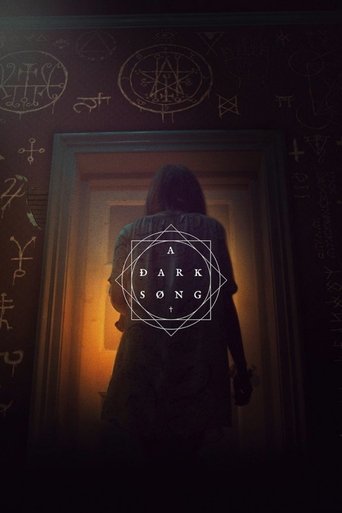
A Dark Song
Liam Gavin · 2016 · Film
Shares slow-burn dread.
89% shared signal
Longlegs
Osgood Perkins · 2024 · Film
Shares a bleak, unforgiving tone.
89% shared signal
Cure
Kiyoshi Kurosawa · 1997 · Film
Shares slow-burn dread.
87% shared signal
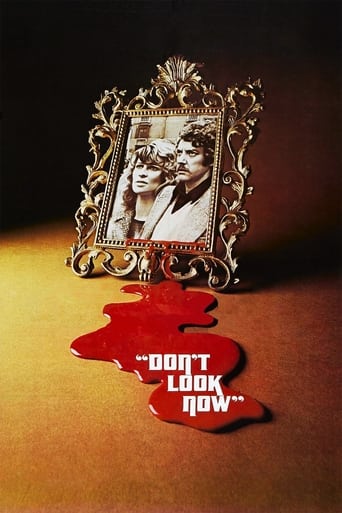
Don't Look Now
Nicolas Roeg · 1973 · Film
86% shared signal
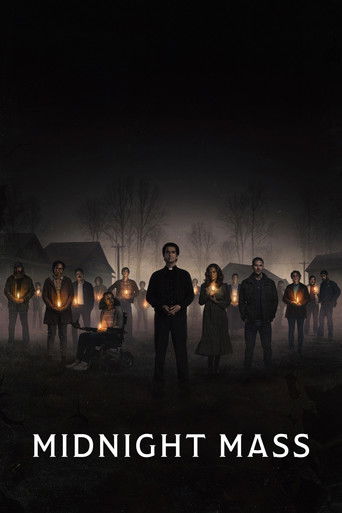
Midnight Mass
Mike Flanagan · 2021 · Television
90% shared signal
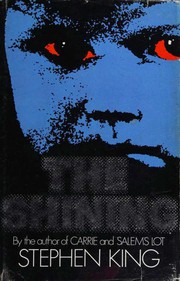
The Shining
Stephen King · 1977 · Book
88% shared signal

Frankenstein
Mary Shelley · 1818 · Book
86% shared signal
More lists like these: Movies like A Dark Song · Shows like Midnight Mass · Books like Frankenstein
Questions about The Killing of a Sacred Deer
The things people actually ask about this film, answered — including how it ends.
What happens at the end of The Killing of a Sacred Deer?
Steven ties up his family, puts a bag over his head, spins with a rifle and fires blindly. He kills his son Bob. The curse lifts, and the surviving family eat in the diner where Martin is also sitting. Nobody speaks to him.
What is Martin's curse in The Killing of a Sacred Deer?
The film never explains it. There is no ritual or object — Martin states the rules like a law of physics and they hold. The symptoms progress in a fixed order: paralysis, refusal of food, bleeding from the eyes, then death.
Why does Steven spin around before shooting?
So that he does not have to choose. The whole film is about a man avoiding responsibility for a death he caused by drinking before surgery. Killing one of his children at random lets him do the thing and still not have chosen it.
What does the title The Killing of a Sacred Deer mean?
It refers to Euripides' Iphigenia in Aulis, where Agamemnon kills a deer sacred to Artemis and must sacrifice his daughter. The film keeps that structure exactly and removes the god, so there is nothing to appeal to or bargain with.
Is The Killing of a Sacred Deer a horror film?
Yes. A supernatural force kills children in a fixed sequence and cannot be stopped by medicine or reason. We score it 058 on the threat axis and 058 on reality anchor — the antagonist is an ordinary teenager and the effect is impossible.
Why does everyone talk so strangely in it?
It is Lanthimos's deliberate register: flat, reporting rather than expressing. Here it does structural work — the characters have no vocabulary for pleading, so when the stakes become absolute all they can do is state terms and make offers.
These are ranked against The Killing of a Sacred Deer, not against you.
Build your own tape →