
Film · 1973
Don't Look Now
Nicolas Roeg
Grief edited like a premonition. The ending is a knife.
Most extreme on ERA BIAS — analog-era texture at 008
On VHSCREAM’s six-axis scale, Don't Look Now (1973) is most extreme on the era-bias axis: 8 out of 100, where 0 is analog-era texture and 100 is modern craft. 9% of the 105 horror works we have scored come in lower on that axis. How we score →
Don't Look Now is a 1973 British-Italian horror film directed by Nicolas Roeg, adapted from a Daphne du Maurier story. A couple whose daughter has drowned go to Venice, where a man begins seeing her. We score it 010 on tone — 17 works in an index of 105 score lower — and 072 on reality anchor, well into dream logic.
Scored and reviewed by VHSCREAM on · how we score
Don't Look Now: the review
Don't Look Now is a film about grief edited as though grief were a tense.
Nicolas Roeg and editor Graeme Clifford built it out of premonition. A shot of a cracked slide dissolves into a drowned child. A glass of water spills before anybody knocks it. Images arrive before the events they belong to, and the film does not flag any of it — you are simply shown things slightly out of order and left to sort them. By the midpoint you are reading every red object in Venice as a warning, which is the precise condition John Baxter is in and refuses to admit.
Julie Christie and Donald Sutherland are extraordinary, and they are the reason the film survives being this formally aggressive. The marriage is specific: two people handling a dead daughter in incompatible ways, one by taking a restoration contract in a sinking city and the other by seeking out mediums. Neither is wrong. Both are alone.
Venice is the second antagonist
Roeg shot in winter, out of season, and the city is a maze of scaffolding, cold water, dead ends and churches under repair. There are almost no tourists. Something is killing people and the police are indifferent. The film's Venice is not beautiful — it is a flooded building site where the protagonist is restoring a mosaic that keeps breaking.
The sex scene matters structurally
It became notorious and has been argued about for fifty years, and the thing nobody mentions is why it is cut the way it is: intercut with the couple dressing afterwards, so that the intimacy and its aftermath happen simultaneously. In a film built entirely on images arriving out of sequence, the one scene of genuine connection is also displaced in time. It is the thesis in miniature.
Where it is hard work
The editing is genuinely disorienting and offers no handholds; some viewers never find the rhythm. The two psychic sisters are broadly played. And the film is slow in a way that reads as aimless until the final five minutes retroactively organise everything.
For the same grief-as-mechanism, Hereditary; for the same drowned-child premonition handled as documentary, Lake Mungo, which is the closest thing in the index to its equal.
The ending of Don't Look Now explained
Total spoilers from here. Everything above this line is spoiler-free.
The short answer: John chases a small figure in a red coat through Venice at night, believing it to be the ghost of his drowned daughter or a child in danger. It is neither. It is the serial killer the city has been hunting — an elderly dwarf woman — and she cuts his throat. His death is the funeral procession he has been seeing all film, and the premonition he could not read was of his own body on a boat.
What does the red coat mean?
It is the film's single organising image and it is a false friend. His daughter Christine drowns in a red mackintosh in the opening scene; the figure he pursues in Venice wears red; the killer wears red. John reads red as his daughter and is right that it is a message and wrong about what it means. Roeg plants it everywhere — a scarf, a boot, a smear on a slide, graffiti — so that the audience learns the same wrong lesson at the same speed.
What was John's premonition actually of?
His own funeral. Early in the film he sees Laura on a boat in Venice with the two sisters, and cannot place it because she is in England at the time. The last sequence shows that boat: it is the funeral barge carrying his coffin, with Laura and the sisters aboard. He had the vision correctly and simply assumed it was a memory or a mistake, because the one thing a man who refuses to believe in premonition cannot do is act on one.
Why does the psychic warn him to leave Venice?
Because Heather, the blind sister, sees exactly what is coming and says so plainly: John is in danger and must leave. He dismisses it, then half believes it, then sends Laura away and stays. The film is clear that the warning was accurate and actionable. He dies because he could not hold two incompatible ideas — that his daughter is gone and that the message is real.
Is the killer supernatural?
No. She is a woman, she has been killing people throughout the film, and the newspaper and police subplot that most viewers ignore has been tracking her the whole time. The only supernatural element in the film is the premonition itself, which belongs to John and the sisters rather than to the threat.
How scary is Don't Look Now, actually?
Scored against the published rubric, here is what the numbers mean.
Era bias 008 is deep analog — only 9 works score lower. 1973 stock, a wintering city, optical dissolves doing the premonitions in-camera.
Tone 010 is near the bottom — 17 works score lower. A child drowns in the first five minutes, the marriage does not recover, and the father dies having misread the one warning he was given.
Reality anchor 072 is on the dream-logic side — 80 works score lower. Nothing impossible happens except the seeing, but the film's grammar refuses chronology, so it plays as a dream throughout.
Viscera 032 is low — 37 works score lower. Two deaths, both brief. The throat-cutting is quick and the drowning is mostly implied.
Pace 016 is very slow — 15 works are slower. There is no escalation of incident; there is only accumulation of images.
The threat at 060 leans human. 78 works score lower, which is right: the thing that kills John is a person with a knife.
On jump scares: one, at the very end, and it is the reveal rather than a sting.
Don't Look Now on six axes of fear
Every work in the index is scored on six continuous axes of fear. This is what Don't Look Now looks like as a vector.
Where that puts it: #5 slow burn · #7 analog era · #8 bleakest · #8 surreal
Disagree with a number? Say so on the axis itself. Nobody has confirmed this vector yet, and a score you challenge goes to the top of the queue to be re-scored by a human. Votes do not move the numbers — they decide what gets looked at first. How the scoring works →
Scored against the published rubric. This vector is a draft awaiting review — the method is public so you can argue with it.
Who should skip Don't Look Now
Skip it if you have lost a child. The opening five minutes depict a young girl drowning in a garden pond while her parents are inside, and the rest of the film is the marriage that follows.
Skip it if disorienting editing frustrates you. The film withholds chronology deliberately and never explains itself. Viewers who cannot find the rhythm describe it as shapeless, which is a fair account of the experience.
Skip it if you want a resolved mystery. The killer is never explained, named or understood.
Content notes: the drowning of a child, a graphic throat-cutting, an extended explicit sex scene, a fall from scaffolding, and sustained parental grief.
Watch it if you want the most formally adventurous horror film of the 1970s, you can take an hour that feels aimless, and you want an ending that reorganises everything you have already seen.
Where to find it
Rent or buy from Amazon Video · Apple TV Store · Google Play Movies +2 ↗Physical copies on eBay ↗Availability from JustWatch via TMDB. We earn nothing from these links.
Nothing loads from YouTube until you press play.
If Don't Look Now is your kind of fear
The eight works closest to Don't Look Now in the index, ranked by distance across all six axes — not by genre label, and not by what other people watched.
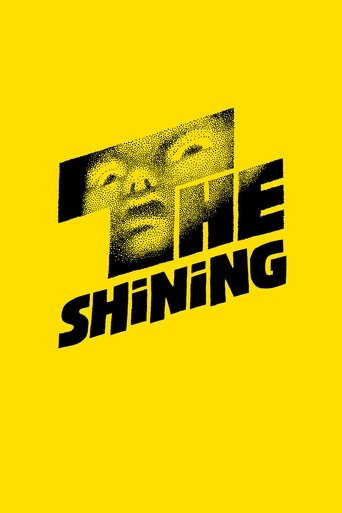
The Shining
Stanley Kubrick · 1980 · Film
Shares analog-era texture.
90% shared signal

Frankenstein
Mary Shelley · 1818 · Book
Shares a bleak, unforgiving tone.
88% shared signal
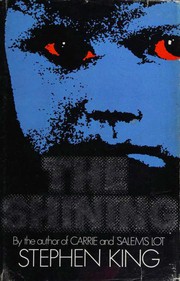
The Shining
Stephen King · 1977 · Book
Shares slow-burn dread.
85% shared signal
Ghost Story
Peter Straub · 1979 · Book
Shares a bleak, unforgiving tone.
84% shared signal
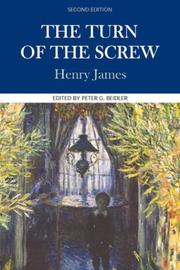
The Turn of the Screw
Henry James · 1898 · Book
Shares analog-era texture.
82% shared signal
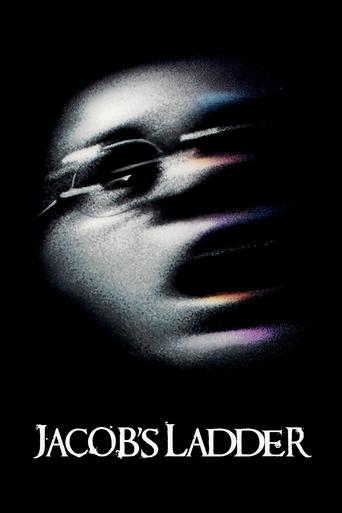
Jacob's Ladder
Adrian Lyne · 1990 · Film
Shares dream logic.
81% shared signal

The Haunting of Hill House
Shirley Jackson · 1959 · Book
Shares slow-burn dread.
80% shared signal
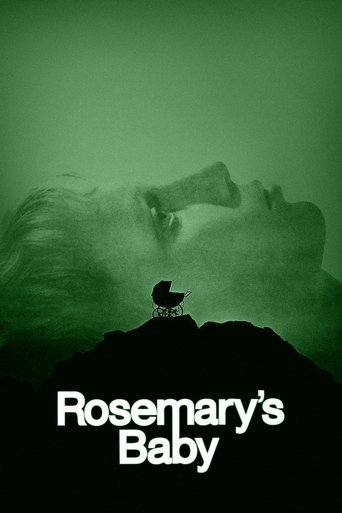
Rosemary's Baby
Roman Polanski · 1968 · Film
Shares restraint over gore.
77% shared signal
Questions about Don't Look Now
The things people actually ask about this film, answered.
What happens at the end of Don't Look Now?
John chases a small red-coated figure through Venice believing it is his dead daughter or a child in danger. It is the serial killer the city has been hunting, an elderly dwarf woman, and she cuts his throat. His funeral is the boat he had been seeing in visions all film.
What does the red coat mean in Don't Look Now?
It is deliberately misleading. John's daughter drowns in a red mackintosh, the figure he pursues wears red, and so does the killer. He correctly reads red as a message and wrongly assumes it means his daughter — and the film teaches the audience the same error at the same pace.
What was John's vision of the boat?
His own funeral. He sees Laura on a Venetian boat with the two sisters while she is still in England and cannot place it. The final sequence reveals it as the barge carrying his coffin. He had the premonition right and dismissed it, which is why he dies.
Is the killer in Don't Look Now supernatural?
No. She is an elderly woman who has been murdering people throughout the film, tracked by a police and newspaper subplot most viewers barely register. The only supernatural element is the second sight, which belongs to John and the psychic sisters rather than to the threat.
Why doesn't John leave Venice when he is warned?
Because he cannot hold both ideas at once — that his daughter is permanently gone and that the warning is real. Heather tells him plainly to leave; he dismisses it, sends his wife away and stays. The film is explicit that the warning was accurate and that he could have acted on it.
Is Don't Look Now scary?
Not in a conventional sense. We score it 032 on viscera and 016 on pace — it is slow and almost bloodless. The horror is formal: images arrive before the events they belong to, which makes the whole film feel like a warning you cannot decode until it is too late.
These are ranked against Don't Look Now, not against you.
Build your own tape →