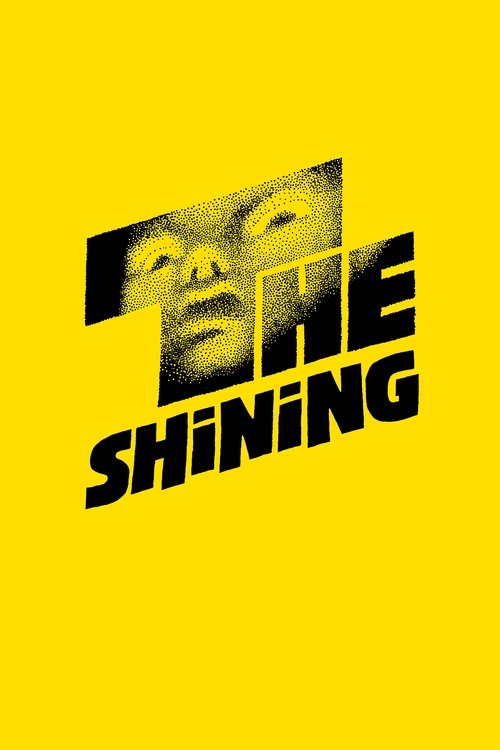
Film · 1980
The Shining
Stanley Kubrick
A hotel doing slow arithmetic on a family. The dread is architectural.
Most extreme on ERA BIAS — analog-era texture at 010
On VHSCREAM’s six-axis scale, The Shining (1980) is most extreme on the era-bias axis: 10 out of 100, where 0 is analog-era texture and 100 is modern craft. 16% of the 105 horror works we have scored come in lower on that axis. How we score →
The Shining is a 1980 horror film directed by Stanley Kubrick, adapted from Stephen King's 1977 novel. A writer takes a winter caretaking job at an isolated Colorado hotel and is absorbed by it. We score it 010 on era bias — joint-tenth most analog-feeling film we score — and 062 on reality anchor — further into dream logic than two-thirds of everything we score.
Scored and reviewed by VHSCREAM on · how we score
The Shining: the review
A haunted house film that refuses to behave like one
The Overlook does not jump out at anybody. It does arithmetic. Kubrick's camera glides down corridors at child height, holds symmetrical compositions a beat too long, and lets a hotel that is architecturally impossible — Ullman's office has a window where the building has none, the corridors do not join up — simply be impossible without comment. Nothing in the film tells you that the geometry is wrong. You feel it before you can name it, which is the single most imitated thing about it and the thing almost nobody imitates well.
The result is a film whose horror is spatial rather than narrative. Very little happens in the Overlook. A boy rides a tricycle. A man fails to write. A woman makes breakfast. And the building accumulates.
What Kubrick took out, and what that cost
King's novel is a book about alcoholism in which a hotel is the antagonist and Jack Torrance is a decent man losing a fight. Kubrick keeps the hotel and discards the decency. Jack Nicholson is already wrong in the interview scene — the grin arrives before the ghosts do — and the film never seriously entertains the idea of a Jack worth saving.
King has objected to this for forty-five years and he is not wrong about his own book. He is wrong that it makes the film worse. The adaptation trades a tragedy for a trap, and the trap is what makes it rewatchable: knowing Jack was never going to be rescued turns the first hour from setup into dread.
What it genuinely did cost is Wendy. The novel's Wendy fights. Shelley Duvall's is written to flinch, shot to look exhausted, and — as the production's own history makes plain — was treated accordingly on set. It is the most uncomfortable thing about the film, and the discomfort is not fictional. Duvall's performance is extraordinary, and it is extraordinary partly for reasons nobody should be proud of.
The sound is doing half the work
The score is almost entirely borrowed terror: Wendy Carlos and Rachel Elkind's synthesised Berlioz over the opening aerials, and then Penderecki, Ligeti and Bartók dropped in slabs. Penderecki's Threnody sits in this index on its own merits and scores 002 on tone — the bleakest thing we have. Kubrick used music written about Hiroshima to score a man walking down a hallway, and it works, and that choice tells you what register he thought he was in.
Why it has outlasted almost everything from 1980
Because it does not resolve. Hereditary explains itself completely in its last ten minutes and is devastating because of it. The Shining explains nothing, and has therefore been generating readings for four decades — the hotel as American atrocity, as the caretaker's eternal return, as domestic abuse with a supernatural alibi. A whole documentary exists about people over-reading it. That is not a flaw the film has; it is the product the film is.
It is also, frankly, slow and strange and sometimes silly. The man in the bear suit. "Great party, isn't it?" The last twenty minutes tip into a chase. If you come to it expecting the scariest film ever made you will probably be disappointed; if you come to it expecting the strangest big-budget studio horror film ever made, it delivers completely.
The ending of The Shining explained
Total spoilers from here. Everything above this line is spoiler-free.
The short answer: Jack freezes to death in the hedge maze; Wendy and Danny escape in the snowcat. The camera then tracks through the Overlook's Gold Room to a photograph dated July 4th, 1921, and Jack is in it, at the front, smiling. The film offers no narration and no explanation. That photograph is the ending.
Here is what the film gives you to work with.
Has Jack always been the caretaker?
Grady tells him he has. In the bathroom scene, Delbert Grady — himself a previous caretaker who killed his family — addresses Jack as a colleague of long standing. Earlier, Ullman describes the Grady murders as happening in 1970. Grady's own daughters appear to Danny as twins in 1920s dress. The hotel's timeline does not run in one direction.
What does the Overlook want with Danny?
The hotel wanted Danny, not Jack. Hallorann and Danny share the shine. The Overlook's interest in Jack is instrumental: he is the adult with the axe. Hallorann is killed the moment he arrives to intervene, which is the film's clearest statement that the hotel acts with intent.
Is Jack possessed by the hotel?
Jack is not possessed so much as recognised. Nothing in the film shows a good man corrupted. Lloyd pours him a drink he has been wanting for five months; Grady gives him permission he has been looking for. The supernatural supplies opportunity, not motive.
What does the ending of The Shining mean?
Four readings, and the film is built to sustain all of them.
The hotel absorbs people, and the photograph is Jack filed away. This is the most economical reading and the one the staging supports: the slow push through the ballroom is a camera finding him where he now lives.
Jack was always there — eternal return. Grady's "you've always been the caretaker" taken literally. Satisfying, and the film does nothing to contradict it.
The hotel is built on what America buried. Ullman mentions an Indian burial ground in the opening interview. The Overlook's decor is full of it; the storeroom is stacked with Calumet cans bearing a chief's head. The film puts this in deliberately and then never develops it, which is either the point or an unfinished thought.
The supernatural is an alibi for a violent father. Wendy tells the doctor about Danny's dislocated shoulder before any ghost appears. On this reading the hotel is what the family needs the violence to have been.
The honest answer is that The Shining is constructed to sustain all four and to settle none, and that the ambiguity is engineered rather than accidental. A film that wanted to be understood would not end on a photograph and a 1921 dance band.
How scary is The Shining, actually?
Scored against the published rubric, here is what the numbers mean for a viewer.
Era bias 010 is its signature, and it is not nostalgia. It ranks joint-tenth among our films, with only 9 scoring lower. This is a film shot on a hotel soundstage with Steadicam in 1979 and it looks and sounds like nothing before or since — the carpet, the lenses, the zooms, the two-shot held forever. If "analog texture" is what frightens you, this is the highest-grade example the index holds.
Reality anchor 062 is the real tell. 70 works score lower, so The Shining sits further into dream logic than most of the index — further than Hereditary at 045. The fear is not that something is in the hotel. It is that the hotel does not obey rules.
Viscera 030 means it is nearly bloodless. 30 works score lower; there are two genuinely explicit images in 146 minutes, and one of them is a lift full of blood that is obviously a lift full of water and paint. Nobody is squeamish about this film.
Threat 058 puts it on the human side, which surprises people. The thing that comes at Wendy and Danny with a weapon is their husband and father. The ghosts open doors; Jack swings the axe.
Pace 028 and tone 018: patient and grim, but not the index's worst of either. 47 works are bleaker. There is black comedy in this film — a lot of it, deliberately — and that is why it reads as less punishing than its reputation despite being far stranger.
On jump scares: a handful, and the famous ones are reveals rather than stings — a door opening, a corridor, a bathtub. The woman in Room 237 is the closest thing to a conventional scare in it.
The Shining on six axes of fear
Every work in the index is scored on six continuous axes of fear. This is what The Shining looks like as a vector.
Where that puts it: #12 analog era · #14 slow burn · #14 surreal
Disagree with a number? Say so on the axis itself. Nobody has confirmed this vector yet, and a score you challenge goes to the top of the queue to be re-scored by a human. Votes do not move the numbers — they decide what gets looked at first. How the scoring works →
Scored against the published rubric. This vector is a draft awaiting review — the method is public so you can argue with it.
Who should skip The Shining
Skip it if you want to be frightened efficiently. This is 146 minutes in which a hotel slowly becomes wrong. Viewers who need incident find the first hour interminable, and that is a reasonable response to a film that is mostly a tricycle on a carpet.
Skip it if you loved the novel and want it honoured. The film keeps the hotel and throws away King's Jack, his Wendy and his ending. People who came for the book have been angry since 1980, King loudest among them.
Know what you are watching with Wendy. Duvall was, by multiple accounts including Kubrick's own daughter's, subjected to sustained pressure to produce that performance. If knowing that would sit badly with you, it is better to know before than after.
Content notes: a child in sustained danger, domestic violence and its aftermath, the killing of the film's only Black character, a corpse in a bath, suicide reference, animal imagery of a sexual nature in the bear-suit scene.
Watch it if you want the strangest film a major studio has ever funded under the word horror, and you would rather argue about a film for twenty years than be scared for two hours.
Where to find it
Rent or buy from Amazon Video · Apple TV Store · Google Play Movies +3 ↗Physical copies on eBay ↗Availability from JustWatch via TMDB. We earn nothing from these links.
Nothing loads from YouTube until you press play.
If The Shining is your kind of fear
The eight works closest to The Shining in the index, ranked by distance across all six axes — not by genre label, and not by what other people watched.

Frankenstein
Mary Shelley · 1818 · Book
Shares analog-era texture.
90% shared signal
The Shining
Stephen King · 1977 · Book
Shares a bleak, unforgiving tone.
90% shared signal
Don't Look Now
Nicolas Roeg · 1973 · Film
Shares slow-burn dread.
90% shared signal
Ghost Story
Peter Straub · 1979 · Book
Shares a bleak, unforgiving tone.
87% shared signal

The Haunting of Hill House
Shirley Jackson · 1959 · Book
Shares restraint over gore.
82% shared signal
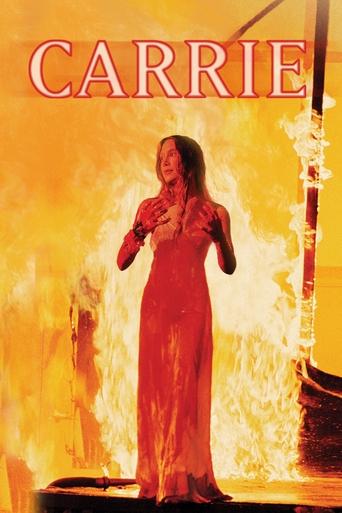
Carrie
Brian De Palma · 1976 · Film
Shares analog-era texture.
81% shared signal
The Turn of the Screw
Henry James · 1898 · Book
Shares slow-burn dread.
81% shared signal
Dracula
Bram Stoker · 1897 · Book
Shares restraint over gore.
81% shared signal
The Shining in another form
The index links works across media, so an adaptation sits beside its source and a score beside the film it haunts.
See the full list of movies like The Shining →
Questions about The Shining
The things people actually ask about this film, answered.
What does the photograph at the end of The Shining mean?
The final shot tracks to a photograph dated July 4th, 1921, with Jack in the middle of the crowd. The most economical reading is that the Overlook has absorbed him and filed him away with its other caretakers. Kubrick supplies no narration, and the film is built to sustain several readings rather than confirm one.
What happens at the end of The Shining?
Jack pursues Danny into the hedge maze, loses him, and freezes to death there. Wendy and Danny escape in Hallorann's snowcat. The camera then moves through the empty Gold Room to a 1921 photograph in which Jack appears, and the film ends without explaining it.
Is The Shining scary?
It is unsettling rather than startling. There are very few jump scares and almost no gore — we score it 030 on viscera — but 062 on reality anchor, meaning it works by making the hotel disobey spatial rules. Viewers who need incident often find the first hour slow; viewers who respond to wrongness rate it among the best ever made.
Why did Stephen King hate The Shining?
King's novel is about an alcoholic father losing a fight for his family, and Kubrick's Jack is unstable from his first scene, so the tragedy becomes a trap. King also objected to Wendy being rewritten as fragile and to the loss of the novel's ending. He has restated the objection for decades, including by backing a 1997 television version.
What is in Room 237?
Danny is drawn into Room 237 and comes out injured; Jack later sees a young woman in the bath who becomes an elderly corpse. The film never says what the room is. In King's novel it is Room 217, changed at the request of the hotel that hosted the exterior shoot.
Is The Shining based on a true story?
No. King wrote the novel after a stay at the Stanley Hotel in Estes Park, Colorado, which inspired the setting, but the Torrances and the Overlook's history are invented. The film adds the detail of the hotel being built on an Indian burial ground and never develops it.
Do I need to read the book first?
No, and the two are different enough that reading first can spoil your enjoyment of the film rather than deepen it. The novel's hotel, Jack and ending are all substantially different. King's novel is scored separately in this index.
These are ranked against The Shining, not against you.
Build your own tape →