Film · 2025
Presence
Steven Soderbergh
Shot entirely as the thing already in the house, which turns out to be on your side.
46Strong to sit through, out of 100 — mostly how bleak it is
- PaceSlow burn18
- ThreatMostly people72
- GoreShows almost nothing14
- ToneBleak24
- RealityTilts unreal56
Era bias 86 · Thoroughly modern. Texture rather than fear, so it is not part of the grade. All six scores →
Frightening horror movies with almost nothing shown →
On VHSCREAM’s six-axis scale, Presence (2025) is most extreme on the viscera axis: 14 out of 100, where 0 is restraint over gore and 100 is explicit viscera. 5% of the 320 horror works we have scored come in lower on that axis. How we score →
Presence is a 2025 American horror film directed by Steven Soderbergh and written by David Koepp. A family moves into a suburban house, and the entire film is shot from the point of view of the thing already living in it — one continuous wandering camera, no cuts away, no shots the ghost is not in. We score it 014 on viscera, which is near the floor of the index, and 072 on threat, which is the human end.
Scored and reviewed by VHSCREAM on · how we score
How scary is Presence, actually?
Scored against the published rubric, here is what the numbers mean for a viewer.
Viscera 014 is near the floor of the index. Only 16 works score lower. There is one act of violence in the entire film and it is over in seconds. Everything else is implication, a glass of water, and a camera waiting in a hallway.
Threat 072 is the human end, which is unusual for a haunted house film. 228 works score lower. The ghost is the protagonist and the predator is a teenage boy. On this axis Presence sits with the films about people, not with the films about houses.
Pace 018 is deep in dread. Only 32 works are slower — this is among the most patient films we hold. Long takes, no score for long stretches, and almost no sudden noise anywhere in it.
Tone 024 is bleak. 163 works score lower. A family with a favourite child, a grieving teenager, a predator and a dead boy, and the one consolation the film offers arrives in its last thirty seconds.
Era bias 086 is modern. 54 works score higher. Digital, bright, estate-agent clean — the house is photographed like a listing, which is part of the joke.
Reality anchor 056 is barely surreal despite the premise. The camera is a ghost and the world it moves through is utterly ordinary: a kitchen island, a basketball hoop, a teenager's bedroom. The formal device is radical and the geography never bends.
On jump scares: essentially none. This is the rare haunted-house film with no interest in startling you.
Who should skip Presence
Skip it if the subject of a predatory older boyfriend is a limit. The film's central threat is the grooming and poisoning of a grieving teenage girl, and it is handled seriously and at length.
Skip it if you want a frightening ghost. The entity is sympathetic throughout. Viewers arriving for a haunting will find the house entirely safe and the people in it not.
Skip it if a single unbroken point of view will frustrate you. There are no cutaways, no reaction shots and no scenes elsewhere. If the device stops working for you in the first ten minutes, there is no relief from it.
Content notes: grooming of a minor, poisoning, substance abuse, suicide of a teenager discussed throughout, parental favouritism and emotional neglect, and one brief act of fatal violence.
Watch it if you want the most formally interesting horror film of 2025, you prefer dread to shock by a wide margin, and a ghost story told from the ghost's side without a single cheat sounds worth eighty-five minutes.
Presence on six axes of fear
Every work in the index is scored on six continuous axes of fear. This is what Presence looks like as a vector — and what each ten-point band looks like across everything else we hold.
Where that puts it: joint #9 without gore · joint #13 slow burn
Draft score — awaiting human review. About these scores
Disagree with a number? Say so on the axis itself. Nobody has confirmed this vector yet, and a score you challenge goes to the top of the queue to be re-scored by a human. Votes do not move the numbers — they decide what gets looked at first. How the scoring works →
Scored against the published rubric. This vector is a draft awaiting review — the method is public so you can argue with it.
Presence: the review
A formal experiment that happens to be a good film
The gimmick is total and Soderbergh does not blink. The camera is the ghost. It drifts through rooms, waits in doorways, moves toward whoever is upset, retreats into a closet when it has nothing to do. There are no reaction shots because the ghost cannot see its own face, no score to speak of, and no scene anywhere in the house that the entity does not attend.
What makes it more than a stunt is that the constraint does the work a conventional haunted-house film does with jump scares. You spend ninety minutes in the position of something that can watch a family and almost never intervene, and the resulting feeling is not fear. It is helplessness, which is a much rarer thing for a horror film to produce and the reason this one lingers.
The family is the horror
Rebecca, the mother, has decided which of her two children matters, and she is not subtle about it. Chris, the father, knows and manages rather than objects. Tyler, the son, is the favoured one and is being hollowed out by it. Chloe, the daughter, is grieving a dead friend and self-medicating and is the only person in the house who registers that something is there.
Soderbergh shoots all of this in long, patient takes from across a room, and the effect is that the supernatural content feels less upsetting than the domestic content. By the time the film's actual danger arrives — a boy named Ryan, charming, older, attached to Chloe, with a history — the audience has already been trained to watch a vulnerable person from a distance without being able to help, which is precisely the position the ghost is in and precisely why the last fifteen minutes work.
Why the threat scores 072
Because the ghost is not the problem. It is the protagonist, and arguably the only character acting in anybody's interest. The thing in this film that intends harm is a human being with a plan, and the horror of Presence is watching that plan proceed through walls you can pass through and conversations you cannot interrupt.
That makes it a near-inversion of the usual haunted-house arrangement, and it is why it sits oddly in our haunted house guide — a film with a ghost, a house and a family, in which the house is not hostile and the ghost is trying.
Where it strains
Eighty-five minutes is the right length and it still feels thin in places: the medium who turns up to explain the rules is a device, and Tyler's arc resolves in a single line. The constraint occasionally forces awkward blocking, with characters delivering important information while conveniently facing a corner of the room. And the film's final revelation about the ghost's identity, while genuinely moving, depends on a piece of temporal logic the film states rather than earns.
None of that spoils it. This is a major director using a genre as a laboratory and producing something no other haunted-house film has: a ghost story told entirely from inside the grief.
The ending of Presence explained
The ending, in full. Open it when you have seen it.
The short answer: the presence is Chloe's brother Tyler, moving backwards through the time of his own death. Ryan has been poisoning Chloe and is preparing to kill her; the entity finally manages to act, Ryan dies, and Chloe survives. The final moments reveal that the ghost has been watching the sister he will later die saving.
Here is how the film gets there.
Who is the ghost in Presence?
Tyler. The film establishes a loose rule through its visiting medium — that the entity is not experiencing time in order — and the ending pays it off: the presence in the house is Tyler after his death, witnessing the period before it, which is why it is drawn to Chloe and why it reacts to Ryan long before anybody else does.
What is Ryan doing?
Poisoning her. Ryan has attached himself to Chloe during her grief, has done something comparable before, and is administering something to her over a period of weeks. The film reveals this gradually and mostly through the ghost's attention — the entity keeps going to the same drawer, the same glass, the same bag, and the audience works it out at roughly the speed it does.
Why can't the presence do anything sooner?
That is the film's whole design. For most of its length the entity can move small objects, open a door, disturb a shelf, and nothing it does is legible to anybody except Chloe. The frustration the audience feels is the subject. When it finally acts decisively, the act costs everything it has.
What actually happens in the last scene?
Ryan attacks Chloe, the presence intervenes with full force for the first and only time, and Ryan is killed. Chloe lives. The final image closes the loop: we understand that the thing we have been riding is her brother, that his death is still ahead of him in the family's timeline, and that he spends it in this house watching over her.
Is the ending ambiguous?
Less than most ghost stories. The identity is stated, the mechanism is stated, and the only genuinely open question is how much of what we watched was Tyler choosing where to go and how much was simply where he was.
If Presence is your kind of fear
The eight works closest to Presence in the index on the five axes that describe fear, the same medium first — not by genre label, and not by what other people watched.
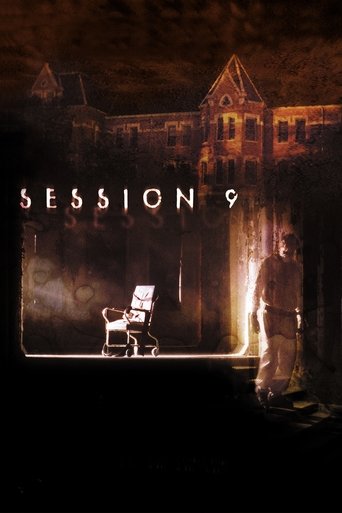
Session 9
Brad Anderson · 2001 · Film
Shares slow-burn dread.
86% shared signal
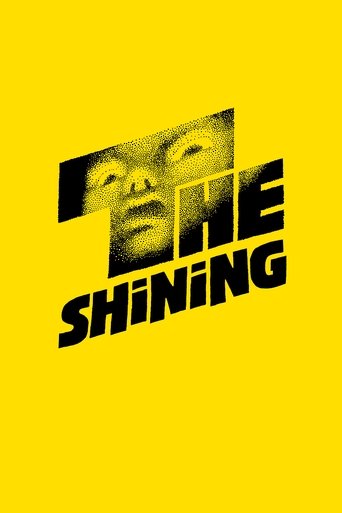
The Shining
Stanley Kubrick · 1980 · Film
Shares a bleak, unforgiving tone.
85% shared signal
Rebecca
Daphne Du Maurier · 1938 · Book
Shares restraint over gore.
87% shared signal
The Shining (OST)
Wendy Carlos & Rachael Elkind · 1980 · Record
Shares restraint over gore.
86% shared signal

Frankenstein
Mary Shelley · 1818 · Book
Shares slow-burn dread.
86% shared signal
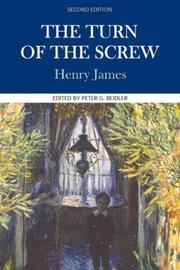
The Turn of the Screw
Henry James · 1898 · Book
Shares a bleak, unforgiving tone.
84% shared signal
Petscop
Tony Domenico · 2017 · Web series
Shares human monsters.
83% shared signal

The Haunting of Hill House
Shirley Jackson · 1959 · Book
83% shared signal
More lists like these: Movies like Session 9 · Movies like The Shining · Books like Frankenstein
Questions about Presence
The things people actually ask about this film, answered — including how it ends.
What happens at the end of Presence?
Ryan, who has been poisoning Chloe, attacks her, and the entity intervenes with full force for the first time, killing him. Chloe survives. The film then reveals that the presence is her brother Tyler, experiencing the time before his own death out of order, watching over the sister he will die for.
Who is the ghost in Presence?
Tyler, Chloe's brother. The film sets this up through a medium who explains that the entity is not moving through time in sequence, and confirms it in the final moments.
Why is Presence shot in one point of view?
Because the camera is the ghost. Soderbergh shot the whole film handheld as the entity, so there are no cutaways, no reaction shots and no scenes the presence does not attend. The constraint is the source of the film's central feeling, which is helplessness rather than fear.
Is Presence scary?
Not in the conventional sense, and deliberately. We score it 018 on pace, which puts it among the most patient films in this index, and 014 on viscera, near the floor. The discomfort comes from watching a vulnerable person from a distance and being unable to intervene.
Is Presence a haunted house movie?
Technically and awkwardly. There is a ghost, a house and a family, and the house is not hostile and the ghost is on their side. We score the threat at 072, the human end, which is the opposite of where most of the haunted house guide sits.
What should I watch after Presence?
The Haunting of Hill House for a haunting that is mostly a person's interior, Lake Mungo for grief filmed as documentary with its worst image hidden in plain sight, and Les Revenants for the dead returning into an ordinary town without a single scare.
These are ranked against Presence, not against you.
Build your own tape →