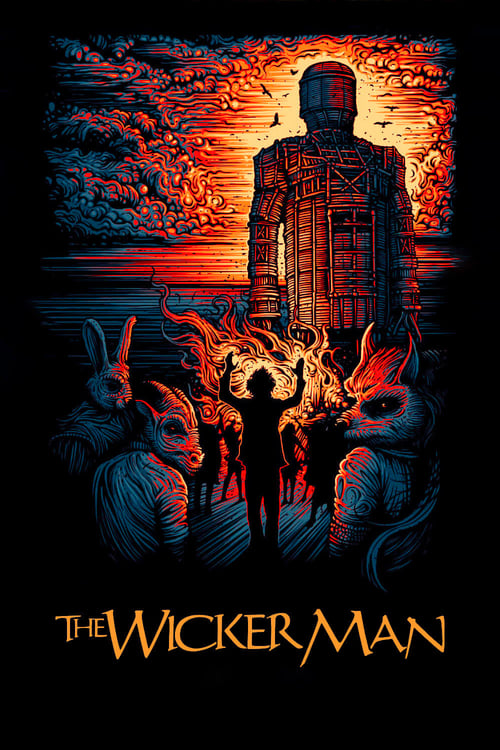
Film · 1973
The Wicker Man
Robin Hardy
Sunlit, folky, and cheerful right up until it isn't.
Most extreme on ERA BIAS — analog-era texture at 006
On VHSCREAM’s six-axis scale, The Wicker Man (1973) is most extreme on the era-bias axis: 6 out of 100, where 0 is analog-era texture and 100 is modern craft. 6% of the 105 horror works we have scored come in lower on that axis. How we score →
The Wicker Man is a 1973 British folk horror film directed by Robin Hardy and written by Anthony Shaffer. A mainland policeman flies to a Hebridean island to investigate a missing girl and finds a pagan community. We score it 052 on tone — 101st of 105 works, which makes it one of the least bleak films we hold — and 088 on the threat axis.
Scored and reviewed by VHSCREAM on · how we score
The Wicker Man: the review
The Wicker Man is a musical, and most people who recommend it forget to mention that.
There are folk songs throughout — a landlord's bawdy round, a naked Britt Ekland singing through a wall, a maypole rhyme sung by boys, a procession hymn — performed diegetically by the islanders and arranged by Paul Giovanni from genuine traditional material. The effect is that the community is not sinister. It is cheerful, bawdy, musical and extremely well adjusted, and the only person in the film who is frightened, repressed and humourless is the policeman the audience is meant to identify with.
That inversion is the whole trick. Edward Woodward plays Howie as a prig: a devout Free Church Presbyterian who is disgusted by the sex, offended by the religion, and certain throughout that he is dealing with criminals rather than believers. Christopher Lee's Lord Summerisle is patient, amused and entirely sincere, and he gives the better arguments.
It is an argument between two religions and the film takes a side
Howie's Christianity is presented as joyless and brittle; the island's paganism as productive, communal and sexually healthy — right up until the point where it requires a man to be burned alive. The film does not resolve this in Howie's favour, and it does not let the islanders off either. What it establishes is that a functioning society can arrive at an atrocity by consensus and remain functional afterwards, which is the thesis every folk horror since has borrowed.
The production was a mess and it shows
Shot in autumn for a May setting, so the crew wired blossom onto bare trees. Lee worked for nothing. The studio cut it to eighty-seven minutes and the negative trim was, by legend, buried under a motorway. The result is that there is no definitive version — the Director's Cut restores the mainland prologue and Howie's established virginity, which matters because his virginity is one of the four qualifications for the sacrifice.
Watch the Director's Cut or the 2013 Final Cut. The theatrical version removes the setup that makes the ending a trap rather than a surprise.
For the same consensus-atrocity in daylight, Midsommar is the direct descendant; for the same island isolation, The Lighthouse.
The ending of The Wicker Man explained
Total spoilers from here. Everything above this line is spoiler-free.
The short answer: there is no missing girl. Rowan Morrison was never in danger — the entire investigation was staged to bring Howie to the island and keep him there. He is the sacrifice: a king's representative, a virgin, a fool who came of his own free will. The islanders seize him during the May Day procession, sew him into a huge wicker effigy with livestock, and burn it while singing. The film ends on the burning man and the sun.
Why was Howie the sacrifice?
Because he met the requirements, and the islanders tell him so plainly. Summerisle lists them: he came of his own free will, he has the power of a king as the law's representative, he is a virgin, and he is a fool. Every step of the investigation — the false report, the obstruction, the fake grave, the discovery of Rowan alive — was designed to produce exactly those four conditions in one man.
Was Rowan Morrison ever in danger?
No. She is alive and unharmed throughout and takes part in the deception, running from Howie in the cave sequence so that he will believe he is rescuing her. The reveal that she is one of them, holding Summerisle's hand, is the moment Howie understands he has not been investigating anything.
Does Howie's faith save him?
No, and the film is pointed about it. He dies reciting the twenty-third psalm while the islanders sing a harvest song, and the two pieces of music compete on the soundtrack. The film grants him dignity and denies him deliverance. Summerisle's closing argument — that if the crops fail again, the islanders will sacrifice him next year — is the only hint that the system might eventually collapse.
Which cut of The Wicker Man should I watch?
The Director's Cut or the 2013 Final Cut, not the eighty-seven-minute theatrical version. The longer cuts include the mainland prologue establishing Howie's fiancée and his abstinence, which is what makes the virginity requirement a trap laid in advance rather than a convenient coincidence.
How scary is The Wicker Man, actually?
Scored against the published rubric, here is what the numbers mean.
Tone 052 is the surprise and it is correct. 100 works score lower, making this one of the least bleak films in the index. It is funny, bawdy, full of songs, and the islanders are having a lovely time. The bleakness is entirely in the last six minutes and belongs to one man.
The threat at 088 is near the ceiling — only 8 works score higher. Nothing supernatural occurs. No god appears, no magic works, no crop is shown to recover. It is a community that has agreed on something.
Viscera 018 is very low — 11 works score lower. Nobody bleeds. The violence is one man inside a structure that is set alight, shown from outside.
Era bias 006 is near the floor — only 6 works score lower. 1973 British film stock, location sound, wired-on blossom.
Pace 020 is slow — 22 works are slower. It is a procedural for eighty minutes and a horror film for six.
Reality anchor 042 keeps it grounded. An island, a licensing law, a school register, a harvest.
On jump scares: none at all. The film never raises its voice before the procession.
The Wicker Man on six axes of fear
Every work in the index is scored on six continuous axes of fear. This is what The Wicker Man looks like as a vector.
Where that puts it: #5 analog era · #8 without gore · #8 human monsters · #10 slow burn
Disagree with a number? Say so on the axis itself. Nobody has confirmed this vector yet, and a score you challenge goes to the top of the queue to be re-scored by a human. Votes do not move the numbers — they decide what gets looked at first. How the scoring works →
Scored against the published rubric. This vector is a draft awaiting review — the method is public so you can argue with it.
Who should skip The Wicker Man
Skip it if a slow investigation will lose you. For most of its length this is a policeman interviewing unhelpful witnesses, and the horror arrives almost entirely at the end.
Skip it if you need a rescue. There is no rescue and no retribution; the islanders are still there when the credits roll.
Skip it if the Nicolas Cage remake is your reference. The 2006 version shares a premise and nothing else, and arriving expecting its tone will ruin this one.
Content notes: a man burned alive, animal sacrifice, nudity presented as ritual, sexual pressure placed on an unwilling man, and children taught sexual material as religious instruction.
Watch it if you want the film folk horror is measured against, you can take a slow procedural, and you want to see a horror film where the frightening thing is a community that is perfectly happy.
Where to find it
Streaming on Amazon Prime Video · BFI Player · MovieSphere+ ↗Physical copies on eBay ↗Availability from JustWatch via TMDB. We earn nothing from these links.
Nothing loads from YouTube until you press play.
If The Wicker Man is your kind of fear
The eight works closest to The Wicker Man in the index, ranked by distance across all six axes — not by genre label, and not by what other people watched.
We Have Always Lived in the Castle
Shirley Jackson · 1962 · Book
Shares analog-era texture.
93% shared signal
Psycho
Alfred Hitchcock · 1960 · Film
Shares human monsters.
74% shared signal

Halloween (OST)
John Carpenter · 1978 · Record
Shares restraint over gore.
73% shared signal

Frankenstein
Mary Shelley · 1818 · Book
Shares slow-burn dread.
73% shared signal
Session 9
Brad Anderson · 2001 · Film
Shares slow-burn dread.
72% shared signal
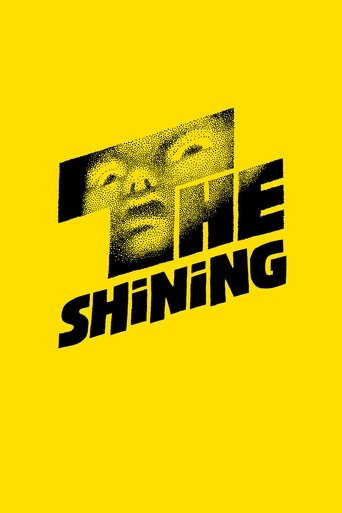
The Shining
Stanley Kubrick · 1980 · Film
Shares analog-era texture.
72% shared signal
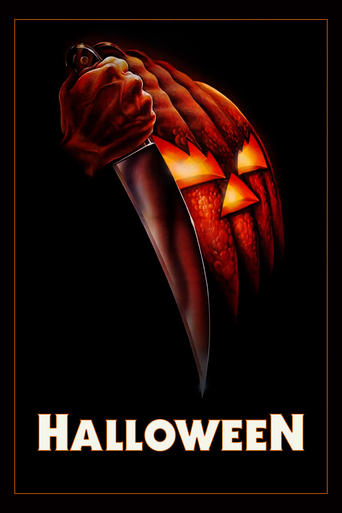
Halloween
John Carpenter · 1978 · Film
Shares restraint over gore.
72% shared signal
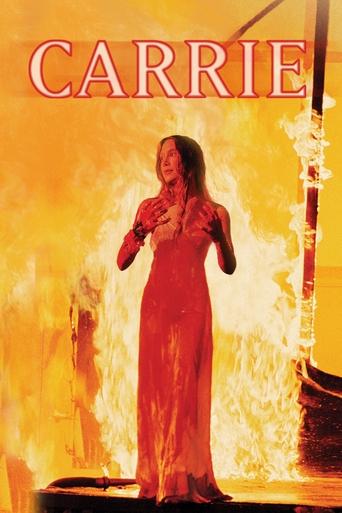
Carrie
Brian De Palma · 1976 · Film
Shares human monsters.
71% shared signal
See the full list of movies like The Wicker Man →
Questions about The Wicker Man
The things people actually ask about this film, answered.
What happens at the end of The Wicker Man?
Howie discovers the missing girl was never missing — the entire investigation was staged to bring him to the island as a sacrifice. He is seized during the May Day procession, sewn into a giant wicker effigy with livestock and burned alive while the islanders sing. The film ends on the burning figure.
Why is Howie chosen as the sacrifice?
Because he meets four conditions Summerisle lists: he came of his own free will, he carries the authority of a king as the law's representative, he is a virgin, and he is a fool. The whole fake investigation existed to produce those four things in one man.
Was Rowan Morrison ever really missing?
No. She is alive and unharmed throughout and takes part in the deception, running from Howie in the cave so he believes he is rescuing her. Seeing her safe and holding Summerisle's hand is the moment Howie realises he was the target.
Which version of The Wicker Man should I watch?
The Director's Cut or the 2013 Final Cut. The eighty-seven-minute theatrical version removes the mainland prologue that establishes Howie's abstinence, which turns a trap laid in advance into a lucky coincidence.
Is The Wicker Man scary?
Not for most of its length — we score it 052 on tone, making it one of the least bleak films in our index, and 018 on viscera. It is cheerful, musical and funny until the final six minutes, which is precisely what makes those six minutes work.
Is The Wicker Man based on real pagan practices?
Loosely. Anthony Shaffer drew on Frazer's The Golden Bough and real Scottish and English folk custom, and the songs are arranged from genuine traditional material. The wicker man itself comes from a single disputed line in Julius Caesar, and Summerisle's island religion is invented.
These are ranked against The Wicker Man, not against you.
Build your own tape →