
Book · 1938
Rebecca
Daphne Du Maurier
A second wife arrives at a house still arranged entirely around the first one.
45Strong to sit through, out of 100 — mostly how bleak it is
- PaceSlow burn16
- ThreatPeople, entirely86
- GoreShows almost nothing10
- ToneBleak22
- RealityTilts unreal38
Era bias 8 · Analog to the bone. Texture rather than fear, so it is not part of the grade. All six scores →
On VHSCREAM’s six-axis scale, Rebecca (1938) is most extreme on the era-bias axis: 8 out of 100, where 0 is analog-era texture and 100 is modern craft. 5% of the 320 horror works we have scored come in lower on that axis. How we score →
Rebecca is a 1938 novel by Daphne du Maurier. An unnamed young woman marries a widower, arrives at his house on the Cornish coast, and discovers that the first wife is still the organising principle of every room, every servant and every conversation in it. We score it 086 on threat, which is the human end of that axis, and 010 on viscera — and it is the one work in this index we would hesitate to call supernatural horror at all.
Scored and reviewed by VHSCREAM on · how we score
How scary is Rebecca, actually?
Scored against the published rubric, here is what the numbers mean for a reader.
Threat 086 is the signature and the most useful number on this page. Only 58 works score higher. There is nothing supernatural in Rebecca. The danger is a housekeeper, a blackmailer, a husband with a gun and a dead woman's reputation, and the score says so plainly where the shelving does not.
Viscera 010 is near the floor. 305 works score higher. One drowned body, described at a distance, and a gunshot recounted in dialogue. Nothing is shown.
Era bias 008 is deep in the analog end. 291 works score higher. Servants' bells, a costume ball, a motor car, an inquest. The texture is 1938 writing about the 1920s and nothing has been smoothed.
Pace 016 is dread. 288 works are faster. The novel withholds its central fact for two thirds of its length and fills that space with social humiliation.
Tone 022 is bleak. 149 works score lower. The house burns, the marriage survives on a shared secret, and the narrator tells you in the first paragraph that she is in exile and dreaming about it.
Reality anchor 038 is grounded. Nothing bends. Every strange event has a human explanation, which is unusual for a book this frequently called gothic.
On jump scares: none, and the form has no use for them.
Who should skip Rebecca
Skip it if a passive narrator will frustrate you. She does not act for most of the novel and is not meant to, and that is the most common reason readers abandon it.
Skip it if you want actual horror. There are no ghosts, no supernatural events and no gore. This is suspense and psychological cruelty, and we score it here because the measurement is interesting, not because it will frighten you.
Skip it if coercive humiliation is hard to read. The costume-ball sequence is a sustained, deliberate public destruction of a young woman by someone who has planned it.
Content notes: suicide and terminal illness, a murder the novel asks you to forgive, a suggestion of suicide made to a vulnerable person, sustained psychological cruelty, drowning, and a period attitude to servants and class throughout.
Read it if you want the novel that built the modern gothic, the best opening line in English, and an antagonist who never once does anything you could report her for.
Rebecca on six axes of fear
Every work in the index is scored on six continuous axes of fear. This is what Rebecca looks like as a vector — and what each ten-point band looks like across everything else we hold.
Where that puts it: #3 without gore · #9 slow burn
Draft score — awaiting human review. About these scores
Disagree with a number? Say so on the axis itself. Nobody has confirmed this vector yet, and a score you challenge goes to the top of the queue to be re-scored by a human. Votes do not move the numbers — they decide what gets looked at first. How the scoring works →
Scored against the published rubric. This vector is a draft awaiting review — the method is public so you can argue with it.
Where to start with horror books →
Where to find it
Buy from an indie bookshop ↗Out-of-print copies on eBay ↗We earn nothing from these links.
Rebecca: the review
Said plainly: this is gothic suspense, not a ghost story
The index should be honest about its own edges. There is nothing supernatural in Rebecca. Nobody is haunted in any sense a séance would recognise. It is here because it is on every gothic-horror canon ever assembled, because it invented a great deal of what the subgenre now does automatically, and because the six axes describe it accurately — and because its threat score, 086, says something true that the label "romance" obscures completely.
What it is, is a novel about a woman being slowly convinced that she does not exist. The narrator is never named. She is "my wife", "Mrs de Winter", "you", and she spends four hundred pages comparing herself unfavourably to a dead woman whose handwriting is still in the desk. Du Maurier understood that the most frightening thing you can do to a person is furnish their life with somebody else's taste.
Mrs Danvers is the best antagonist in the gothic
She does nothing illegal. She is unfailingly correct. She keeps the west wing as a shrine, lays out Rebecca's underwear for a guest to admire, and suggests, in a voice of complete solicitude, that the narrator might like to jump from a window. The scene at the costume ball — Danvers steering a frightened girl into wearing the dead woman's dress in front of a hundred people — is as cruel as anything in horror and there is not a raised voice in it.
That is the engine of the threat score. The danger in Rebecca is entirely people: a housekeeper with a devotion, a blackmailing cousin, a husband who shot his wife, and a dead woman whose influence survives because the living keep choosing to obey it.
Manderley
The house is the other character and du Maurier's prose about it is the reason the book has never been out of print. The opening — "Last night I dreamt I went to Manderley again" — does something no first line has any right to: it tells you the house is gone, that the narrator is in exile, and that she is not over it, before you know who she is. The novel then spends its length making you want the place she has already told you she lost.
Where it strains
The narrator's passivity is the point and it is still a long time to spend with someone who will not speak. The middle third circles — another misunderstanding, another comparison, another silence — and readers accustomed to modern pacing have reliably stalled around the arrival of Beatrice. And the novel's moral settlement is genuinely odd: it asks you to want the best for a man who committed murder and got away with it, and most of the time it succeeds, which is its own kind of unsettling.
The ending of Rebecca explained
The ending, in full. Open it when you have seen it.
The short answer: Rebecca's body is found in her scuttled boat. Maxim confesses to the narrator that he shot her and sank it. An inquest returns suicide; a blackmail attempt by Rebecca's cousin fails when a London doctor reveals she had terminal cancer, which supplies a motive for suicide and clears Maxim. As they drive home, Manderley is burning — set alight, the novel strongly implies, by Mrs Danvers.
Here is how the novel gets there.
What did Maxim actually do?
He shot her. In the novel this is deliberate and he says so: Rebecca taunted him with a pregnancy by another man and with the prospect of an heir to Manderley who was not his, and he killed her in the boathouse, put her in her own boat and holed it. Hitchcock's 1940 film changes this to an accident, because the production code of the time would not let a murderer go unpunished, and that change has confused the book's reputation ever since.
Why was Rebecca's death first recorded as accidental?
Because a body had already been identified as hers a year earlier and buried. When the real wreck is raised with a corpse in the cabin, the whole account has to be reopened — and the identification of the earlier body as a mistake is what puts Maxim in danger.
What does the cancer reveal change?
Everything, legally and nothing, morally. Dr Baker's records show Rebecca had an inoperable cancer and months to live. That supplies the inquest with a reason for suicide and destroys Jack Favell's blackmail. It also means Rebecca engineered her own death: she goaded a man she knew had a temper into doing what the illness was going to do anyway, and in the process handed him a secret to carry for the rest of his life. She wins.
Does the narrator ever learn her husband is a murderer?
Yes, and the novel's most quietly shocking beat is her reaction: relief. She has spent the whole book believing he still loved Rebecca. Being told he hated her enough to kill her is, to the narrator, good news — and from that point she becomes decisive, competent and complicit.
Who burns Manderley?
Du Maurier never states it. The final pages give us a glow on the horizon that the narrator first takes for the northern lights, and the last information we had about Mrs Danvers is that she left the house after learning the inquest had cleared Maxim. The book's implication is unmistakable and its refusal to confirm it is deliberate.
If Rebecca is your kind of fear
The eight works closest to Rebecca in the index on the five axes that describe fear, the same medium first — not by genre label, and not by what other people watched.
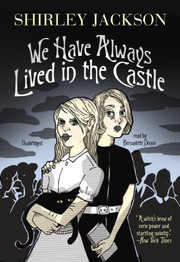
We Have Always Lived in the Castle
Shirley Jackson · 1962 · Book
Shares analog-era texture.
86% shared signal

Frankenstein
Mary Shelley · 1818 · Book
Shares slow-burn dread.
78% shared signal

The Haunting of Hill House
Shirley Jackson · 1959 · Book
Shares restraint over gore.
75% shared signal
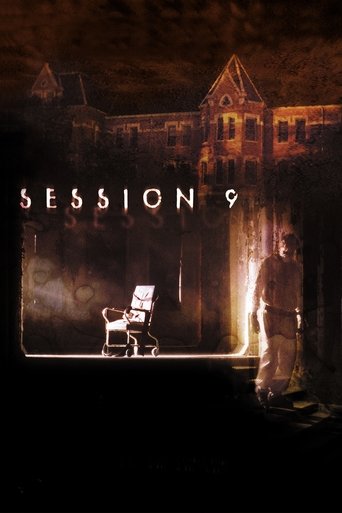
Session 9
Brad Anderson · 2001 · Film
Shares a bleak, unforgiving tone.
87% shared signal
Presence
Steven Soderbergh · 2025 · Film
Shares human monsters.
87% shared signal
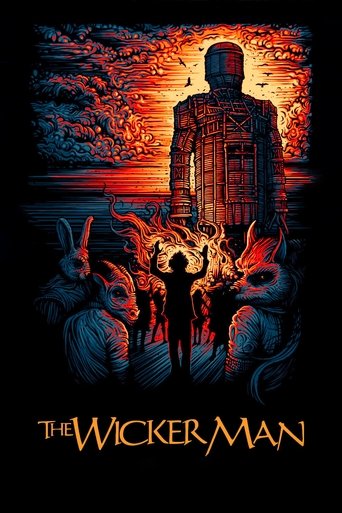
The Wicker Man
Robin Hardy · 1973 · Film
Shares human monsters.
82% shared signal
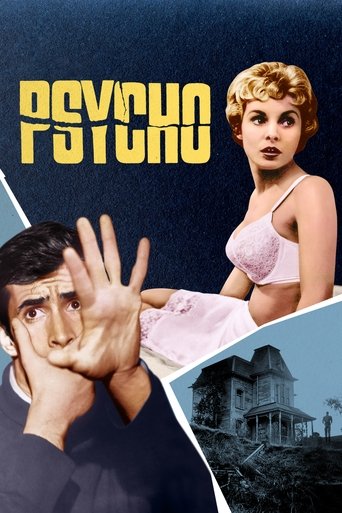
Psycho
Alfred Hitchcock · 1960 · Film
Shares restraint over gore.
78% shared signal

Deathconsciousness
Have a Nice Life · 2008 · Record
Shares slow-burn dread.
77% shared signal
More lists like these: Books like Frankenstein · Movies like Session 9 · Movies like Psycho
Questions about Rebecca
The things people actually ask about this book, answered — including how it ends.
How does Rebecca end?
Rebecca's boat is raised with her body in it, and Maxim admits to the narrator that he shot her. The inquest returns suicide, and a blackmail attempt collapses when a doctor reveals Rebecca had terminal cancer. Driving home, the de Winters see Manderley burning — the novel implies, without stating, that Mrs Danvers set the fire.
Did Maxim kill Rebecca?
In the novel, yes, deliberately. He shot her in the boathouse after she taunted him with a pregnancy by another man and sank her boat with the body aboard. Hitchcock's 1940 film changes it to an accident to satisfy the production code, which is why the two versions are often confused.
Is Rebecca a ghost story?
No. Nothing supernatural happens. Rebecca's hold on the house is entirely maintained by living people who choose to maintain it, which is why we score the threat at 086 — the human end of our axis — rather than anywhere near the supernatural end.
Why does the narrator have no name?
Du Maurier never gives her one, and the omission is the book's central device: the novel is about a woman whose identity is being replaced by a dead woman's, so the text withholds the one thing that would fix her in place.
Who set fire to Manderley?
The novel does not say. Mrs Danvers leaves the house immediately before the fire after learning the inquest has cleared Maxim, and the final image is a red glow on the horizon. The inference is obvious and deliberately unconfirmed.
What should I read after Rebecca?
We Have Always Lived in the Castle for the other great gothic novel driven entirely by people, The Haunting of Hill House for a house that may or may not be doing it, and Mexican Gothic for the modern version with the supernatural put back in.
These are ranked against Rebecca, not against you.
Build your own tape →