
Book · 1962
We Have Always Lived in the Castle
Cosy and poisonous in equal measure. The village is the threat.
Most extreme on ERA BIAS — analog-era texture at 010
On VHSCREAM’s six-axis scale, We Have Always Lived in the Castle (1962) is most extreme on the era-bias axis: 10 out of 100, where 0 is analog-era texture and 100 is modern craft. 16% of the 105 horror works we have scored come in lower on that axis. How we score →
We Have Always Lived in the Castle is a 1962 novel by Shirley Jackson, her last. Two sisters and an invalid uncle live alone in a large house outside a village that hates them, six years after four members of their family were poisoned at dinner. We score it 088 on the threat axis — joint-ninth of 105 works, the human end of the scale — and 012 on pace.
Scored and reviewed by VHSCREAM on · how we score
We Have Always Lived in the Castle: the review
We Have Always Lived in the Castle is the most charming book about a murderer ever written, and the charm is the weapon.
Merricat Blackwood narrates, and she is eighteen, and she is delightful. She opens by telling you her name, that she likes her sister Constance and Amanita phalloides and the library, and that everyone else in her family is dead. She buries objects in the grounds as protective magic, nails a book to a tree, repeats three words she believes hold the house together, and walks into the village once a week for groceries while children sing a rhyme at her about arsenic. Jackson's achievement is that you are inside this voice for two hundred pages and it never once feels like unreliable narration as a technique. It feels like company.
Constance is the other half of it. Twenty-eight, acquitted at trial, universally believed guilty, she has not left the property in six years; she cooks, preserves, gardens, and manages Merricat and Uncle Julian with a serenity that is either saintly or something else. Julian, in a wheelchair, is writing and rewriting an account of the day of the poisoning, cannot keep its details straight, and refers to Merricat as a child who died.
It is a novel about being hated by your neighbours
The village is the horror. Jackson wrote this at the end of her life in a Vermont town where she and her family were genuinely disliked, and the book's agoraphobia is not metaphorical. The Blackwoods are rich, they were rich before, the family bought the land and kept it, and the village's resentment has had six years and a quadruple homicide to concentrate around. What happens in the final third — when the villagers come to the burning house, help a little, and then stay to break it apart, smashing crockery and shouting the rhyme — is one of the most frightening sequences in American fiction and there is nothing supernatural in it at all.
Cousin Charles is the plot
He arrives after the sisters' father's death, looking for the money, and he is a magnificently ordinary villain: hearty, acquisitive, condescending, and absolutely determined to be reasonable. Merricat's response to him is the novel's engine, and the book is very funny about how badly he reads the household he has walked into.
Where readers struggle
Almost nothing happens for the first hundred pages, and what does happen is a shopping trip and a tea. The prose is simple and the horror is entirely structural, so readers expecting Gothic machinery find it thin. And the ending's strange contentment is, for some people, the point at which the book loses them.
For Jackson's other and more famous novel, The Haunting of Hill House; for the same village closing ranks, The Wicker Man; for the same first-person narrator you should not trust, The Turn of the Screw.
The ending of We Have Always Lived in the Castle explained
Total spoilers from here. Everything above this line is spoiler-free.
The short answer: Merricat, trying to get rid of Charles, pushes his lit pipe into a wastepaper basket in his room. The house catches fire. The village fire brigade puts it out and then the villagers, who have gathered to watch, come inside and systematically wreck what is left — breaking the china, tearing the rooms apart, chanting the rhyme at the sisters. Uncle Julian dies that night. Charles leaves and later tries to come back for money and is refused. Constance and Merricat retreat into the two habitable rooms of the burned house, board up the windows, barricade the door and stop going out at all. And then the villagers, out of guilt, begin leaving food on the doorstep — baskets of cooking left anonymously at night, which the sisters take in. The novel's revelation arrives almost in passing in the final chapters: Merricat put the arsenic in the sugar bowl, Constance has known from the first day, and Constance's defence at trial and her six years of silence were both protection. The last line is Merricat telling her sister how happy they are, and meaning it.
Who poisoned the Blackwood family?
Merricat. She was twelve, she had been sent to bed without supper that evening, and she put arsenic in the sugar bowl knowing that Constance did not take sugar on her blackberries. Her father, mother, aunt and younger brother died; Uncle Julian survived with permanent damage. Constance washed the sugar bowl out before the police arrived — which the prosecution used against her at trial — and was acquitted, and has never contradicted the village's belief that she did it.
Why does Constance protect Merricat?
The novel never has her explain it, and that silence is the point. What it shows is that Constance knew immediately, cleaned the bowl, stood trial, was acquitted, came home and has spent six years feeding and managing her sister without reproach. The strongest reading the text supports is that Constance considers the family's treatment of Merricat part of the cause, and that the arrangement they have now — two sisters alone, a garden, a kitchen, no outside world — is one she also wants.
What is Merricat's magic?
A private system of protective rituals: burying objects at the boundaries of the property, nailing a book to a tree, placing her father's watch and a silver dollar in the ground, repeating three words of power that she will not say aloud twice, and treating the appearance of a new object or a broken ward as a catastrophe. It is not presented as effective and it is not presented as madness. It is what a child who poisoned her family built in order to keep the only remaining member of it inside the fence with her.
What happens when the villagers come to the house?
They come for the fire and stay for the house. The brigade extinguishes it; the crowd that has assembled then moves inside and breaks it up — smashing the kitchen, destroying the dining room where the poisoning happened, throwing things, singing the children's rhyme about Merricat and the arsenic. Charles tries to organise them and fails. It is a riot conducted by neighbours, in daylight, at a house where two women and a dying old man live, and Jackson writes it with complete calm.
Is the ending happy?
Merricat says so and the text does not contradict her. The sisters have what she has wanted the whole book: the house sealed, the outside world reduced to anonymous baskets of food, Charles gone, Julian gone, and nobody left to leave. By any outside measure it is a catastrophe — two women walled into a ruin, fed by the guilt of people who wrecked it. By Merricat's, it is the arrangement she poisoned four people to get. The novel's final effect is that you are pleased for her, and then you notice that you are.
How scary is We Have Always Lived in the Castle, actually?
Scored against the published rubric, here is what the numbers mean.
The threat at 088 is near the human ceiling — only 8 works score higher. There is nothing supernatural in the novel: the danger is a twelve-year-old with arsenic, a cousin with a motive, and a village with a grudge.
Pace 012 is extremely slow — only 9 works are slower. The first half is a household routine described in detail by someone who finds it beautiful.
Viscera 016 is very low — 10 works score lower. Four deaths by poison, six years earlier, described only in Julian's unreliable notes, plus a fire and some broken china.
Era bias 010 is deep analog — only 17 works score lower. A 1962 novel of village shops, a wheelchair, a wind-up watch and no technology at all.
Tone 044 is close to the midpoint — 93 works score lower, which is high for a book with four murders in it: the narrator is funny, the sisters survive, and the last page is contentment.
Reality anchor 040 is grounded — 26 works score lower. Merricat's magic produces no effects the text confirms, and everything else is a house, a garden and a road.
On shocks: one, and it is a sentence about a sugar bowl.
We Have Always Lived in the Castle on six axes of fear
Every work in the index is scored on six continuous axes of fear. This is what We Have Always Lived in the Castle looks like as a vector.
Where that puts it: #3 without gore · #4 slow burn
Disagree with a number? Say so on the axis itself. Nobody has confirmed this vector yet, and a score you challenge goes to the top of the queue to be re-scored by a human. Votes do not move the numbers — they decide what gets looked at first. How the scoring works →
Scored against the published rubric. This vector is a draft awaiting review — the method is public so you can argue with it.
Who should skip We Have Always Lived in the Castle
Skip it if you need incident. Two hundred pages of domestic routine, one shopping trip, one visitor and one fire.
Skip it if a narrator you cannot trust will frustrate you. Merricat is charming, precise and lying by omission for the whole book, and the novel never stops to say so.
Skip it if mob cruelty is a hard limit. The sequence in which the village wrecks the burned house is sustained and extremely upsetting.
Content notes: the poisoning murder of four family members including a child, a child as the murderer, long-term poisoning damage to a survivor, a house fire, a mob destroying a home while its occupants are inside, sustained harassment of two women by a community, and an elderly man's death.
Read it if you want the best first-person voice in American horror, you can take a novel in which the frightening thing is the neighbours, and you want to finish a book delighted for a murderer and then have to sit with that.
Where to start with horror books →
Where to find it
Buy from an indie bookshop ↗Out-of-print copies on eBay ↗We earn nothing from these links.
If We Have Always Lived in the Castle is your kind of fear
The eight works closest to We Have Always Lived in the Castle in the index, ranked by distance across all six axes — not by genre label, and not by what other people watched.
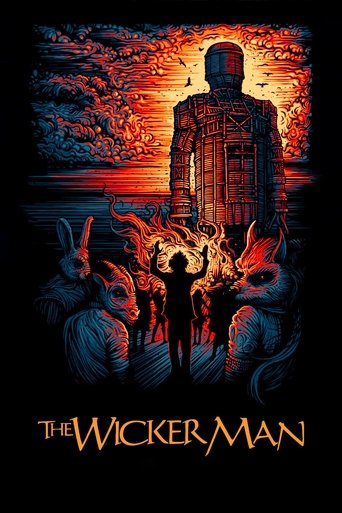
The Wicker Man
Robin Hardy · 1973 · Film
Shares analog-era texture.
93% shared signal
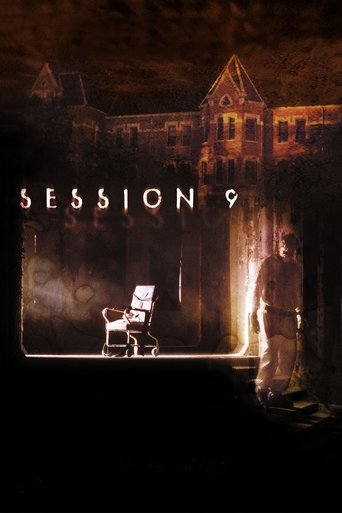
Session 9
Brad Anderson · 2001 · Film
Shares slow-burn dread.
76% shared signal

Frankenstein
Mary Shelley · 1818 · Book
Shares restraint over gore.
75% shared signal
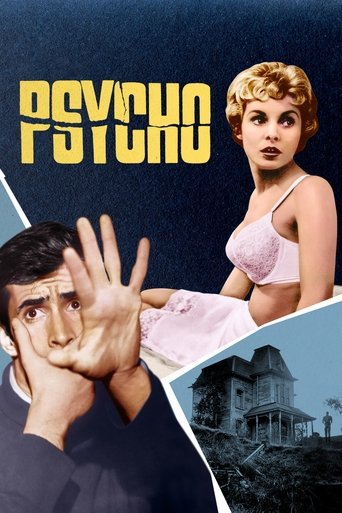
Psycho
Alfred Hitchcock · 1960 · Film
Shares human monsters.
75% shared signal
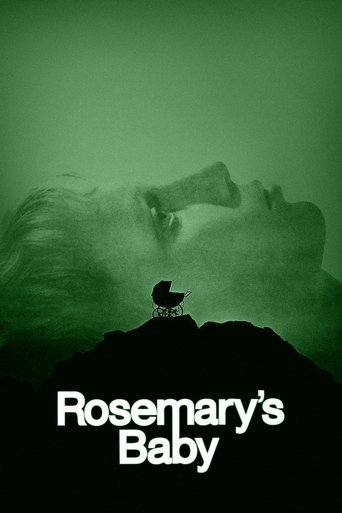
Rosemary's Baby
Roman Polanski · 1968 · Film
Shares analog-era texture.
73% shared signal
The Shining
Stanley Kubrick · 1980 · Film
Shares slow-burn dread.
73% shared signal

The Haunting of Hill House
Shirley Jackson · 1959 · Book
Shares restraint over gore.
72% shared signal

Halloween (OST)
John Carpenter · 1978 · Record
72% shared signal
Questions about We Have Always Lived in the Castle
The things people actually ask about this book, answered.
What happens at the end of We Have Always Lived in the Castle?
Merricat sets the house alight by accident while trying to drive Charles out. The villagers put the fire out and then wreck what is left. Uncle Julian dies that night. The sisters board themselves into the two surviving rooms, and the village begins leaving food on the step out of guilt.
Who poisoned the Blackwood family?
Merricat, aged twelve, with arsenic in the sugar bowl — knowing Constance did not take sugar. Her parents, her aunt and her younger brother died and Uncle Julian was permanently damaged. Constance washed the bowl before the police came, stood trial, and was acquitted.
Why does Constance take the blame in We Have Always Lived in the Castle?
The novel never lets her explain. It shows that she knew at once, cleaned the sugar bowl, went to trial and has never contradicted the village since. The reading the text best supports is that she holds the family partly responsible, and that she wants the life the poisoning produced.
What is Merricat's magic in the novel?
A private system of wards — objects buried at the property line, a book nailed to a tree, three words of power she will not repeat — which she maintains obsessively. The book never shows it working and never calls it delusion; it is how a child keeps her sister inside the fence.
Is We Have Always Lived in the Castle a horror novel?
Yes, and almost entirely without the genre's machinery. We score it 088 on the threat axis and 016 on viscera: no ghosts, very little blood, and the frightening material is a charming narrator, a greedy cousin and a village that comes inside your house and breaks it.
Is the ending of We Have Always Lived in the Castle happy?
Merricat thinks so and the novel does not argue. The sisters are sealed into a ruin, fed anonymously by the people who wrecked it, with nobody left to leave — which is precisely the arrangement she killed four people to get. The discomfort is that you are glad for her.
These are ranked against We Have Always Lived in the Castle, not against you.
Build your own tape →