
Record · 2008
Deathconsciousness
Have a Nice Life
Distorted, hopeless, weirdly beautiful. Horror with no monster in it.
Most extreme on TONE — a bleak, unforgiving tone at 005
On VHSCREAM’s six-axis scale, Deathconsciousness (2008) is most extreme on the tone axis: 5 out of 100, where 0 is a bleak, unforgiving tone and 100 is gleeful black comedy. 6% of the 105 horror works we have scored come in lower on that axis. How we score →
Deathconsciousness is a 2008 double album by Have a Nice Life — Dan Barrett and Tim Macuga — self-released with a long accompanying essay about an eleventh-century heretic who never existed. We score it 005 on tone — 98 works score higher — and 085 on the threat axis.
Scored and reviewed by VHSCREAM on · how we score
Deathconsciousness: the review
Deathconsciousness is the most despairing record anyone has made and it was recorded by two men in basements in Connecticut on equipment that could not handle it.
That last part is not a criticism. The album's sound — enormous reverb, drum machines pushed into clipping, bass that smears, guitars that are mostly noise, vocals buried so far down that the lyrics are frequently inaudible — is the consequence of recording ambition on inadequate gear over several years, and it is the most important thing about it. Everything is too loud and nothing is clear, which produces the specific experience of listening to it: you are hearing something enormous from the wrong side of a wall.
Barrett and Macuga were not a band in any professional sense. They pressed a small number of copies, the record found its audience over a decade through word of mouth and listener-aggregation sites, and it has since become one of the few genuinely canonical internet-era albums — not because of a campaign, but because people kept handing it to each other.
The Antiochus essay
The album came with a long prose document about Antiochus, an eleventh-century heretic, and the Antiochians, the cult that followed him — his teachings, his death, the suppression of his movement. Antiochus did not exist. The essay is fiction presented as history, attributed to a scholar who is also fiction, and its function is to give an album about despair a frame that is about belief. It is the clearest precedent in this medium for what Danielewski does with apparatus in House of Leaves.
The record itself
"Bloodhail" and "The Big Gloom" are the openers that establish the method. "Telephony" and "There Is No Food" are the most oppressive things on it. "Holy Fucking Shit: 40,000" is the one that most listeners cite, and it is almost unbearable — a slow build on a two-note figure that arrives somewhere genuinely frightening. And "Earthmover" is the closer and the reason the album has the reputation it does.
Where it is difficult
It is eighty-five minutes long and it does not vary its emotional register once. The production will read to many listeners as simply bad rather than as deliberate. And the lyrics, where they are audible, are the weakest element — the record works as sound and atmosphere far more than as writing.
For the same fictional apparatus wrapped around a work, House of Leaves; for the same voice-inside-a-mass effect, Black One; for the same unrelieved bleakness in another medium, Tender Is the Flesh.
The ending of Deathconsciousness explained
Total spoilers from here. Everything above this line is spoiler-free.
The short answer: it ends with "Earthmover", which is about nine minutes long and is the only point on the record where the band let something resolve. The track builds on a slow, enormous, heavily distorted figure, with Barrett's vocal further down in the mix than anywhere else on the album, and then — in its last third — opens out. The distortion thins, the reverb widens, and the piece arrives at something that is recognisably a release rather than a collapse. It is not a happy ending and it is not a redemption; it is the sound of something stopping after eighty minutes of not stopping. Listeners routinely describe it as the only part of the album that feels like air, and placing it last is the single best structural decision Barrett and Macuga made.
Who is Antiochus?
Nobody. The essay packaged with the album presents Antiochus as an eleventh-century heretic whose followers, the Antiochians, held that the world was the creation of a malevolent power and that existence itself was the punishment — and it presents this as documented history, complete with scholarly framing and an attributed author. All of it is invented. The fiction is the point: the album is about despair, and the booklet gives that despair a theology and a persecuted church.
Who are Have a Nice Life?
Dan Barrett and Tim Macuga, from Connecticut, who recorded this over several years in basements and self-released it in 2008 in a very small pressing. They are not a conventional band and have released sparingly since — The Unnatural World in 2014 and Sea of Worry in 2019. Barrett also runs the Enemies List label and records as Giles Corey, which is the closest relative to this album's sound.
What genre is Deathconsciousness?
No single one, which is part of why it spread. There is post-punk in the drum machines and bass lines, shoegaze in the guitar textures, industrial in the production, drone in the long passages and doom in the tempos, and the vocal delivery is closer to Joy Division than to anything heavier. It is usually filed as post-punk or shoegaze and neither description prepares anybody for it.
What is the album cover?
A detail from Antoine-Jean Gros's 1804 painting of Napoleon visiting plague victims at Jaffa — a canvas about a leader walking among the dying. Using a Napoleonic propaganda painting as the sleeve for a record about a fictional medieval heresy is exactly the kind of layered misdirection the whole package runs on.
Where should I start with Deathconsciousness?
"Bloodhail" for the sound, "Holy Fucking Shit: 40,000" for the scale, and "Earthmover" for the reason people love it. But the album genuinely works best heard whole and in order, loud, once, without the booklet — and then a second time with it.
Is Deathconsciousness horror?
Not by genre and absolutely by effect. We score it 005 on tone, close to the floor of our scale, and 085 on the threat axis, because the record's subject is what people do to each other and to themselves rather than anything supernatural. The fictional heresy around it is the only metaphysics on offer and it is a bleak one.
How scary is Deathconsciousness, actually?
Scored against the published rubric, here is what the numbers mean.
Tone 005 is near the floor of our scale — 98 works score higher. There is no consolation across eighty-five minutes except the last three, and the consolation is a cessation rather than a resolution.
The threat at 085 leans hard towards the human — 92 works score lower. Nothing on the record is supernatural; its subjects are suicide, violence, faith and failure.
Reality anchor 072 leans towards dream logic — 80 works score lower. The production buries everything, the lyrics are frequently unintelligible, and the album arrives wrapped in a fictional history presented as fact.
Viscera 025 is low — 25 works score lower. The record's violence is almost entirely conceptual; there is very little bodily imagery in what can be made out.
Era bias 074 leans modern — 66 works score lower. 2008, recorded digitally on inadequate equipment, and distributed in a way that only the internet made possible.
Pace 018 is very slow — only 18 works are slower. The tempos are doom tempos and the tracks are long.
On shocks: two or three, and all of them are the production breaking rather than anything written.
Deathconsciousness on six axes of fear
Every work in the index is scored on six continuous axes of fear. This is what Deathconsciousness looks like as a vector.
Where that puts it: #3 bleakest · #6 slow burn
Disagree with a number? Say so on the axis itself. Nobody has confirmed this vector yet, and a score you challenge goes to the top of the queue to be re-scored by a human. Votes do not move the numbers — they decide what gets looked at first. How the scoring works →
Scored against the published rubric. This vector is a draft awaiting review — the method is public so you can argue with it.
Who should skip Deathconsciousness
Skip it if lo-fi production is the problem. Everything on this record clips, smears or distorts, and a great many listeners hear that as incompetence rather than as design.
Skip it if suicidal ideation is a hard limit. It is the album's recurring subject and it is not framed as a metaphor.
Skip it if eighty-five minutes in one register will exhaust you. The record does not modulate and is not intended to.
Content notes: sustained depiction of suicidal ideation and despair, religious violence and persecution in the accompanying fiction, and references to self-harm and death throughout.
Listen to it if you want the bleakest record in this index, you can hear deliberate ruin in a production rather than failure, and you want to arrive at "Earthmover" having earned it.
If Deathconsciousness is your kind of fear
The eight works closest to Deathconsciousness in the index, ranked by distance across all six axes — not by genre label, and not by what other people watched.

Everywhere at the End of Time
The Caretaker · 2016 · Record
Shares a bleak, unforgiving tone.
86% shared signal
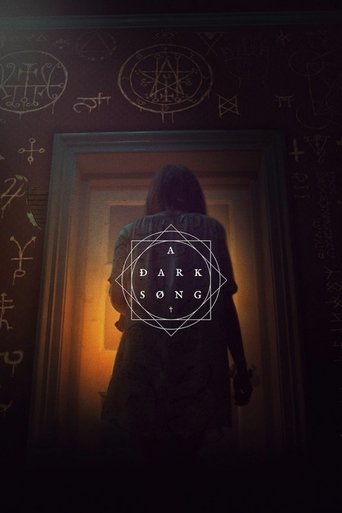
A Dark Song
Liam Gavin · 2016 · Film
Shares slow-burn dread.
78% shared signal

Under the Skin (OST)
Mica Levi · 2013 · Record
Shares modern craft.
76% shared signal
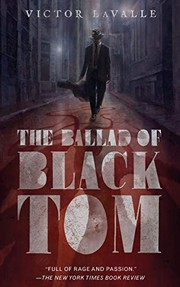
The Ballad of Black Tom
Victor Lavalle · 2016 · Book
Shares dream logic.
75% shared signal
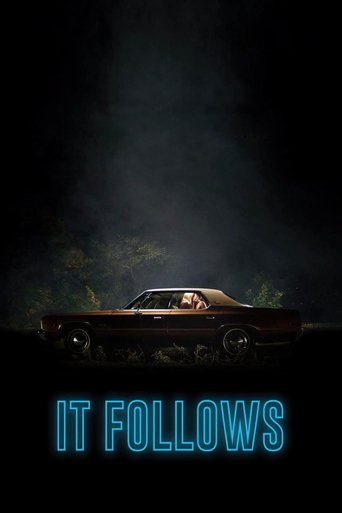
It Follows
David Robert Mitchell · 2014 · Film
Shares restraint over gore.
75% shared signal

Abyss
Chelsea Wolfe · 2015 · Record
Shares a bleak, unforgiving tone.
74% shared signal
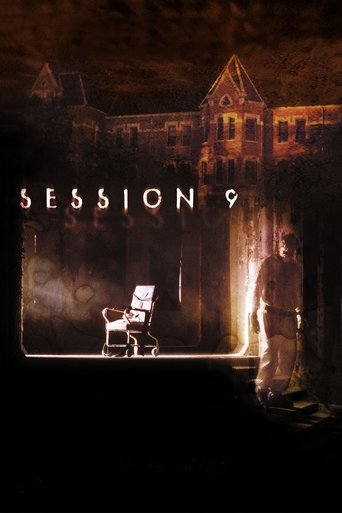
Session 9
Brad Anderson · 2001 · Film
Shares human monsters.
74% shared signal
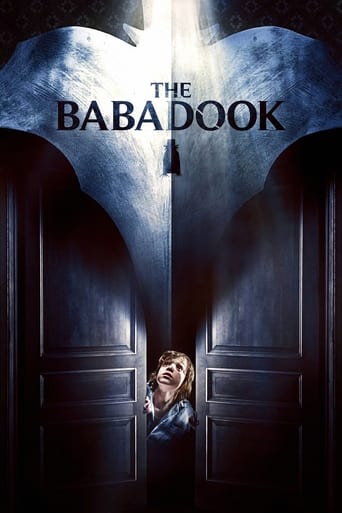
The Babadook
Jennifer Kent · 2014 · Film
Shares restraint over gore.
73% shared signal
Questions about Deathconsciousness
The things people actually ask about this record, answered.
How does Deathconsciousness end?
With "Earthmover", about nine minutes long and the only track that resolves. It builds on a huge distorted figure with the vocal buried deeper than anywhere else, and in its last third the distortion thins and it opens out — not into redemption, but into the first air on the record.
Who is Antiochus in Deathconsciousness?
A fiction. The essay packaged with the album presents him as an eleventh-century heretic whose followers held that existence itself was a punishment, framed as documented history by an invented scholar. None of it is real, and the invention is the point.
Who are Have a Nice Life?
Dan Barrett and Tim Macuga, from Connecticut, who recorded this in basements over several years and self-released it in 2008 in a tiny pressing. They have released sparingly since — The Unnatural World and Sea of Worry — and Barrett's Giles Corey project is the nearest relative.
What genre is Deathconsciousness?
All of post-punk, shoegaze, industrial, drone and doom at once, usually filed as the first two. The drum machines and bass are post-punk, the guitars shoegaze, the production industrial and the tempos doom, and no single label prepares anyone for it.
What is on the cover of Deathconsciousness?
A detail from Antoine-Jean Gros's 1804 painting of Napoleon visiting plague victims at Jaffa. Using a piece of Napoleonic propaganda as the sleeve for a record about an invented medieval heresy is of a piece with everything else about the package.
Is Deathconsciousness a horror album?
Not by genre and entirely by effect. We score it 005 on tone, near the floor of our scale, and 085 on the threat axis — nothing on it is supernatural, and its subjects are suicide, violence and belief.
These are ranked against Deathconsciousness, not against you.
Build your own tape →