
Record · 2005
Black One
Sunn O)))
Drone metal recorded to feel like being buried alive. Best at volume.
Most extreme on PACE OF FEAR — slow-burn dread at 004
The slowest-burning horror albums ever recorded →
On VHSCREAM’s six-axis scale, Black One (2005) is most extreme on the pace-of-fear axis: 4 out of 100, where 0 is slow-burn dread and 100 is relentless shock. 2% of the 105 horror works we have scored come in lower on that axis. How we score →
Black One is a 2005 album by Sunn O))) — Stephen O'Malley and Greg Anderson — their harshest and most black-metal-facing record, with guest vocals from Malefic of Xasthur and Wrest of Leviathan. We score it 095 on reality anchor — third of 105 works — and 004 on pace, with only 2 works slower.
Scored and reviewed by VHSCREAM on · how we score
Black One: the review
Black One is the only record in this index that frightens people who are not frightened by music, and it is a drone metal album with almost no riffs on it.
Sunn O))) by 2005 were an established proposition: two guitarists, a wall of amplifiers, detuned strings, feedback as composition, volume as the actual instrument. What they did here was abandon the almost ceremonial, slightly funny register of their earlier records — the robes, the fog, the physical pleasure of the low end — and make something genuinely unpleasant. The guitars are thinner and more corroded. There are no grooves. And they brought in two black metal vocalists whose own work is among the most hostile in the genre.
The result is a record that behaves like a space rather than a performance. For long stretches nothing happens except decay, and when something does arrive it is a voice in it.
The coffin
The closing track, "Báthory Erzsébet", is the reason this album has the reputation it does. Scott Conner — Malefic, of Xasthur — is claustrophobic, and his vocals for it were recorded while he was sealed inside a closed coffin in the back of a hearse. What is audible on the record is not a performance of distress. It is distress, muffled through a box, with the band playing around it. It is the single most upsetting vocal take in this index and the method is indefensible in exactly the way that produced the result.
Where the record is at its best
"It Took the Night to Believe" is the clearest piece on it and the closest to a song. "Cursed Realms (of the Winterdemons)" has Wrest on it and is the most straightforwardly black metal thing Sunn O))) have recorded. "Orthodox Caveman" and "CandleGoat" are the drone-as-architecture material the band are known for. And "Cry for the Weeper" is the one that sounds like something trying to get into the room.
Where it is less good
It is their least musical record and the decision to be unpleasant costs it the hypnotic quality that makes Flight of the Behemoth or Monoliths & Dimensions rewarding on repeat. The black metal elements are more effective as texture than as writing. And at volume for an hour it is simply exhausting, which some listeners want and most do not.
For the band at their best as music rather than as dread, their later work is the place to go; for the same mass without melody, Heresy and Time Machines; for the same voice-in-a-void effect, Deathconsciousness.
The ending of Black One explained
Total spoilers from here. Everything above this line is spoiler-free.
The short answer: the record ends with "Báthory Erzsébet", and it ends with a man in a coffin. The track is around sixteen minutes: a long, slow, corroded guitar bed with Malefic's vocals buried underneath it, recorded from inside a sealed casket in a hearse. The performance degrades across the track — what begins as black metal rasp becomes something closer to a person trying to be heard through a box — and the band do not bring it forward in the mix or resolve around it. The final minutes thin out to feedback and amplifier hum, and the album stops. There is no closing gesture, no return to earlier material and no release of the tension the track has built, which is why "Báthory Erzsébet" is the most-discussed thing Sunn O))) have recorded and why the album is almost never played twice in a row.
Was the vocal on "Báthory Erzsébet" really recorded in a coffin?
Yes. Scott Conner, who records as Malefic and is claustrophobic, performed the vocal sealed inside a closed coffin placed in the back of a hearse, in order to produce a genuine rather than a performed reaction. The method has been confirmed by the band and by Conner, and it is audible: the take has the specific sound of a person who is not acting.
Who is Elizabeth Báthory?
A Hungarian noblewoman of the late sixteenth and early seventeenth centuries, convicted in connection with the torture and killing of a large number of young women on her estates, and a fixture of horror iconography ever since — the blood-bathing legend attached to her is later folklore rather than trial record. Black metal has used her as a subject since Bathory took her name, and the track title places the record in that lineage rather than making a claim about history.
Who are the guest vocalists on Black One?
Malefic — Scott Conner of Xasthur — who appears on "Báthory Erzsébet" and elsewhere, and Wrest — Jef Whitehead of Leviathan — who appears on "Cursed Realms (of the Winterdemons)". Both are American one-man black metal projects known for extremely lo-fi, hostile and isolated records, and both are much further from Sunn O)))'s usual collaborators than the band's later guest lists would suggest.
Where should I start with Sunn O)))?
Not here. Black One is the band at their most punishing and least musical, and it is a bad introduction. Flight of the Behemoth or White2 are the better entry points for the drone work, and Monoliths & Dimensions is the record that proves they are composers — brass, choir, strings and actual development. Come to Black One once you already know what the band do.
Is Black One a black metal album?
It is a drone metal album facing black metal, which is a different thing. There are no blast beats, almost no discernible riffs, no tremolo picking and no drums for long stretches. What it takes from black metal is the vocal register, the production ethic and two of its practitioners, and what it does with them is put them inside a drone record, which is why it satisfies neither audience completely.
Is Black One loud?
Yes, and the band's live reputation for volume is not a metaphor — Sunn O))) shows have been measured at levels requiring hearing protection, which they supply. On record the low content is the composition, and played quietly Black One loses most of its effect. It also has the widest dynamic gap of anything in this medium in our index.
How scary is Black One, actually?
Scored against the published rubric, here is what the numbers mean.
Reality anchor 095 is near the ceiling — only 2 works score higher. There is no metre, no key centre and no stable pitch across most of the record, and the vocal performances are not located anywhere in the mix.
Pace 004 is near the floor — only 2 works are slower. There are no drums for most of the album's length and the tracks move in minutes rather than bars.
Tone 006 is bleak — 7 works score lower. There is no warmth anywhere on the record and its most famous track is a man in distress in a box.
Viscera 055 is above the median — 67 works score lower. Nothing is described, but the record is physical in the most direct sense: the low end is felt, and the vocal takes are bodily.
Era bias 070 leans modern — 61 works score lower. 2005, digital recording, enormous amplification and a production approach that could not have been realised earlier.
The threat at 030 is on the supernatural side — 35 works score lower, although the one genuinely human element — the coffin vocal — is where the record's horror actually lives.
On shocks: none. There is nothing on this record designed to startle, which is why the sixteen-minute closer works.
Black One on six axes of fear
Every work in the index is scored on six continuous axes of fear. This is what Black One looks like as a vector.
Where that puts it: #2 slow burn · #2 surreal · #4 bleakest · #6 supernatural
Disagree with a number? Say so on the axis itself. Nobody has confirmed this vector yet, and a score you challenge goes to the top of the queue to be re-scored by a human. Votes do not move the numbers — they decide what gets looked at first. How the scoring works →
Scored against the published rubric. This vector is a draft awaiting review — the method is public so you can argue with it.
Who should skip Black One
Skip it if you want Sunn O)))'s better records. This is their most hostile and least musical album and it is the wrong introduction to them.
Skip it if the coffin recording will trouble you. A claustrophobic man was sealed in a casket to produce the vocal take, and the audible result is genuine distress.
Skip it if you cannot play it loud. Quietly this record is a thin hum; the low-frequency content is the composition.
Content notes: a vocal performance recorded under genuine duress in a sealed coffin; a track titled after a historical figure associated with the torture and killing of young women; extreme sustained volume.
Listen to it if you want the only drone metal record that reliably frightens people, you can take an hour of corroded low end with no grooves in it, and you want to hear the sixteen minutes everybody in this genre argues about.
If Black One is your kind of fear
The eight works closest to Black One in the index, ranked by distance across all six axes — not by genre label, and not by what other people watched.

The Croning
Laird Barron · 2012 · Book
Shares a bleak, unforgiving tone.
84% shared signal
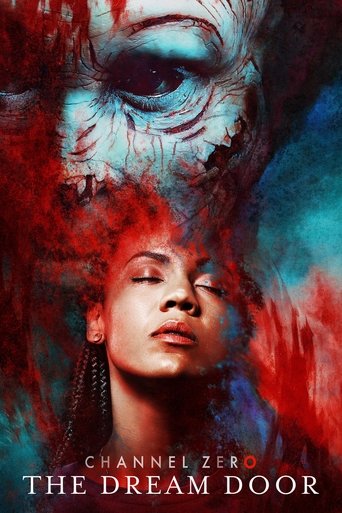
Channel Zero: Candle Cove
Nick Antosca · 2016 · Television
Shares dream logic.
83% shared signal
Twin Peaks: The Return
David Lynch · 2017 · Television
Shares slow-burn dread.
81% shared signal

Under the Skin (OST)
Mica Levi · 2013 · Record
Shares modern craft.
78% shared signal

House of Leaves
Mark Z. Danielewski · 2000 · Book
Shares a supernatural threat.
78% shared signal

Abyss
Chelsea Wolfe · 2015 · Record
Shares a bleak, unforgiving tone.
78% shared signal

The Fisherman
John Langan · 2016 · Book
Shares slow-burn dread.
76% shared signal

The Cipher
Kathe Koja · 1991 · Book
Shares dream logic.
76% shared signal
Questions about Black One
The things people actually ask about this record, answered.
How does Black One end?
With "Báthory Erzsébet", around sixteen minutes of corroded guitar bed under Malefic's vocal, recorded from inside a sealed coffin. The performance degrades across the track, the band never bring it forward, and the album thins to feedback and stops without any release.
Was the vocal on "Báthory Erzsébet" recorded in a coffin?
Yes. Scott Conner — Malefic of Xasthur — is claustrophobic, and the take was recorded with him sealed in a closed casket in the back of a hearse to produce a real rather than performed reaction. Both he and the band have confirmed it.
Who are the guest vocalists on Black One?
Malefic, of Xasthur, and Wrest — Jef Whitehead of Leviathan, who appears on "Cursed Realms (of the Winterdemons)". Both are American one-man black metal projects known for extremely lo-fi and hostile records.
Where should I start with Sunn O)))?
Not with this one. Flight of the Behemoth or White2 are better entry points for the drone material, and Monoliths & Dimensions — with brass, choir and strings — is the record that shows they are composers. Black One is for after you already know them.
Is Black One black metal?
It is drone metal facing black metal. There are no blast beats, almost no riffs and no drums for long stretches; what it borrows is the vocal register, the production ethic and two of the genre's practitioners, placed inside a drone record.
Is Black One frightening?
More reliably than almost anything else in this medium. We score it 095 on reality anchor and 006 on tone. The fear is not atmospheric — it is a voice in genuine distress at the bottom of a sixteen-minute track, which is not an effect any other record here attempts.
These are ranked against Black One, not against you.
Build your own tape →