On VHSCREAM’s six-axis scale, Twin Peaks: The Return (2017) is most extreme on the reality-anchor axis: 98 out of 100, where 0 is grounded realism and 100 is dream logic. 98% of the 105 horror works we have scored come in lower on that axis. How we score →
Twin Peaks: The Return is an eighteen-part 2017 television series directed by David Lynch and written with Mark Frost, twenty-five years after the original. Agent Dale Cooper is still inside the Black Lodge and his double has spent a quarter of a century loose in the world. We score it 098 on reality anchor — joint-first of 105 works, the surreal ceiling of the index — and 020 on pace.
Scored and reviewed by VHSCREAM on · how we score
Twin Peaks: The Return: the review
Twin Peaks: The Return is the strangest thing ever broadcast by a television network and it is also, in long stretches, deliberately unwatchable, and both of those are the same decision.
Lynch got eighteen hours and final cut and used them to make something that refuses almost every obligation the format has. The thing audiences wanted — Cooper, coffee, the town, the Double R — is withheld for sixteen hours. In its place: a man sweeping a floor in real time, a woman in a casino saying "Hellooo-oo" for several minutes, a long scene of a man counting money, a drunk honking a horn, a boy dying in a road while his mother screams, and two hours of Kyle MacLachlan playing a man with the cognition of a toddler. Viewers who treated it as a mystery to be solved were being told, repeatedly and by design, that solving was not on offer.
What it is instead is the most sustained piece of dread on television. The Return is a horror series, not a mystery series, and the horror is that time has passed and nothing was repaired. Twin Peaks is poorer, flatter and more addicted; Audrey is somewhere terrible; Sarah Palmer has something in her; Laura Palmer's murder solved itself and the evil simply moved.
Part 8 is the best hour of horror ever made for television
It begins with a murder in a field and then abandons the plot entirely: the Trinity nuclear test in July 1945, nine minutes of Penderecki and expanding light, a convenience store full of smoke, the Fireman in a theatre, a woman singing into a horn, an egg, and a creature crawling into a girl's mouth in New Mexico in 1956. It has almost no dialogue. It is the series' creation myth and it declines to be legible, and it is the single clearest statement in Lynch's work that the atomic bomb is where the century's evil entered.
The craft, hour by hour
Lynch shot it as an eighteen-hour film and it is paced like one: dialogue scenes play two or three times longer than drama allows, the sound design does the work the score would normally do, and the digital photography is flat and merciless in a way the 1990 series never was. The acting ranges from the greatest thing MacLachlan has done to deliberately amateur. Laura Dern's Diane is extraordinary, and the series' cruellest idea is what it reveals her to be.
Where it will lose people
It does not resolve. Multiple plots stop rather than end — the Las Vegas material, Audrey, Billy and Tina, the tulpa economy, the Jacoby shovels. A great deal of screen time is given to comedy that is not funny, intentionally. And Part 18 asks you to sit through a fourteen-minute night drive before it does the only thing it is going to do.
For the same unexplainable grief in a small town, Les Revenants; for the same marriage-as-possession, Possession; for the same apparatus that generates pages and explains nothing, House of Leaves.
The ending of Twin Peaks: The Return explained
Total spoilers from here. Everything above this line is spoiler-free.
The short answer: in Part 17 Cooper finally reaches 1989 and intercepts Laura Palmer on the night of her murder, leading her by the hand through the woods away from her death. She vanishes from his grip, screaming; in the present, the plastic-wrapped body is gone from the 1990 pilot and Pete Martell never finds it. In Part 18 Cooper and Diane drive four hundred and thirty miles to a crossing point, have sex in a motel, and wake as different people — he is "Richard", her note is signed "Linda". He finds a woman in Odessa, Texas who is Laura's face with another life and no memory of being her. He drives her back to Twin Peaks. The Palmer house is owned by a stranger. Standing in the road, Cooper asks "What year is this?" — Sarah Palmer's voice calls Laura's name from inside the house, the woman screams, and every light on the street goes out.
What is Judy in Twin Peaks: The Return?
The series' name for the thing above BOB. Gordon Cole explains that "Judy" is an anglicisation of Jowday, an extreme negative force that a Blue Rose task force has been pursuing since the 1940s, and that nobody is supposed to talk about it. The Return's implication is that Judy is the entity inhabiting Sarah Palmer, that it is the source of BOB rather than a peer, and that it is older than the Lodges — the convenience store and the 1945 sequence are both its arrival.
Who is Dougie Jones?
A manufactured double — the series calls them tulpas — created by Cooper's doppelgänger to be sent into the Lodge in his place when the exchange came due. When Cooper is finally expelled he lands in Dougie's life instead of his own and spends almost the entire series as a hollowed-out man who repeats the last words spoken to him. Lynch plays it absolutely straight for sixteen hours, which is either the boldest or the most contemptuous structural decision in modern television, and possibly both.
What happens in Part 8?
The Trinity test on 16 July 1945 opens a passage. The series shows the detonation for nine minutes over Penderecki's Threnody, then a convenience store above which woodsmen gather, then the creation of BOB as a bubble inside a mass of vomit. In response the Fireman and Señorita Dido send a golden orb bearing Laura Palmer's face into the world. Eleven years later, a woodsman walks into a New Mexico radio station, asks "Gotta light?", crushes a skull, and broadcasts a poem that puts every listener to sleep while a frog-moth crawls into the mouth of a sleeping girl who is almost certainly Sarah Palmer.
Did Cooper save Laura Palmer?
Not in any way that holds. He removes her from the night of her murder, and she is immediately taken out of his hand by something stronger; the body disappearing from the pilot footage confirms the change took, and the Odessa sequence confirms it did not help. The Return's position is that the past can be altered and that altering it produces a worse arrangement — a woman living someone else's life in Texas, with the thing still waiting in the house.
What does "What year is this?" mean?
It is Cooper's recognition that he has lost track of which timeline he is standing in. He has driven a woman who is and is not Laura Palmer to a house that is and is not the Palmer house, and the owner's name is wrong. The question is the series' final admission that the rescue has displaced him out of his own history, and Laura's scream answers it: whatever year it is, Sarah is still in the house and Laura still knows what happened to her.
What is the Dale Cooper doppelgänger?
The version of Cooper that left the Black Lodge in 1991 — the series calls him Mr C — who has spent twenty-five years as a criminal with Lodge abilities, hunting coordinates that will lead him to Judy. He manufactures tulpas, including Dougie and the Diane we spend the series with, and his death in Part 17 is almost perfunctory. The point of him is that he was loose the entire time nobody was looking.
How scary is Twin Peaks: The Return, actually?
Scored against the published rubric, here is what the numbers mean.
Reality anchor 098 is the ceiling — 103 of 105 works score lower. Nothing in the series is reliably sequential, a character can be two people, and the final hour relocates the protagonist into a history that is not his.
Pace 020 is extremely slow — only 22 works are slower. Scenes run several times longer than their content, and that duration is the mechanism.
Era bias 084 reads modern — 81 works score lower. Flat digital photography, a contemporary sound mix and an eighteen-hour streaming-era structure, used against a 1990 memory.
Viscera 048 is just under the median — 56 works score lower. A skull crushed by hand, a child killed by a truck, a head wound in a jail cell, an eye injury and a woman's body in a bed.
Tone 032 is bleak — 83 works score lower. Everyone who was damaged in 1990 is worse, and the one act of rescue in eighteen hours fails.
The threat at 025 is well into the supernatural — 24 works score lower. There are human criminals throughout, and all of them are downstream of something that arrived in 1945.
On jump scares: perhaps four in eighteen hours, and the woodsman in the radio station is the worst thing in it.
Twin Peaks: The Return on six axes of fear
Every work in the index is scored on six continuous axes of fear. This is what Twin Peaks: The Return looks like as a vector.
Disagree with a number? Say so on the axis itself. Nobody has confirmed this vector yet, and a score you challenge goes to the top of the queue to be re-scored by a human. Votes do not move the numbers — they decide what gets looked at first. How the scoring works →
Scored against the published rubric. This vector is a draft awaiting review — the method is public so you can argue with it.
Who should skip Twin Peaks: The Return
Skip it if you want the 1990 series continued. It is not a continuation. The town is a minor location, most of the original cast appear briefly or not at all, and the tone is dread rather than whimsy.
Skip it if a lack of resolution will ruin it for you. Several major plots simply stop, and the finale ends mid-scream.
Skip it if sexual violence is a hard limit. The series contains multiple assaults, and Sarah Palmer's history is treated as ongoing rather than past.
Content notes: child death, domestic and sexual violence including the abuse of a teenager, a skull crushed with bare hands, drug addiction and overdose, a graphic shooting of a child's mother, a prolonged depiction of a woman's catatonia, and the nuclear destruction of a desert staged as a creation myth.
Watch it if you want the most formally extreme thing ever put on television, you can give eighteen hours to a work that will not reward completion in the usual way, and you want Part 8.
If Twin Peaks: The Return is your kind of fear
The eight works closest to Twin Peaks: The Return in the index, ranked by distance across all six axes — not by genre label, and not by what other people watched.
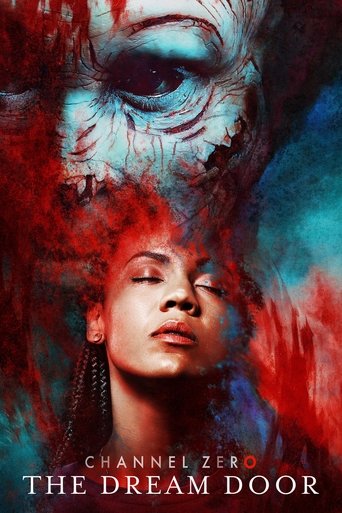
Channel Zero: Candle Cove
Nick Antosca · 2016 · Television
Shares modern craft.
87% shared signal

Black One
Sunn O))) · 2005 · Record
Shares dream logic.
81% shared signal

Abyss
Chelsea Wolfe · 2015 · Record
Shares slow-burn dread.
80% shared signal
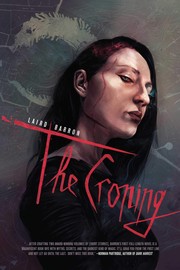
The Croning
Laird Barron · 2012 · Book
Shares a bleak, unforgiving tone.
80% shared signal

Under the Skin (OST)
Mica Levi · 2013 · Record
Shares dream logic.
79% shared signal

The Lighthouse
Robert Eggers · 2019 · Film
Shares modern craft.
79% shared signal
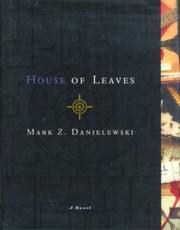
House of Leaves
Mark Z. Danielewski · 2000 · Book
Shares a supernatural threat.
78% shared signal

Hereditary (OST)
Colin Stetson · 2018 · Record
Shares a supernatural threat.
76% shared signal
See the full list of shows like Twin Peaks: The Return →
Questions about Twin Peaks: The Return
The things people actually ask about this series, answered.
What happens at the end of Twin Peaks: The Return?
Cooper reaches 1989 and leads Laura away from her murder; she is pulled out of his hand. He then crosses into another version of events with Diane, wakes as "Richard", finds Laura living in Texas as Carrie Page, and drives her to Twin Peaks. He asks what year it is, Sarah's voice calls Laura's name, Carrie screams, and the lights go out.
What is Judy in Twin Peaks?
An extreme negative force — an anglicisation of Jowday — that the Blue Rose task force has pursued since the 1940s and is forbidden to name. The series implies Judy is above BOB rather than beside him, that she entered the world with the Trinity test, and that she is inside Sarah Palmer.
Who is Dougie Jones in Twin Peaks: The Return?
A tulpa, manufactured by Cooper's doppelgänger as a substitute to send into the Black Lodge. Cooper is expelled into Dougie's life instead of his own and spends sixteen of the eighteen parts barely able to speak, repeating the last words said to him.
What does Part 8 of Twin Peaks: The Return mean?
It is the series' creation myth. The 1945 Trinity test opens a passage through which BOB is born; the Fireman answers by sending an orb carrying Laura Palmer's face. In 1956 a woodsman asking "Gotta light?" broadcasts a poem that puts a town to sleep while a frog-moth enters the mouth of a girl who is almost certainly Sarah Palmer.
Is Twin Peaks: The Return horror?
Yes, more than it is mystery. We score it 098 on reality anchor and 032 on tone: the fear comes from duration, from a town that has decayed, and from the discovery that the original murder solved nothing because the thing behind it was never the point.
Do I need to watch the original series and Fire Walk With Me first?
Yes to both. The Return assumes the 1990 series in full and depends on Fire Walk With Me more than on the original — Laura's final days, the ring, the convenience store and Judy all come from the film, and Part 17 edits the film's own footage into itself.
These are ranked against Twin Peaks: The Return, not against you.
Build your own tape →