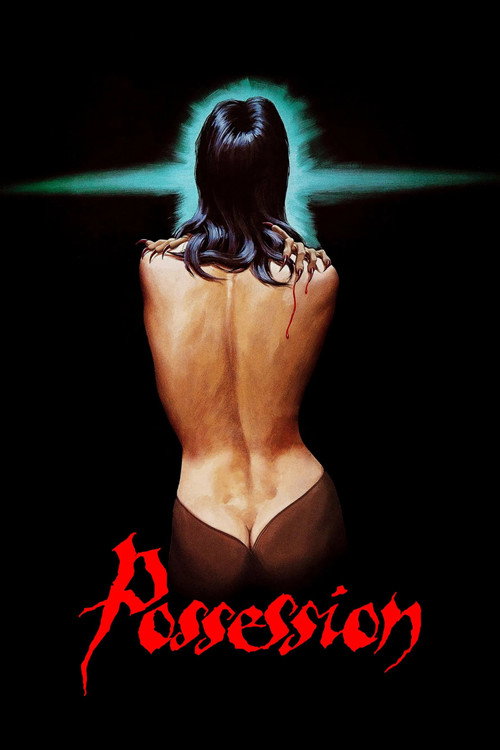
Film · 1981
Possession
Andrzej Zulawski
A divorce film that becomes something unspeakable in a Berlin stairwell.
Most extreme on TONE — a bleak, unforgiving tone at 006
On VHSCREAM’s six-axis scale, Possession (1981) is most extreme on the tone axis: 6 out of 100, where 0 is a bleak, unforgiving tone and 100 is gleeful black comedy. 7% of the 105 horror works we have scored come in lower on that axis. How we score →
Possession is a 1981 French-German film written and directed by Andrzej Żuławski, starring Isabelle Adjani and Sam Neill. A marriage ends in Berlin, and the wife begins keeping something in a rented apartment. We score it 006 on tone — only 7 works in an index of 105 are bleaker — and 092 on reality anchor, the second-furthest into dream logic of anything we hold.
Scored and reviewed by VHSCREAM on · how we score
Possession: the review
Żuławski wrote this during his own divorce and filmed it as though the form of cinema were also coming apart. Nobody in Possession performs at a level a normal film could contain. Adjani screams, convulses, laughs and bleeds through a performance that reportedly cost her years, and Sam Neill — twelve months before Omen III and a decade before Jurassic Park — matches her by playing a man whose reasonableness is itself a symptom.
Describing the plot makes it sound like a creature feature, which it technically is. Mark returns to Berlin from an unexplained job to find Anna wants to leave him. There is a lover, Heinrich, who is ridiculous. There is a daughter nobody is parenting. And there is an apartment on a condemned street where Anna is keeping a thing made of meat and tentacles that she is sleeping with and that is slowly becoming a man.
It is the most honest divorce film ever made
The creature is not a metaphor you decode and set aside. It is what the film has instead of an explanation, and it works because every human scene around it operates at the same pitch. These people do not argue like characters in a drama; they argue like people in the last month of something, saying the unsurvivable thing and then needing to continue the conversation anyway. The famous subway sequence — Adjani alone in a corridor, coming apart — is not a horror set piece. It is the film's thesis performed without dialogue.
Żuławski shot it in a divided Berlin that is doing an enormous amount of unspoken work. The Wall is in the background of scene after scene, nobody mentions it, and the film is about two people who have built one.
Why it was almost unseeable
It was cut, banned and bootlegged for decades — a UK video nasty, unavailable in anything like a watchable transfer in America until a 2021 restoration. Its reputation was built on degraded tapes, which is appropriate for a film that looks like it is degrading while you watch it.
It is not for everybody and it is not trying to be. There is no craft argument that makes the last twenty minutes legible. But nothing else in the index is doing what it does, and for the same register in a tighter film, The Fly is the obvious next step; for the same bleakness scored even lower, Martyrs.
The ending of Possession explained
Total spoilers from here. Everything above this line is spoiler-free.
The short answer: the film does not resolve, and it is built not to. Anna's creature finishes becoming a double of Mark. Anna asks Mark to kill her and he does. Mark is shot on a staircase by police. Helen — the schoolteacher who is Anna's physical double, played by Adjani in a second role — is left with Mark's son and with something at the door wearing Mark's face, while a green light comes through the window and the boy refuses to let it in.
What is the creature?
The film never says, and the refusal is the point. It arrives as a mass of tissue in a locked apartment, Anna feeds it, she has sex with it, and across the film it organises itself into a human shape that is recognisably Mark. The usable readings are that Anna is building a version of her husband she can stand, that the thing is the marriage itself given a body, and that it is simply a creature and the film means it literally. Żuławski offers no evidence for any of them over the others.
What is the point of the doubles?
Anna and Helen look identical and behave as opposites — Anna is chaos, Helen is patience and good with the child. The creature becomes a double of Mark. By the end the film has produced a second, more liveable version of both halves of a marriage, which is the cruellest joke in it: the replacements are better and nobody wanted them.
Why does the film become unreadable at the end?
Because the characters do. The final ten minutes abandon continuity of place and motive in a way that is clearly deliberate — the dialogue stops answering itself, the green light has no source, the boy's refusal is not explained. A film that has spent two hours arguing that a marriage ending is an event beyond the reach of sense ends by refusing to make sense. That is consistent rather than careless, and whether it is also satisfying is a matter of taste.
What does the green light mean?
Nothing the film will confirm. It arrives with the Mark-double, it is the last image, and it has been read as the thing coming for them, as an air raid, as grace, and as nothing at all. If you need the film to tell you, it will not.
How scary is Possession, actually?
Scored against the published rubric, here is what the numbers mean.
Tone 006 is the headline. Only 7 works in the entire index score lower, which makes this the second-bleakest film we have scored. There is no relief, no humour that is not painful, and no character who ends better than they began.
Reality anchor 092 is near the ceiling. 100 works score lower. It ranks joint-fourth on that axis of everything we score, and first among our films — not stylishly strange, structurally strange.
Viscera 060 is above the median and not what you remember it for — 73 works score lower. There is blood, there is the creature, and there is a famously difficult sequence with an electric carving knife. But the film's damage is almost entirely performative rather than visual.
Era bias 018 is deep analog, with only 31 works lower. Grainy 1981 Berlin on film stock, available light, and a mix that sounds like it was recorded in the room.
Threat 035 sits on the supernatural side, though the real harm in the film is done by two people to each other.
On jump scares: none. The film is relentless at a level that makes a jump scare irrelevant.
Possession on six axes of fear
Every work in the index is scored on six continuous axes of fear. This is what Possession looks like as a vector.
Where that puts it: #1 surreal · #2 bleakest
Disagree with a number? Say so on the axis itself. Nobody has confirmed this vector yet, and a score you challenge goes to the top of the queue to be re-scored by a human. Votes do not move the numbers — they decide what gets looked at first. How the scoring works →
Scored against the published rubric. This vector is a draft awaiting review — the method is public so you can argue with it.
Who should skip Possession
Skip it if you are going through a separation. This is the most accurate film about the end of a marriage that anybody has made, and accuracy is the problem. It was written inside one.
Skip it if you need a film to resolve. The last twenty minutes are deliberately illegible. Viewers who want an explanation leave angry, and the film has not misled them.
Skip it if extreme performance registers as bad acting to you. Nobody in this film is naturalistic. If Adjani's register reads as excessive rather than as the point, there is no version of the next two hours you will enjoy.
Content notes: graphic self-harm with a knife, a miscarriage, sexual content involving a non-human creature, the neglect of a child, suicide, and sustained psychological abuse in both directions.
Watch it if you want the strangest major film in the index, you can take a performance with no ceiling, and you would rather a film be true about something unbearable than clear about it.
Where to find it
Streaming on Philo · AMC+ · Criterion +3 ↗Physical copies on eBay ↗Availability from JustWatch via TMDB. We earn nothing from these links.
Nothing loads from YouTube until you press play.
If Possession is your kind of fear
The eight works closest to Possession in the index, ranked by distance across all six axes — not by genre label, and not by what other people watched.

The Cipher
Kathe Koja · 1991 · Book
Shares a bleak, unforgiving tone.
85% shared signal
Jacob's Ladder
Adrian Lyne · 1990 · Film
Shares dream logic.
84% shared signal
Candyman
Bernard Rose · 1992 · Film
Shares analog-era texture.
81% shared signal
Suspiria
Dario Argento · 1977 · Film
Shares dream logic.
79% shared signal
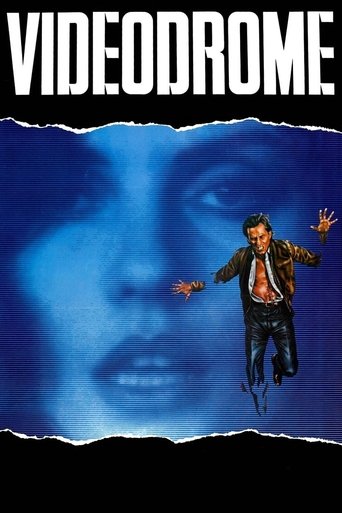
Videodrome
David Cronenberg · 1983 · Film
Shares analog-era texture.
78% shared signal
Ghost Story
Peter Straub · 1979 · Book
Shares a bleak, unforgiving tone.
78% shared signal

Profondo Rosso
Goblin · 1975 · Record
77% shared signal
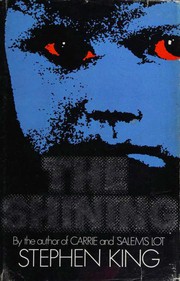
The Shining
Stephen King · 1977 · Book
77% shared signal
Questions about Possession
The things people actually ask about this film, answered.
What happens at the end of Possession (1981)?
Anna's creature completes its transformation into a double of Mark. Anna asks Mark to kill her and he does. Mark is shot by police on a staircase. Helen, Anna's physical double, is left with Mark's son as something wearing Mark's face arrives at the door and a green light fills the window. The film offers no resolution.
What is the creature in Possession?
The film never explains it. It begins as a mass of tissue in a rented apartment, Anna feeds it and sleeps with it, and over the film it becomes a double of her husband. The readings on offer are that she is building a bearable version of Mark, that it is the marriage given a body, or that it is simply a creature.
Is Possession (1981) based on a true story?
Not literally, but it is autobiographical in the way that matters. Żuławski wrote it during his own divorce and shot it in a Berlin split by a wall that the film never mentions. The creature is invented; the register of the arguments is not.
Why is Possession so hard to watch?
Because of the performances rather than the content. We score it 060 on viscera, above the median but not extreme. What makes it difficult is that every scene runs at maximum intensity — Adjani's work in particular reportedly took her years to recover from — and the film never lets up across two hours.
Why was Possession banned?
It was cut or refused in several territories and spent years on the UK video nasties list, largely for the self-harm sequence and the creature's sexual content. It remained effectively unavailable in a watchable transfer in the United States until a restoration in 2021, so its reputation was built on degraded bootlegs.
These are ranked against Possession, not against you.
Build your own tape →