
Book · 1991
The Cipher
Kathe Koja
A hole in a storage room that eats whatever is fed to it. Grimy, hypnotic.
Most extreme on TONE — a bleak, unforgiving tone at 010
The bleakest horror novels ever written →
On VHSCREAM’s six-axis scale, The Cipher (1991) is most extreme on the tone axis: 10 out of 100, where 0 is a bleak, unforgiving tone and 100 is gleeful black comedy. 16% of the 105 horror works we have scored come in lower on that axis. How we score →
The Cipher is a 1991 novel by Kathe Koja, the first title in Dell's Abyss line. Two people find a lightless hole in the floor of a storage room on the landing of a condemned apartment building, and begin lowering things into it. We score it 085 on reality anchor — thirteenth of 105 works — and 072 on viscera.
Scored and reviewed by VHSCREAM on · how we score
The Cipher: the review
The Cipher is the best novel ever written about having no talent and knowing it, and the hole in the floor is almost incidental.
Nicholas is a failed poet with a job he hates, a bad apartment and a drinking habit. Nakota is not his girlfriend in any sense either of them would defend; she is cruel, bored, magnetic, and the most convincing portrait of a destructive person in horror fiction. Their relationship is the engine of the novel and Koja writes it with no sentiment at all: they are not misunderstood, they are not tragic, they are two people who make each other worse and prefer it.
Then there is the Funhole. It is in a storage room on Nicholas's floor. It is round, it is black, it has no measurable bottom, and light does not work in it. They lower a mouse down on a string and it comes back alive and wrong. They lower a video camera and the tape records something that cannot be watched. Nicholas puts his hand in and comes out with a wound in his palm that will not close, that produces fluid, and that he begins to think of as a separate thing.
The prose is the point
Koja writes in a jagged, compressed, present-tense first person full of fragments and run-ons, and it is doing the work of the book: Nicholas's narration degrades as he does, the sentences break down, and the reader is inside a mind losing its grip rather than observing one. It is the most stylistically ambitious horror novel of its decade and it is a genuine barrier for some readers.
The real subject is what happens when a nobody becomes interesting
Nakota evangelises the hole. People arrive. There is a scene crowd, an art crowd, hangers-on in the hallway, somebody filming, somebody with a theory. Nicholas's hand becomes an attraction and then an exhibit, and he is interviewed, handled, photographed and used by people who want proximity to the only remarkable thing he has ever been near — which is a wound he did not earn. Koja's satire of the art world is savage and it is the funniest material in the book.
Where it is hard going
It is relentlessly unpleasant company. Nobody in it is likeable, nothing improves, and the plot in the middle third is largely people standing in a corridor. The style will lose a substantial number of readers in the first thirty pages. And the novel's refusal to explain the Funhole, which is correct, leaves some readers with nothing to hold.
For the same flesh-as-frontier with a theology attached, Books of Blood and Hellraiser; for the same unmeasurable space in a building, House of Leaves; for the same deterioration narrated from inside it, The Croning.
The ending of The Cipher explained
Total spoilers from here. Everything above this line is spoiler-free.
The short answer: by the final act Nicholas has been thoroughly used — his hand exhibited, his apartment invaded, his life conducted by other people — and the Funhole has changed him physically in ways the novel describes without ever explaining. Nakota's obsession has gone past curiosity into a determination to go into the hole herself. Nicholas barricades the storage room to keep her out. She gets through the barricade anyway, and he stops her: he kills her, and the novel is explicit and extremely unpleasant about how. The book ends there, with the question it has been building towards left deliberately open — whether Nicholas killed her to keep the Funhole from having her, or to keep her from having the Funhole. Koja does not adjudicate, and the final pages make both readings available.
What is the Funhole?
A hole in the concrete floor of a storage room, perhaps a metre across, absolutely black, with no bottom that any measurement finds. Light entering it does nothing. Objects lowered into it come back altered in ways that have no pattern: a mouse returns alive and inverted, a camera returns footage that resists being watched, a jar returns full of something. Nicholas eventually concludes it is not a thing at all but an absence — a negativity, a lack — and the novel offers no better account and no origin.
What happens to Nicholas's hand?
He reaches into the Funhole and the wound he comes out with never closes. It weeps, it opens further, it develops something like an interior, and it begins to be treated by the people around him as an object rather than an injury. The novel's most upsetting sustained thread is Nicholas's drift from describing the wound as his to describing it as something he is attached to, and the art-crowd sequences in which it is photographed and displayed are the book's cruellest joke.
Why does Nicholas kill Nakota?
The novel will not say, and the ambiguity is the ending. He has spent the book keeping her away from the Funhole, barricading it, lying about it; when she finally breaks through he stops her permanently. One reading is protective — the hole would have destroyed her and he could not allow it. The other is possessive — her going in would have ended the only thing that is his, and the relationship along with it. Both are consistent with everything we have seen of him, which is the point.
Does anyone go into the Funhole?
Nobody completes it on the page, which is the discipline of the book. Objects go in, parts of people go in, and the whole novel is structured around an aperture that is never crossed. Koja's decision to keep the Funhole a destination nobody reaches is what keeps it unexplained, and the most frequent misremembering of this novel is that Nicholas climbs in at the end. He does not.
What is the Abyss line?
Dell's horror imprint, launched in 1991 with The Cipher as its first title, intended to publish horror that was psychological, transgressive and stylistically adventurous rather than commercial. It ran for about five years and produced work by Koja, Poppy Z. Brite, Melanie Tem and others, and The Cipher won the Bram Stoker Award for best first novel. The line is the reason this book exists and the reason it was out of print for two decades afterwards.
How scary is The Cipher, actually?
Scored against the published rubric, here is what the numbers mean.
Reality anchor 085 is near the ceiling — only 12 works score higher. The Funhole has no rules, the narrator is degrading, and the prose itself stops being reliable.
Viscera 072 is high — 86 works score lower. An open hand wound described across the whole novel, altered animals, bodily fluid as a recurring image, self-injury, and a killing at the end.
Tone 010 is bleak — 17 works score lower. Nobody improves, nothing is learned, the one relationship in the book ends in a murder, and the final pages offer no relief of any kind.
Pace 028 is slow — 39 works are slower. Much of the middle is people in a hallway and a narrator who cannot organise his own account.
Era bias 040 is just under the midpoint. Camcorders, answering machines, photocopied zines and a 1991 art scene — technologically specific and now historical.
The threat at 040 is on the supernatural side — 54 works score lower, although the novel is careful that every cruelty in it is committed by a person.
On shocks: almost none. The book is a deterioration, not a sequence of events.
The Cipher on six axes of fear
Every work in the index is scored on six continuous axes of fear. This is what The Cipher looks like as a vector.
Where that puts it: #2 surreal · #4 bleakest · #5 goriest
Disagree with a number? Say so on the axis itself. Nobody has confirmed this vector yet, and a score you challenge goes to the top of the queue to be re-scored by a human. Votes do not move the numbers — they decide what gets looked at first. How the scoring works →
Scored against the published rubric. This vector is a draft awaiting review — the method is public so you can argue with it.
Who should skip The Cipher
Skip it if unlikeable narrators are the problem. Nicholas is self-pitying and Nakota is actively cruel, and the novel has no interest in redeeming either.
Skip it if experimental prose will frustrate you. The style is fragmented, present-tense and deliberately degrading, and it is the single most common reason readers abandon it.
Skip it if body horror involving an open wound is a hard limit. Nicholas's hand is described in detail on almost every page of the second half.
Content notes: a sustained open wound described in detail, self-injury, animal experimentation and cruelty, alcoholism, a psychologically abusive relationship throughout, a graphic killing, and bodily fluids used as a recurring image.
Read it if you want the most stylistically ambitious horror novel of the nineties, you can spend three hundred pages with two people who deserve each other, and you want a hole in the floor that is never explained by anybody.
Where to start with horror books →
Where to find it
Buy from an indie bookshop ↗Out-of-print copies on eBay ↗We earn nothing from these links.
If The Cipher is your kind of fear
The eight works closest to The Cipher in the index, ranked by distance across all six axes — not by genre label, and not by what other people watched.
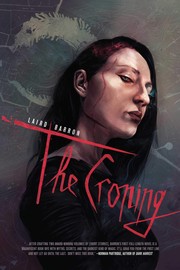
The Croning
Laird Barron · 2012 · Book
Shares a bleak, unforgiving tone.
87% shared signal
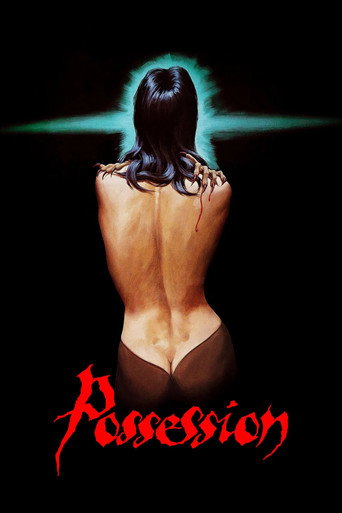
Possession
Andrzej Zulawski · 1981 · Film
Shares dream logic.
85% shared signal
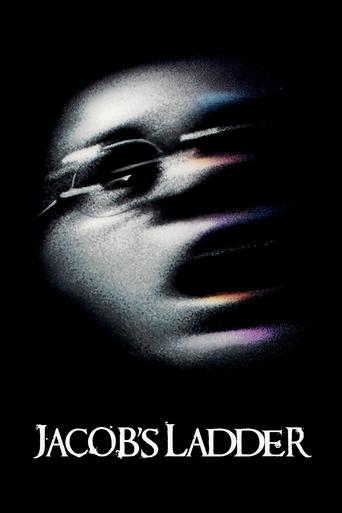
Jacob's Ladder
Adrian Lyne · 1990 · Film
Shares slow-burn dread.
83% shared signal
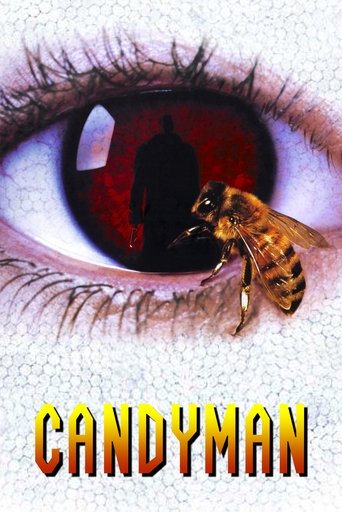
Candyman
Bernard Rose · 1992 · Film
Shares a bleak, unforgiving tone.
81% shared signal
Ghost Story
Peter Straub · 1979 · Book
Shares slow-burn dread.
76% shared signal

Black One
Sunn O))) · 2005 · Record
Shares dream logic.
76% shared signal
Videodrome
David Cronenberg · 1983 · Film
Shares explicit viscera.
76% shared signal
The Shining
Stephen King · 1977 · Book
75% shared signal
Questions about The Cipher
The things people actually ask about this book, answered.
What happens at the end of The Cipher?
Nakota finally breaks through the barricade Nicholas has built to keep her away from the Funhole, and he kills her to stop her going in. The novel ends there, deliberately leaving open whether he did it to protect her or to keep the hole for himself.
What is the Funhole in The Cipher?
A lightless hole in the floor of a storage room with no bottom anyone can find. Light does nothing in it and objects lowered into it come back altered without any pattern. Nicholas eventually decides it is not a thing but an absence, and the novel never explains it further.
What happens to Nicholas's hand in The Cipher?
He reaches into the Funhole and gets a wound that never closes. It weeps, opens further and develops an interior, and the people around him begin treating it as an exhibit rather than an injury — which is the novel's bleakest running joke.
Does Nicholas go into the Funhole?
No, and this is the most commonly misremembered thing about the book. Objects go in and parts of people go in, but nobody crosses it on the page. Koja keeps it a destination nobody reaches, which is why it stays unexplained.
Why does Nicholas kill Nakota?
The novel refuses to say. He has spent the book keeping her away from the hole, and when she breaks through he stops her for good. It reads equally as protecting her from it and as refusing to let her take the only remarkable thing in his life.
Is The Cipher worth reading?
If you can take the prose, yes — it won the Bram Stoker Award for best first novel and it is the best thing Dell's Abyss line published. We score it 085 on reality anchor and 010 on tone: unexplained, unrelenting, and far more interested in failure than in its hole.
These are ranked against The Cipher, not against you.
Build your own tape →