
Book · 1984
Books of Blood
The collection that fused sex, meat and myth and reset the whole genre.
Most extreme on VISCERA — explicit viscera at 092
The most extreme horror novels ever written →
On VHSCREAM’s six-axis scale, Books of Blood (1984) is most extreme on the viscera axis: 92 out of 100, where 0 is restraint over gore and 100 is explicit viscera. 94% of the 105 horror works we have scored come in lower on that axis. How we score →
Books of Blood is a sequence of short-story collections by Clive Barker, the first three volumes published in 1984. Thirty stories that replaced the genre's vocabulary of restraint with one of flesh, transformation and appetite. We score it 092 on viscera — joint-fourth of 105 works — and 070 on reality anchor.
Scored and reviewed by VHSCREAM on · how we score
Books of Blood: the review
Books of Blood is the most influential horror publication of the last fifty years and it reads, forty years on, like somebody kicking a door off its hinges.
The context matters. In 1984 British horror meant ghost stories and the Pan paperbacks; American horror meant King's small towns. Barker was a Liverpool playwright in his early thirties with no interest in either, and what he produced was a body of work in which the monstrous is erotic, the transformation is usually a promotion, and the thing in the dark very often wins and is right to. Stephen King's line about having seen the future of horror sold the books, and it was also a fair description of what happened: everything from the splatterpunk movement to modern body horror and most of weird fiction's current shape is downstream of these volumes.
The prose is the surprise. Barker writes in long, sensuous, carefully balanced sentences about appalling things, and the effect is closer to Angela Carter than to the genre around him. He is also, consistently, funny.
The essential stories
"In the Hills, the Cities" is the one to read first, and nothing else in horror is like it. Two Yugoslav towns, Popolac and Podujevo, meet every ten years to bind their entire populations together with rope and leather into two enormous human bodies and wrestle. One of them falls. The survivor goes mad and walks away across the country. It is a short story about a four-hundred-foot giant made of people, and it is completely serious.
"The Midnight Meat Train" is Barker's most perfect machine: a man falls asleep on the New York subway and finds the car that the city keeps for its butcher, and the ending reveals what the city is actually for.
"Dread" has no supernatural content at all. A graduate student called Quaid is writing about fear and decides to produce it experimentally in his friends — and the sequence in which he locks a vegetarian in a room with nothing but a steak is the most sustained piece of psychological cruelty Barker has written.
"Rawhead Rex", "Son of Celluloid", "Pig Blood Blues", "Sex, Death and Starshine" and "The Forbidden" are the other high points. The last of those became Candyman, and it is instructive to read it against the film: Barker's version is set on a Liverpool council estate and the race material that defines the adaptation is entirely Bernard Rose's addition.
Where it is uneven
It is a thirty-story sequence written fast and it shows. Several pieces are one image with a plot attached; the later volumes are weaker than the first three; and the recurring equation of sexual transgression with monstrosity is handled with much more nuance in some stories than others. Barker's habit of ending on a revelation occasionally substitutes for a conclusion.
For Barker's own film of this material, Hellraiser; for the adaptation of one of these stories, Candyman; for the novel that took his body-horror register furthest in prose, The Cipher.
The ending of Books of Blood explained
Total spoilers from here. Everything above this line is spoiler-free.
The short answer, for the frame: the sequence is bracketed by a story called "The Book of Blood" and a short coda. Simon McNeal is a young man at a house on Tollington Place who claims to be a medium and is being studied by the parapsychologist Mary Florescu, who is in love with him. He is a fraud — he produces his phenomena by hand, and Barker lets the reader in on it. The problem is that Tollington Place stands on a junction of the roads the dead travel, and the dead object to being impersonated. They come through, and they write on him: his body is opened in thousands of places and inscribed with their testimonies, in a script that has to be read off his skin. McNeal becomes the book. The stories that follow are what is written on him, and the closing coda returns to Florescu, who has read him and is now carrying what she read.
What is the frame story of Books of Blood?
"The Book of Blood", which opens the first volume, and "On Jerusalem Street", which closes the sixth. The frame establishes the collection's governing image — that the dead have highways, that those highways have junctions, and that a human body can be written on. It is the reason the thirty stories are presented as testimony rather than as fiction, and the first line of the first volume is the sequence's thesis in four words.
Which Books of Blood story should I read first?
"In the Hills, the Cities", from volume one, if you want to understand why Barker mattered — there is nothing else like it in the genre. "The Midnight Meat Train", from the same volume, if you want the most efficient demonstration of his craft. "Dread", from volume two, if you want to know how frightening he can be without any supernatural element at all.
What order are the Books of Blood in?
Six volumes, three published in 1984 and three in 1985, five stories each. Volumes one to three are the strongest and are frequently reprinted together; volume four is The Inhuman Condition, volume five is In the Flesh — which contains "The Forbidden" — and volume six closes the frame. Nothing requires reading in order except the first and last stories, which are a pair.
What has been adapted from Books of Blood?
"The Forbidden" became Candyman in 1992, relocated from Liverpool to Chicago. "Rawhead Rex" was filmed in 1986 with a script by Barker, who disliked the result enough that he directed Hellraiser himself the following year rather than hand over another adaptation. "The Midnight Meat Train" was filmed in 2008. "The Last Illusion" became Lord of Illusions in 1995, directed by Barker.
How explicit are the Books of Blood?
Among the most explicit things we hold, at 092 on viscera. Flaying, evisceration, mutilation presented as transcendence, a man written on in thousands of cuts, bodies bound together into one body, a cinema that digests people, sexual content fused with injury throughout. Barker's position — stated in the stories rather than argued — is that the body is the only subject, and the collection is relentless about it.
How scary is Books of Blood, actually?
Scored against the published rubric, here is what the numbers mean.
Viscera 092 is near the ceiling — only 3 works score higher. Flaying, evisceration, a body inscribed in thousands of cuts, a slaughterhouse on a train, and transformation rendered as surgery.
Reality anchor 070 leans towards dream logic — 78 works score lower. Several stories offer no account of their own premise, and two of the best are built on images that cannot be reconciled with the world.
Tone 045 is close to the midpoint — 96 works score lower, which is higher than the content suggests: Barker is frequently delighted, often funny, and his monsters usually win, which he presents as a reasonable outcome.
Pace 062 is on the shock side — 83 works are slower. These are short stories built to arrive, and most of them run to a reveal.
Era bias 022 reads analog — 36 works score lower. 1984 and 1985, in a Britain of council estates, repertory theatres, borstals and Underground stations.
The threat at 025 is on the supernatural side — 24 works score lower, with the notable exception of "Dread", which has no supernatural content and is the most frightening story in the sequence.
On shocks: constant. This is short fiction and nearly every piece is engineered to land one.
Books of Blood on six axes of fear
Every work in the index is scored on six continuous axes of fear. This is what Books of Blood looks like as a vector.
Where that puts it: #2 goriest · #3 supernatural · #4 surreal
Disagree with a number? Say so on the axis itself. Nobody has confirmed this vector yet, and a score you challenge goes to the top of the queue to be re-scored by a human. Votes do not move the numbers — they decide what gets looked at first. How the scoring works →
Scored against the published rubric. This vector is a draft awaiting review — the method is public so you can argue with it.
Who should skip Books of Blood
Skip it if extreme gore is a hard limit. At 092 on viscera this is among the most explicit works we hold, and the explicitness is the point rather than a side effect.
Skip it if sexual violence is a hard limit. Multiple stories fuse sex with injury and at least three turn on an assault.
Skip it if you want the genre's monsters to be wrong. Barker's frequently are not, and readers who need a moral framework will find several of these stories genuinely hostile.
Content notes: flaying and evisceration throughout, a body mutilated in thousands of cuts, sexual violence in several stories, sexual content fused with injury as a recurring mode, the killing and consumption of humans as an institution, animal cruelty, child death, prolonged psychological torture in "Dread", and bodies bound together and destroyed en masse.
Read it if you want the collection that reset the genre, you can take unrelenting physicality, and you want to read "In the Hills, the Cities" — which is, by a distance, the strangest short story in horror.
Where to start with horror books →
Where to find it
Buy from an indie bookshop ↗Out-of-print copies on eBay ↗We earn nothing from these links.
If Books of Blood is your kind of fear
The eight works closest to Books of Blood in the index, ranked by distance across all six axes — not by genre label, and not by what other people watched.
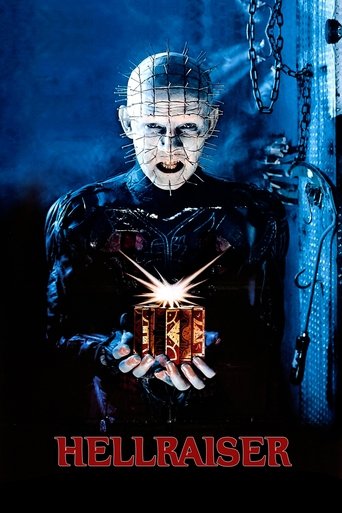
Hellraiser
Clive Barker · 1987 · Film
Shares explicit viscera.
87% shared signal
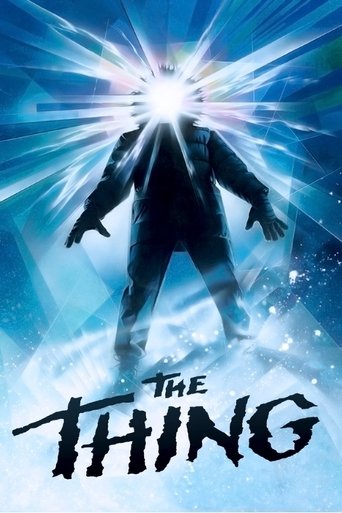
The Thing
John Carpenter · 1982 · Film
Shares analog-era texture.
79% shared signal
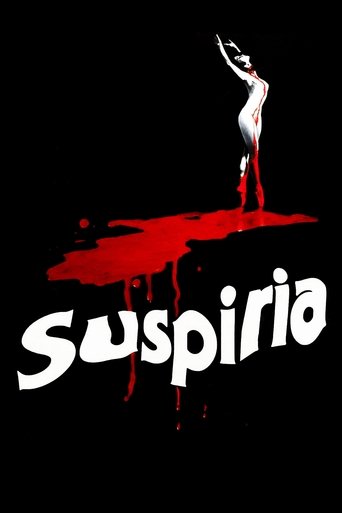
Suspiria
Dario Argento · 1977 · Film
Shares a supernatural threat.
79% shared signal

Profondo Rosso
Goblin · 1975 · Record
Shares dream logic.
78% shared signal
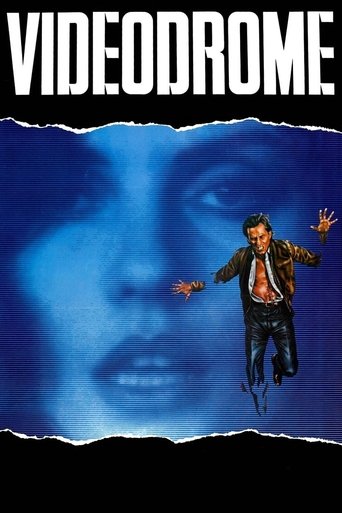
Videodrome
David Cronenberg · 1983 · Film
Shares analog-era texture.
78% shared signal

Suspiria (OST)
Goblin · 1977 · Record
Shares a supernatural threat.
78% shared signal
The Fly
David Cronenberg · 1986 · Film
Shares explicit viscera.
75% shared signal
Alien
Ridley Scott · 1979 · Film
72% shared signal
Questions about Books of Blood
The things people actually ask about this book, answered.
What is the frame story of Books of Blood?
Simon McNeal fakes mediumship at a house built on a junction of the roads the dead travel. The dead object to being impersonated, come through, and write their testimonies on his body in thousands of cuts. The stories are what is written on him, and the parapsychologist studying him reads it.
Which Books of Blood story is the best?
"In the Hills, the Cities" — two Yugoslav towns that bind their whole populations into enormous human bodies and wrestle — is the most original. "The Midnight Meat Train" is the best-made. "Dread" is the most frightening, and has no supernatural content at all.
How many Books of Blood are there?
Six volumes of five stories each, three published in 1984 and three in 1985. Volumes one to three are the strongest; volume five contains "The Forbidden", which became Candyman; and volume six closes the frame story that volume one opens.
What was adapted from Books of Blood?
"The Forbidden" became Candyman (1992), moved from Liverpool to Chicago. "Rawhead Rex" was filmed in 1986, badly enough that Barker directed Hellraiser himself next. "The Midnight Meat Train" was filmed in 2008, and "The Last Illusion" became Lord of Illusions in 1995.
How gory are the Books of Blood?
Extremely. We score the sequence 092 on viscera, near the top of our index. Flaying, evisceration, a man inscribed in thousands of cuts, industrial human slaughter and sex fused with injury all recur, and Barker treats the body as the only real subject.
Is Books of Blood still worth reading?
Yes, and it is the single most load-bearing horror publication since the war. Almost all modern body horror, splatterpunk and a great deal of current weird fiction runs back through these thirty stories, and the best of them have not been equalled.
These are ranked against Books of Blood, not against you.
Build your own tape →