Film · 2025
Together
Michael Shanks
A couple drink from a flooded cave and their bodies begin to agree with each other.
65Hard going to sit through, out of 100 — mostly how bleak it is
- PaceBuilds, then strikes44
- ThreatMostly supernatural28
- GoreUnflinching86
- ToneGrim, with air40
- RealityDream logic68
Era bias 88 · Thoroughly modern. Texture rather than fear, so it is not part of the grade. All six scores →
The goriest horror movies ever made →
On VHSCREAM’s six-axis scale, Together (2025) is most extreme on the viscera axis: 86 out of 100, where 0 is restraint over gore and 100 is explicit viscera. 88% of the 320 horror works we have scored come in lower on that axis. How we score →
Together is a 2025 Australian body horror film written and directed by Michael Shanks. Millie and Tim, a couple roughly a decade into a relationship neither will name as finished, move to the countryside, fall into a flooded cave and drink the water in it. Afterwards their bodies begin to join. We score it 086 on viscera and 068 on reality anchor, and it is the most literal film in this index.
Scored and reviewed by VHSCREAM on · how we score
How scary is Together, actually?
Scored against the published rubric, here is what the numbers mean for a viewer.
Viscera 086 is the signature. Only 29 works score higher. Skin, hair, teeth and bone are all involved, the effects are practical, and the camera does not cut away. The separation sequence is as explicit as anything in this index outside extreme horror.
Reality anchor 068 is high for a film this domestic. 238 works score lower. The house, the job, the schoolroom and the argument are all completely ordinary; the biology is not, and the film never offers a rule set that would make it ordinary either.
Threat 028 is the supernatural end. 206 works score higher. There is no antagonist. A hole with water in it does something to two people who went in it, and the only human with knowledge of it is helpful.
Pace 044 is on the dread side, barely. 188 works are faster. The fusion accumulates across weeks, with roughly four hard escalations, and the film spends most of its time on the conversations between them.
Tone 040 is bleak with a lot of comedy in it. 242 works score lower. The jokes are real and they are about domestic irritation, which keeps working right up to the point where it stops.
Era bias 088 is the modern end. 30 works score higher. Clean digital, bright country light, and a sound mix that puts every wet detail front and centre.
On jump scares: two or three. The film mostly frightens you by holding still and letting you see what has happened to someone's arm.
Who should skip Together
Skip it if body horror is a hard limit. The transformations are shown in close detail and the film's centrepiece is an attempted surgical separation of two conscious people.
Skip it if you are in or leaving a long relationship you have not discussed. This film is specifically about the version of love that is indistinguishable from fear of being alone, and viewers have found it genuinely upsetting for reasons unrelated to the gore.
Skip it if you need a mythology that holds together. The cult explains and never threatens, and the rate of the fusion is governed by the plot rather than by anything stated.
Content notes: extensive graphic body horror, an attempted surgical separation, self-harm, dental and nail trauma, animal death, a drowning, suicidal ideation, and sustained emotional coercion between partners.
Watch it if you want the most committed practical body horror in years, you can take a metaphor that refuses to be subtle, and two very good actors doing a decade of marriage in ninety minutes sounds worth the rest of it.
Together on six axes of fear
Every work in the index is scored on six continuous axes of fear. This is what Together looks like as a vector — and what each ten-point band looks like across everything else we hold.
Draft score — awaiting human review. About these scores
Disagree with a number? Say so on the axis itself. Nobody has confirmed this vector yet, and a score you challenge goes to the top of the queue to be re-scored by a human. Votes do not move the numbers — they decide what gets looked at first. How the scoring works →
Scored against the published rubric. This vector is a draft awaiting review — the method is public so you can argue with it.
Together: the review
The metaphor is the plot, and the film refuses to be shy about it
Most body horror hides its subject under the biology. Together puts it on the table in the first twenty minutes: these two people have been together so long that neither can tell where the relationship ends and they begin, one of them wants out and will not say so, and the other would rather die than be left. Then the film makes that physical. Skin adheres. Hair grows into the wrong scalp. A hand will not come away from a back.
Running a metaphor this openly should not work and mostly it does, for two reasons. The first is that Dave Franco and Alison Brie are married in real life and play a couple with a decade of unspoken grievance with a specificity no amount of rehearsal normally buys — the way an argument about a job offer is really about something eight years old, the half-sentences, the unbearable politeness. The second is that the film is funny. Not comic relief; funny in the way people are funny when they are frightened and still have to discuss who is going to call the plumber.
The horror arrives as logistics
The best stretch of Together is the practical middle: two adults trying to conduct a normal week while their bodies attempt to combine. Sleeping in separate rooms stops being a marital metaphor and becomes a medical necessity. There is a sequence involving a bathroom door and a decision about separation that is as hard to watch as anything in 2025, and it is hard because of what it costs the relationship rather than because of the blood.
Damon Herriman arrives as the local who knows what the cave is and plays him as entirely reasonable, which is the correct and most upsetting choice. The mythology he brings — a local congregation built around two becoming one, with the Symposium quoted more or less straight — is the weakest material in the film. The film is better when the cave is simply a hole with water in it.
Where it strains
The cult subplot exists to deliver exposition and never becomes a threat in its own right. The film's rules are elastic: the rate of fusion accelerates when the plot needs urgency and pauses when it needs a conversation. And a viewer who does not accept the premise in the first act has nothing to hold onto, because there is no second reading available — this film means exactly what it appears to mean.
Against that, it is the most committed body horror in years. The effects are practical and specific and the film never cuts away from a transformation to spare you. It earns its last image, which is the thing a film like this almost always fails to do.
The ending of Together explained
The ending, in full. Open it when you have seen it.
The short answer: they merge completely. After one attempt at separation and one attempt at escape, Tim and Millie fuse into a single body, and the film's final image is the two of them as one creature, alive, and — in the terms the film has set up — no longer in any danger of being left.
Here is how the film gets there.
What is in the cave?
The film never names it and that is the right call. There is a flooded cavern under the property with something in the water, and a local religious tradition has grown up around it that understands the effect as a blessing: the fusion of two people into one. Whether that tradition created the effect, discovered it or merely explains it is left open.
Why does it affect Tim and Millie and not anybody else?
Because they both drank, and because the film's logic is that the water acts on attachment. Everything we see suggests the effect works on a bond that is already present and already asymmetrical — Tim's dependence is total, Millie's has become obligation, and the fusion proceeds along exactly that gradient, pulling her toward him.
What is the separation scene?
About two thirds through, with the fusion well advanced, they attempt to cut themselves apart. It is the most explicit sequence in the film and the most important, because it fails in a way that establishes the terms of the ending: separation is possible and it is survivable and neither of them can go through with it.
How does the film actually end?
They stop resisting. The last movement is not a defeat imposed from outside — nobody forces it, the cult does not win, there is no final chase. They choose each other in the only way the film has left available, and the result is one body with two people in it. The final shot holds on the creature long enough that you have to decide for yourself whether you have watched a tragedy or a wedding.
Is the ending meant to be romantic?
Both, and the discomfort is the point. Everything the film has shown about this relationship says the ending is a catastrophe. Everything the film has shown about these two people says it is what they wanted. Together declines to break the tie.
If Together is your kind of fear
The eight works closest to Together in the index on the five axes that describe fear, the same medium first — not by genre label, and not by what other people watched.
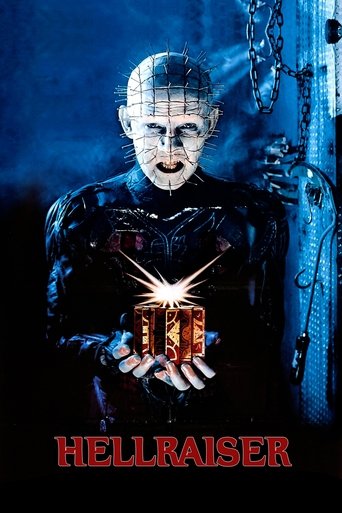
Hellraiser
Clive Barker · 1987 · Film
Shares explicit viscera.
86% shared signal
Hellraiser
David Bruckner · 2022 · Film
Shares dream logic.
85% shared signal
Hellbound: Hellraiser II
Tony Randel · 1988 · Film
Shares explicit viscera.
84% shared signal
Hellraiser III: Hell on Earth
Anthony Hickox · 1992 · Film
Shares dream logic.
84% shared signal
Sinners
Ryan Coogler · 2025 · Film
84% shared signal
Jason Goes to Hell: The Final Friday
Adam Marcus · 1993 · Film
Shares a threat that is not human.
83% shared signal

Books of Blood
Clive Barker · 1984 · Book
Shares a threat that is not human.
88% shared signal
The Hellbound Heart
Clive Barker · 1986 · Book
86% shared signal
See the full list of movies like Together →
More lists like these: Movies like Sinners
Questions about Together
The things people actually ask about this film, answered — including how it ends.
What happens at the end of Together?
Tim and Millie fuse completely into one body. After a failed attempt to cut themselves apart and a failed attempt to get away, they stop resisting, and the final image is the two of them as a single living creature. The film does not say whether to read it as a tragedy or as a resolution.
What is the water in the cave in Together?
Never named. There is a flooded cavern beneath the property, and a local religious tradition understands what is in it as a blessing that joins two people into one. The film leaves open whether the tradition caused the effect, found it, or simply built a story around it.
Is Together based on a true story?
No. It is an original screenplay by Michael Shanks, his first feature, and the mythology it uses is invented, though it quotes Plato's Symposium on the origin of love more or less directly.
Is Together very gory?
Yes. We score it 086 on viscera, higher than 283 of the 320 works in this index. The effects are practical and the film holds on them, and the attempted separation is the single most explicit sequence in it.
Is Together a comedy?
Partly, and the comedy is one of the reasons it works. We score it 040 on tone, so it sits on the bleak side, but the jokes are constant and domestic. For the register done with the comedy in front, horror comedy is the guide.
What should I watch after Together?
The Fly for body horror as a love story that ends the only way it can, Possession for a marriage ending in a form no other film has attempted, and body horror for the guide to the subgenre.
These are ranked against Together, not against you.
Build your own tape →