
Book · 1986
The Hellbound Heart
A puzzle box, an appetite, and a brother rebuilt out of the attic floor.
75Hard going to sit through, out of 100 — mostly how bleak it is
- PaceBuilds, then strikes44
- ThreatHuman and not40
- GoreUnflinching92
- ToneBleak22
- RealityDream logic78
Era bias 20 · Analog-leaning. Texture rather than fear, so it is not part of the grade. All six scores →
The most extreme horror novels ever written →
On VHSCREAM’s six-axis scale, The Hellbound Heart (1986) is most extreme on the viscera axis: 92 out of 100, where 0 is restraint over gore and 100 is explicit viscera. 94% of the 320 horror works we have scored come in lower on that axis. How we score →
The Hellbound Heart is a 1986 novella by Clive Barker, in which a man opens a puzzle box in search of a pleasure he has exhausted every other route to and is taken apart by what answers. We score it 092 on viscera — only 7 works in an index of 320 are more explicit — and 078 on reality anchor.
Scored and reviewed by VHSCREAM on · how we score
How scary is The Hellbound Heart, actually?
Scored against the published rubric, here is what the numbers mean.
Viscera 092 is near the explicit ceiling of prose in this index — only 7 works go further and 10 tie it. Flaying, reassembly, hooks and chain, described without flinching.
Reality anchor 078 is well into the surreal half, with 40 works further out. There is another order of being with its own geography and the book never explains it.
The threat 040 leans inhuman — 157 works lean further that way. The Cenobites are the thing nobody escapes, and Julia does most of the killing.
Tone 022 is on the bleak side, with 149 works lower. There is a cold relish in the prose and no warmth anywhere in the plot.
Pace 044 sits just under the midpoint. A novella moves, and this one has four or five genuine shocks in a hundred and sixty pages.
Era bias 020 is firmly analog. This is 1986 prose in a formal English register, and it reads like it.
Who should skip The Hellbound Heart
Skip it if explicit body horror is a line. This is one of the most explicit things on this shelf and the explicitness is the argument.
Skip it if you want Pinhead. He is not here. The film invented him.
Skip it if sexual violence and sexual appetite as horror are too near. The whole novella runs on them.
Read it for the prose, for Frank, and for one of the few horror premises that is genuinely a theology rather than a monster. It sits with Books of Blood as the other half of what Barker did in the mid-eighties, and with Hellraiser as the thing he then filmed himself.
The Hellbound Heart on six axes of fear
Every work in the index is scored on six continuous axes of fear. This is what The Hellbound Heart looks like as a vector — and what each ten-point band looks like across everything else we hold.
Where that puts it: joint #3 goriest · #7 surreal
Draft score — awaiting human review. About these scores
Disagree with a number? Say so on the axis itself. Nobody has confirmed this vector yet, and a score you challenge goes to the top of the queue to be re-scored by a human. Votes do not move the numbers — they decide what gets looked at first. How the scoring works →
Scored against the published rubric. This vector is a draft awaiting review — the method is public so you can argue with it.
Where to start with horror books →
Where to find it
Buy from an indie bookshop ↗Out-of-print copies on eBay ↗We earn nothing from these links.
The Hellbound Heart: the review
A hundred and sixty pages that invented an iconography the film industry has been quoting for forty years, and which is colder, shorter and better than almost everything made from it.
Frank Cotton has run out of appetites. He has had every variety of sex available to a man with money and no scruples, and found the floor of each one. So he buys the Lemarchand configuration — a lacquered puzzle box said to open onto the Order of the Gash, who are reported to deal in sensation without limit — and he solves it in an empty room at the top of his dead mother's house.
What arrives is not what he ordered. The Cenobites are theologians of sensation, and their position is that pleasure and pain stopped being distinguishable several centuries ago. They take him apart and take the pieces away.
Then Rory Cotton, Frank's duller brother, moves into the house with his wife Julia, who slept with Frank once before the wedding and has thought about almost nothing else since. Rory cuts his hand carrying furniture upstairs. The blood goes into the floorboards of the room at the top of the house. Frank, or something that remembers being Frank, begins to come back up through it.
Barker's prose is the reason it holds
The novella is written in a register almost nobody else attempts: formal, unhurried, specific about anatomy, and entirely without disgust. Barker describes a man reassembling himself out of a floor the way a naturalist describes a moult. There is no shudder in the sentences, which is what makes them hard to read.
It is also tightly built. Every element pays twice. The box is a solution and a summons. Julia's boredom is a motive and a method — she picks men up in pubs and brings them to the attic because Frank needs meat and she needs something to feel. Kirsty, Rory's friend, is in the book because she loves a man who does not notice, and that is exactly the quality that makes her the only person who looks closely at anything.
Frank is the best piece of writing in it. He is not a tragic seeker. He is a bore with a credit line, and the novella's cruellest joke is that the thing he spent his life chasing was always going to be administered by professionals who find him tedious.
Where it frustrates
Rory is thin to the point of being a device, which the ending depends on and never quite earns.
The Cenobites are described rather than characterised, and the single most quoted thing about the property — the one with the pins — barely exists here. Readers arriving from the film find four largely interchangeable figures in a room, and the disappointment is real even though the novella is the better work.
The ending of The Hellbound Heart explained
The ending, in full. Open it when you have seen it.
What happens at the end of The Hellbound Heart?
Kirsty takes the box from the attic and solves it, which summons the Cenobites to her instead of to Frank. They intend to take her. She bargains: she will give them Frank, who escaped them, if they let her go.
They accept, with a condition — she has to get him to admit who he is.
Frank, now wearing Rory's skin, has already killed Rory and is playing him. Kirsty gets the admission out of him in the attic, and the Cenobites arrive and hook him back into pieces. Julia, already dying, is taken as well. The room empties.
Then Kirsty is left with the box, and the last movement of the novella is quiet and much worse than the violence: the configuration reassembles itself, intact, and something that is not finished with her takes an interest. She throws it into a bonfire. A figure walks out of the fire carrying it.
What are the Cenobites in The Hellbound Heart?
An order of beings who were, the novella implies, once people, and who have pursued sensation past the point where the categories hold. They call themselves theologians and behave like surgeons. They are not demons, they do not bargain in souls, and they have no interest in corrupting anybody — they answer a summons, they deliver what was requested, and the horror is entirely in the gap between what the customer meant and what the word means to them.
Barker gives them almost no physical description beyond their mutilations and their calm. There is no hierarchy, no leader and no pinhead; the most memorable of them in the book is a figure whose voice is described as a child's.
How does the puzzle box work?
The Lemarchand configuration is a lacquered box with multiple solutions. Solving it is not a trick but a petition: it signals that somebody has asked, deliberately and with full understanding, to be shown the order's work. It opens a corner of the room onto their realm, and it closes again when they are done.
The novella is specific that it cannot be opened by accident and that it is not evil. It is a door, it is beautifully made, and everyone who goes through it asked to.
Is The Hellbound Heart the same story as Hellraiser?
The same plot, a different emphasis, and Barker directed the film himself the following year. The names change — Rory becomes Larry, Kirsty becomes his daughter rather than a friend who loves him, which turns a story about unrequited attention into a family story. Pinhead does not exist in the novella; the figure he grew out of is one of four, has no rank, and speaks softly.
What the film adds is iconography. What the novella keeps is the argument: that this is a transaction, that the customer is always a bore, and that the professionals are not interested in him.
Why does Julia help Frank?
Because the one hour she spent with him is the only thing in her life that registered, and the marriage she has instead is a long quiet nothing. Barker is careful not to make it love. It is appetite recognising appetite, and then being given a use.
Her murders are the most uncomfortable passages in the book precisely because they are so procedural — a man in a pub, a drive, a flight of stairs, a hammer, and the mess carried upstairs in a bucket.
If The Hellbound Heart is your kind of fear
The eight works closest to The Hellbound Heart in the index on the five axes that describe fear, the same medium first — not by genre label, and not by what other people watched.

The Cipher
Kathe Koja · 1991 · Book
Shares dream logic.
82% shared signal
Hellraiser
David Bruckner · 2022 · Film
Shares a bleak, unforgiving tone.
90% shared signal
Hellbound: Hellraiser II
Tony Randel · 1988 · Film
Shares explicit viscera.
90% shared signal
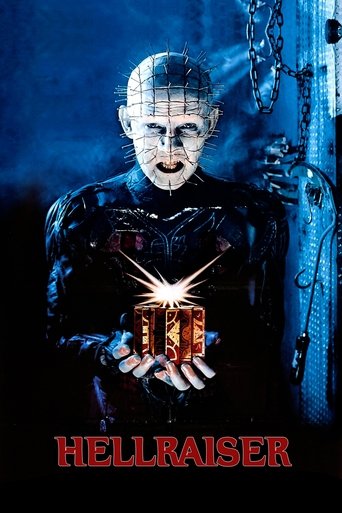
Hellraiser
Clive Barker · 1987 · Film
Shares explicit viscera.
86% shared signal
Together
Michael Shanks · 2025 · Film
Shares dream logic.
86% shared signal
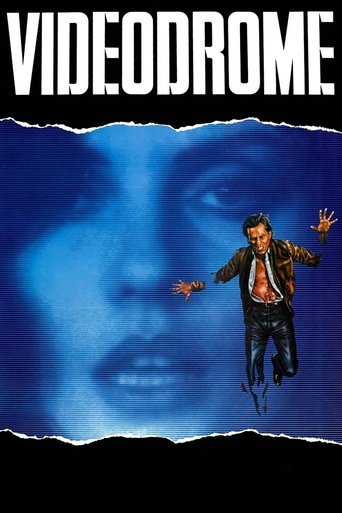
Videodrome
David Cronenberg · 1983 · Film
84% shared signal
Men
Alex Garland · 2022 · Film
Shares a bleak, unforgiving tone.
83% shared signal
Penny Dreadful
John Logan · 2014 · Television
81% shared signal
More lists like these: Movies like Together · Movies like Videodrome
Questions about The Hellbound Heart
The things people actually ask about this book, answered — including how it ends.
What happens at the end of The Hellbound Heart?
Kirsty solves the box, the Cenobites come for her, and she bargains Frank's return for her own release on condition she makes him confess. She does, in the attic, and they take him and Julia apart. The box then reassembles itself and something walks out of the fire she throws it into.
What are the Cenobites in The Hellbound Heart?
An order of beings who pursued sensation until pleasure and pain stopped being separable. They call themselves theologians and behave like surgeons. They are not demons, they do not trade in souls, and they only ever arrive because somebody deliberately asked them to.
How does the puzzle box work in The Hellbound Heart?
The Lemarchand configuration has several solutions, and solving one is a petition rather than a trick — it signals that a person has knowingly asked to be shown the order's work. The novella is explicit that it cannot be opened by accident and is not itself evil.
Is The Hellbound Heart different from Hellraiser?
Same plot, different emphasis. Barker filmed it himself a year later, changing Kirsty from a friend who loves Rory into Larry's daughter, which makes it a family story. Pinhead does not exist in the novella — the figure he came from is one of four, unranked, and speaks in a soft voice.
Why does Julia help Frank in The Hellbound Heart?
Because one hour with him before her wedding is the only thing in her life that ever registered, and her marriage is a long quiet nothing. Barker never calls it love. It is appetite recognising appetite and then being handed a use for itself.
How explicit is The Hellbound Heart?
Extremely. We score it 092 on viscera, high in the explicit half of the index, and the explicitness is the book's argument rather than its decoration — Barker describes flaying and reassembly in the unhurried register of a naturalist, with no disgust in the sentences at all.
These are ranked against The Hellbound Heart, not against you.
Build your own tape →