Film · 1988
Hellbound: Hellraiser II
Tony Randel
Through the box and into the labyrinth. Skinless, sprawling and wildly imaginative.
73Hard going to sit through, out of 100 — mostly how bleak it is
- PaceBuilds, then strikes56
- ThreatHuman and not40
- GoreUnflinching92
- ToneBleak32
- RealityPure nightmare logic86
Era bias 12 · Analog to the bone. Texture rather than fear, so it is not part of the grade. All six scores →
The goriest horror movies ever made →
Part of a series: Hellraiser movies in order →
On VHSCREAM’s six-axis scale, Hellbound: Hellraiser II (1988) is most extreme on the viscera axis: 92 out of 100, where 0 is restraint over gore and 100 is explicit viscera. 94% of the 320 horror works we have scored come in lower on that axis. How we score →
Hellbound: Hellraiser II is a 1988 British-American supernatural body horror film directed by Tony Randel. Kirsty Cotton wakes in a psychiatric hospital whose chief doctor is secretly obsessed with the puzzle box, and the sequel follows her through it into Hell itself. We score it 092 on viscera and 086 on reality anchor.
Scored and reviewed by VHSCREAM on · how we score
How scary is Hellbound: Hellraiser II, actually?
Scored against the published rubric, here is what the numbers mean.
The threat at 040 is between the poles — 157 works score lower. The Cenobites and Leviathan are supernatural, but a doctor's obsession and Julia's hunger choose every victim.
Viscera 092 is near the explicit end — 302 works score lower. Skinless bodies, a man cutting himself on a mattress, flayings and a surgeon-monster, even after six minutes were cut.
Tone 032 is bleak — 216 works score lower. Almost everyone dies, but Channard's camp and Julia's relish lift it towards dark comedy.
Pace 056 is on the shock side of the middle, with 167 works slower. It moves in bursts of spectacle with a lot of wandering between them.
Era bias 012 reads analog — 41 works score lower. Prosthetics, matte paintings and practical sets throughout.
Reality anchor 086 is surreal — 294 works score lower. Half the film takes place in an Escher-like labyrinth ruled by a diamond-shaped god.
On jump scares: few. It shocks by showing, not by springing.
Who should skip Hellbound: Hellraiser II
Skip it if gore is a hard limit. Skinless bodies and self-mutilation are on screen for much of the running time.
Skip it if you need a tight plot. It moves from image to image, and the story is held together with string.
Skip it if self-harm imagery is a hard limit. A disturbed patient cuts himself on a mattress in an early scene.
Content notes: self-mutilation with a razor, skinned bodies, flaying, a man's heart torn out, patients killed and fed upon, psychiatric abuse, a murdered parent recalled, and sustained images of torture.
Watch it if you liked Hellraiser and want to see the inside of the box, you love practical make-up effects, and you can forgive a sequel for being far bigger than its story.
Hellbound: Hellraiser II on six axes of fear
Every work in the index is scored on six continuous axes of fear. This is what Hellbound: Hellraiser II looks like as a vector — and what each ten-point band looks like across everything else we hold.
Where that puts it: joint #6 goriest · joint #10 surreal
Draft score — awaiting human review. About these scores
Disagree with a number? Say so on the axis itself. Nobody has confirmed this vector yet, and a score you challenge goes to the top of the queue to be re-scored by a human. Votes do not move the numbers — they decide what gets looked at first. How the scoring works →
Scored against the published rubric. This vector is a draft awaiting review — the method is public so you can argue with it.
Hellbound: Hellraiser II: the review
Hellbound: Hellraiser II is a mess, and it is one of the most imaginative messes in horror sequels.
It follows directly from Hellraiser. Kirsty Cotton, whose father was killed by Frank Cotton, has been committed to a psychiatric hospital, and the hospital's head, Dr. Philip Channard, is listening far more carefully than a doctor should. He has spent years collecting material on the Lament Configuration. Kirsty asks for the bloodstained mattress on which her stepmother Julia died to be destroyed. Channard has it taken to his house instead, and has a disturbed patient, Mr. Browning, cut himself on it. The blood brings Julia back, without her skin.
Barker's world, made bigger
Clive Barker wrote the story and executive-produced, but he did not return to direct, and the job went to Tony Randel, a New World employee who had worked as an uncredited editor on the first film. Randel and the writer Peter Atkins do the one thing a sequel to this film had to do: they go through the box. The second half of Hellbound takes place in Hell, and Hell is a labyrinth whose look Randel drew from M. C. Escher, ruled by Leviathan, a giant diamond-shaped god. Christopher Young's score gives Leviathan a horn-like sound that has the word "god" hidden in it in Morse code. It is one of the strangest and most confident pieces of world-building in 1980s horror, and it is the reason the film is remembered.
The film's other big idea is to give the Cenobites a past. A prologue shows a British officer, Captain Elliot Spencer, opening the box and becoming the creature fans call Pinhead. Late in the film, Kirsty shows Pinhead a photograph of Spencer, and the Cenobites remember, briefly, that they were once human. It is a sentimental idea that the series would lean on for decades, and here it lands, because Doug Bradley plays the moment with real confusion.
The make-up is the film's argument
The viscera is extraordinary even by the standards of the first film. Julia's skinless resurrection, the cutting scene on the mattress, the patients brought in for her to feed on, and Channard's transformation into a Cenobite with tentacles tipped with scalpels: the effects work is relentless and inventive. The MPAA first gave the film an X, which Barker put down to his own taste for explicit gore, and six minutes had to be cut for an R. What survives is still a great deal.
Clare Higgins is the best thing in it. Her Julia, skinless, then whole, then betraying everyone, is a villain who enjoys herself, and the script lets her tear out Frank's heart in revenge for his lies. Kenneth Cranham's Channard is a fine ham, especially once he becomes a Cenobite and leans into it.
Kirsty and Tiffany
Ashley Laurence's Kirsty is a sturdier heroine here than in the first film, a young woman who has seen the worst thing imaginable and is being treated as mad for reporting it. The hospital setting makes that literal, and the film gets a good deal of mileage from the idea that the one institution meant to protect her is run by a man who wants exactly what she escaped. Her motive for going after Channard is the film's emotional hook: she sees a skinless figure she believes is her father, begging to be rescued, and she goes. The revelation that it was Frank all along, posing as her father to trick her, is cruel and entirely in character.
Imogen Boorman's Tiffany, the mute patient with a gift for puzzles, gives the film its key. She is the one who opens the box, under compulsion, and the one who closes it at the end, and the idea that a puzzle-solver rather than a fighter saves the day is a good one even if the script never gives her a voice. William Hope's Kyle, the young doctor who sees what Channard is doing and believes Kirsty, is the film's one ordinary decent man, and he does not last.
The production was squeezed. New World Pictures was in financial trouble and the budget was reduced, which is why a fuller version of Pinhead's backstory was dropped. Andrew Robinson declined to return as Larry Cotton, and Channard, the film's new villain, began life in Barker's hands under another name, Malahide. Christopher Figg produced, Robin Vidgeon shot it, and the film premiered at the Toronto International Film Festival in September 1988 before opening in America that December.
Where it falls down
The story barely holds. Budget cuts trimmed a fuller version of Pinhead's backstory, and it shows: the film often moves from striking image to striking image with no connective tissue. Roger Ebert gave it half a star, describing it as gruesome images you could watch in any order, and while that is too harsh, it is not wrong about the structure. Tiffany, the mute patient whose talent for puzzles drives the plot, is a device more than a character. And Channard's final form, a surgeon-monster, tips the last act towards camp that the first film never risked.
It made about $12.1 million in the United States and opened at number one in the UK, and its reputation has risen steadily since; Christopher Young won the Saturn Award for Best Music for it.
For the film it continues and the novella behind both, Hellraiser and The Hellbound Heart; for the man who created all of it, Clive Barker; and for more films where flesh is the subject, body horror movies.
The ending of Hellbound: Hellraiser II explained
The ending, in full. Open it when you have seen it.
The short answer: after Julia betrays Channard to Leviathan and he is remade as a Cenobite, Julia kills Frank by tearing out his heart and is then sucked into a vortex, leaving only her empty skin. Channard hunts Kirsty and Tiffany. Kirsty shows Pinhead a photograph of Elliot Spencer, and the Cenobites remember being human, but Channard kills all of them; their bodies revert to their human forms, and Spencer dies on Channard's scalpel-tipped tentacles. Kirsty puts on Julia's discarded skin to distract Channard, while Tiffany solves the puzzle in reverse and closes the gateway to Hell. Channard is caught in his own tentacles and tears himself apart. The two young women leave the hospital. In an epilogue, movers clearing Channard's house find the bloody mattress; one is taken into it, a pillar rises from it, and a figure fused to the pillar asks the other what he wants.
What happens at the end of Hellbound: Hellraiser II?
Tiffany reverses the puzzle box and closes the gateway to Hell while Kirsty, wearing Julia's skin, distracts the Cenobite Channard. Channard gets tangled in his own tentacles and tears himself apart, and the two young women walk out of the hospital. A short epilogue shows a pillar of bodies rising from the old mattress, setting up a third film.
What happens to Pinhead in Hellbound?
Kirsty shows Pinhead a photograph of the man he used to be, Captain Elliot Spencer, and he and the other Cenobites remember their humanity. Channard, now a more powerful Cenobite, kills them all. Their bodies revert to human form, and Spencer is killed by Channard's tentacles. The pillar in the epilogue is where the next film picks up.
Who is Leviathan in Hellraiser II?
The ruler of the Cenobites' Hell, shown as a giant diamond-shaped entity above a labyrinth. It makes Channard relive his atrocities and then turns him into a Cenobite. Julia explains that she must bring souls to it. Christopher Young built the word "god", in Morse code, into the horn-like sound the score gives it.
What happens to Julia in Hellbound?
Brought back skinless by blood spilled on the mattress where she died, she regenerates by feeding on Channard's patients, kills Kyle, and leads Channard into Hell, where she betrays him to Leviathan. She tears out Frank's heart for his lies and is then pulled into a vortex, leaving behind her skin. Clare Higgins asked for Julia to be killed off.
If Hellbound: Hellraiser II is your kind of fear
The eight works closest to Hellbound: Hellraiser II in the index on the five axes that describe fear, the same medium first — not by genre label, and not by what other people watched.
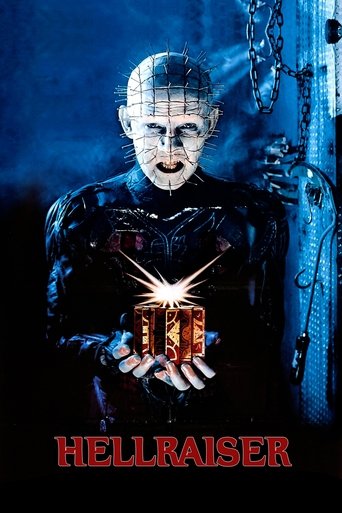
Hellraiser
Clive Barker · 1987 · Film
Shares explicit viscera.
91% shared signal
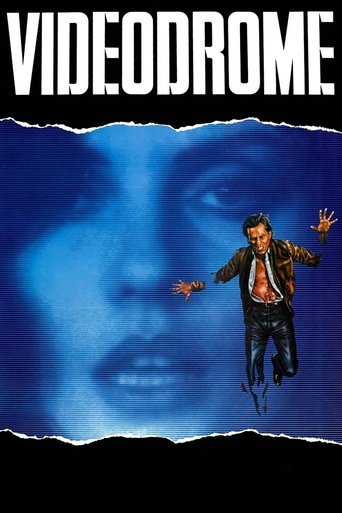
Videodrome
David Cronenberg · 1983 · Film
Shares dream logic.
87% shared signal
Hellraiser
David Bruckner · 2022 · Film
Shares a bleak, unforgiving tone.
85% shared signal
Together
Michael Shanks · 2025 · Film
Shares explicit viscera.
84% shared signal
Hellraiser III: Hell on Earth
Anthony Hickox · 1992 · Film
Shares dream logic.
83% shared signal
A Nightmare on Elm Street
Wes Craven · 1984 · Film
82% shared signal

The Hellbound Heart
Clive Barker · 1986 · Book
Shares a bleak, unforgiving tone.
90% shared signal

Books of Blood
Clive Barker · 1984 · Book
85% shared signal
More lists like these: Movies like Videodrome · Movies like Together
Questions about Hellbound: Hellraiser II
The things people actually ask about this film, answered — including how it ends.
What happens at the end of Hellbound: Hellraiser II?
Tiffany solves the puzzle box in reverse and closes the gateway to Hell while Kirsty, wearing Julia's skin, distracts Channard. Channard gets caught in his own tentacles and tears himself apart. Kirsty and Tiffany leave the hospital, and an epilogue shows a pillar of bodies rising from the old mattress.
Does Pinhead die in Hellraiser II?
Yes, in a sense. After Kirsty shows him a photograph of his human self, Captain Elliot Spencer, the Cenobites remember being human, and Channard kills them all. Their bodies revert to human form, and Spencer dies on Channard's tentacles. The third film picks up the story from the pillar.
Who is Dr. Channard?
The head of the psychiatric hospital where Kirsty is committed, played by Kenneth Cranham. He is secretly obsessed with the Lament Configuration, resurrects Julia with a patient's blood, and follows her into Hell, where Leviathan turns him into a Cenobite with scalpel-tipped tentacles.
How gory is Hellbound: Hellraiser II?
Very. We score it 092 on viscera. The MPAA first gave it an X rating, and six minutes were cut to win an R. What remains includes skinless bodies, a patient cutting himself on a mattress, flaying and Channard's surgical tentacles, all done with practical effects.
Did Clive Barker direct Hellraiser II?
No. Barker wrote the story and was an executive producer, but did not return to direct. Tony Randel, a New World Pictures employee who had worked as an uncredited editor on the first film, made his directorial debut with it, from a screenplay by Peter Atkins.
What is the deleted surgery scene in Hellbound?
An ending was filmed showing Pinhead and the Female Cenobite as surgeons. It was dropped, but promotional photos of it led to rumours of an "infamous deleted surgery scene" that fans long hunted for.
These are ranked against Hellbound: Hellraiser II, not against you.
Build your own tape →